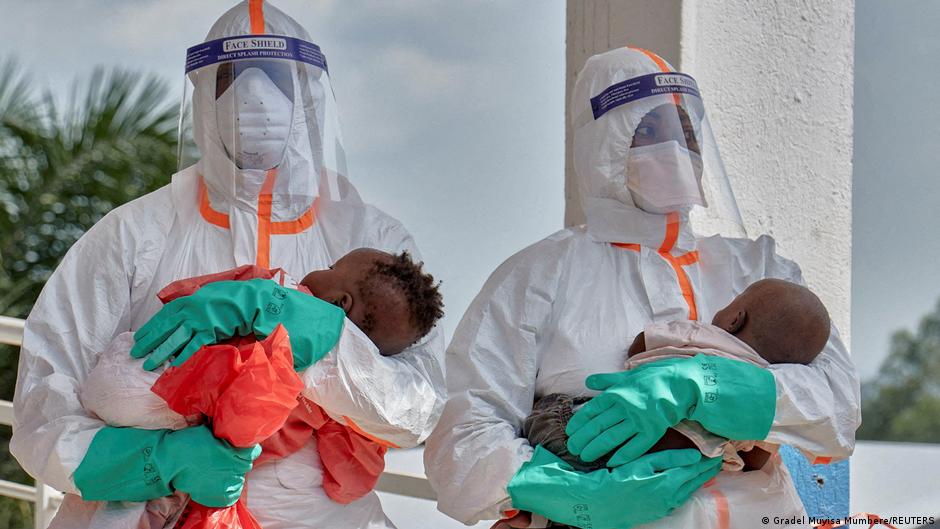
Photo via Deutsche Welle

Ebola: Why is there still no vaccine?

Read the original at Deutsche Welle ↗
Cite

Fuchs, H. (2026, November 7). Ebola: Why is there still no vaccine? Deutsche Welle. https://www.dw.com/en/ebola-why-is-there-still-no-vaccine/a-79888134?maca=en-rss-en-world-4025-rdf

Dated from the outlet's own feed. Check the original for its byline.

Deutsche Welle · collected 2026-11-08 · by Hannah Fuchs

Quick Summary

In 1976, the first documented Ebola epidemic occurred near the Ebola River in what was then Zaire and is now the Democratic Republic of Congo. Recently, another major outbreak has emerged, this time involving the less common Bundibugyo variant of the virus. Despite previous outbreaks dating back to 2007 in Uganda and 2012 in the DRC providing ample opportunity for vaccine development, no licensed vaccine or treatment exists against this particular strain. Experts like Dr. Torsten Feldt and Leonie Mayer from the German Center for Infection Research criticize the lack of preparation and highlight the scientific challenges that prevent preemptive vaccine creation for every potential pathogen due to funding constraints and prioritization issues.
Written by AI on 2026-11-11, from this article's own text only (the story summary below draws on all the coverage).

AI analysis

Story summary

As of 2026, the Democratic Republic of Congo is facing a major Ebola outbreak caused by the less common Bundibugyo strain. This virus was first identified in 2007 during an outbreak in Bundibugyo, Uganda and had another occurrence in the DRC in 2012. Dr. Torsten Feldt from Düsseldorf's University Hospital criticized the lack of preparedness for this strain, stating that enough time existed to develop vaccines and treatments after previous outbreaks but these opportunities were not seized. This delay has now resulted in significant challenges during the current outbreak.

Written for “Ebola Vaccine Development” on 2026-11-11, grounded in this article and the 0 other(s) covering the same event.

Story

Ebola Vaccine Development
Health · 1 article(s) covering the same event.

Compared with similar articles

This article reads unscored and hedges 20% of its claims. Each row says how that neighbour differs.
BBC News
Hedges 1 of 15 claims Outlet record 66/100
“Article A reports on a UK national testing positive for Ebola in DR Congo, while Article B discusses historical context and ongoing challenges regarding the Ebola virus.”
Al Jazeera
Hedges 3 of 18 claims Outlet record 60/100
“Article A discusses the history and lack of a vaccine for the Bundibugyo strain, while Article B reports on WHO approving trials for new Ebola vaccines. These are related but distinct events.”
Evening Standard
Hedges 0 of 5 claims Outlet record 64/100
“Article A reports on a British man infected with Ebola being flown back to the UK, while Article B discusses historical context and questions about why there is no vaccine for the Bundibugyo strain of Ebola.”
The Guardian
Hedges 1 of 13 claims Outlet record 65/100
“Article A describes the evacuation of an Ebola-positive British doctor from DRC to a London hospital, while Article B is a broader discussion about the history and lack of vaccine for the Bundibugyo type of Ebola virus.”
Al Jazeera
Hedges 1 of 9 claims Outlet record 60/100
“Article A discusses historical context and the emergence of different types of Ebola, while Article B reports on current statistics and efforts to contain a specific ongoing outbreak.”
Toronto Star
Hedges 0 of 2 claims Outlet record 64/100
“Article A discusses historical context and past Ebola outbreaks while Article B reports on a current outbreak surpassing 11,000 cases.”
NPR
Hedges 2 of 11 claims Outlet record 60/100
“Article A discusses historical context and the discovery of different Ebola strains, while Article B reports on current statistics and containment efforts in Congo's ongoing outbreak.”
The Hindu
Hedges 2 of 9 claims Outlet record 78/100
“Article A discusses historical context and the discovery of different Ebola strains, while Article B reports on current statistics and challenges of the ongoing outbreak.”
How this article was measured signals, leaning charts, publisher record, byline, topics and claims

Signals How these are calculated →

Claims extracted
60
sentences that state something as happening or true
Uncertain
20%
12 of 60 hedged ("reportedly", "may", "according to")
Leaning
not political
takes no side on a contested political question
Publisher signals
95/100
Deutsche Welle's corrections and hedging, across everything collected from it. Not a measure of accuracy.
Outlets on this story
1
Health
Same framing elsewhere
1
articles that frame the event the way this one does
Analyzed 2026-11-11 · how these are computed

How this is being covered How these are calculated →

Article leaning vs. publisher reliability
Source leaning vs. consistency

Publisher

Deutsche Welle · 644 article(s) · 0 correction(s) detected
No corrections detected for this publisher. That may mean careful reporting, or simply that nothing has been checked.

Who wrote this

Hannah Fuchs
4 article(s) here · 1 carrying a prediction
Preparations could have been made for Bundibugyo How can a virus that has been known for decades continue to infect thousands of people, yet there is still no licensed vaccine or official treatment?
2026-11-08 · assertive framing · Ebola: Why is there still no vaccine?
Artificial intelligence could potentially be misused to develop biological weapons.
2026-11-01 · assertive framing · Biological weapons: The weaponization of disease
Since the outbreak began in mid-May, more than 3,000 people have died.
He has no doubt that the drugs have led to weight loss in many people at an individual level, but he told DW that it was too soon to say whether it "will lead to a plateau, […] a decrease […] or a slower decrease in the next 20 years" and what the effect on the general population might be.
Also by Hannah Fuchs
Nothing else under this byline is closely related to this article, so these are simply their most recent.

Topics

Bundibugyo DRC Uganda Zaire the Democratic Republic of Congo

Subjects

Mayer PERSON · 6× Bundibugyo GPE · 4× DRC GPE · 3× Zaire GPE · 3× DZIF ORG · 2× Sudan GPE · 2× Uganda GPE · 2× Düsseldorf GPE · 1× Torsten Feldt PERSON · 1× the Democratic Republic of Congo GPE · 1×

Narrative

"Our data does not enable us to answer the question of whether this immune response actually provides protection, or if it results in a milder progression of the disease," she added, calling it an important gap in our knowledge.
framing: assertive · carried by 1 article(s) · first seen 2026-11-11
Preparations could have been made for Bundibugyo How can a virus that has been known for decades continue to infect thousands of people, yet there is still no licensed vaccine or official treatment?
2026-11-11 · Deutsche Welle
Ebola: Why is there still no vaccine? · assertive framing

Claims (60 extracted, 12 hedged)

A hitherto unknown disease breaks out near the Ebola river in the country then known as Zaire, now the Democratic Republic of Congo (DRC). asserted
disease → break → Congo
This was the first scientifically documented Ebola epidemic. asserted
This → document → ?
Now, 50 years on, the DRC once again finds itself at the center of a major Ebola outbreak. asserted
DRC → find → outbreak
The virus was identified in 2007 during an outbreak in Bundibugyo, Uganda. asserted
virus → identify → Bundibugyo
Another outbreak occurred in the DRC in 2012. asserted
outbreak → occur → 2012
Preparations could have been made for Bundibugyo How can a virus that has been known for decades continue to infect thousands of people, yet there is still no licensed vaccine or official treatment? uncertain
that → make → people
Torsten Feldt, a doctor of tropical medicine at Düsseldorf's University Hospital, sees this as a missed opportunity. asserted
Feldt → see → opportunity
"We had come across the Bundibugyo virus in two previous outbreaks: 2007 in Uganda and 2012 in DR Congo. asserted
We → come → Congo
So we had enough time to develop vaccines and therapeutic options. asserted
we → have → vaccines
But we didn't make use of this opportunity, meaning crucial time was lost during the current outbreak," he said. asserted
he → make → outbreak
Leonie Mayer from the German Center for Infection Research (DZIF) and the Institute for Infection Research and Vaccine Development at the University Medical Center in Hamburg-Eppendorf agrees. asserted
Mayer → agree → Eppendorf
"They could of course have developed a vaccine and run pre-clinical trials before," Mayer told DW. uncertain
Mayer → develop → DW
She stressed, however, that their effectiveness can only be assessed and confirmed during an actual outbreak. asserted
effectiveness → stress → outbreak
Mayer is the lead author of a recently published study that examined whether Ervebo, an Ebola vaccine that has already been licensed, can be used against other types of Ebola as well. asserted
that → publish → Ebola
From an immunological point of view, and compared to — for example — influenza or HIV, Ebola is a very worthwhile candidate for a vaccine. asserted
Ebola → compare → vaccine
Influenza viruses are constantly mutating, and the human immunodeficiency virus is particularly good at evading our immune defenses. asserted
virus → mutate → defenses
"I think — and perhaps it's kind of a blessing in disguise — that it will be relatively straightforward to develop a vaccine against Bundibugyo," said Mayer. asserted
Mayer → think → Bundibugyo
Herein lies the paradox. asserted
paradox → lie → ?
From a scientific point of view, Ebola is a good vaccine candidate, yet there is still no licensed form of prevention against the Bundibugyo variant that is currently circulating. asserted
that → be → variant
Mayer explained that vaccines cannot be developed as a precautionary measure against every potential pathogen. asserted
vaccines → explain → pathogen
Lack of funding or the prioritization of other pathogens often have a role to play. asserted
Lack → have → role
Many researchers had assumed that a fresh outbreak of the Sudan Ebola virus was more likely, and vaccine development for this strain is more advanced. asserted
development → assume → strain
The known, highly dangerous orthoebolaviruses include Ebola virus (EBOV), previously called the Zaire Ebola virus (ZEBOV), the Sudan virus (SUDV), and the Bundibugyo virus (BDBV). asserted
orthoebolaviruses → know → virus
The existing vaccine, Ervebo, was developed and licensed for use against the Zaire variant. asserted
vaccine → exist → variant
This is why the existing Ebola vaccine has been of only limited use to people in the areas of the current outbreak. asserted
vaccine → exist → outbreak
Another factor may also be relevant: The Bundibugyo virus appears to be less aggressive than the Zaire variant. uncertain
virus → appear → variant
At first, that sounds like good news, but it may make it harder to contain, as people remain mobile for longer after being infected, and can pass on the virus without realizing. uncertain
people → sound → virus
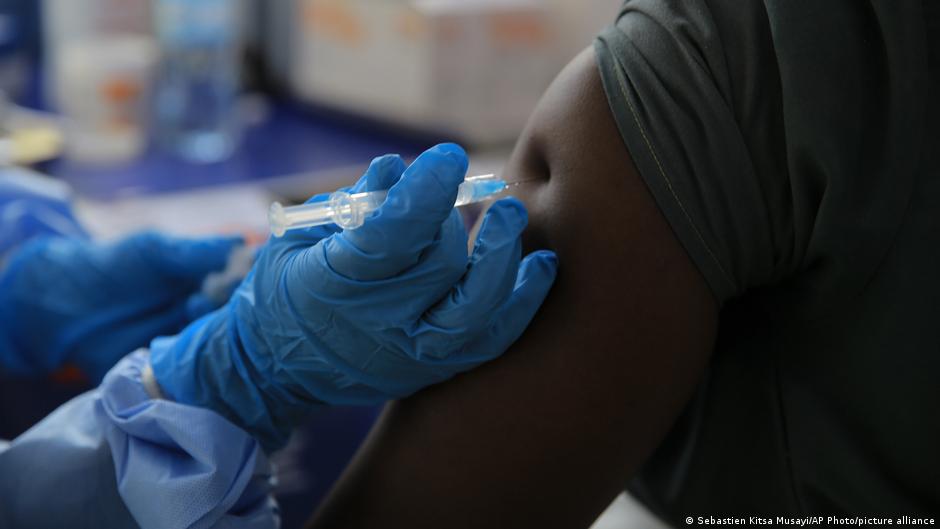
Ervebo vaccine shows immune response to Bundibugyo asserted
vaccine → show → Bundibugyo
In the recently published study, Mayer's research team from the DZIF investigated whether the already licensed Ebola vaccine could trigger an immune response not only against EBOV, but against other types of Ebola as well. uncertain
vaccine → publish → Ebola
They found cross-reactive T-cell responses against Bundibugyo, and also, to a lesser extent, against the Sudan virus. asserted
They → find → virus
"We now know that the immune cells can most likely also recognize the Bundibugyo virus," she said. asserted
she → know → virus
"Our data does not enable us to answer the question of whether this immune response actually provides protection, or if it results in a milder progression of the disease," she added, calling it an important gap in our knowledge. asserted
she → enable → knowledge
Why can't existing vaccine be deployed yet? asserted
vaccine → deploy → ?
If there's a vaccine that has already been licensed, and indications that it could protect people, why isn't it simply being deployed? uncertain
it → be → people
Mayer explains the dilemma. asserted
Mayer → explain → dilemma
For one thing, she said, it's not ethical to deploy a vaccine if you're not sure whether or how well it works. asserted
it → say → vaccine
Also, if it were used on a large scale, it would no longer be possible to establish whether it actually works: A reduction in cases could also be a result of other measures, or the epidemic might already have passed its peak. uncertain
epidemic → use → peak
Jürgen May, a specialist in tropical diseases at the Bernhard Nocht Institute, also warns against mass vaccination. uncertain
May → warn → vaccination
"Mass vaccination without proof of efficacy could create a false sense of security, forfeit trust, and, if it does not provide sufficient protection, make study impossible," he said. uncertain
he → create → protection
"If we inoculate people with a vaccine on a large scale, and afterwards it turns out that it was nothing like as effective as we expected, it's very difficult to communicate that to people on the ground," Mayer said. asserted
Mayer → inoculate → ground
…and 20 more, not listed.

Give feedback · no sign-in needed

No sign-in needed for now. Your note is sent without a name, so it cannot be answered.

History Support