Artificial intelligence could potentially be misused to develop biological weapons.
uncertain
intelligence → misuse → weapons
This may sound like science fiction, but scientists, security services, and international organizations are all looking at how to deal with this scenario.
uncertain
scientists → sound → scenario
Pathogens can be analyzed and altered with ever greater precision thanks to ongoing developments in biotechnology.
asserted
Pathogens → analyze → biotechnology
Meanwhile, AI is able to evaluate vast quantities of data at astonishing speeds.
asserted
AI → evaluate → speeds
As a result, experts are warning that, in the long term, modern technologies could also be misused to develop biological weapons.
uncertain
technologies → warn → weapons
In October 2026, Ken McCallum, head of the British domestic intelligence service MI5, warned that artificial intelligence could increase the risk from existing, or new, biological weapons – including from non-state actors.
uncertain
intelligence → warn → actors
Fine line between valid research and misuse
A report by the American AI company Anthropic in September 2026 highlights the topicality of the debate.
asserted
report → highlight → debate
Anthropic said it had identified and blocked numerous attempts to use its AI assistant Claude in connection with possible biological weapon research.
asserted
it → say → research
The report said these attempts included grant applications for so-called "gain-of-function" research, as well as projects to research avian influenza variants that were potentially the most transmissible to mammals.
asserted
that → say → mammals
At the same time, Anthropic stressed that, although it could have a military application, such research could also relate to medical prevention.
uncertain
research → stress → prevention
The difficulty in distinguishing between legitimate science and its possible misuse is one of the biggest problems in terms of the control of modern biotechnologies.
asserted
difficulty → distinguish → biotechnologies
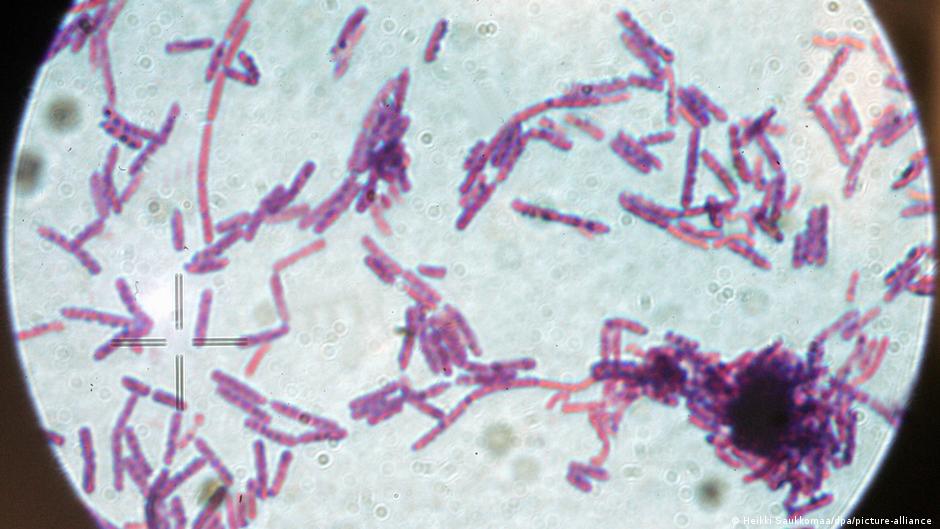
Many pathogens — bacteria, viruses, fungi, and certain biological toxins — have the potential for weaponization.
asserted
pathogens → have → weaponization
Familiar diseases include plague, smallpox, and botulinum toxin, but anthrax is one of the most notorious biological agents.
asserted
anthrax → include → agents
Its resistant spores can survive a long time in the environment, and it has also been the focus of research by state biological weapons programs.
asserted
it → survive → programs
The World Health Organization (WHO) and the United Nations Office for Disarmament Affairs define a biological weapon as the targeted release of such biological substances for the purpose of injuring people, animals, or plants.
asserted
Organization → define → people
A biological weapon usually has two components: The biological substance itself, and a system for disseminating it.
asserted
weapon → have → it
Experts refer to these as the "agent," such as a virus or bacterium, and the "delivery mechanism."
asserted
Experts → refer → virus
Examples of the latter include missiles, spraying systems, and contaminated food.
asserted
Examples → include → missiles
Biological weapons belong to the so-called ABC weapons, alongside atomic (nuclear) and chemical weapons.
asserted
weapons → belong → weapons
They are often also counted as weapons of mass destruction.
asserted
They → count → destruction
How do they differ from chemical weapons?
Biological and chemical weapons differ in their mode of operation.
asserted
weapons → differ → operation
Chemical weapons injure people through the toxic effects of chemical substances such as sarin or mustard gas.
asserted
weapons → injure → sarin
They will often take effect within minutes, or even seconds.
asserted
They → take → minutes
Examples of the use of chemical weapons are the gas attacks in World War I, which involved chlorine gas, and later mustard gas; and the deployment of the nerve gas sarin in the Syrian civil war and by Saddam Hussein in Iraq.
asserted
which → involve → Iraq
Biological weapons, on the other hand, cause infectious disease.
asserted
weapons → cause → disease
The effects become apparent only hours, days, or even weeks after they have been deployed.
asserted
they → become → ?
Some pathogens are also capable of spreading from person to person, meaning that the outcome is difficult to predict.
asserted
outcome → spread → person
To summarize: Chemical weapons kill or injure through immediate toxicity, whereas biological weapons cause diseases.
asserted
weapons → summarize → diseases
The possibility of human-to-human transmission makes the effect of a biological weapon particularly hard to calculate.
asserted
effect → make → weapon
Biological weapons are prohibited under international law.
asserted
weapons → prohibit → law
The first Biological Weapons Convention (BWC) came into force in 1975.
asserted
Convention → come → 1975
This prohibits the development, stockpiling, acquisition, retention, production, and transfer of biological and toxin-based weapons.
asserted
This → prohibit → weapons
The Convention, which has been ratified by 189 countries, can be seen as a development of the Geneva Protocol of 1925, which banned the use of biological weapons as a method of warfare.
asserted
which → ratify → warfare
Only a few countries have not signed the agreement, or have signed but not ratified it, including Israel, Egypt, and Syria.
asserted
countries → sign → Israel
All those who have acceded to the Convention have also committed themselves to destroying all stocks, production sites, and means of conveyance.
asserted
who → accede → conveyance
Chemical weapons are also internationally banned, but their control is seen as much more highly developed.
asserted
control → ban → ?
The Chemical Weapons Convention is implemented by the Organization for the Prohibition of Chemical Weapons (OPCW), which can carry out inspections and oversee the destruction of chemical weapons stocks.
asserted
which → implement → stocks
States fear that inspection could expose sensitive research data pertaining to medicine, biotechnology, or the pharmaceutical industry.
uncertain
inspection → fear → medicine
This is why the control of biological weapons relies to a great extent on transparency, voluntary reporting, and good faith.
asserted
control → rely → transparency
One of the best-known examples of why the ban on biological weapons is insufficient on its own to prevent their use occurred in the United States in 2001.
asserted
ban → know → 2001
…and 14 more, not listed.
 The Aporia