An 11-item menu board from the 1950s still hangs in McDonald’s Chicago headquarters, recalling the era when Ray Kroc struck his franchise agreement with the McDonald brothers and began building the world’s best known fast-food chain.
asserted
Kroc → hang → chain
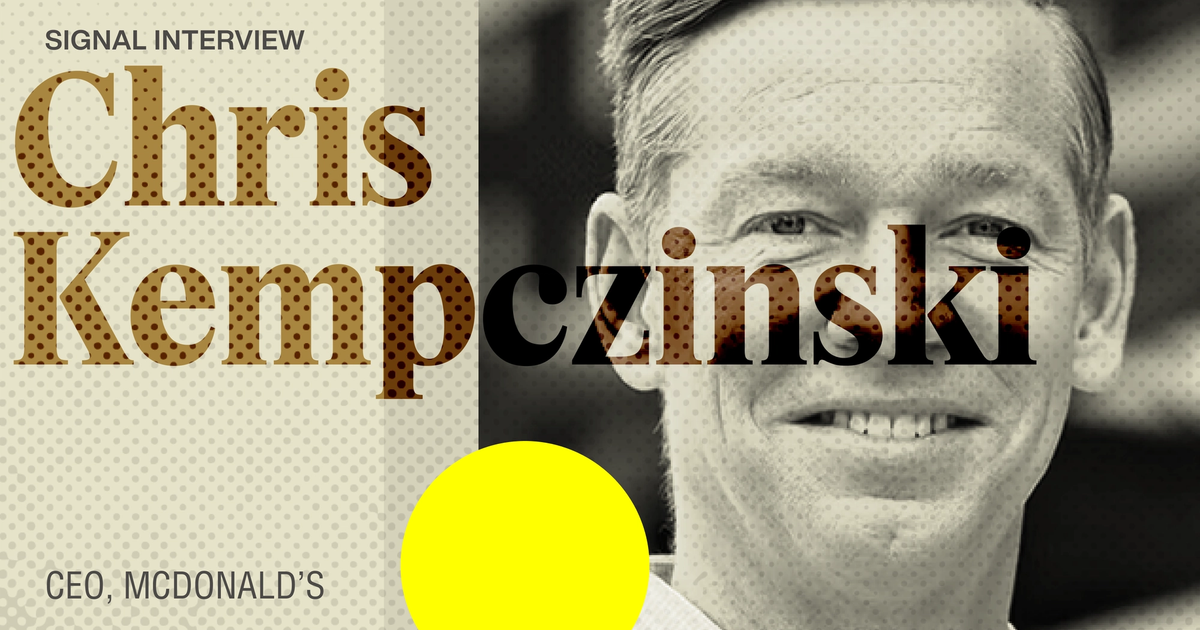
The 10-cent root beers are long gone, but Chris Kempczinski, who marked his seventh anniversary as CEO this week, is having to pay new attention to its value proposition.
asserted
who → go → proposition
The business is facing a “challenging” US consumer environment, he told investors this week, with comparable sales falling 0.2% in the three months to September.
asserted
sales → face → September
Kempczinski’s assurance that the company had started to turn things around in the last month of the quarter helped revive a stock that had fallen a jarring 32% between February and October.
asserted
that → start → February
But to reverse the drop in customer visits, he has had to put more marketing dollars behind potentially slimmer-margin deals, like a $2 breakfast sandwich with free fries for loyalty program members.
asserted
he → reverse → members
“Our goal is straightforward,” Kempczinski told Wall Street: “Customers should see a clear and compelling value proposition every time they consider McDonald’s.”
asserted
they → tell → McDonald
Few companies see as many consumers each week as McDonald’s does, and it has seen growing numbers of lower-income Americans staying home for breakfast or skipping it altogether, Kempczinski says in an interview for The CEO Signal.
asserted
Kempczinski → see → Signal
“Housing, medical care, childcare, utilities, transport — all of those things are putting, I think, a lot of pressure on people’s disposable income,” he says.
asserted
he → put → income
McDonald’s sometimes benefits in tough economic times, as higher-earning households trade down from pricier restaurants.
asserted
households → benefit → restaurants
But the US economy’s current “K-shaped” nature means that wealthier households are still eating out in pricier restaurants, rather than trading down to eat burgers and fries.
asserted
households → shape → burgers
Reserving the right to get smarter in a franchised system
Kempczinski’s $8.5 billion game plan, announced in June and dubbed “McDonald’s > NEXT,” is the second strategic overhaul of his tenure.
asserted
plan → reserve → tenure
Designed to update the group’s menu and modernize restaurants, he expects it to lift sales and margins by making McDonald’s “more customers’ first choice more often.”
asserted
it → design → sales
The complication is that about 95% of the world’s 46,000 McDonald’s restaurants are owned and operated by franchisees — and some have pushed back against a proposal that could require $650,000 to $800,000 of investment per store.
uncertain
that → own → store
There is tension in any business where customers want better value, franchisees want healthier returns, and shareholders want faster growth.
asserted
shareholders → be → growth
McDonald’s relies on its 5,000 independent partners to execute its strategy, Kempczinski notes, which means he must operate “through influence, not through direct control.”
asserted
he → rely → control
A clear focus on growth can unite his disparate stakeholders, he believes.
asserted
he → unite → stakeholders
“If you have growth and the pie is expanding, it’s amazing how harmonious everything is,” he says.
asserted
he → have → growth
“When the pie isn’t growing, then everybody starts to think about their share … and then a system can turn on itself.”
asserted
system → grow → itself
Restaurant upgrades are essential for driving that growth, he says, because “you can’t sell a $5 burger in a $1 lobby.”
asserted
you → drive → lobby
But he knows he can’t influence franchisees who think he’s not listening to them, and he says the headline number McDonald’s put on its proposals “for sure is going to get knocked down” in response to their feedback.
asserted
McDonald → know → feedback
He won’t be so “dogmatic” about the details of his strategy that he won’t learn from their feedback, he says.
asserted
he → learn → feedback
“We have a saying here at McDonald’s: We reserve the right to get smarter.”
asserted
We → have → right
This week, he told analysts he feels “overall, good” about franchisees’ willingness to roll out the upgrades his strategic plan requires.
asserted
plan → tell → upgrades
Changing a risk-averse culture through ‘positive shaming’
asserted
Changing → change → shaming
Kempczinski, who grew up in a Catholic household in Cincinnati and would visit McDonald’s after Friday night football games, admits to some Midwestern conservatism.
asserted
who → grow → conservatism
When he was invited to pick art for his office from the McDonald’s archive, he chose an all-American Norman Rockwell painting.
asserted
he → invite → painting
But the former Procter & Gamble brand executive says he balances those instincts with a restlessness that he is trying to bring to McDonald’s.
asserted
he → say → McDonald
“The company is never going to go faster than the pace that the CEO sets,” he says, and he is pushing people to take more risks and make faster decisions.
asserted
he → go → decisions
McDonald’s is “awesome” at testing new offerings and ideas, Kempczinski says, by way of example.
asserted
Kempczinski → test → example
With thousands of restaurants, “we can do A/B testing forever … but you can also test for too long.”
asserted
you → do → long
The danger in a collaborative culture like at McDonald’s is that “everybody owns it and nobody owns it,” he observes.
asserted
he → own → it
“Yes, we all need to work together, but at the end of the day, there needs to be a person or a group who’s actually held accountable for the results.”
asserted
who → need → results
A CEO can do that by appointing people to senior positions who model the behavior they want others to adopt, he says.
asserted
he → do → behavior
And, instead of shaming people for their mistakes, he believes “positive shaming” — praising top performers who set the right example — gets better results.
asserted
who → sham → results
The lessons of a Big Arch and a little bite
McDonald’s menu now ranges from Cookie Butter Iced Coffee to the Red Bull Dragonberry Energizer drink, and includes far more chicken than it once did.
asserted
it → range → chicken
Demand for chicken has been surging for several years, and the home of the Big Mac already sells more of it than KFC or Chick-fil-A.
asserted
home → surge → KFC
But Kempczinski sees “a lot of headroom” to sell more still, he says, with a push to add KFC-style breaded chicken to the menu.
asserted
he → see → menu
McDonald’s already commands more than 40% of the beef business in its 10 biggest markets, amounting to about $50 billion, he explains — but it has only 20% of the $130 billion chicken market.
asserted
it → command → market
His strategy is about more than building on the power of McNuggets and McCrispy Strips, he says.
asserted
he → build → McNuggets
“It’s just simple math.”
asserted
It → ’ → ?
…and 15 more, not listed.
 The Aporia