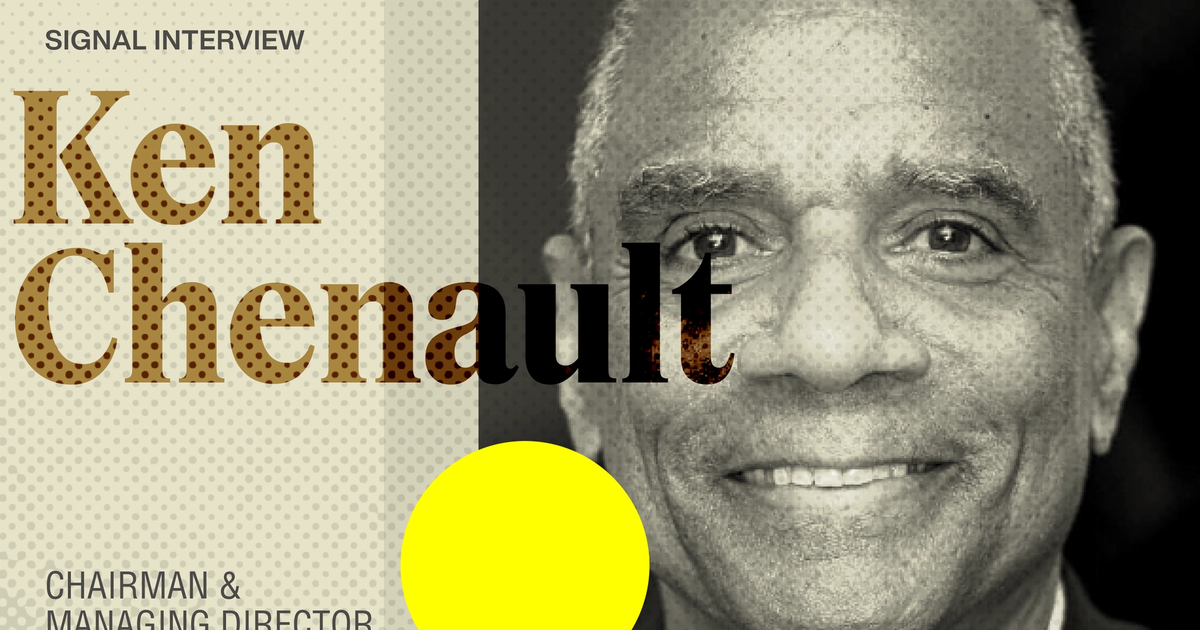
Any interference in next week’s US midterm elections should be a “red line” that prompts business leaders to rally behind American democratic norms, Ken Chenault is warning his peers.
asserted
Chenault → prompt → peers
But the influential chairman of venture capital firm General Catalyst worries that some leaders have lost sight of where to draw such lines, as they’ve retreated from a social responsibility agenda they espoused just a few years ago.
asserted
they → worry → agenda
Chenault, who was one of the first Black CEOs to lead a Fortune 500 company and ran American Express for 17 years, says people concerned about meddling in Tuesday’s election or damaging disputes over the results have been calling him to ask: “Will business stand up?”
asserted
business → lead → him
In 2021, Chenault helped rally hundreds of executives in other companies to oppose restrictive voting bills.
asserted
Chenault → rally → bills
But he thinks it would be “very challenging” to muster the same response from executives now.
asserted
it → think → executives
Back then, businesses issued statements in favor of a peaceful transfer of power around the 2020 election and subsequent attack on the US Capitol.
asserted
businesses → issue → Capitol
But they’ve since “backed down,” he notes.
asserted
he → back → ?
“They said, ‘Here’s what we’re not going to do.’
asserted
we → say → what
And then, in fact, they changed.
asserted
they → change → fact
And then the hammer came down.”
asserted
hammer → come → ?
CEOs have pulled back from public comment on issues they fear will attract a costly backlash, having watched President Donald Trump go after law firms, universities, and corporations in his second term.
asserted
Trump → pull → term
Some US officials have raised concerns about possible threats to the integrity of the midterms and campaigners have called on CEOs to express support for free and fair elections.
asserted
campaigners → raise → elections
Robert Rubin, the former Treasury Secretary, wrote recently that any manipulation of the process would have lasting economic effects.
asserted
manipulation → write → effects
But very few active CEOs of large US companies have echoed such concerns publicly, and investors have been calm.
asserted
investors → echo → concerns
“People feel threatened by consequences,” Chenault says.
asserted
Chenault → say → consequences
Some executives see voting rights as too political a topic to touch, but “it’s not political; we’re talking about a fundamental right here.
asserted
we → see → right
We’re not saying Republican [or] Democrat.”
asserted
We → say → ?
In Equal to the Task, a memoir that will be published next week, Chenault argues a point many CEOs won’t: that it is “vitally important” for business to protect the democratic process.
asserted
business → publish → process
“As the integrity of elections becomes compromised, segments of the population become alienated, communities become less stable and less prosperous, and individual businesses suffer,” he writes.
asserted
he → compromise → population
Chenault’s stance seems an increasingly lonely one in corporate America.
asserted
stance → seem → America
He does not believe that every CEO should have to take a public position on every social or political controversy, he stresses, “but we need a few people.”
asserted
we → believe → people
A call to get business off the sidelines
Warren Buffett, who appointed Chenault to the board of Berkshire Hathaway, has called him “the gold standard for corporate leaders and the benchmark that I measure others against.”
asserted
I → get → others
The onetime lawyer earned widespread respect in the upper reaches of US business for the way he led Amex through struggles including the September 11 attacks, the 2008 financial crisis, and a US antitrust probe.
asserted
he → earn → attacks
“I think I confronted more major challenges than frankly, some of the CEOs of today,” he says.
asserted
he → think → today
But he does not belittle the complexity of the environment facing this generation of executives, saying that “the transforming impact of AI, the geopolitical environment, [and] the increasing movement to authoritarianism [are] existential challenges.”
asserted
impact → belittle → authoritarianism
Chenault’s book is both a personal account of his “uniquely American story” and an attempt to guide his successors through those challenges.
asserted
book → guide → challenges
And it ends with a call for a broader “rebalancing” of the relationship between business and society, which he implies will require a bolder stance from business leaders on issues from democracy to diversity.
asserted
he → end → diversity
“I can’t recall a moment that has called for greater courage than today,” he writes, adding in an interview: “Business can’t afford to just be on the sidelines.”
asserted
Business → recall → sidelines
Chenault, who has mentored founders including Airbnb’s Brian Chesky in his role at General Catalyst, says he often asks CEOs what their core beliefs are beyond their strategy and which “red lines” they would never cross in business.
asserted
they → mentor → business
He has grown concerned that “people are increasingly uncomfortable with that question,” he says, adding that executives should see any election interference as one of those boundaries.
asserted
executives → grow → boundaries
Organizations that know what behavior they would find beyond the pale have the advantage of being able to prepare for how to respond if they encounter it, Chenault says.
asserted
Chenault → know → it
The Harvard Corporation, the university governing body on which he served until earlier this year, discussed its red lines “before things happened,” he says, referring to the Trump administration’s multi-front campaign against the institution.
asserted
he → serve → institution
Some people told him privately that they agreed with how Harvard responded, but said, “I could never do that; I’ve got to be silent,” Chenault says.
uncertain
Chenault → tell → that
“I’ve said to people, you can’t be silent about principles.”
asserted
you → say → principles
A ‘proud capitalist’ makes the case for social responsibility
Chenault calls himself a “proud capitalist,” but he has long rejected Milton Friedman’s argument that the only social responsibility a business has is to use its resources to increase its profits “within the rules of the game.”
asserted
business → make → game
“I believe that business exists because society allows it to exist.
asserted
it → believe → ?
And, to me, that confers a level of responsibility,” Chenault says.
asserted
Chenault → confer → responsibility
As an example of what needs to change, he adapts a line popularized by the founder of Meta, whose board Chenault briefly served on and now says was “not a fit” for him.
asserted
Chenault → need → him
“The era of ‘move fast and break things’ is over,” he says.
asserted
he → move → things
“Obviously that line is attributed to Mark Zuckerberg, but I think there are a range of people in business generally and technology specifically that have lost sight of what their responsibilities are.”
asserted
responsibilities → attribute → sight
…and 5 more, not listed.
 The Aporia