Inside the Breakup of an American Industrial Giant

Read the original at Semafor ↗
Semafor · collected 2026-10-09 · by Andrew Edgecliffe-Johnson

Quick Summary

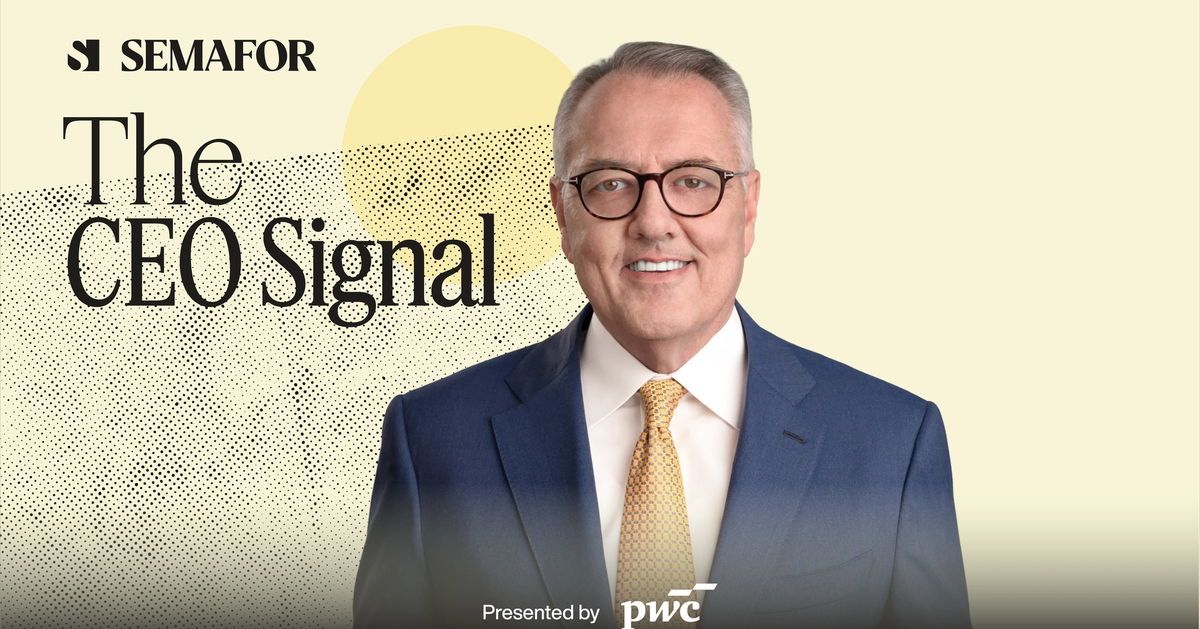
Vimal Kapur, who spent nearly four decades at Honeywell, discusses his role in splitting the 140-year-old company into three separate entities while transforming Honeywell Technologies into an automation-focused firm. In an interview with Penny Pritzker and Andrew Edgecliffe-Johnson, Kapur emphasizes the importance of customer engagement and maintaining a founder’s mindset to balance focus and scale, key aspects that guided his strategic decisions during this major corporate restructuring.
Written locally by qwen2.5:14b on 2026-10-09, using this article's own text rather than the other coverage of the same event (that is the story summary below).

AI analysis runs on qwen2.5:14b, locally

Story summary

After nearly four decades at Honeywell, Vimal Kapur became CEO and undertook the ambitious task of splitting the 140-year-old industrial conglomerate into three separate companies. This move aimed to create a focused automation company called Honeywell Technologies, while also restructuring its portfolio and deciding on new areas for competition. A key aspect of this strategy involves spending roughly one-third of his time with customers, as Kapur believes such close interaction is crucial for testing major strategic decisions and maintaining a "founder’s mindset" in terms of product innovation and future direction.

Written for “Breakup Of American Industrial Company” on 2026-10-09, grounded in this article and the 0 other(s) covering the same event.
Why this leaning score
This article does not take a side on a contested political question, so it has no leaning score. That is an answer rather than a gap: a match report or a rescue can be warmly or critically written without being left or right, and scoring it anyway is how approval of a subject gets recorded as a political position.
No political leaning scored for article 68355 · logged 2026-10-09

Signals How these are calculated →

Claims extracted
5
claim-shaped sentences
Uncertain
0%
0 of 5 hedged
Leaning
not political
takes no side on a contested political question
Correction & hedging signals
95.1
corrections and hedging in what we collected; not a measure of accuracy
Outlets on this story
1
Other
Narrative spread
1
articles carrying this framing
Analyzed 2026-10-09 · how these are computed

Story

📰 Breakup Of American Industrial Company
Other · 1 article(s) covering the same event.

How this is being covered How these are calculated →

Article leaning vs. publisher reliability
Source leaning vs. consistency

Compared with similar articles

Nothing to compare against. No article is close enough to this one for the pipeline to have linked or judged the pair.

Publisher

Semafor · 893 article(s) · 0 correction(s) detected
No corrections detected for this publisher. That may mean careful reporting, or simply that nothing has been checked.

Who wrote this

Andrew Edgecliffe-Johnson
12 article(s) here · 0 carrying a prediction
🔮 He is now weighing a possible market listing that could value his holding company at $10 billion, even as war in the Middle East sends jet fuel prices higher and economists debate how much longer the boom in global luxury spending can continue.
🔮 Beyond the walls of the company’s London headquarters, which is filled with thousands of its plushy pink octopus mascots, Jackson’s empire may look like an unwieldy one.
🔮 Brown resolved to spin off the mobility business for which his brand was best known, and says now that “there wouldn’t be a firm” if he had not done so in 2011.
🔮 I think there was maybe 20% of that role that was the same.
🔮 The technology heralds a new era of decentralization, he believes, and that will make the people CEOs have surrounded themselves with feel threatened.
🔮 Sydney’s diversified economy makes it “a great microcosm,” where Atlassian can test whether ideas hatched in California’s Bay Area will work in less tech-forward cities around the world.
🔮 The Signal Interview Kai-Fu Lee’s AI Superpowers, an influential book published in 2018, largely predicted the current tech battle between the US and China.
2026-09-18 · assertive framing · Why Kai-Fu Lee thinks companies need an AI boss
🔮 Combining two of the three largest US carriers would transform the country’s aviation industry to such an extent that many analysts predicted regulators would never clear such a deal.
🔮 Tulchinsky’s backing of the exhibition will put his name in front of an estimated one million visitors and his company’s brand in front of millions more school children between now and next summer.
🔮 And Logitech’s own renaissance would not have been possible without rethinking its approach to the export powerhouse that strikes fear into the hearts of many Western manufacturers.
2026-09-06 · assertive framing · How a ‘China-for-China’ strategy rebooted Logitech
Also by Andrew Edgecliffe-Johnson
Nothing else under this byline is closely related to this article, so these are simply their most recent.

All 12 articles by Andrew Edgecliffe-Johnson →

Topics

Honeywell Honeywell Technologies

Subjects

Kapur PERSON · 2× Andrew Edgecliffe-Johnson PERSON · 1× Honeywell ORG · 1× Honeywell Technologies ORG · 1× Penny Pritzker PERSON · 1× Vimal Kapur PERSON · 1×

Narrative

Kapur explains why he tries to spend roughly a third of his time with them, how those conversations help test major strategic decisions, and why he believes “the CEO should have a founder’s mindset” when it comes to products, innovation and the future of the business.
framing: assertive · carried by 1 article(s) · first seen 2026-10-09
2026-10-09 · Semafor
Inside the Breakup of an American Industrial Giant · assertive framing

Claims (5 extracted, 0 hedged)

After nearly four decades at Honeywell, Vimal Kapur reached the top — and then took on the task of breaking the 140-year-old industrial conglomerate into three companies. asserted
Kapur → reach → companies
Kapur tells Penny Pritzker and Andrew Edgecliffe-Johnson how he managed that separation while simultaneously building Honeywell Technologies into a focused automation company, reshaping its portfolio and deciding where the new business should compete. asserted
business → tell → portfolio
The challenge, he says, is capturing the advantages of focus without giving up the benefits of scale. asserted
he → say → scale
A big part of that judgment comes from staying close to customers. asserted
part → come → customers
Kapur explains why he tries to spend roughly a third of his time with them, how those conversations help test major strategic decisions, and why he believes “the CEO should have a founder’s mindset” when it comes to products, innovation and the future of the business. asserted
it → explain → business
💬Give feedback
🕘History 🎫Support