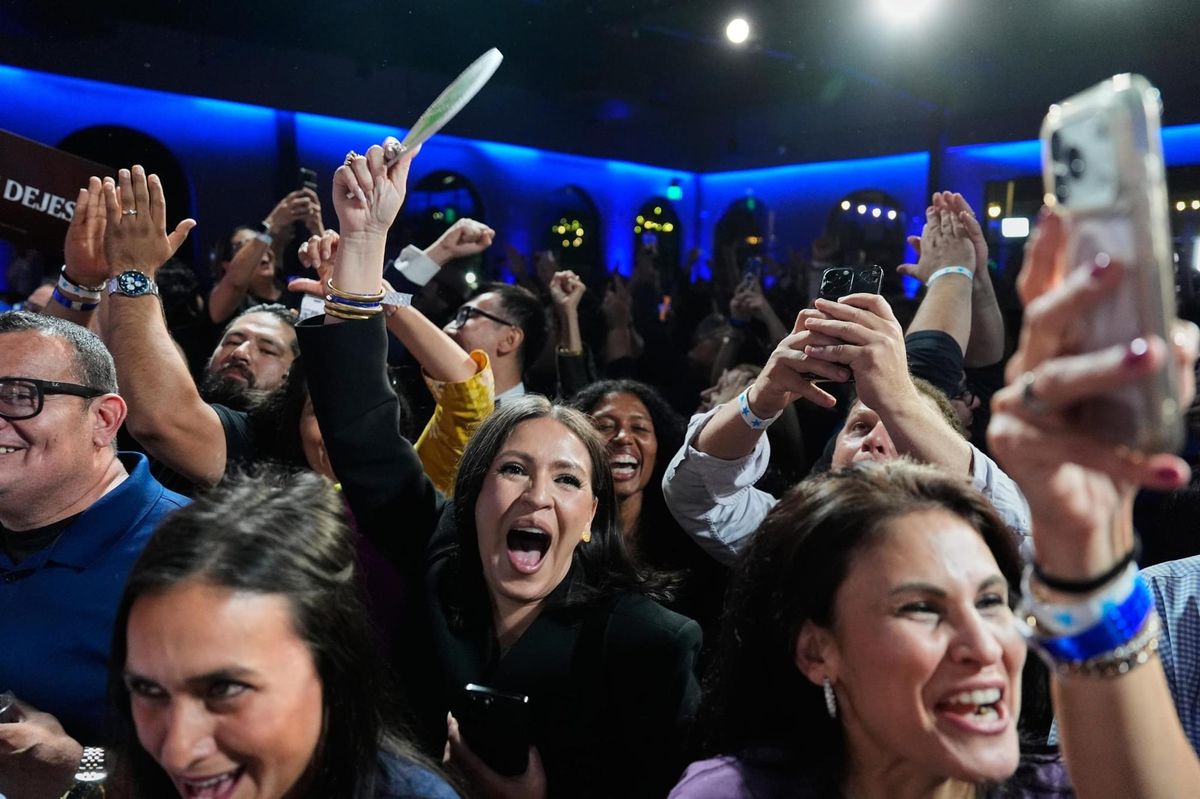
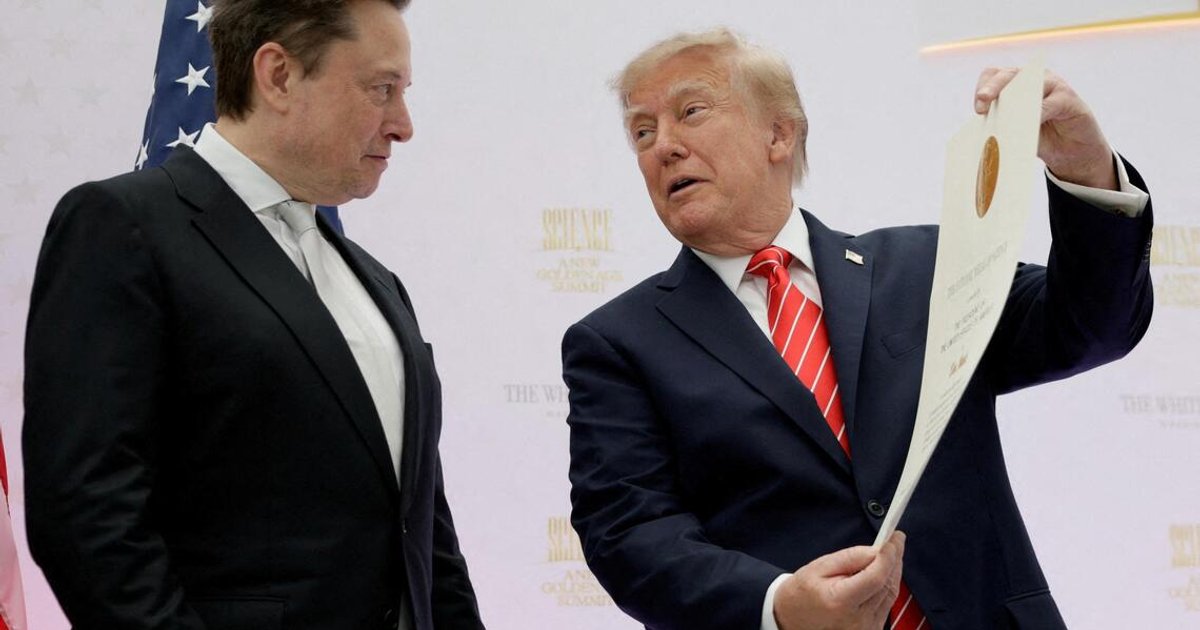
Photo via Platformer

The AI backlash needs a plan

Read the original at Platformer ↗
Cite

Newton, C. (2026, November 6). The AI backlash needs a plan. Platformer. https://www.platformer.news/thursday-newsletter-7/

Dated from the outlet's own feed. Check the original for its byline.

Platformer · collected 2026-11-06 · by Casey Newton

Quick Summary

Tuesday's election results show significant voter discontent with Big Tech and AI policies. Gina Hinojosa in Texas and Sherrod Brown in Ohio won after campaigning against data centers and pro-AI efforts. Voters approved bans on data centers in 38 jurisdictions. The incoming Democratic majority in Congress plans to regulate tech companies more strictly, promising increased oversight and regulation of the AI industry. Democrats view these results as a mandate to address issues related to Big Tech and AI, but navigating how to properly regulate AI remains complex and challenging.
Written by AI on 2026-11-06, from this article's own text only (the story summary below draws on all the coverage).

AI analysis

Story summary

On November 7, 2026, Democrats gained control over both houses of Congress, marking a shift from the Republican-led era often associated with former President Trump's second term. Voters were dissatisfied with high gas and grocery prices, tensions with Iran, and perceived corruption within the administration. A significant concern among voters was the support for Big Tech and AI expansion, particularly through new data centers.

Texas Representative Gina Hinojosa defeated Governor Greg Abbott by campaigning against new data center construction, while Ohio Senator Sherrod Brown won against incumbent Jon Husted, who had facilitated tax breaks for such facilities. Across at least 38 jurisdictions, voters approved bans or restrictions on data centers, reflecting widespread opposition to their rapid expansion. Despite substantial spending by pro-AI groups and Elon Musk, these efforts largely failed to sway voter sentiment.

Written for “AI Backlash Plan Needed” on 2026-11-06, grounded in this article and the 0 other(s) covering the same event.
Why this leaning score
The article's own words the score was based on. Each is quoted verbatim and was checked against the article text before being stored, so you can find it in the original.
Reading Leans strongly left (beta estimate) Confidence high 1 quote(s) discarded as not found in the article
Leaning: leans strongly left for article 133178 (high confidence, 3 verified quotes) · logged 2026-11-06

Story

📰 AI Backlash Plan Needed
Politics · 1 article(s) covering the same event.

Compared with similar articles

This article reads leans strongly left and hedges 12% of its claims. Each row says how that neighbour differs.
The Left’s AI Problem Different event
The Dispatch
⚖️ Centre further right than this Hedges 0 of 2 claims Outlet record 61/100
“The articles describe different events: one is about an assembly discussing AI with Mayor Mamdani, while the other discusses general voting trends and voter discontent.”
CBS News
Hedges 1 of 1 claims Outlet record 69/100
“Article A discusses the risk of AI deepfakes in midterm elections, while Article B covers the results and voter sentiment from the midterms on a broader scale.”
404 Media
⚖️ Leans strongly left Hedges 4 of 43 claims Outlet record 95/100
“While both articles discuss reactions to an election, Article A focuses specifically on voter rejection of tech oligarchy and AI negative externalities, while Article B broadly discusses voter dissatisfaction with economic issues and corruption.”
Washington Examiner
⚖️ Leans right further right than this Hedges 0 of 5 claims Outlet record 69/100
“While both articles discuss political outcomes and voter concerns from Election Day 2026, they describe different aspects of the aftermath without focusing on the exact same incident or moment.”
TIME
⚖️ Leans strongly left Hedges 10 of 70 claims Outlet record 59/100
“The articles discuss different aspects of the election results and voter sentiment, without clearly referring to the exact same incident.”
South China Morning Post
⚖️ Leans left further right than this Hedges 1 of 1 claims Outlet record 62/100
“Article A discusses the impact of a Democratic sweep on AI growth, while Article B focuses on general voter discontent with multiple issues including AI backlash.”
South China Morning Post
⚖️ Leans strongly left Hedges 1 of 3 claims Outlet record 62/100
“The articles discuss different aspects of voter sentiment towards AI infrastructure and broader political issues, without clearly describing the same specific incident.”
Semafor
⚖️ Leans left further right than this Hedges 0 of 34 claims Outlet record 68/100
“Article A focuses on the Democratic majority's stance on AI regulation post-election, while Article B discusses broader voter discontent and issues beyond just AI.”
The Straits Times
⚖️ Leans right further right than this Hedges 0 of 7 claims Outlet record 66/100
“The articles discuss different aspects related to political outcomes but do not describe the same specific incident.”
How this article was measured signals, leaning charts, publisher record, byline, topics and claims

Signals How these are calculated →

Claims extracted
136
sentences that state something as happening or true
Uncertain
12%
16 of 136 hedged ("reportedly", "may", "according to")
Leaning
Leans strongly left
of the writing, not the subject · beta estimate
Publisher signals
96/100
Platformer's corrections and hedging, across everything collected from it. Not a measure of accuracy.
Outlets on this story
1
Politics
Same framing elsewhere
1
articles that frame the event the way this one does
Analyzed 2026-11-06 · how these are computed

How this is being covered How these are calculated →

Article leaning vs. publisher reliability
Source leaning vs. consistency

Publisher

Platformer · 38 article(s) · 0 correction(s) detected
No corrections detected for this publisher. That may mean careful reporting, or simply that nothing has been checked.

Who wrote this

Casey Newton
30 article(s) here · 1 carrying a prediction
🔮 On Tuesday, America voted to give Democrats control over both houses of Congress, punishing Republicans for the abandoned promises of the second Trump administration and raising hopes that a decade of MAGA misery might be coming to an end.
2026-11-06 · assertive framing · The AI backlash needs a plan
🔮 The company noted that its traffic from search had fallen meaningfully, and that by the fourth quarter daily users might decline by a low double-digit percentage.
2026-10-30 · assertive framing · What Google and Reddit's bad days have in common
🔮 While these cases against OpenAI may be the most significant to date, they are far from the first: there are now dozens of private suits against the company, and governments are taking notice as well.
2026-10-15 · assertive framing · The states come for OpenAI
🔮 The other is recent blog posts from OpenAI and Anthropic outlining their progress toward recursive self-improvement: AI systems that can research and train their successors, leading to ever-faster releases and increased risk that the systems will escape their control.
2026-10-07 · assertive framing · Does intelligence need a hard cap?
🔮 Writing on his blog, Gates predicted that the age of apps was coming to an end.
2026-09-30 · assertive framing · OpenAI connects the Dots
🔮 At the time, Silicon Valley had been consumed by an interest in bots, which its boosters hoped would shift more and more internet activity to messaging apps.
2026-09-25 · assertive framing · Can Muse make us forget the metaverse?
🔮 Once a fringe obsession of Bay Area rationalists, existential risk is suddenly all anyone is talking about Frontier labs make for lousy messengers on AI safety — but it would be foolish to ignore them
2026-09-23 · assertive framing · Muse is having a moment
🔮 When Kevin and I pitched Hard Fork in 2021, Silicon Valley was in the throes of crypto mania, and we assumed that the podcast would cover the effort to rebuild our existing internet on the blockchain.
2026-09-18 · assertive framing · What was Hard Fork?
🔮 “Jacob is correct here—we really do earnestly believe AI could kill all humans!” Hubinger wrote.
2026-09-11 · assertive framing · The AI safety vibe shift
🔮 Maybe we should listen?
2026-09-09 · assertive framing · The AI warnings are coming from inside the lab
Also by Casey Newton
The states come for OpenAI
2026-10-15 · Platformer
Does intelligence need a hard cap?
2026-10-07 · Platformer
Nothing else under this byline is closely related to this article, so these are simply their most recent.
All 30 articles by Casey Newton →

Topics

America Congress Democrats MAGA Republicans

Subjects

Congress ORG · 5× Democrats NORP · 3× Trump PERSON · 3× America GPE · 2× TikTok ORG · 2× Gina Hinojosa PERSON · 1× Iran GPE · 1× Republicans NORP · 1× Texas GPE · 1× the White House ORG · 1×

Narrative

Following After voters said no to data centers, OpenAI and Google bid to make them friendlier What happened: In a new data-center framework, OpenAI promises to protect locals from energy price increases and avoid making local officials sign NDAs at data centers OpenAI owns and operates.
framing: assertive · carried by 1 article(s) · first seen 2026-11-06
🔮 On Tuesday, America voted to give Democrats control over both houses of Congress, punishing Republicans for the abandoned promises of the second Trump administration and raising hopes that a decade of MAGA misery might be coming to an end.
2026-11-06 · Platformer
The AI backlash needs a plan · assertive framing

Claims (136 extracted, 16 hedged)

On Tuesday, America voted to give Democrats control over both houses of Congress, punishing Republicans for the abandoned promises of the second Trump administration and raising hopes that a decade of MAGA misery might be coming to an end. uncertain
decade → vote → end
In exit polls, voters were fed up with high prices for gas and groceries, the chaotic conflict with Iran, and the endemic corruption of the Trump administration, which they seemed to have noticed in large numbers for the first time. asserted
they → feed → time
But another powerful thread of discontent ran through the voting on Tuesday, and it lay in the administration’s full-throated endorsement of Big Tech oligarchy and the AI accelerationism it has pushed for in the White House. asserted
it → run → House
In Texas, Gina Hinojosa unseated Gov. Greg Abbott after campaigning on an immediate moratorium on new data centers. asserted
Hinojosa → unseat → centers
In Ohio, Sherrod Brown beat Sen. Jon Husted, whom he called “the face of data centers” after Husted recruited and gave tax breaks to the facilities during his time as lieutenant governor. asserted
Husted → beat → governor
Voters approved bans or restrictions on data centers in at least 38 jurisdictions. asserted
Voters → approve → jurisdictions
The efforts of pro-AI super PACs mostly went nowhere, as did those of Elon Musk, who spent nearly half a billion dollars this cycle and got almost nothing in return. asserted
who → go → return
The incoming majority in Congress is already promising to take a stronger hand in regulating tech companies. asserted
majority → promise → companies
Rep. Greg Casar, who chairs the Congressional Progressive Caucus, called the results an "early tremor of a much bigger AI earthquake." asserted
who → chair → earthquake
Sen. Ed Markey joked that Democrats would be issuing so many subpoenas they'd need new forests. asserted
they → joke → forests
At Transformer, Shakeel Hashim predicted that a bill regulating frontier models will pass in the first months of 2027, and that President Trump might even sign it. uncertain
Trump → predict → it
It’s clear that Democrats won a strong mandate against something: data centers and their various externalities, billionaires buying elections, and the AI industry’s ongoing promise to take your job and also maybe kill you. asserted
Democrats → ’ → you
But properly regulating AI isn’t as simple as banning data centers — which the labs will simply move to other states, countries, or even into space. asserted
labs → regulate → space
It may not even be as simple as pausing frontier AI development — even if the United States could coordinate a global pause, we would still be left with the question of how technology development could safely continue. uncertain
development → pause → question
The uncertainty over what to do next feels familiar. asserted
uncertainty → feel → what
It’s an uncertainty that plagued the entire debate over what to do about social media in the aftermath of the 2016 US presidential election — a debate that never resulted in any meaningful regulation from Congress. asserted
that → ’ → Congress
Social media is now being regulated primarily by judges and juries. asserted
media → regulate → judges
AI regulation can’t afford to take the same path. asserted
regulation → afford → path
(TikTok and Instagram might scramble your brain, or the brain of someone you love, but there was never any risk that they might automate your job or invent a novel bioweapon.) uncertain
they → scramble → bioweapon
And two, the technology is developing much faster: most industry leaders believe that hugely powerful AI systems may arrive within the next two years. uncertain
systems → develop → years
Congress will not have a decade to debate which approach to regulation is the right one. asserted
approach → have → regulation
And in particular, it does not have a decade for a debate that goes nowhere. asserted
that → have → debate
Beginning in 2018, Congress spent roughly four years being performatively furious at social media companies. asserted
Congress → begin → companies
Mark Zuckerberg was dragged in to testify about Cambridge Analytica and a host of other issues. asserted
Zuckerberg → drag → issues
Frances Haugen brought tens of thousands of pages of internal Meta documents with her to Capitol Hill. asserted
Haugen → bring → Hill
Antitrust subcommittees produced a 450-page report and a package of bills aimed at dismantling the oligarchy. asserted
subcommittees → produce → oligarchy
All America got in return was a ban on TikTok that, in the end, no one bothered to enforce. asserted
one → get → end
The country still has no comprehensive privacy law, no Section 230 reform, and no new antitrust legislation. asserted
country → have → law
The Kids Online Safety Act, first introduced four years ago, appears stuck in a kind of perpetual limbo. asserted
Act → introduce → limbo
It took juries in Los Angeles and New Mexico accepting the argument that addictive product design can cause harm to get around Section 230 and punish the platforms for their recklessness. asserted
design → take → recklessness
State attorneys general got a settlement from Meta worth roughly $17 billion, plus some of the time limits and notification curfews for teens that Congress never managed to pass. asserted
Congress → get → that
But America got nowhere, I think, because of a handful of mistakes that it may be on the verge of making again when it comes to AI. uncertain
it → get → AI
With that in mind, then, here are three things to watch out for as the new Congress is seated in January. asserted
Congress → watch → January
Maybe the biggest problem with the movement to “make social media safer” was that no one could agree on what “safe” meant. uncertain
safe → make → what
Is social media “safe” if it can’t send push notifications? asserted
it → send → notifications
If it is scrubbed of all bullying, harassment, hate speech, violence, and self-harm? asserted
it → scrub → bullying
Should platforms be able to rent your personal data to advertisers, or show you ads for scams without much penalty? asserted
platforms → rent → penalty
What obligations should they have to label and remove propaganda? asserted
they → have → propaganda
How far should a sitting president be able to go in overturning the results of an election and keep his account? asserted
president → sit → account
Each of these questions demands a separate answer. asserted
Each → demand → answer
…and 96 more, not listed.

💬Give feedback · no sign-in needed

No sign-in needed for now. Your note is sent without a name, so it cannot be answered.

🕘History 🎫Support