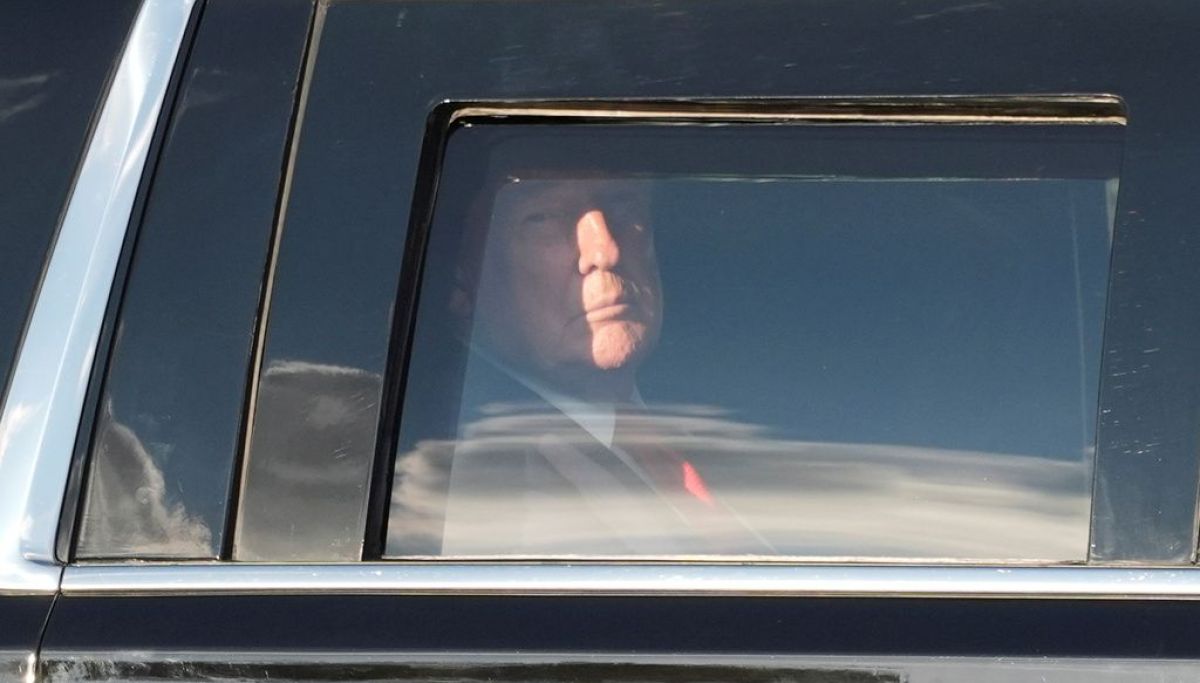
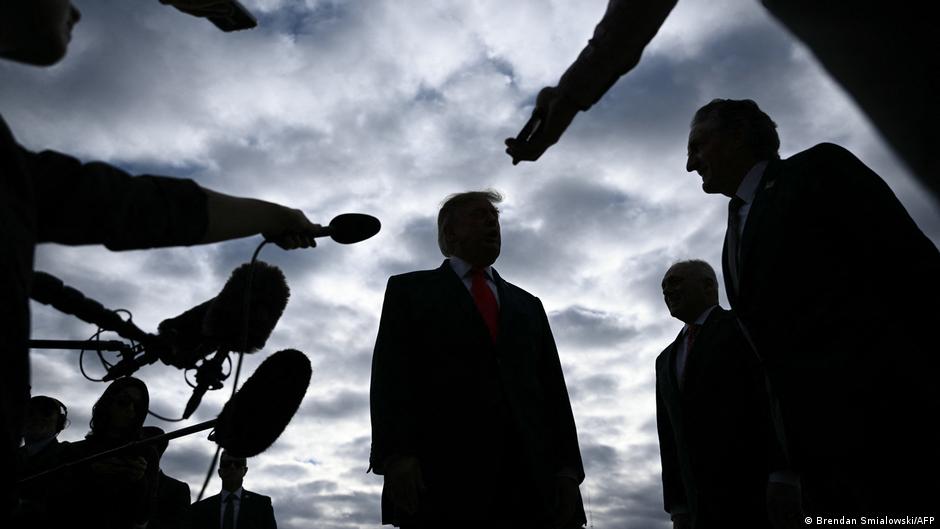
Photo via The Guardian

A Democratic-controlled Congress will likely try to constrain Trump’s foreign adventures

Read the original at The Guardian ↗
Cite

Roth, A., & correspondent, g. a. (2026, November 5). A Democratic-controlled Congress will likely try to constrain Trump’s foreign adventures. The Guardian. https://www.theguardian.com/us-news/2026/nov/05/democrats-trump-foreign-policy-analysis

Dated from the outlet's own feed. Check the original for its byline.

The Guardian · collected 2026-11-05 · by Andrew Roth, global affairs correspondent

Quick Summary

Following the midterm elections where Democrats gained control of both houses of Congress, there is anticipation for increased scrutiny and potential constraints on President Donald Trump's foreign policies, particularly regarding his actions in Iran. Key Republicans like JD Vance attribute the Republican losses to the impact of these policies on inflation and gasoline prices. With Democrats now in a position to influence budget decisions, they are expected to use this leverage to challenge funding for military operations related to Iran and possibly other conflicts, such as Yemen and Lebanon.Democrats will aim to limit Trump's ability to conduct foreign wars through financial restrictions, starting with negotiations during the upcoming lame duck session of Congress.
Written by AI on 2026-11-05, from this article's own text only (the story summary below draws on all the coverage).

AI analysis

Story summary

As of November 3, 2026, the U.S. midterm elections concluded with a decisive victory for the Democratic Party, which took control of both the House of Representatives and the Senate, stripping President Donald Trump's Republican party of their majorities in Congress. Democrats secured over 260 seats in the House and at least 56 seats in the Senate, marking a significant shift from previous expectations that they would only capture one chamber.

The elections were held amid rising concerns about affordability issues under Trump’s presidency, despite his reassurances to the contrary. Voter turnout was near-record high, with over 122 million ballots counted, reflecting widespread dissatisfaction among Americans with the state of the country and policies enacted during Trump's term.

Political analysts had initially predicted a challenging path for Democrats due to factors like voter fatigue and regional strongholds traditionally supporting Republicans. However, Democratic candidates performed exceptionally well across several previously Republican-held states such as Texas, South Carolina, and Kansas.

This outcome could significantly impact U.S. domestic policy over the next two years but may also escalate existing trade tensions and conflicts with global partners like China, given Trump’s continued hardline stance on foreign relations despite the new political landscape in Washington.

Written for “US Midterm Elections Results” on 2026-11-05, grounded in this article and the 721 other(s) covering the same event.
Why this leaning score
The article's own words the score was based on. Each is quoted verbatim and was checked against the article text before being stored, so you can find it in the original.
Reading Leans left (beta estimate) Confidence high
Leaning: leans left for article 130919 (high confidence, 4 verified quotes) · logged 2026-11-05

Story

📰 US Midterm Elections Results
Politics · 722 article(s) covering the same event. Compare every outlet's account →

Compared with similar articles

This article reads leans left and hedges 18% of its claims. Each row says how that neighbour differs.
Dawn
⚖️ Leans left Hedges 18 of 50 claims Outlet record 72/100
Washington Examiner
⚖️ Leans left Hedges 0 of 7 claims Outlet record 69/100
“The articles discuss different aspects of foreign policy impacts on elections, but describe distinct phases: Article A focuses on Trump's promise from his victory speech in 2024, while Article B discusses the aftermath and implications for his policies post-election.”
The Straits Times
⚖️ Leans left Hedges 9 of 27 claims Outlet record 66/100
The Straits Times
⚖️ Leans left Hedges 9 of 36 claims Outlet record 66/100
“While both articles discuss the impact of US midterm elections on foreign policy and relations with Iran, they are reporting on different aspects and outcomes rather than the exact same specific incident.”
South China Morning Post
⚖️ Leans left Hedges 2 of 3 claims Outlet record 62/100
“The articles discuss different aspects of the political aftermath following an election, rather than a single specific incident.”
The Straits Times
⚖️ Leans left Hedges 9 of 36 claims Outlet record 66/100
“The articles discuss similar political implications following the US midterm elections but describe different aspects of their outcomes and impacts.”
The Sydney Morning Herald
⚖️ Leans strongly left further left than this Hedges 2 of 22 claims Outlet record 61/100
South China Morning Post
⚖️ Centre further right than this Hedges 1 of 8 claims Outlet record 62/100
“The articles discuss different aspects of the political changes resulting from the midterm elections, with Article A focusing on the impact on Trump's foreign policy and potential investigations by a Democratic-controlled Congress, while Article B focuses on how these changes affect US-China relations.”
Semafor
⚖️ Leans left Hedges 4 of 5 claims Outlet record 59/100
“While both articles discuss the implications of midterm election results for President Trump's term, they cover different aspects and outcomes from distinct days.”
Deutsche Welle
Hedges 17 of 67 claims Outlet record 95/100
“The articles discuss different aspects of the election outcome's implications for Trump's policies rather than a single specific incident.”
How this article was measured signals, leaning charts, publisher record, byline, topics and claims

Signals How these are calculated →

Claims extracted
33
sentences that state something as happening or true
Uncertain
18%
6 of 33 hedged ("reportedly", "may", "according to")
Leaning
Leans left
of the writing, not the subject · beta estimate
Publisher signals
66/100
The Guardian's corrections and hedging, across everything collected from it. Not a measure of accuracy.
Outlets on this story
722
Politics
Same framing elsewhere
1
articles that frame the event the way this one does
Analyzed 2026-11-05 · how these are computed

How this is being covered How these are calculated →

Article leaning vs. publisher reliability
Source leaning vs. consistency

Publisher

The Guardian · 2089 article(s) · 6 correction(s) detected
Running correction rate · 6 correction(s)

Who wrote this

Andrew Roth
5 article(s) here · 1 carrying a prediction
🔮 In a rare occurrence, a US election may have actually been decided by foreign policy.
🔮 Donald Trump has said that the US will end military aid to Israel at the end of this year in a surprise election day announcement that appeared to be targeted at voters sceptical of US support for Israel and the war in Gaza.
🔮 So, how could the war affect US voters at the polls?
🔮 However the bill faced last-minute hurdles in Congress as members of the Republican party’s isolationist wing were joined by Democrats who warned that Trump could use the bill’s new tariffs authority against allies instead.
🔮 Rubio said that he would seek $45m (£33m) in additional funding from Congress towards efforts aimed at “dismantling these terrorist groups”, although he did not go into details.
Also by Andrew Roth
Nothing else under this byline is closely related to this article, so these are simply their most recent.
global affairs correspondent
1 article(s) here · 1 carrying a prediction
🔮 In a rare occurrence, a US election may have actually been decided by foreign policy.
The only article under this byline in the corpus.

Topics

Congress Democrats Iran Pentagon Republicans

Subjects

Democrats NORP · 11× Iran GPE · 9× Trump PERSON · 8× Congress ORG · 7× Pentagon ORG · 2× Republicans NORP · 2× Yemen GPE · 2× Americans NORP · 1× Donald Trump’s PERSON · 1× Israel GPE · 1×

Narrative

And in the coming months, the president is going to face severe headwinds on those policies as Democrats storm back into control of Congress, threatening investigations of some of his top envoys and Pentagon contractors, big fights over budgets linked to the Iran war, and greater scrutiny of US relationships with allies such as Israel.
framing: assertive · carried by 1 article(s) · first seen 2026-11-05
🔮 In a rare occurrence, a US election may have actually been decided by foreign policy.

Claims (33 extracted, 6 hedged)

In a rare occurrence, a US election may have actually been decided by foreign policy. uncertain
election → decide → policy
Donald Trump’s war in Iran and international tariffs are seen as playing a key role in the inflationary pressures that drove so many Americans to vote against his party on Tuesday in what has been described as a “generational wipeout” for the Republicans. asserted
what → see → Republicans
And in the coming months, the president is going to face severe headwinds on those policies as Democrats storm back into control of Congress, threatening investigations of some of his top envoys and Pentagon contractors, big fights over budgets linked to the Iran war, and greater scrutiny of US relationships with allies such as Israel. asserted
Democrats → come → Israel
While Democrats plot their strategy, the civil war within the Republican party has already begun. asserted
war → plot → party
JD Vance was early out of the gate, announcing in a postmortem on X that the Republicans’ shellacking was directly linked to Trump’s decision to strike Iran. asserted
shellacking → announce → Iran
“The reason we lost is the war,” he said. asserted
he → lose → ?
“The president himself said so last night.” asserted
president → say → ?
Soon Donald Trump Jr was chiming in: “Every word of this is 💯💯💯.” asserted
word → chime → this
Trump Sr partly confirmed the vice-president’s analysis, admitting that the war had pushed gasoline prices up. asserted
war → confirm → prices
But he added that he believed the Iran war was worth it, and that “we had to do it, we continue to do it”. asserted
we → add → it
“Long term, it’s the only answer,” he said. asserted
he → ’ → ?
“You can’t let Iran have a nuclear weapon.” asserted
Iran → let → weapon
Seeing little left to lose, he may resume strikes in the upcoming months, seeking to secure his legacy with fewer concerns about voter backlash with the midterms already passed. uncertain
midterms → see → backlash
Democrats will hold a majority in both houses of Congress, but won’t be able to override a presidential veto to force legislation into law. asserted
Democrats → hold → law
So the likely battles in the coming months will be focused on finding leverage to constrain the White House – most clearly through Congress’s control of the budget. asserted
battles → come → budget
“The Democrats taking control of both houses gives them unprecedented leverage – especially using the budget,” said Ryan Crocker, a former career diplomat and diplomatic fellow at the Middle East Institute, a thinktank. asserted
Crocker → take → Institute
“We have seen the [Pentagon] request to dramatically increase funding to support the war with Iran come into substantial criticism from Democrats, and I think that will be the first battleground.” asserted
that → see → Democrats
Democrats will have an early opportunity to pressure the Trump administration during the lame duck session of Congress in December, when funding for the government through a continuing resolution is set to expire. asserted
funding → have → resolution
They could also hold hostage the passage of the National Defense Authorization Act, demanding concessions on Iran or limits on Trump’s authority in order to pass the Senate version of the bill that would authorise about $1.15tn in national defense spending for 2027. uncertain
that → hold → 2027
One progressive foreign policy thinktank suggested inserting language into the continuing resolution that would prevent Trump from using the money authorised by Congress to fund the war in Iran, as well as in Yemen, Lebanon and Gaza. uncertain
that → suggest → Yemen
But shutting down the government could be a “two-edged sword”, said Crocker, and Democrats will have to be careful not to overplay their hand. uncertain
Democrats → shut → hand
“American voters were pretty angry in this midterm election – they were voting against President Trump and his actions and policies as much as they were voting for [Democrats] – and that means that Democrats will have to be careful how they use this power.” asserted
they → vote → power
Democrats had little success in 2019 restraining Trump from unpopular foreign policy decisions like an abrupt withdrawal from Syria that abandoned Kurdish allies or to end his support for the Saudi war in Yemen. asserted
that → have → Yemen
When Congress managed to pass a bipartisan resolution that invoked the War Powers Act to end US support for Saudi Arabia in the deadly war, Trump simply vetoed it. asserted
Trump → manage → it
Even with control of both houses of Congress, it will remain difficult for Democrats to constrain Trump’s power to dictate foreign policy over tariffs, the war in Iran or aid for Ukraine such as intelligence sharing, deliveries of desperately needed Patriot interceptors or access to the Starlink satellite internet service. asserted
Democrats → remain → service
“It is worth watching how and where the new Congress chooses to convert its investigative energies into real policy constraints on the executive branch,” wrote Jennifer Hendrixson White, a visiting scholar in the American Statecraft Program at the Carnegie Endowment for International Peace. asserted
White → watch → Peace
“Congressional investigations into the Iran war or defense contracts with Trump-linked firms could pressure or embarrass the president, but it is less clear whether a Democratic-controlled House or Senate would be able to convert those investigations into meaningful actions. uncertain
House → link → actions
Still, the elections have upended the status quo for foreign policy in both parties, and Trump will increasingly face pressure from his own allies to end the war in Iran. asserted
Trump → upend → Iran
Vance, in his public statement about the elections, prescribed his cure for what is ailing the Republican party: “1) End the war 2) Focus on cost of living/inflation 3) Put America First 4) Change our relationship to Israel. asserted
what → prescribe → Israel
That also marks a dangerous moment for Israel, wrote Amit Segal, a political analyst close to the Netanyahu administration, which “now faces its biggest challenge in Washington since at least the 1975 ‘reassessment’, when Ford and Kissinger froze arms deals to pressure Jerusalem,” he wrote. asserted
he → mark → Jerusalem
Abdul El-Sayed, the Michigan Democrat who will be the first sitting Muslim senator next year, illustrated how far US policy has shifted in this election as he praised Trump’s decision to end military aid to Israel at the end of this year. asserted
he → sit → year
“I think the president is actually right on this policy,” he said. asserted
he → think → policy
“I’d also like to see us stop selling weaponry that gets used to do the worst things, including genocide and apartheid, to Israel.” asserted
that → like → Israel

💬Give feedback · no sign-in needed

No sign-in needed for now. Your note is sent without a name, so it cannot be answered.

🕘History 🎫Support