Photo via Toronto Star

How Trump and Republicans lost the 2026 midterm elections, according to The AP Voter Poll

Read the original at Toronto Star ↗
Cite

Lodhi, H., Boak, J., & Yoo, H. (2026, November 4). How Trump and Republicans lost the 2026 midterm elections, according to The AP Voter Poll. Toronto Star. https://www.thestar.com/news/world/united-states/how-trump-and-republicans-lost-the-2026-midterm-elections-according-to-the-ap-voter-poll/article_a40c0df0-74ee-5b57-aef7-2079ad6f155c.html

Dated from the outlet's own feed. Check the original for its byline.

Toronto Star · collected 2026-11-04 · by Humera Lodhi, Josh Boak, Hyojin Yoo

Quick Summary

The AP Voter Poll indicates that Donald Trump's influence negatively impacted Republican candidates in the 2026 midterm elections, with many voters feeling disillusioned by his promises and frustrated with high inflation. The poll shows Democrats gained an advantage as voters perceived Republicans as not addressing economic hardships adequately, particularly in Texas where Democratic Senate candidate James Talarico won significant support from those affected by inflation. Additionally, voter concern about government corruption was highlighted as a crucial factor influencing their decisions.
Written by AI on 2026-11-04, from this article's own text only (the story summary below draws on all the coverage).

AI analysis

Story summary

In the U.S. midterm elections on November 3, 2026, Democrats secured control of Congress, ending a decades-long Republican dominance. This shift came despite initial concerns about Trump's unpopularity and Republicans' chances in the Senate. Key factors included high turnout among Asian-American voters and younger demographics, fueling what was described as a "blue wave" for Democrats. The election results saw Democrats gain significant sway over war spending and Trump’s foreign policy decisions, notably his controversial war with Iran. Social media reactions highlighted Trump blaming the Iran conflict for Republican losses while celebrating historic victories like Abdul El-Sayed's Senate win in Michigan.

Written for “Democrat's Sweep Congress Midterms” on 2026-11-05, grounded in this article and the 515 other(s) covering the same event.
Why this leaning score
The article's own words the score was based on. Each is quoted verbatim and was checked against the article text before being stored, so you can find it in the original.
Reading Leans left (beta estimate) Confidence high
Leaning: leans left for article 128633 (high confidence, 4 verified quotes) · logged 2026-11-04

Story

📰 Democrat's Sweep Congress Midterms
Politics · 516 article(s) covering the same event. Compare every outlet's account →

Compared with similar articles

This article reads leans left and hedges 6% of its claims. Each row says how that neighbour differs.
The Guardian
⚖️ Leans left Hedges 1 of 5 claims Outlet record 66/100
Washington Examiner
⚖️ Leans left Hedges 1 of 37 claims Outlet record 69/100
The Guardian
⚖️ Leans left Hedges 2 of 93 claims Outlet record 66/100
BBC News
Hedges 1 of 67 claims Outlet record 66/100
The Guardian
⚖️ Leans strongly left further left than this Hedges 5 of 42 claims Outlet record 66/100
NBC News
Hedges 4 of 41 claims Outlet record 78/100
The Independent
⚖️ Leans left Hedges 2 of 9 claims Outlet record 59/100
“The articles discuss the overall outcomes and voter sentiment regarding the 2026 midterm elections, but they do not describe the same specific incident or moment.”
Washington Examiner
⚖️ Leans strongly left further left than this Hedges 9 of 36 claims Outlet record 69/100
The Independent
Hedges 5 of 41 claims Outlet record 59/100
How this article was measured signals, leaning charts, publisher record, byline, topics and claims

Signals How these are calculated →

Claims extracted
52
sentences that state something as happening or true
Uncertain
6%
3 of 52 hedged ("reportedly", "may", "according to")
Leaning
Leans left
of the writing, not the subject · beta estimate
Publisher signals
64/100
Toronto Star's corrections and hedging, across everything collected from it. Not a measure of accuracy.
Outlets on this story
516
Politics
Same framing elsewhere
1
articles that frame the event the way this one does
Analyzed 2026-11-04 · how these are computed

How this is being covered How these are calculated →

Article leaning vs. publisher reliability
Source leaning vs. consistency

Publisher

Toronto Star · 11614 article(s) · 28 correction(s) detected
Running correction rate · 28 correction(s)
2026-10-26
Correction
2026-10-24
Correction
2026-10-07
Correction
2026-09-24
Correction

Who wrote this

Humera Lodhi
3 article(s) here · 1 carrying a prediction
🔮 Voters could see it clearly in their receipts from grocery stores and gasoline stations.
🔮 Republicans in Tuesday’s midterm races were hoping their candidates could hold onto the winning coalition that President Donald Trump assembled in the 2024 presidential election, but The AP Voter Poll suggests the GOP has lost ground with at least one key group.
Also by Humera Lodhi
Nothing else under this byline is closely related to this article, so these are simply their most recent.
Josh Boak
14 article(s) here · 1 carrying a prediction
🔮 Voters could see it clearly in their receipts from grocery stores and gasoline stations.
🔮 WASHINGTON (AP) — President Donald Trump would prefer that voters not worry about inflation.
🔮 Punching above their weight Bill Pulte has joined Trump for at least five legs of the midterm marathon so far, a sign that his status inside the administration is far higher than his title — director of the Federal Housing Finance Agency — would suggest. The scion of a homebuilding company, Pulte is a Trump pal who was for a brief period also the acting director of national intelligence and oversaw layoffs in that office.
🔮 PERRY, Ga. (AP) — President Donald Trump on Saturday announced that Audi will build an automobile plant in Georgia as he tries to deliver on his promise to bolster American manufacturing in the final days before the midterm elections.
🔮 President Donald Trump on Friday told a rally for candidates in South Florida that U.S. warships returning from the Middle East could stop over in Cuba on their way back from the Iran war, his latest suggestion of taking an interventionist approach to the nearby country.
🔮 In his inaugural address last year, the Republican pledged: “I will direct all members of my Cabinet to marshal the vast powers at their disposal to defeat what was record inflation and rapidly bring down costs and prices.”
🔮 The outcome will be decided in places like Dayton, which once sprouted factories because it led America in patents per capita.
🔮 Ohio Republican Party Chairman Alex Triantafilou recently told The Associated Press that he hoped Trump would visit his state, where he won by 11 percentage points in 2024.
🔮 The biggest policy announcement of the visit was modest: an agreement to extend by two months a trade truce that had been set to expire in November.
🔮 That tough talk helped Trump get to the White House a decade ago, but since then, he increasingly speaks in glowing terms about Chinese President Xi Jinping, the geopolitical rival Trump will fete on Thursday with a state dinner.
Also by Josh Boak
Nothing else under this byline is closely related to this article, so these are simply their most recent.
All 14 articles by Josh Boak →
Hyojin Yoo
1 article(s) here · 1 carrying a prediction
🔮 Voters could see it clearly in their receipts from grocery stores and gasoline stations.
The only article under this byline in the corpus.

Topics

Democrats House Republican Republicans Senate

Subjects

Trump PERSON · 7× Democrats NORP · 5× House ORG · 4× Senate ORG · 4× Congress ORG · 3× Democratic NORP · 3× Republican NORP · 3× Republicans NORP · 3× Iran GPE · 2× Texas GPE · 2×

Narrative

Republicans chose weak candidates Trump endorsed Republicans who turned off voters — and that put areas that were once safely with the GOP at risk. After Sen. Lindsey Graham of South Carolina died in July, the president chose the late senator’s sister, Darline Graham, to fill his seat.
framing: assertive · carried by 1 article(s) · first seen 2026-11-04
🔮 Voters could see it clearly in their receipts from grocery stores and gasoline stations.

Claims (52 extracted, 3 hedged)

After more than a decade with Donald Trump at the epicenter of U.S. politics, most voters appear exhausted and exasperated by him, according to The AP Voter Poll, a survey of midterm voters in all 50 states. uncertain
voters → appear → states
The president’s failure to deliver on key promises — most prominently, his vows to tame inflation, which has worsened instead — clearly weighed on his fellow Republicans in Tuesday’s midterm elections for the House and the Senate. asserted
which → deliver → House
The polling shows that voters generally saw Trump as being more focused on his own fortune and gold-leafed existence than their needs. asserted
voters → show → needs
The president also helped elevate candidates with obvious flaws, amplifying their struggles in an already challenging year. asserted
president → help → year
He suggested in a Tuesday evening interview with Fox News Channel that Democrats “fought hard” and that the Republican base “didn’t like the candidates” he had endorsed because some of his picks were not fully loyal to him. uncertain
some → suggest → him
But the poll also contains a serious note of caution for Democrats. asserted
poll → contain → Democrats
Many voters dislike the party — and while Democrats hold an advantage on key issues such as the economy, their edge is relatively slim. asserted
edge → dislike → economy
About 7 in 10 voters said Congress is not doing enough to provide checks and balances for the president, setting the bar for Democrats who won back the Senate and the House. asserted
who → say → Senate
Inflation crushed Republicans It was impossible for GOP candidates to hide from inflation. asserted
candidates → crush → inflation
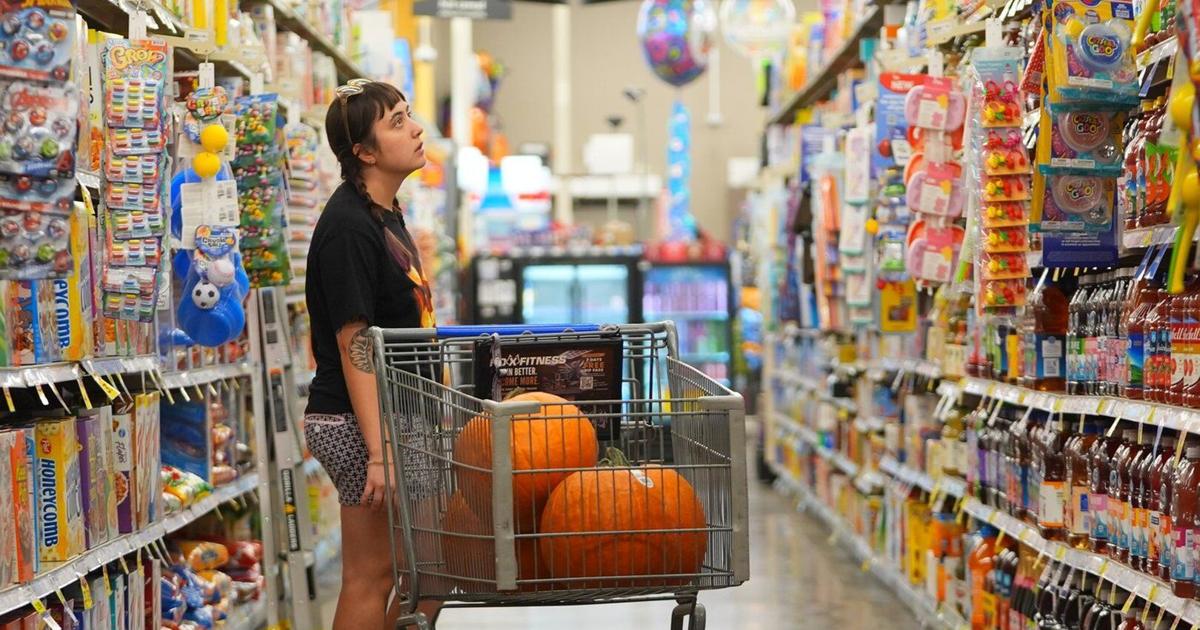
Voters could see it clearly in their receipts from grocery stores and gasoline stations. uncertain
Voters → see → stores
And even in Republican strongholds such as Texas, the drag caused by inflation helped Democrats. asserted
drag → cause → Democrats
About 2 in 10 Texas voters said inflation had imposed “severe” hardship on them and their family — and about three-quarters of this group backed Democrat James Talarico for the Senate. asserted
quarters → say → Senate
An additional 6 in 10 voters, roughly, said inflation had led to “moderate” hardship, and Talarico won the majority of these voters, too. asserted
Talarico → say → voters
That same pattern repeated in state after state. asserted
pattern → repeat → state
Nationally, voters who said they were “very concerned” about everyday costs — including groceries, healthcare and gas — overwhelmingly said they voted for the Democratic candidate in their local U.S. House race. asserted
they → say → race
But it wasn’t just the inflation itself that mattered. asserted
that → matter → ?
Voters nationwide pinned the blame on Trump for his tariffs, his war in Iran and his unfulfilled campaign promise two years ago to bring down prices. asserted
Voters → pin → prices
Asked about the impact of Trump’s policies, about two-thirds of voters nationwide said they had made the economy worse. asserted
economy → ask → voters
And out of this group, about 8 in 10 said they backed the Democratic candidate. asserted
they → say → candidate
Corruption was a major concern More than half of voters nationally said government corruption was “crucial” for their vote for Congress. asserted
corruption → say → Congress
That was a little higher than the share who said the cost of living was “crucial,” a striking finding in a year when about 6 in 10 voters said they were personally “very concerned” about the cost of food and groceries. asserted
they → say → food
Meanwhile, despite Republicans’ suggestion that voters cared little about Trump making more than $1 billion last year from meme coins and cryptocurrency, most voters saw Trump as obsessed with his own interests. asserted
voters → care → interests
During his second term, Trump solicited donations from powerful companies to build his desired White House ballroom after having surprised the country by rapidly demolishing what had been the building’s East Wing. asserted
what → solicit → country
That tenor set at the top spilled over into business deals for his family and other deals by his associates involving pardons and federal policies. asserted
tenor → set → pardons
Ultimately, about two-thirds of voters said Trump does not have the right priorities — and the overwhelming majority of these voters supported Democratic House candidates. asserted
majority → say → candidates
Voters want an assertive Congress asserted
Voters → want → Congress
Much of the Republican-controlled House and Senate barely objected to his whims. asserted
Much → control → whims
He laid off federal workers, imposed sweeping new tariffs, launched the war with Iran, remodeled Washington in gold paint, threatened the Federal Reserve, the Kennedy Center and the Smithsonian Institution and bullied a bevy of longtime allies. asserted
He → lay → allies
Voters made it clear that they want more congressional oversight. asserted
they → make → oversight
About 7 in 10 voters said Congress was not doing enough to provide checks and balances for the presidency, including about 4 in 10 Republicans. asserted
Congress → say → Republicans
Swing voters don’t really love Democrats, even if they voted for them Despite Democrats’ victories, voters did not deliver a ringing endorsement of the party as a whole. asserted
voters → love → whole
Many voters expressed frustration with both parties: On the economy, foreign policy, healthcare, taxes and immigration, roughly 2 in 10 voters said “neither” party was better equipped to handle these issues. asserted
party → express → issues
An even larger share of voters said neither party would be better at addressing government corruption or artificial intelligence. asserted
party → say → corruption
Those skeptical voters generally broke for Democrats. But it wasn’t because the party was overwhelmingly popular. asserted
party → break → Democrats
Only about half of voters had a “somewhat” or “strongly” favorable view of the Democratic Party. asserted
half → have → Party
That was higher than the approximately 4 in 10 who viewed the GOP positively, but not by much. asserted
who → view → much
About 2 in 10 voters who supported Democratic candidates had a negative view of the party as a whole. asserted
who → support → whole
Instead, in key races, voters seemed to be looking to Democratic candidates for change. asserted
voters → seem → change
In Maine, for instance, most voters who said having a candidate with “the right experience” mattered most to their Senate decision chose Republican incumbent Susan Collins. asserted
having → say → Collins
But more voters cared about bringing about “needed change,” and they favored Democrat Troy Jackson. asserted
they → care → Jackson
…and 12 more, not listed.

💬Give feedback · no sign-in needed

No sign-in needed for now. Your note is sent without a name, so it cannot be answered.

🕘History 🎫Support