Photo via The Sydney Morning Herald

All the money said the Republicans and Trump would win. They blew it

Read the original at The Sydney Morning Herald ↗
Cite

Fernandes, C. (2026, November 4). All the money said the Republicans and Trump would win. They blew it. The Sydney Morning Herald. https://www.smh.com.au/world/north-america/all-the-money-said-the-republicans-and-trump-would-win-they-blew-it-20261104-p61b7o.html?ref=rss&utm_medium=rss&utm_source=rss_feed

Dated from the outlet's own feed. Check the original for its byline.

The Sydney Morning Herald · collected 2026-11-04 · by Clinton Fernandes

Quick Summary

The Republican Party's significant financial advantage in the U.S. midterm elections did not secure them victory, highlighting a shift from decades of fundraising dominance that previously translated to electoral success 92% of the time. Despite favorable data analytics and targeted digital outreach to key demographics like white voters without college degrees, issues such as high inflation and low approval ratings for President Trump's policies led many potential supporters to feel disillusioned and less motivated to vote Republican.
Written by AI on 2026-11-04, from this article's own text only (the story summary below draws on all the coverage).

AI analysis

Story summary

As of November 4, 2026, Democrats won control of both chambers of Congress in the U.S. midterms, marking a significant defeat for Republicans and President Donald Trump's handpicked candidates. The election results led to historic defeats with Democrats flipping Senate seats in states like Iowa, Kansas, Maine, North Carolina, Ohio, South Carolina, and Texas. This outcome positioned New Yorkers Chuck Schumer and Hakeem Jeffries to lead the Senate and House respectively, signaling a shift in political power. Trump's staunch base expressed disbelief at the results, with MAGA influencers questioning how this was possible despite Trump's efforts to support Republican candidates across the country. The Democrats' victory is seen as a rebuke of Trump’s presidency, branding him a "lame duck" president.

Written for “Midterm Elections Blue Wave” on 2026-11-04, grounded in this article and the 99 other(s) covering the same event.
Why this leaning score
The article's own words the score was based on. Each is quoted verbatim and was checked against the article text before being stored, so you can find it in the original.
Reading Leans left (beta estimate) Confidence high
Leaning: leans left for article 127826 (high confidence, 2 verified quotes) · logged 2026-11-04

Story

📰 Midterm Elections Blue Wave
Politics · 100 article(s) covering the same event. Compare every outlet's account →

Compared with similar articles

This article reads leans left and hedges 8% of its claims. Each row says how that neighbour differs.
The Guardian
⚖️ Leans strongly left further left than this Hedges 7 of 31 claims Outlet record 66/100
Toronto Star
⚖️ Leans strongly left further left than this Hedges 2 of 38 claims Outlet record 64/100
“Article A discusses voter motivations and economic issues leading up to the midterms, while Article B reports on the immediate aftermath of poll closure and money's limited influence in election outcomes.”
Semafor
Hedges 3 of 27 claims Outlet record 59/100
“Article A discusses the White House's reaction to midterm election results, while Article B focuses on the financial aspects and implications of the midterms for the Republican Party. Although both articles cover the same general topic (the US midterm elections), they describe different facets and outcomes.”
Toronto Star
⚖️ Leans left Hedges 1 of 43 claims Outlet record 64/100
Washington Examiner
⚖️ Leans strongly left further left than this Hedges 9 of 36 claims Outlet record 69/100
Washington Examiner
⚖️ Leans left Hedges 2 of 18 claims Outlet record 69/100
“While both articles discuss the 2026 midterm elections and the performance of the Republican party, they describe different aspects or phases of the election cycle: Article A focuses on predictions before Election Day, while Article B discusses the immediate aftermath of polls closing.”
The Guardian
⚖️ Leans strongly left further left than this Hedges 1 of 19 claims Outlet record 66/100
“The articles discuss general outcomes of the US midterm elections but do not describe the exact same incident or occurrence.”
Euronews
⚖️ Leans strongly left further left than this Hedges 15 of 86 claims Outlet record 60/100
“Article A discusses the lead-up and context before the midterm elections, while Article B covers immediate analysis after polls closed, indicating they describe different stages of the same larger process.”
The Guardian
⚖️ Leans left Hedges 7 of 57 claims Outlet record 66/100
“Article A describes the day of the US midterm elections, while Article B discusses the aftermath and analysis of those elections.”
Evening Standard
⚖️ Leans left Hedges 1 of 11 claims Outlet record 64/100
“The articles discuss different aspects of the midterm elections, with Article A focusing on voter sentiment and policy impacts, while Article B focuses on fundraising and money's influence.”
How this article was measured signals, leaning charts, publisher record, byline, topics and claims

Signals How these are calculated →

Claims extracted
38
sentences that state something as happening or true
Uncertain
8%
3 of 38 hedged ("reportedly", "may", "according to")
Leaning
Leans left
of the writing, not the subject · beta estimate
Publisher signals
61/100
The Sydney Morning Herald's corrections and hedging, across everything collected from it. Not a measure of accuracy.
Outlets on this story
100
Politics
Same framing elsewhere
1
articles that frame the event the way this one does
Analyzed 2026-11-04 · how these are computed

How this is being covered How these are calculated →

Article leaning vs. publisher reliability
Source leaning vs. consistency

Publisher

The Sydney Morning Herald · 6052 article(s) · 15 correction(s) detected
Running correction rate · 15 correction(s)

Who wrote this

Clinton Fernandes
2 article(s) here · 1 carrying a prediction
🔮 The final results are coming in for states such as Florida and will land in a few days for others such as California and Alaska.
🔮 Building such a consensus would help Anthropic evade criminal or civil charges resulting from harm caused by its software.
Also by Clinton Fernandes
Nothing else under this byline is closely related to this article, so these are simply their most recent.

Topics

California Florida Republican The Republican Party the Republican Party’s

Subjects

Trump PERSON · 7× Republican NORP · 4× Americans NORP · 2× Democrats NORP · 2× The Republican Party ORG · 2× the Republican Party’s ORG · 2× Alaska GPE · 1× California GPE · 1× Florida GPE · 1× Iran GPE · 1×

Narrative

The Republican Party faced a completely hostile political environment: high prices at the petrol station and the supermarket, a stalemated war with Iran, for which President Donald Trump proudly took responsibility, public hostility toward data centres that feed into fears about job losses due to artificial intelligence, and the lowest presidential approval rating before a midterm election in 80 years, when President Harry S. Truman and the Democrats were demolished in 1946.
framing: assertive · carried by 1 article(s) · first seen 2026-11-04
🔮 The final results are coming in for states such as Florida and will land in a few days for others such as California and Alaska.
2026-11-04 · The Sydney Morning Herald
All the money said the Republicans and Trump would win. They blew it · assertive framing

Claims (38 extracted, 3 hedged)

Polls have just closed in the US midterm elections. asserted
Polls → close → elections
The final results are coming in for states such as Florida and will land in a few days for others such as California and Alaska. asserted
results → come → California
One conclusion can be drawn immediately: the Republican Party’s huge advantage in money couldn’t protect it from a disenchanted electorate. asserted
advantage → draw → electorate
This marks a dramatic change after more than four decades in which the top fundraiser has won 92 per cent of the time. asserted
fundraiser → mark → time
In this sense, the midterms revealed the limits of the power of money in a democracy. asserted
midterms → reveal → democracy
The Republican Party faced a completely hostile political environment: high prices at the petrol station and the supermarket, a stalemated war with Iran, for which President Donald Trump proudly took responsibility, public hostility toward data centres that feed into fears about job losses due to artificial intelligence, and the lowest presidential approval rating before a midterm election in 80 years, when President Harry S. Truman and the Democrats were demolished in 1946. asserted
Truman → face → 1946
The accumulated force of these factors should have swept Republican candidates out of politics the way a meteorite cleared out Earth’s dinosaurs. asserted
meteorite → accumulate → dinosaurs
For historical reasons, however, there was still a chance three months ago that the Republican Party could have staged a comeback. uncertain
Party → be → comeback
That would have required it to maintain a laser-like focus on mobilising Americans who generally don’t vote in midterms. asserted
who → require → midterms
A key demographic group that contributed to Trump’s victory in 2016 and his political rebirth in 2024 is the “white voter without a college degree”. asserted
that → contribute → degree
They are the backbone of his MAGA movement, and about two-thirds of them voted for him in each of his presidential campaigns. asserted
thirds → vote → campaigns
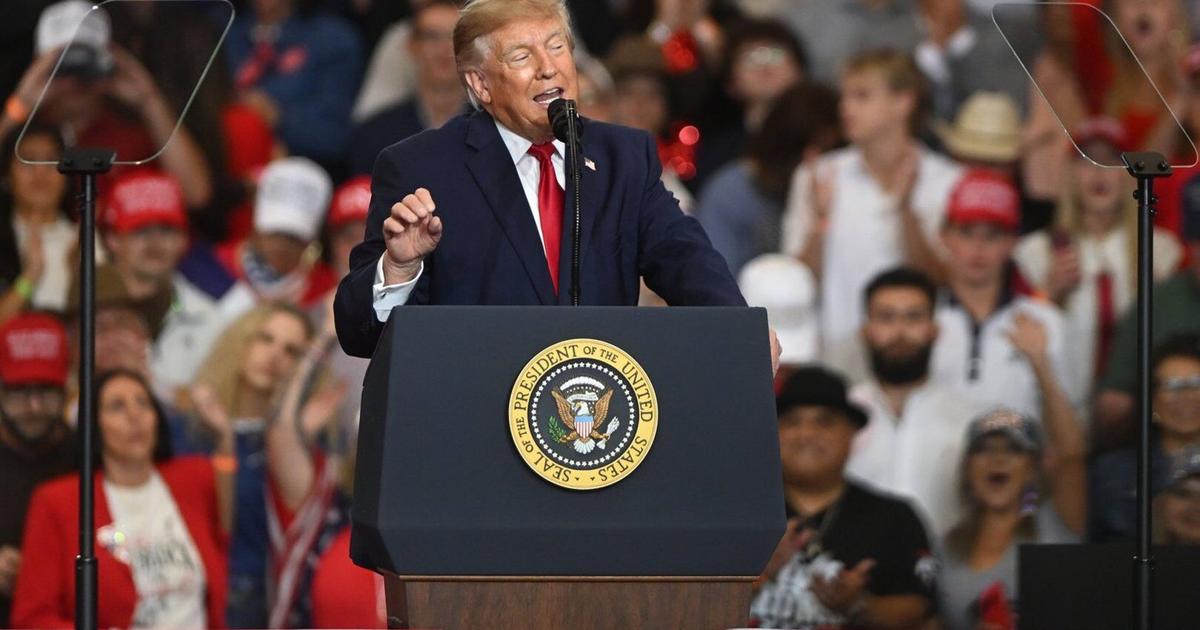
He appealed to them at public rallies to “pretend I’m on the ticket” and vote Republican. asserted
I → appeal → Republican
It is no accident that Trump has been photographed accompanied by various cage fighters and boxers, and sought comfort in their soothing balm of sweat, blood and male aggression. asserted
Trump → photograph → sweat
If they couldn’t get positive energy for their policies, they had to summon up negative energy to get a demoralised and frustrated base into the polling booths to vote against their enemies. asserted
they → get → enemies
But the problem was that these voters expressed intense frustration with their own party, citing unfulfilled promises and economic frustrations. asserted
voters → express → promises
As such, they were inherently forward-looking and grievance-driven at the polling booths, and wanted solutions rather than reminders of what Trump had already done. asserted
Trump → drive → what
Trump’s undisciplined talk of ballrooms, reflecting pools, athletes’ bodies and other diversions undermined the hundreds of millions spent on the campaign. asserted
talk → reflect → campaign
The Republicans used sophisticated data analytics to identify and reach key demographics using digital platforms YouTube, Twitch, and sports-adjacent podcasts, as well as traditional television advertising. asserted
Republicans → use → platforms
They highlighted cultural issues where they believed Democrats were out of step with more socially conservative or working-class voters. asserted
Democrats → highlight → voters
They invested in direct voter contact such as door-knocking, tracking early voting data, and following up with voters who have a history of voting Republican but hadn’t yet done so. asserted
who → invest → Republican
Their efforts were intended to prevent a drop-off in turnout among these specific voters. asserted
efforts → intend → voters
However, working-class Americans voted for Trump in the 2024 presidential election on economic grounds – specifically, inflation, petrol prices, and the cost of living under the Biden administration. asserted
Americans → vote → administration
Trump had promised them immediate economic relief. asserted
Trump → promise → relief
But for the whole of 2026, groceries have been more expensive, energy costs have risen and working-class voters felt their economic situation worsened. asserted
situation → rise → 2026
Ultimately, the avalanche of Republican money couldn’t pull Trump’s most important demographics out of their homes and into the voting booths. asserted
avalanche → pull → booths
Furthermore, the big money was deployed too late, forcing pro-Republican donors to pay much higher advertising rates because the pro-Democrats had used their funds to reserve advertising time much earlier, when it was cheaper. asserted
it → deploy → time
The result is that Trump-connected organisations sometimes paid more than five times what they would have paid if they moved earlier. asserted
they → connect → what
For example, during a football game a few weeks ago, Texas PAC was charged $US450,000 ($646,000) to air a single spot in the Austin market. asserted
PAC → charge → market
The Democratic candidate’s campaign paid $US50,000 for a spot during the same game in the same market, according to AdImpact. uncertain
campaign → pay → AdImpact
A major difference to previous decades is that the Republican Party no longer relies primarily on a broad corporate donor network of the kind associated with figures like George W. Bush. asserted
Party → rely → Bush
Under Trump, it depends heavily on a relatively small number of super-wealthy donors and political action committees. asserted
it → depend → donors
As US political scientist Paul Heidemann noted last week, such elite concentration has narrowed the party’s social base and disconnected party leaders from voter sentiment. asserted
concentration → note → sentiment
There was no-one to push back when Trump repeatedly called affordability a “fake word made up by the Democrats”. asserted
Trump → be → Democrats
That could change in 2028. uncertain
That → change → 2028
When the final results are known, they won’t be a Democratic meteorite hitting the Republican Party. asserted
they → know → Party
They will be a Democratic wave that takes the House Representatives. asserted
that → take → Representatives
And perhaps even a tsunami that takes the Senate. asserted
that → take → Senate
The Opinion newsletter is a weekly wrap of views that will challenge, champion and inform your own. asserted
that → challenge → own

💬Give feedback
🕘History 🎫Support