Photo via The Straits Times

NASA’s Swift satellite telescope heads for fiery re-entry 22 years after launch

Read the original at The Straits Times ↗
Cite

The Straits Times. (2026, November 4). NASA’s Swift satellite telescope heads for fiery re-entry 22 years after launch. The Straits Times. https://www.straitstimes.com/world/united-states/nasas-swift-satellite-telescope-heads-for-fiery-re-entry-22-years-after-launch

Dated from the outlet's own feed. Check the original for its byline.

The Straits Times · collected 2026-11-04 · by The Straits Times

Quick Summary

NASA’s Neil Gehrels Swift Observatory, launched in 2004, is set for re-entry into Earth's atmosphere early on November 4 after nearly 22 years in orbit. The satellite, weighing about 1,452 kg and valued at $500 million, was to be rescued by a retrieval mission this summer but the attempt failed when the rescue vehicle malfunctioned. With no onboard propulsion system, Swift has been drifting toward re-entry for months; NASA estimates that debris posing any risk to populated areas is highly unlikely.
Written by AI on 2026-11-04, from this article's own text only (the story summary below draws on all the coverage).

AI analysis

Story summary

As of November 4, 2026, NASA's Neil Gehrels Swift Observatory, which had been in orbit for nearly 22 years studying cosmic phenomena like gamma-ray bursts and supernovae, re-entered Earth's atmosphere over northern Sumatra. Most of the 3,200-pound satellite is expected to have burned up during re-entry due to atmospheric friction, with only a few denser components possibly surviving and reaching the ground. The U.S. Space Force had predicted the observatory would crash back to Earth on or around November 4th after years of intense solar activity accelerated its descent following a failed rescue mission in late October. Despite this, there were no reported injuries or damage from falling debris.

Written for “NASA Swift Telescope Plummets To Earth” on 2026-11-06, grounded in this article and the 15 other(s) covering the same event.

Story

📰 NASA Swift Telescope Plummets To Earth
Science · 16 article(s) covering the same event. Compare every outlet's account →

Compared with similar articles

This article reads unscored and hedges 7% of its claims. Each row says how that neighbour differs.
The Guardian
Hedges 2 of 21 claims Outlet record 66/100
The Straits Times
Hedges 1 of 16 claims Outlet record 66/100
ABC News (AU)
Hedges 0 of 3 claims Outlet record 67/100
CBS News
Hedges 1 of 26 claims Outlet record 69/100
ABC News (AU)
Hedges 7 of 39 claims Outlet record 67/100
CBC News
Hedges 2 of 18 claims Outlet record 60/100
CBS News
Hedges 1 of 26 claims Outlet record 69/100
New York Post
Hedges 3 of 14 claims Outlet record 66/100
South China Morning Post
Hedges 1 of 3 claims Outlet record 62/100
Dawn
Hedges 1 of 17 claims Outlet record 72/100
How this article was measured signals, leaning charts, publisher record, byline, topics and claims

Signals How these are calculated →

Claims extracted
14
sentences that state something as happening or true
Uncertain
7%
1 of 14 hedged ("reportedly", "may", "according to")
Leaning
not political
takes no side on a contested political question
Publisher signals
66/100
The Straits Times's corrections and hedging, across everything collected from it. Not a measure of accuracy.
Outlets on this story
16
Science
Same framing elsewhere
1
articles that frame the event the way this one does
Analyzed 2026-11-04 · how these are computed

How this is being covered How these are calculated →

Article leaning vs. publisher reliability
Source leaning vs. consistency

Publisher

The Straits Times · 4543 article(s) · 5 correction(s) detected
Running correction rate · 5 correction(s)

Who wrote this

The Straits Times
3012 article(s) here · 1 carrying a prediction
🔮 It would also tower over the Lincoln Memorial, directly across the Potomac River.
🔮 Pope Leo leaves on Friday for an ambitious 12-day trip across South America expected to attract millions-strong crowds, as the first US-born pope returns to a Catholic stronghold where he lived for decades as a missionary.
🔮 The 71-year-old head of the Catholic Church will in 12 days visit Uruguay, Argentina and Peru in one of the most intense papal foreign trips in decades, meeting political leaders, prisoners, the poor, as well as old friends.
🔮 For months, conspiracy-peddling supporters of US President Donald Trump spread baseless theories that the vote would be rigged.
🔮 Peru airport thwarts plot to smuggle 3,000 tarantulas in dirty socks AI generated LIMA – More than 3,000 tarantulas were seized at an airport in Lima before the furry crawlers could be smuggled to Germany, Peruvian authorities told AFP on Nov 5.
🔮 Senator Richard Blumenthal, who is set to take over as chair of the Permanent Subcommittee on Investigations, called on Apple, Meta, Google, Nvidia, Amazon.com, Microsoft and others who donated to the ballroom project to turn over records, as he sent warnings to targets of a number of different probes. Blumenthal also called on FCC Chair Brendan Carr to turn over documents about his agency’s handling of investigations into media companies and approval of the Paramount Skydance merger in 2025, and criticised Carr’s decision to order an early license review of Disney’s eight company-owned ABC stations.
🔮 Nov 5 - Democratic socialist-backed candidate Nithya Raman defeated incumbent Karen Bass in a closely fought race for Los Angeles mayor.
🔮 Hegseth’s remarks, posted on social media, came as taunts from his foes in Congress intensified and President Donald Trump swatted away questions about whether he might fire Hegseth.
🔮 Rubio rejects reports he will leave his jobs to run for president Tyler Pager and Anatoly Kurmanaev
🔮 Trump meets Putin envoy Kirill Dmitriev at the White House AI generated WASHINGTON – US President Donald Trump said he met Russian presidential envoy Kirill Dmitriev at the White House but did not visit with Ukrainian representatives. Speaking to reporters on Nov 5 in the Oval Office, Trump predicted there would be a “big agreement” that is “going to involve more than Ukraine” and “might involve all of Europe”, without elaborating.
Also by The Straits Times
Nothing else under this byline is closely related to this article, so these are simply their most recent.
All 3012 articles by The Straits Times →

Topics

Katalyst Link NASA Swift WASHINGTON

Subjects

NASA ORG · 7× Katalyst ORG · 2× Arizona GPE · 1× China GPE · 1× REUTERS ORG · 1× The US Space Force ORG · 1× WASHINGTON GPE · 1×

Narrative

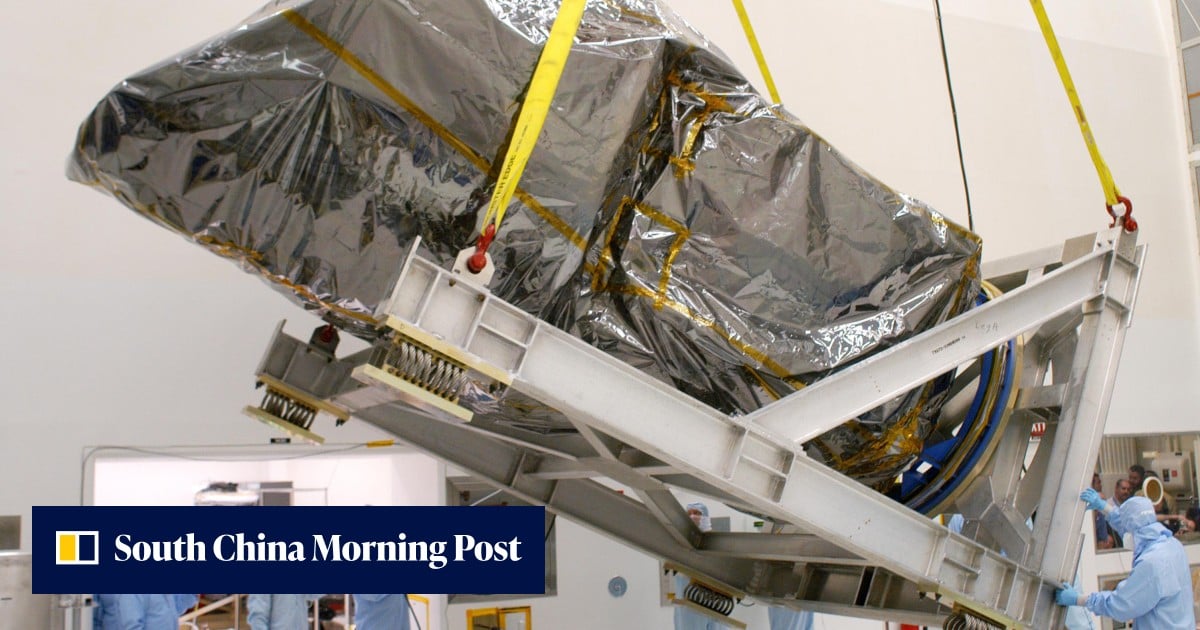
Originally designed for a two-year prime mission, Swift remained in operation far longer with observations of a wide range of cosmic objects, from galaxies powered by supermassive black holes and stars emitting X-ray flares, to comets and asteroids streaking through our own solar system. REUTERS
framing: assertive · carried by 1 article(s) · first seen 2026-11-04
🔮 The Neil Gehrels Swift Observatory, weighing roughly 1,452 kg, was expected to tumble out of orbit and burn up in the atmosphere at about 3.30am, with fragments surviving re-entry unlikely to threaten populated areas, according to NASA.
2026-11-04 · The Straits Times
NASA’s Swift satellite telescope heads for fiery re-entry 22 years after launch · assertive framing

Claims (14 extracted, 1 hedged)

NASA’s Swift satellite telescope heads for fiery re-entry 22 years after launch AI generated asserted
telescope → head → launch
An ageing NASA satellite telescope that a robotic spacecraft was sent to retrieve on a failed rescue mission this summer was headed for a fiery re-entry into Earth’s atmosphere early on Nov 4, nearly 22 years after it was launched into orbit. asserted
it → age → orbit
The Neil Gehrels Swift Observatory, weighing roughly 1,452 kg, was expected to tumble out of orbit and burn up in the atmosphere at about 3.30am, with fragments surviving re-entry unlikely to threaten populated areas, according to NASA. uncertain
fragments → weigh → NASA
The US Space Force has put the odds of harm coming to anyone on Earth at one chance in 2,100, NASA said in an online statement. asserted
NASA → put → statement
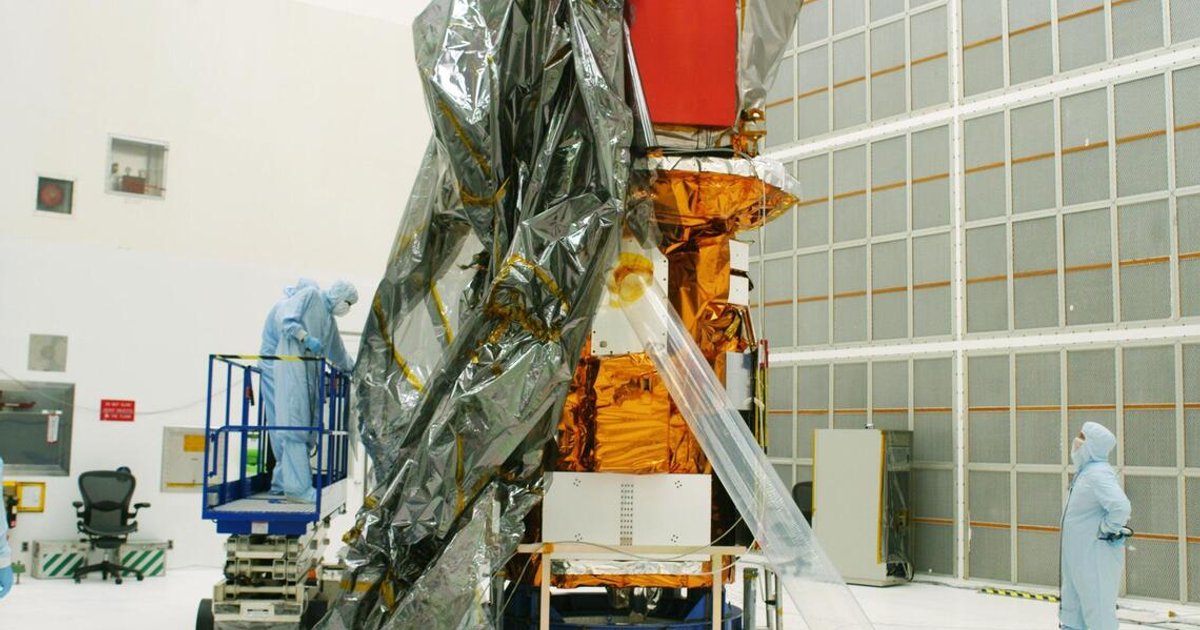
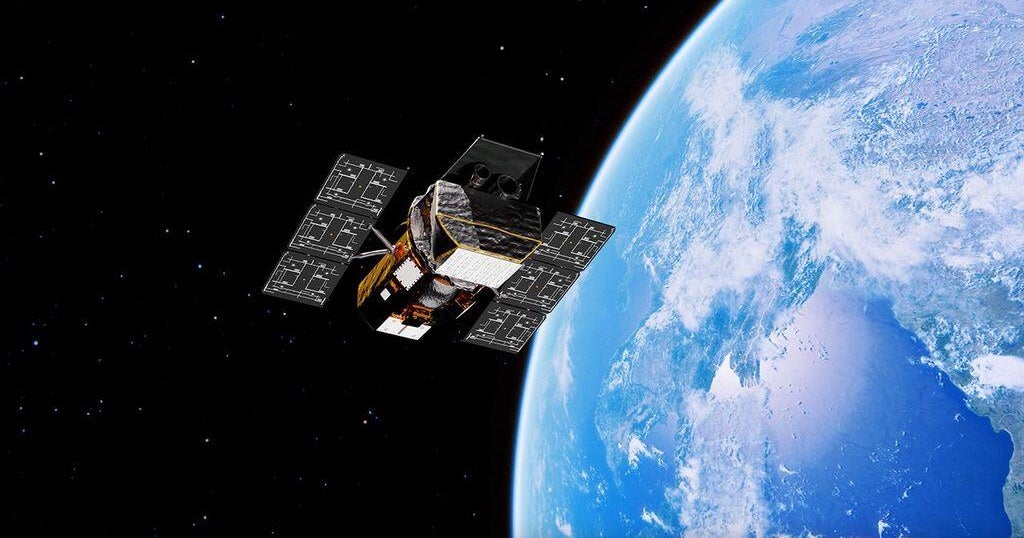
NASA’s prized US$500 million (S$639) Swift satellite, a first-of-its-kind multi-wavelength space observatory, has been studying gamma-ray bursts and other cosmic phenomena since 2004, using its array of three telescopes. asserted
satellite → prize → telescopes
The observatory, which has no onboard propulsion system of its own, has been drifting toward an expected demise for months. asserted
which → have → months
Astronomers had hoped to extend Swift’s mission for a number of years by somehow giving the satellite telescope a lift. asserted
Astronomers → hop → lift
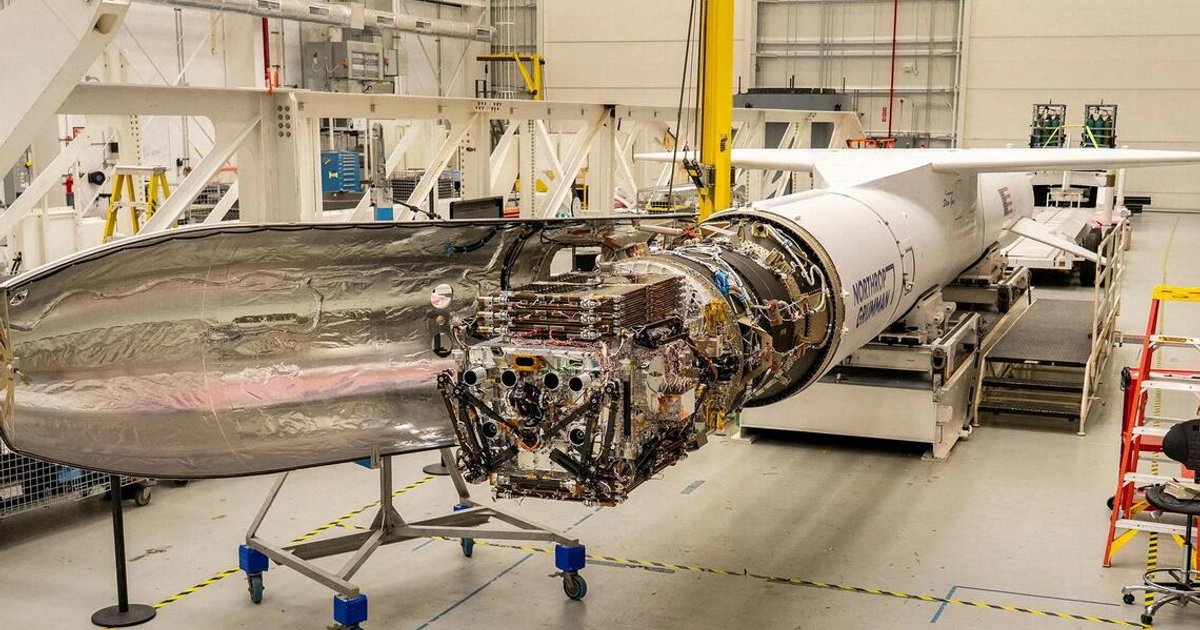
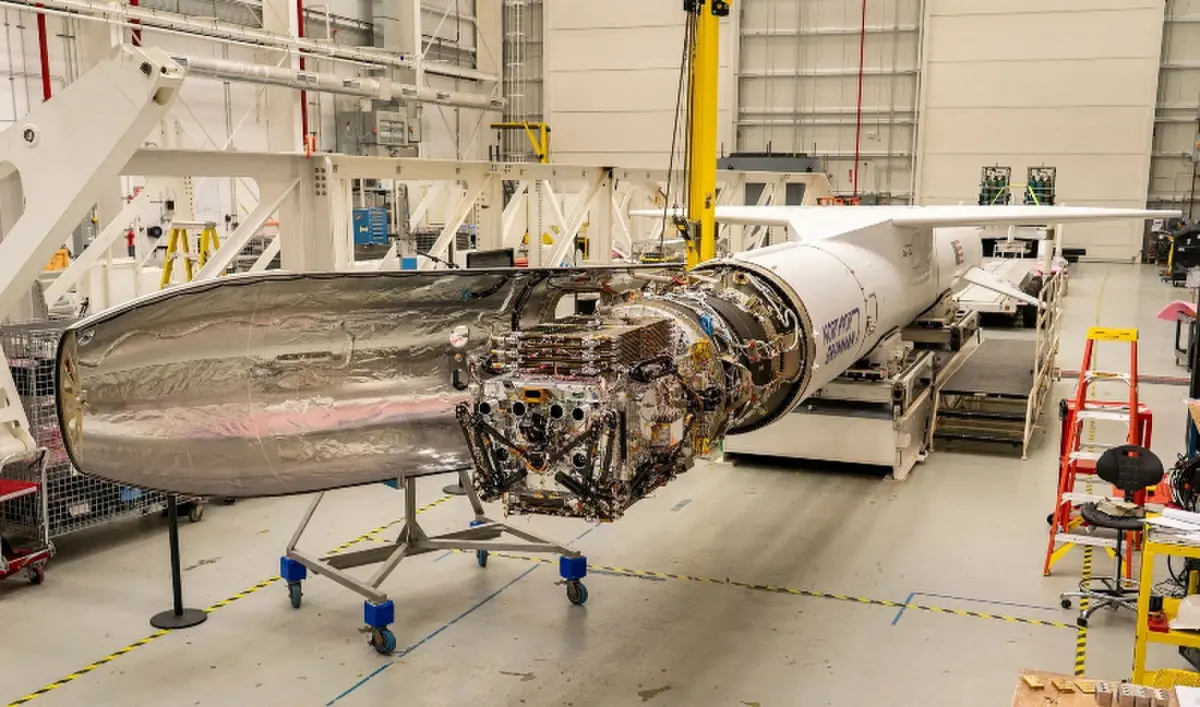
In July, NASA and Arizona-based startup Katalyst launched a specially built rescue vehicle called Link on a mission to rendezvous with Swift, latch onto the satellite and tug the observatory back into a higher, more sustainable orbit. asserted
NASA → base → orbit
But the Link spacecraft itself began spinning uncontrollably soon after reaching space, and by mid-August, mission managers abandoned the effort, resigned to letting Swift continue to meet its fate. asserted
Swift → begin → fate
The aborted rescue attempt, the first US mission of its kind, took on heightened significance as a demonstration of a new orbital grappling technology seen as pivotal to the outcome of the US-China space race. asserted
attempt → abort → race
The Link effort was closely watched as a trial run of a key satellite-maintenance technology with potential dual-use military space applications. asserted
effort → watch → applications
Katalyst touted the mission as a historic endeavor that designed, built and tested the Link rescue vehicle on an unprecedented nine-month production schedule under a US$30 million NASA contract. asserted
that → tout → contract
Swift was launched more than two decades ago to explore the most powerful known explosions in the universe, bursts of gamma-ray radiation emanating from the cores of distant galaxies. asserted
Swift → launch → galaxies
Originally designed for a two-year prime mission, Swift remained in operation far longer with observations of a wide range of cosmic objects, from galaxies powered by supermassive black holes and stars emitting X-ray flares, to comets and asteroids streaking through our own solar system. REUTERS asserted
Swift → design → system

💬Give feedback · no sign-in needed

No sign-in needed for now. Your note is sent without a name, so it cannot be answered.

🕘History 🎫Support