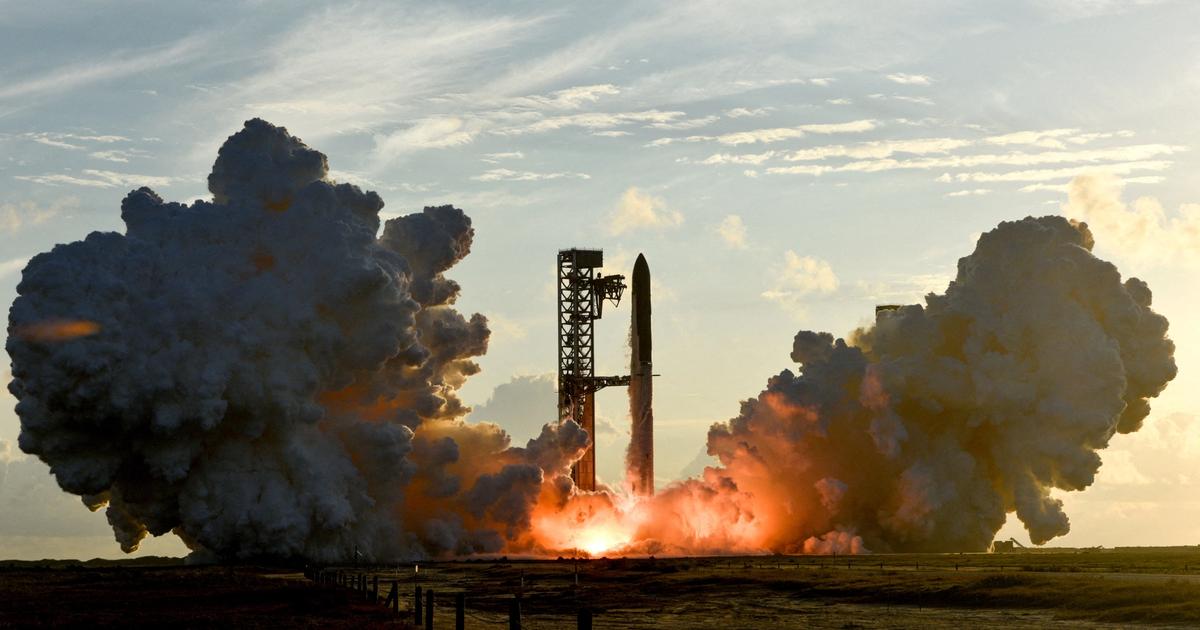
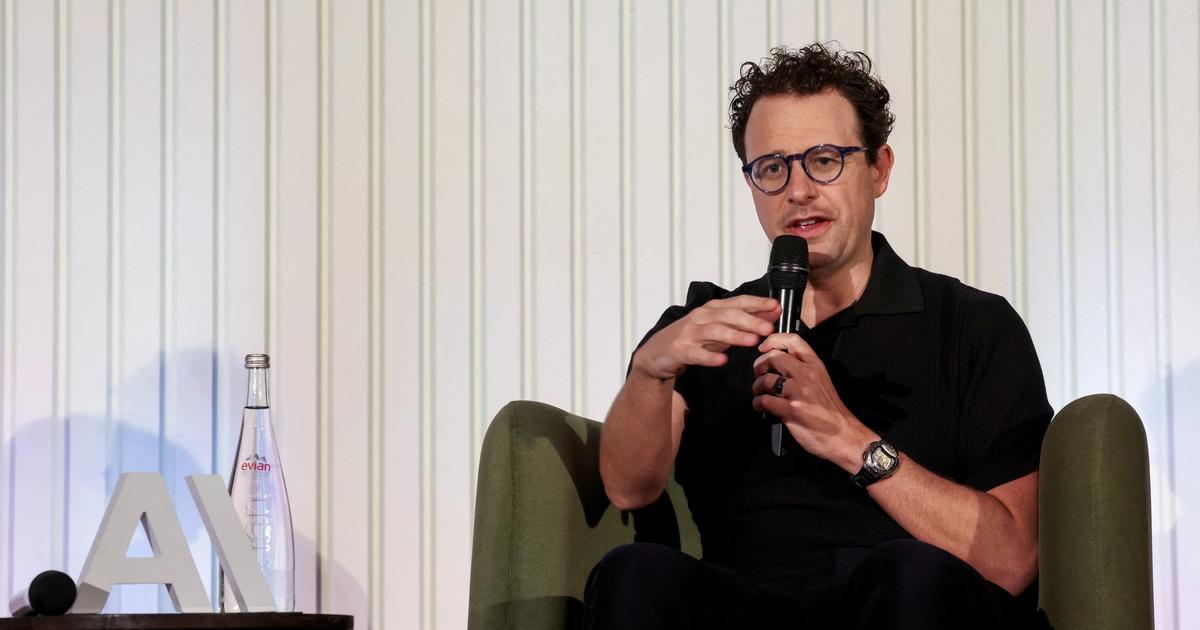
Photo via Semafor

Voyager CEO on space death, why Mars matters, and how to fix data centers 500 miles up

Read the original at Semafor ↗
Cite

Hoffman, L. (2026, November 3). Voyager CEO on space death, why Mars matters, and how to fix data centers 500 miles up. Semafor. https://www.semafor.com/article/11/02/2026/voyager-ceo-on-space-death-why-mars-matters-and-how-to-fix-data-centers-500-miles-up

Dated from the outlet's own feed. Check the original for its byline.

Semafor · collected 2026-11-03 · by Liz Hoffman

Quick Summary

Dylan Taylor, CEO of Voyager Technologies, discussed the current financial challenges facing both the AI and space industries during an episode of Compound Interest. Voyager, which builds infrastructure for the Pentagon and operates a commercial space station called Starlab, recently raised $400 million in public trading despite economic pressures. Taylor emphasized that companies with solid business models and funding are well-positioned to thrive. He also addressed building data centers in orbit to avoid Earth’s energy constraints and political issues, suggesting resilience through redundancy if such facilities malfunction.
Written by AI on 2026-11-03, from this article's own text only (the story summary below draws on all the coverage).

AI analysis

Story summary

Voyager Technologies CEO Dylan Taylor discussed the financial challenges facing his company and the broader space industry on Compound Interest. Voyager, which builds infrastructure for the Pentagon and is developing a commercial space station called Starlab, recently raised $400 million in public trading. Taylor emphasized that having low-cost capital is crucial due to competition from SpaceX. Even SpaceX has had to limit usage of its Grok AI bot due to high costs, as acknowledged by Elon Musk on X (formerly Twitter). Taylor noted that while well-run companies with solid business models can thrive despite the financial strain, others are struggling.


Written for “Voyager CEO On Space Death And Mars” on 2026-11-03, grounded in this article and the 0 other(s) covering the same event.
Why this leaning score
This article does not take a side on a contested political question, so it has no leaning score. That is an answer rather than a gap: a match report or a rescue can be warmly or critically written without being left or right, and scoring it anyway is how approval of a subject gets recorded as a political position.
No political leaning scored for article 125557 · logged 2026-11-03

Story

📰 Voyager CEO On Space Death And Mars
Technology · 1 article(s) covering the same event.

Compared with similar articles

Nothing to compare against. No article is close enough to this one for the pipeline to have linked or judged the pair.
How this article was measured signals, leaning charts, publisher record, byline, topics and claims

Signals How these are calculated →

Claims extracted
14
sentences that state something as happening or true
Uncertain
0%
0 of 14 hedged ("reportedly", "may", "according to")
Leaning
not political
takes no side on a contested political question
Publisher signals
59/100
Semafor's corrections and hedging, across everything collected from it. Not a measure of accuracy.
Outlets on this story
1
Technology
Same framing elsewhere
1
articles that frame the event the way this one does
Analyzed 2026-11-03 · how these are computed

How this is being covered How these are calculated →

Article leaning vs. publisher reliability
Source leaning vs. consistency

Publisher

Semafor · 1462 article(s) · 3 correction(s) detected
Running correction rate · 3 correction(s)

Who wrote this

Liz Hoffman
24 article(s) here · 1 carrying a prediction
🔮 We also talked to Taylor about building data centers in space, which would sidestep the energy needs and political backlash back on Earth.
🔮 For a long time, private equity firms could borrow cheaply, ride a rising market, and look like geniuses.
🔮 Notable - “While we are proud of the privileged position we play in the AI investment cycle, no one knows how the demands for capital and compute will evolve as the broader AI ecosystem matures,” Goldman Sachs’ CEO David Solomon said on a recent call with analysts.
🔮 Believers will see a fast-growing company with blue-chip backers, $131 billion of cash, and founders with a seriousness of purpose.
🔮 The most expensive slice of the $40 billion of private credit borrowing it’s finalized in recent days will cost as much as 8.75%, a person familiar with the matter said, having shot higher since we reported on price talks last week.
🔮 Further from Wall Street, he reset US foreign policy by cutting Ukraine off from Starlink — a move that says enough about who’s in charge that President Donald Trump claimed credit for reversing it — and dominated the midterm-elections homestretch with spending that will near $450 million this cycle.
2026-10-26 · assertive framing · Elon Musk is back at the center of everything
🔮 About $60 billion will come in the form of new, nonvoting shares that the company created last week, a move that telegraphed its rapacious need for cash and CEO Mark Zuckerberg’s desire to raise it without diluting his control stake (and pay his tax bill).
2026-10-26 · assertive framing · Meta announces $95B offering to fund AI
🔮 Saudi Arabia is set to make a final decision on whether to postpone its flagship investment conference in Riyadh as soon as Monday, after Wall Street executives privately relayed safety concerns to organizers, including the boss of the kingdom’s sovereign wealth fund, people familiar with the matter said.
🔮 I’ve written a lot that I think the panic in private credit is overblown, but there are real questions about how these loans will hold up, especially as interest rates stay high and borrowers get squeezed.
2026-10-08 · assertive framing · Blue Owl CEOs rebuff credit fears
🔮 The case for boutiques hasn’t disappeared — there will always be a place for independent advice from talented bankers — but the ground has shifted.
2026-10-01 · assertive framing · Where are Wall Street’s big egos today?
Also by Liz Hoffman
Nothing else under this byline is closely related to this article, so these are simply their most recent.
All 24 articles by Liz Hoffman →

Topics

Compound Interest Pentagon SpaceX Voyager Voyager Technologies

Subjects

Taylor PERSON · 5× Musk PERSON · 2× SpaceX ORG · 2× Voyager ORG · 2× American NORP · 1× Compound Interest ORG · 1× Dylan Taylor PERSON · 1× Elon Musk’s PERSON · 1× Pentagon ORG · 1× Voyager Technologies ORG · 1×

Narrative

“Low cost of capital [is] a secret weapon,” Taylor said, “because the first question is, ‘how do you compete with SpaceX?’” Even Elon Musk’s behemoth is feeling the squeeze: It throttled usage of its Grok AI bot this week because, as Musk said in an X post Sunday, it was getting too expensive.
framing: assertive · carried by 1 article(s) · first seen 2026-11-03
🔮 We also talked to Taylor about building data centers in space, which would sidestep the energy needs and political backlash back on Earth.

Claims (14 extracted, 0 hedged)

The money crunch that has hit AI in recent weeks is coming for the space industry, which shares DNA, investors, and market vibes with artificial intelligence. asserted
which → hit → intelligence
“If you’re a high-quality, well-run company with a good balance sheet and a good business model, you are very well positioned because everyone’s paying attention,” Dylan Taylor, CEO of Voyager Technologies, said on this week’s episode of Compound Interest. asserted
Taylor → ’re → Interest
Everyone else is “being cast aside.” asserted
Everyone → cast → ?
Voyager builds space infrastructure for the Pentagon and defense contractors, and is working on a commercial space station, Starlab, to replace the International Space Station when it is retired in 2030. asserted
it → build → 2030
The company is publicly traded, which last month allowed it to raise $400 million on terms roughly in line with a hot convertible-debt market. asserted
it → trade → market
“Low cost of capital [is] a secret weapon,” Taylor said, “because the first question is, ‘how do you compete with SpaceX?’” Even Elon Musk’s behemoth is feeling the squeeze: It throttled usage of its Grok AI bot this week because, as Musk said in an X post Sunday, it was getting too expensive. asserted
it → say → post
Taylor, like most space executives today, counts Musk as both a competitor (for contracts and capital) and collaborator (Voyager’s hardware hitches a ride on SpaceX’s rockets). asserted
hardware → count → rockets
The space and AI trades are increasingly twinned, tapping into similar pools of capital, riding similar national-security vibes, and carrying similar potential of catastrophic escalation. asserted
trades → twin → escalation
“It’s the same thing,” Taylor said of the two, but for a different reason: their potential to reshape every corner of the economy. asserted
Taylor → ’ → economy
“Everyone is in the space industry,” he said. asserted
he → say → industry
“They just don’t know it yet.” asserted
They → know → it
We also talked to Taylor about building data centers in space, which would sidestep the energy needs and political backlash back on Earth. asserted
which → talk → Earth
And if they break? asserted
they → break → ?
Just “build more,” is Taylor’s quintessentially American answer. asserted
answer → build → more
💬Give feedback
🕘History 🎫Support