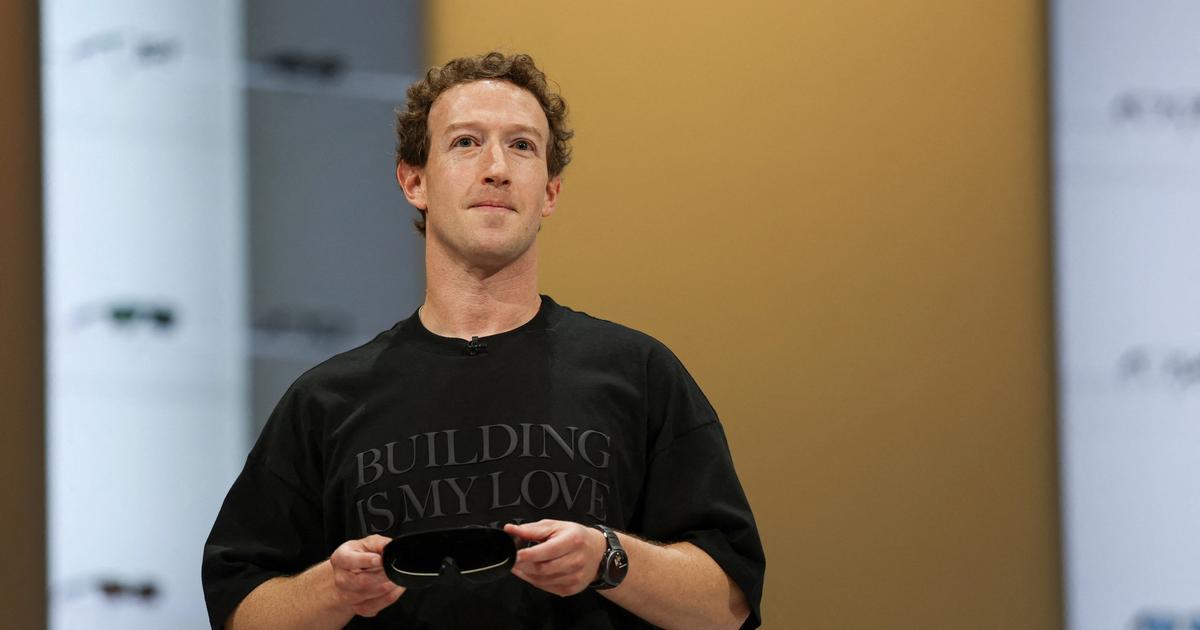
Photo via Semafor

Apollo's twin deals reveal Wall Street's AI money problem

Read the original at Semafor ↗
Cite

Hoffman, L. (2026, October 29). Apollo's twin deals reveal Wall Street's AI money problem. Semafor. https://www.semafor.com/article/10/29/2026/apollos-twin-deals-reveal-wall-streets-ai-money-problem

Dated from the outlet's own feed. Check the original for its byline.

Semafor · collected 2026-10-29 · by Liz Hoffman

Quick Summary

This piece is an opinion article by Liz that discusses conflicting signals from Apollo’s financial activities regarding the availability of capital for AI investments. On one hand, Apollo’s deal to invest $40 billion in SpaceX indicates a high cost of capital due to increased risk perception. On the other hand, Apollo’s investment in Mubadala Capital suggests an oversupply of capital chasing limited opportunities. The article highlights that while there is ample money available for AI investments, it now comes with higher costs and greater caution from investors.
Written by AI on 2026-10-29, from this article's own text only (the story summary below draws on all the coverage).

AI analysis

Story summary

Apollo's recent deals reveal conflicting trends in Wall Street's approach to investing in artificial intelligence (AI). On one hand, Apollo’s acquisition of a stake in Abu Dhabi’s government-backed asset manager, Mubadala Capital, suggests an oversupply of capital chasing too few investment opportunities. This deal provides Apollo with access to a steady stream of deals, highlighting the abundance of available funds.

Conversely, Apollo's $40 billion chip lease to SpaceX indicates that despite the presence of capital, it is now much more expensive to obtain. When initially discussed six days ago, SpaceX’s financing terms suggested an interest rate spread of about 3.5 percentage points over a baseline US Treasury rate, which was already steep but reasonable for such a risky investment. However, by the time the deal closed this week, that spread had widened significantly to 3.95 percentage points, indicating a sharp increase in borrowing costs.

Goldman Sachs’ CEO David Solomon acknowledged on an analyst call that while the financial industry is proud of its role in AI investments, predicting future capital and computational needs as the ecosystem matures remains uncertain. This uncertainty underscores the complexities Wall Street faces in navigating the current AI investment landscape.
Written for “Apollo's Twin Deals Reveal AI Money Problem” on 2026-10-31, grounded in this article and the 0 other(s) covering the same event.

Story

📰 Apollo's Twin Deals Reveal AI Money Problem
Economy/Business · 1 article(s) covering the same event.

Compared with similar articles

This article reads leans left and hedges 8% of its claims. Each row says how that neighbour differs.
Semafor
⚖️ Leans left Hedges 0 of 3 claims Outlet record 60/100
“The articles describe different financial investments in AI-related companies: one involving Apollo and Mubadala Capital, and the other involving Canada's investment in a Toronto-based AI startup.”
Washington Examiner
Hedges 0 of 7 claims Outlet record 70/100
“The articles discuss related themes in finance and AI investment but describe different events or perspectives.”
How this article was measured signals, leaning charts, publisher record, byline, topics and claims

Signals How these are calculated →

Claims extracted
13
sentences that state something as happening or true
Uncertain
8%
1 of 13 hedged ("reportedly", "may", "according to")
Leaning
Leans left
of the writing, not the subject · beta estimate
Publisher signals
60/100
Semafor's corrections and hedging, across everything collected from it. Not a measure of accuracy.
Outlets on this story
1
Economy/Business
Same framing elsewhere
1
articles that frame the event the way this one does
Analyzed 2026-10-29 · how these are computed

How this is being covered How these are calculated →

Article leaning vs. publisher reliability
Source leaning vs. consistency

Publisher

Semafor · 1393 article(s) · 1 correction(s) detected
Running correction rate · 1 correction(s)

Who wrote this

Liz Hoffman
21 article(s) here · 1 carrying a prediction
🔮 Notable - “While we are proud of the privileged position we play in the AI investment cycle, no one knows how the demands for capital and compute will evolve as the broader AI ecosystem matures,” Goldman Sachs’ CEO David Solomon said on a recent call with analysts.
🔮 Believers will see a fast-growing company with blue-chip backers, $131 billion of cash, and founders with a seriousness of purpose.
🔮 The most expensive slice of the $40 billion of private credit borrowing it’s finalized in recent days will cost as much as 8.75%, a person familiar with the matter said, having shot higher since we reported on price talks last week.
🔮 Further from Wall Street, he reset US foreign policy by cutting Ukraine off from Starlink — a move that says enough about who’s in charge that President Donald Trump claimed credit for reversing it — and dominated the midterm-elections homestretch with spending that will near $450 million this cycle.
2026-10-26 · assertive framing · Elon Musk is back at the center of everything
🔮 About $60 billion will come in the form of new, nonvoting shares that the company created last week, a move that telegraphed its rapacious need for cash and CEO Mark Zuckerberg’s desire to raise it without diluting his control stake (and pay his tax bill).
2026-10-26 · assertive framing · Meta announces $95B offering to fund AI
🔮 Saudi Arabia is set to make a final decision on whether to postpone its flagship investment conference in Riyadh as soon as Monday, after Wall Street executives privately relayed safety concerns to organizers, including the boss of the kingdom’s sovereign wealth fund, people familiar with the matter said.
🔮 I’ve written a lot that I think the panic in private credit is overblown, but there are real questions about how these loans will hold up, especially as interest rates stay high and borrowers get squeezed.
2026-10-08 · assertive framing · Blue Owl CEOs rebuff credit fears
🔮 The case for boutiques hasn’t disappeared — there will always be a place for independent advice from talented bankers — but the ground has shifted.
2026-10-01 · assertive framing · Where are Wall Street’s big egos today?
🔮 The author of America First Antitrust and former Senate aide to JD Vance, Slater brought a tough enforcement mindset to the early months of Trump’s second term, but was marginalized as the administration took a pro-corporate turn and lost internal fights over mergers involving HPE and Live Nation, where the role of outside lobbyists drew criticism.
2026-09-29 · assertive framing · Trump antitrust chief Gail Slater plans a comeback
🔮 We might be early, but I don’t think we’re wrong.
2026-09-22 · assertive framing · Fintech startups that hated banks are now becoming them
Also by Liz Hoffman
Nothing else under this byline is closely related to this article, so these are simply their most recent.
All 21 articles by Liz Hoffman →

Topics

Abu Dhabi’s Apollo Mubadala Mubadala Capital SpaceX

Subjects

Apollo ORG · 3× SpaceX ORG · 3× Abu Dhabi’s GPE · 1× David Solomon PERSON · 1× Goldman Sachs’ ORG · 1× Liz PERSON · 1× Mubadala ORG · 1× Mubadala Capital ORG · 1× US Treasury ORG · 1×

Narrative

Notable - “While we are proud of the privileged position we play in the AI investment cycle, no one knows how the demands for capital and compute will evolve as the broader AI ecosystem matures,” Goldman Sachs’ CEO David Solomon said on a recent call with analysts.
framing: assertive · carried by 1 article(s) · first seen 2026-10-29
🔮 Notable - “While we are proud of the privileged position we play in the AI investment cycle, no one knows how the demands for capital and compute will evolve as the broader AI ecosystem matures,” Goldman Sachs’ CEO David Solomon said on a recent call with analysts.
2026-10-29 · Semafor
Apollo's twin deals reveal Wall Street's AI money problem · assertive framing

Claims (13 extracted, 1 hedged)

One player in the great spend-a-thon of 2026 provides us with two different answers. asserted
player → spend → answers
Apollo’s deal to buy a stake in Abu Dhabi’s government-backed asset manager, Mubadala Capital, is a bet that the real shortage facing Wall Street right now isn’t capital, but places to invest it. asserted
shortage → buy → it
Apollo’s retirement arm takes in $1 billion a week that it has to find something to do with, and its origination engine can’t keep up. asserted
engine → take → something
By investing in Mubadala, it gets first dibs on a steady stream of deals. asserted
it → invest → deals
The takeaway is that an oversupply of capital is chasing too few opportunities. asserted
oversupply → chase → opportunities
Apollo’s $40 billion chip lease to SpaceX suggests the opposite. uncertain
lease → suggest → opposite
When we checked in on SpaceX’s financing six days ago, the riskiest piece appeared likely to find takers at about 3.5 percentage points over a baseline US Treasury rate, steep but reasonable. asserted
piece → check → rate
By the time it closed this week, the spread had blown out to 3.95 points — outrageously expensive for SpaceX, which carries an investment-grade rating. asserted
which → close → rating
Those eye-watering terms make clear that while the AI money is there, it now costs a lot more than it did a few weeks ago. asserted
it → water → more
Capital providers are wising up to the risks of the AI trade, even if they have the money to burn. asserted
they → wise → money
“I won’t say they were dumb until four weeks ago, but…” said one Wall Street executive, “they’ve gotten a lot smarter, fast.” asserted
they → say → ?
Notable - “While we are proud of the privileged position we play in the AI investment cycle, no one knows how the demands for capital and compute will evolve as the broader AI ecosystem matures,” Goldman Sachs’ CEO David Solomon said on a recent call with analysts. asserted
Solomon → play → analysts
“That will only become clearer as technology and markets continue to develop.” asserted
technology → become → ?
💬Give feedback
🕘History 🎫Support