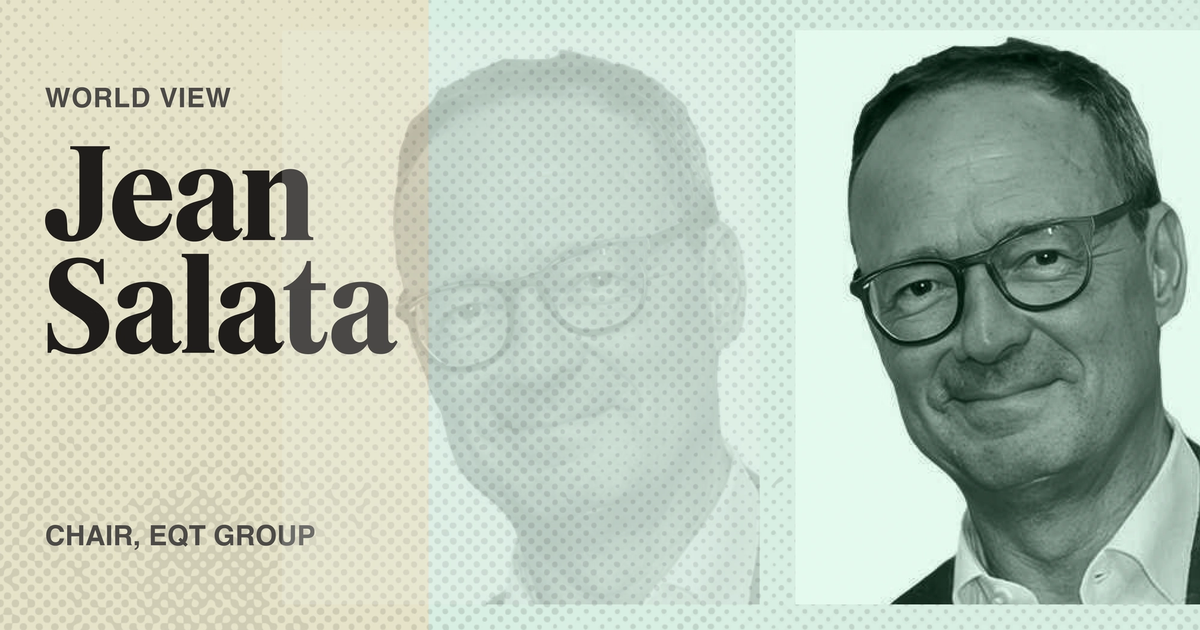
For all the talk of AI bubbles and market crashes, Scandinavian private-equity giant EQT says it’s making a bet that regardless of what happens with the frontier labs, AI is still going to need a massive amount of power, energy, chips, and data centers.
asserted
AI → say → power
“All of a sudden, we find ourselves with $100 billion of energy assets, which are really the limiting factor for AI right now,” said Jean Salata, global chair of EQT, which has $400 billion in assets under management.
asserted
which → find → management
“A lot of people went out and signed tons of contracts with anybody — they call them ‘bragawatts.’
asserted
they → go → them
But signing something and delivering it on time, and with power connected, are two very different things,” Salata said.
asserted
Salata → sign → power
“Sophisticated investors understand that, but there’s a lot of things happening in the public markets where people are investing in things that they really don’t understand.”
asserted
they → understand → that
EQT is a unique animal in an industry where exits have dried up, a generational bet on software companies looks vulnerable to AI, and higher interest rates have broken the math of cheap leverage and multiple expansion.
asserted
rates → dry → leverage
Since 2018, PE firms have asked their investors for $1.5 trillion more capital than they’ve given back, and the industry is sitting on nearly $4 trillion worth of businesses it can’t sell.
asserted
it → ask → businesses
EQT has largely stayed out of the private credit and insurance boom that has turned its US rivals into asset-gathering giants — a “beta business,” said Salata, an artisanally crafted Wall Street dig.
asserted
Salata → stay → giants
And it has an unusual backstop: The Wallenbergs, Sweden’s most powerful business dynasty, helped found EQT in 1994 and remain its largest shareholder.
asserted
Wallenbergs → have → 1994
The family’s patient approach to ownership is close to the long-hold model that much of private equity is now trying to reinvent.
asserted
much → try → equity
Q&A
This interview has been condensed and edited for clarity.
asserted
interview → condense → clarity
For a long time, private equity firms could borrow cheaply, ride a rising market, and look like geniuses.
uncertain
firms → borrow → geniuses
It feels like the jig is up, and I know you have some thoughts on that.
asserted
you → feel → that
Our industry needs to remember what we are meant to be doing, which is delivering returns for our clients.
asserted
which → need → clients
If we’re not doing that, we’re going to end up in a very difficult place.
asserted
we → do → place
There’s been a lot of attention on the growth in assets under management, a business model that has really benefited from the tailwinds of the private credit run of the last five years.
asserted
that → benefit → years
But we’re in an environment where the tide is going out and that means you’re going where there is real value being created.
asserted
you → ’re → environment
What should that number be?
The industry already is consolidating and that will accelerate.
asserted
that → consolidate → be
This year the top 10 firms in the world have raised 50% of the capital.
asserted
firms → raise → capital
When you raise smaller funds, people don’t see the carry coming in and so they leave and you get zombie funds.
asserted
you → raise → funds
EQT has chosen not to chase those credit tailwinds you mentioned.
asserted
you → choose → tailwinds
It doesn’t have the big lending business that Apollo, Blackstone, and others have ridden to huge AUM piles.
asserted
Apollo → have → piles
Do you feel good about that decision?
asserted
you → feel → decision
I think there’s a role for private credit, but the question is who’s best positioned to deliver that?
asserted
question → think → that
We’re good at being an equity investor, being really close to the sectors that we invest in, bringing the best operational talent, bringing the technology and the AI capabilities that we have to the company.
asserted
we → ’re → company
It’s an origination business.
asserted
It → ’ → ?
It’s a beta business.
asserted
It → ’ → ?
Best case scenario, you make 8% return on your money.
asserted
you → make → money
So, the answer is yes, I think we are happy with the decision.
asserted
we → think → decision
But how do you resist the pressures to be a one-stop shop?
asserted
you → resist → pressures
But when you start talking about third- and fourth-quartile returns, clients will either stop or reduce the amount that they invest with you.
asserted
they → start → you
It’s hard to take anything public right now that isn’t a giant AI company and private equity’s track record on returning capital has been abysmal.
asserted
record → ’ → capital
How does the industry get out of this funk?
asserted
industry → get → funk
There are a lot of assets for sale that need to find a home and there aren’t that many buyers.
asserted
that → be → home
At EQT, we’ve been able to take advantage of where there are pockets of opportunity and liquidity.
asserted
we → take → opportunity
We had $33 billion of distributions to our investors in the last 12 months, and as a result, we’re continuing to attract capital.
asserted
we → have → capital
There’s this strange incentive structure in our industry, where you sell businesses that you otherwise wouldn’t want to sell because of this finite [fund] life.
asserted
you → ’ → life
There’s a bit of frustration on the part of sellers that have sold assets because they need to go fundraising, only to see the buyers make like another 3x on it, which is why you’re seeing these longer-hold vehicles like evergreen structures, open-ended structures, continuation vehicles.
asserted
you → ’ → structures
But then isn’t the market saying that the 10-year closed-end fund is outdated and should probably go away?
asserted
fund → say → ?
One of the reasons we bought [secondaries firm] Coller is we think there is a convergence happening between the primary market and the secondary market.
asserted
we → buy → market
…and 25 more, not listed.
 The Aporia