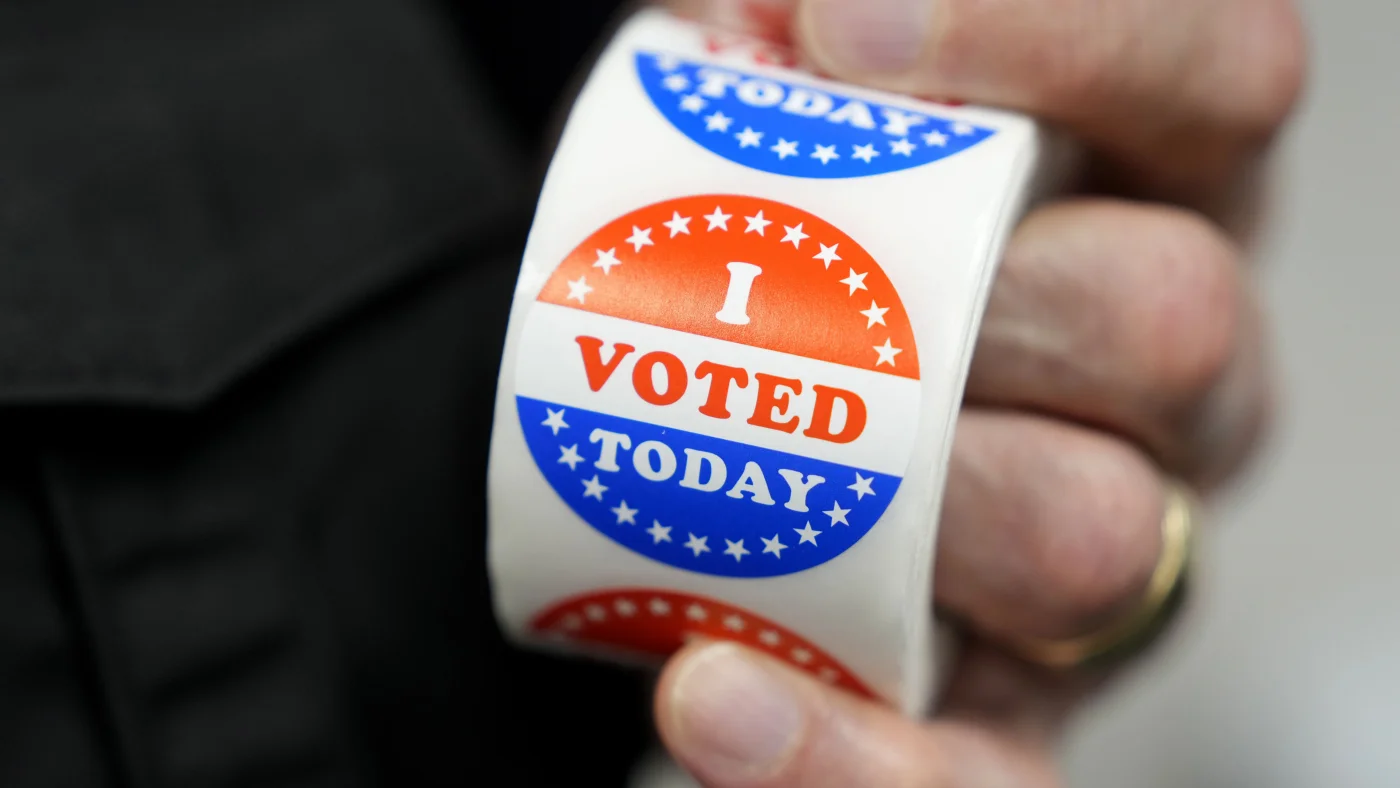
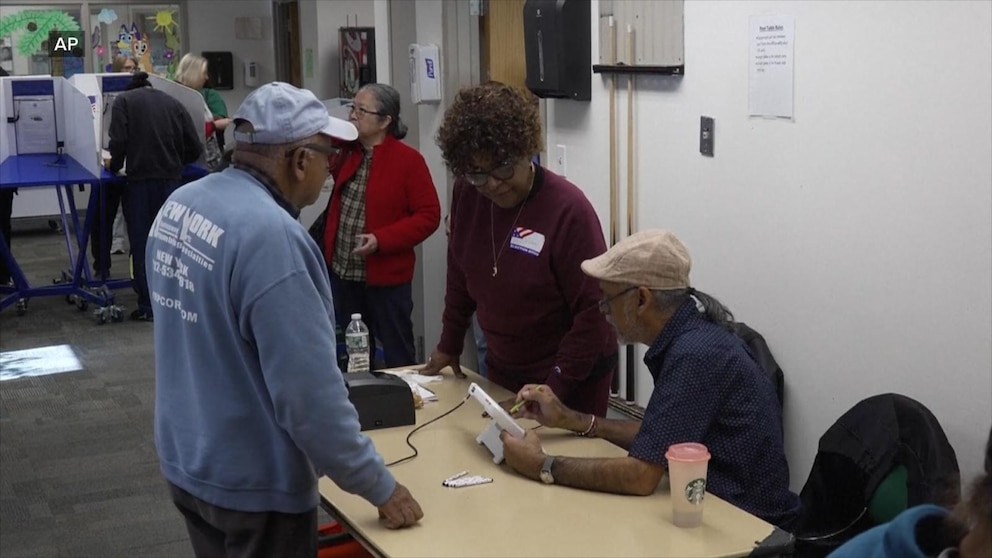
Americans will vote in the US midterm elections on Tuesday, with the economy, the cost of living, and immigration among the top issues.
asserted
Americans → vote → issues
While Democrats and Republicans share concerns about the rising cost of living, recent surveys suggest differences in how they view the economy, President Donald Trump, and other key issues.
asserted
they → share → economy
In an NBC poll released on Sunday, 75 percent of respondents said they were dissatisfied with the state of the US economy, and 51 percent said they were dissatisfied with their personal financial situation.
asserted
they → release → situation
Recommended Stories
list of 3 items- list 1 of 3Trump asks Supreme Court to block 20,000 California ballots before midterms
- list 2 of 3US midterms: 1 day to go – Democrats rally around El-Sayed amid attacks
- list 3 of 3Trump, Vance campaign with candidates on last day before US midterms
Other surveys conducted in October also offer a look into how voters from both parties felt about their finances and which issues mattered most.
asserted
issues → ask → finances
Here is what we know:
What issues matter most to Democrats and Republicans?
asserted
issues → know → Democrats
The economy is the main concern for US voters, but Democrats and Republicans vary on the importance of issues like healthcare, immigration, and crime.
asserted
Democrats → vary → healthcare
A Pew Research Centre survey, conducted between September 28 and October 4, suggested that 84 percent of registered voters considered the economy very important to their midterm vote.
uncertain
economy → conduct → vote
It was the top issue for 82 percent of respondents who prefer Republican candidates, and 88 percent for those who back Democrats.
asserted
who → prefer → Democrats
However, the two groups differed on other issues.
asserted
groups → differ → issues
About 85 percent of Democratic Party supporters considered the future of democracy very important, compared with 69 percent of Republicans.
asserted
future → consider → Republicans
Healthcare was a priority for 82 percent of Democrats, compared with 53 percent of Republicans.
asserted
Healthcare → compare → Republicans
Republican supporters were more concerned about immigration, with 72 percent saying it was very important, compared with 53 percent of Democrats.
asserted
it → say → Democrats
Violent crime was also more important to Republican supporters, at 64 percent, compared with 37 percent Democrats.
asserted
crime → compare → Democrats
A KFF survey, conducted by the Kaiser Family Foundation, an independent nonprofit, from September 16 to 21, suggested 42 percent of registered voter respondents trusted Democrats more to handle healthcare costs, compared with 22 percent who trusted Republicans.
uncertain
who → conduct → Republicans
On the cost of living, 39 percent trusted Democrats more, while 25 percent preferred Republicans.
asserted
percent → trust → Republicans
What grade do Democrats and Republicans give Trump’s second term?
asserted
Democrats → give → term
Views of President Trump and his economic policies remain divided along party lines.
asserted
Views → remain → lines
In the Pew Research Centre survey, 91 percent of Democratic respondents and those who leaned Democratic believed Trump’s economic policies had made things worse.
asserted
things → lean → respondents
Among Republican supporters, 39 percent said his policies had improved the economy, 35 percent said they made conditions worse, and 25 percent said they had little effect.
In the November 1 NBC News poll, 40 percent of registered-voter respondents approved of Trump’s overall job performance, compared with 60 percent who disapproved.
asserted
who → say → percent
How do Democrats and Republicans feel about the economy?
asserted
Democrats → feel → economy
Americans are concerned about rising costs, but Democrats are more likely than Republicans to express negative feelings about economic conditions.
asserted
Democrats → rise → conditions
In an October Pew Research survey, 36 percent of Republicans rated the US economy as excellent or good, compared with just 9 percent of Democrats or Democrat-leaning voters.
asserted
percent → rat → Democrats
However, the majority in both groups expressed concern about the cost of essential goods and services.
asserted
majority → express → goods
According to PEW, 82 percent of Democrats and Democratic leaners were concerned about food and consumer prices, compared with 62 percent of Republicans and Republican leaners.
uncertain
percent → accord → Republicans
Healthcare costs concerned 80 percent of Democrats and 57 percent of Republicans, while petrol and energy prices worried 81 percent of Democrats and 65 percent of Republicans.
asserted
prices → concern → Republicans
A Fox News poll released on October 14 also had 74 percent of registered voter respondents rating the economy negatively, and 60 percent identified the cost of living as their biggest economic concern.
asserted
percent → release → concern
The November 1 NBC News poll found that 53 percent of Republican respondents were dissatisfied with the state of the economy.
asserted
percent → find → economy
The Pew Research Center also found that abortion and gun policy were less central to Democratic respondents in comparison with 2022.
asserted
abortion → find → 2022
In the NBC poll, 51 percent of registered voters were dissatisfied with their personal financial situation, compared with 49 percent who were satisfied.
asserted
who → register → percent
It was the first time in 30 years of NBC polling that dissatisfaction with personal finances outweighed satisfaction.
asserted
dissatisfaction → outweigh → satisfaction
In an NPR/PBS News/Marist poll on October 19-20, 38 percent of likely voters said their finances had gotten worse over the past year, 44 percent said they had remained about the same, and 15 percent said they had improved.
asserted
they → say → year
A total of 51 percent of Democratic likely voters said their finances had deteriorated, compared with 21 percent of Republicans.
In a Reuters/Ipsos survey conducted from September 30 to October 5, 71 percent of Democrats and 57 percent of Republicans said their incomes had not kept pace with rising prices.
asserted
incomes → say → prices
Eric Ham, a former Democratic congressional staffer and Senate national security adviser, said that Trump’s global tariffs and the US-Israel war on Iran had added to the financial pressure on American households.
“Americans are paying more not just in terms of self-inflicted wounds that President Donald Trump implemented through tariffs, but also if you look at this war of choice,” Ham told Al Jazeera.
asserted
Ham → say → Jazeera
Democratic voters reported higher enthusiasm about participating in the elections.
asserted
voters → report → elections
In the Marist poll, 91 percent of likely Democratic voters were enthusiastic or very enthusiastic, compared with 86 percent of Republicans and 76 percent of Independents.
asserted
percent → compare → Independents
John Fury, a former Republican congressional staffer, said the final days of campaigning were focused on turnout.
“This is not a persuasion election.
asserted
This → say → turnout
This is a get-out-the base election,” Fury said.
asserted
Fury → get → ?
In a KFF survey, Democratic candidate supporters were 25 percentage points more likely than Republican supporters to describe themselves as “more motivated” than usual to vote (63 percent versus 38 percent).
asserted
supporters → describe → percent
The November 1 NBC News poll also reported high interest in the elections, with 70 percent of registered voters rating their interest at nine or 10 on a 10-point scale.
asserted
percent → report → scale
Who are Americans planning to vote for?
asserted
Americans → plan → Who
…and 4 more, not listed.
 The Aporia