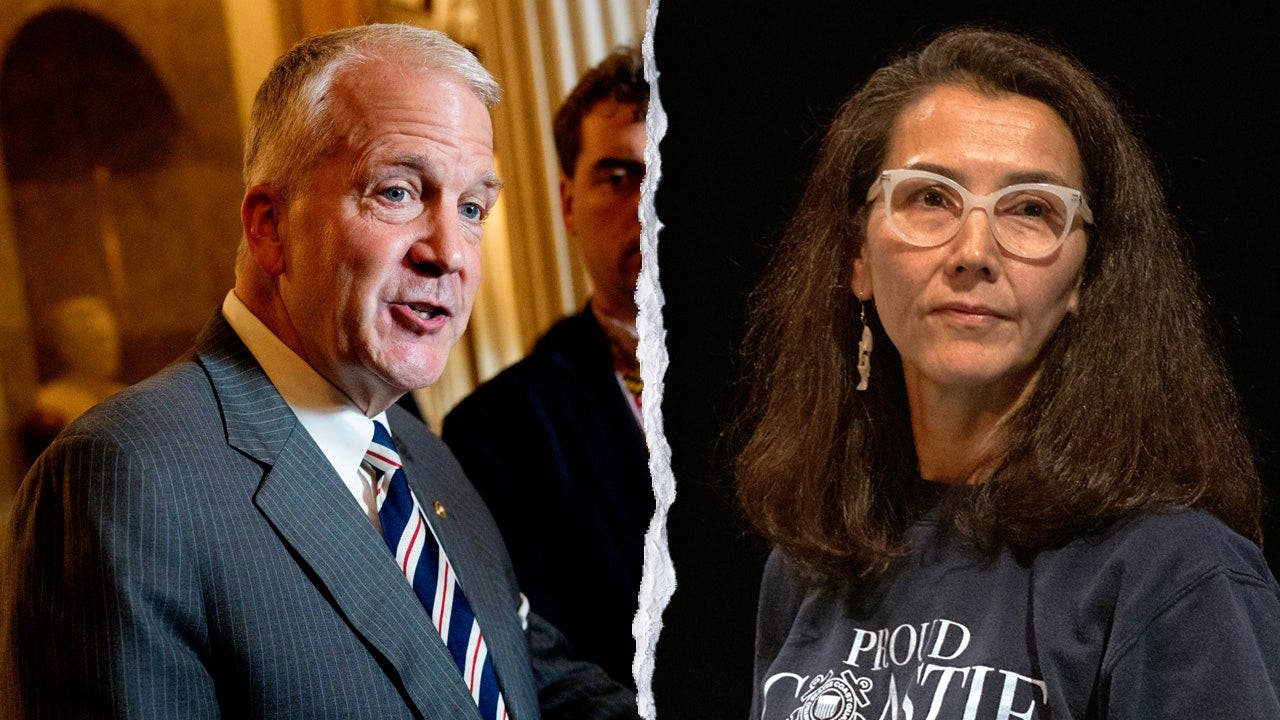
The Alaska Senate ballot in the next week’s midterm elections in the United States features two candidates with the name Dan Sullivan – one the incumbent Republican senator and another a retired teacher with no prior political experience.
asserted
another → feature → experience
Last week, The New York Times reported that aides to Mary Peltola, the Alaska Democrat challenging Republican Senator Sullivan for a crucial seat, helped recruit candidates bearing names similar to Sullivan’s in an apparent bid to manipulate the ballot and siphon votes from the incumbent.
asserted
aides → report → incumbent
The controversy has triggered a political firestorm in the US, and prompted President Donald Trump to order a Justice Department investigation into alleged voter fraud.
“It was a scheme.
asserted
It → trigger → fraud
Total election fraud,” Trump said.
asserted
Trump → say → ?
Peltola has rejected the accusations, saying the dispute is distracting from voters’ concerns.
asserted
dispute → reject → concerns
On Friday, US Attorney Michael Heyman said Democrats had “orchestrated a sprawling conspiracy to recruit and prop up Daniel J Sullivan as a sham candidate”, adding that “we are taking that extremely seriously”.
asserted
we → say → that
So, how common is this electoral tactic – and does it work?
asserted
it → work → ?
We look at history to find out.
asserted
We → look → history
What’s happened in Alaska?
asserted
What → happen → Alaska
Daniel J Sullivan Jr, the second Dan Sullivan, announced his US Senate candidacy on May 29, just three days before Alaska’s June 1 filing deadline.
uncertain
Jr → announce → deadline
The Republican nominee on the ballot is also called Dan Sullivan.
asserted
nominee → call → ballot
The second Sullivan has repeatedly denied any Democratic push behind his candidacy.
asserted
Sullivan → deny → candidacy
However, the Times’s reporting earlier this week triggered a political storm over allegations that Democratic operatives had sought to manipulate Alaska’s crucial US Senate race by recruiting candidates to split votes for Republican incumbent Sullivan.
asserted
operatives → trigger → Sullivan
The report alleged that people aligned with Peltola, her campaign’s lawyers and the Democratic Senatorial Campaign Committee (DSCC) had coordinated an initiative to recruit candidates who could dilute Sullivan’s support – internally called the “ballot composition project”.
uncertain
who → allege → support
According to the Times, a Peltola campaign staffer was tasked with identifying Alaskans named Dan Sullivan.
uncertain
staffer → accord → Alaskans
The strategy, commonly called “ballot stacking”, involves recruiting or encouraging candidates to enter a race not necessarily to win, but to influence the distribution of votes and improve another candidate’s chances.
asserted
strategy → call → chances
Alaska has four candidates on the ballot – and the presence of two candidates named Sullivan could potentially confuse voters.
uncertain
presence → have → voters
The report prompted Republican Governor Mike Dunleavy to order a criminal investigation.
asserted
report → prompt → investigation
“I just want to clear the air,” Peltola said at the top of a speech in a downtown bar in Juneau, Alaska’s capital, on Friday.
asserted
Peltola → want → Friday
“I knew nothing about any other candidate on the ballot except for me and the incumbent.
asserted
I → know → me
That is all I have ever known about.
asserted
I → know → ?
I am not interested in tricking voters.
asserted
I → trick → voters
The race is considered key to control of the US Senate.
asserted
race → consider → Senate
Does ballot stacking work?
asserted
stacking → work → ?
Past instances show that the strategy can work at times to manipulate voters.
asserted
strategy → show → voters
One of the starkest examples emerged in Florida’s 2020 state Senate race, when Republican political operative and former state senator Frank Artiles allegedly orchestrated a scheme to recruit a namesake candidate to undermine Democratic incumbent Jose Javier Rodriguez.
uncertain
Artiles → emerge → Rodriguez
According to prosecutors, Artiles paid Alex Rodriguez, who shared the incumbent’s surname, to enter the race as an independent candidate to confuse voters and divert ballots from the Democrat to his Republican challenger, Ileana Garcia.
uncertain
who → accord → challenger
Incumbent senator Jose lost by just 32 votes – while the other Rodriguez garnered more than 6,000 votes without having led a meaningful campaign.
asserted
Rodriguez → lose → campaign
Later, Alex Rodriguez pleaded guilty to campaign finance violations in 2021 and agreed to cooperate with investigators, and Artiles was later convicted in connection with the scheme and fined.
asserted
Artiles → plead → scheme
Similarly, in 2024, Washington’s Democratic state Attorney General Bob Ferguson was joined by two namesakes in the primary race, after a Republican activist was alleged to have paid the other two Fergusons to run.
However, Democratic leader Bob Ferguson threatened legal action – and the decoys dropped out.
asserted
decoys → join → action
Ferguson was elected governor.
asserted
Ferguson → elect → ?
Though stacking a ballot is a political tactic used in other countries as well, the US has seen a couple of its own instances, in Florida and Washington.
asserted
US → stack → Florida
During John F Kennedy’s first congressional campaign, a second candidate named Joseph Russo entered the Democratic primary for Massachusetts’ 11th Congressional District.
asserted
candidate → name → District
The first Joseph Russo was a prominent Boston city councillor who opposed Kennedy.
asserted
who → oppose → Kennedy
Kennedy’s campaign manager and his father, Joseph P Kennedy Sr, have been implicated in accounts of the alleged scheme, but the extent of JFK’s personal involvement remains disputed.
asserted
extent → implicate → involvement
In the June 1946 primary, Kennedy received 22,183 votes, while the two Russos collectively received 6,460.
asserted
Russos → receive → 6,460
Kennedy won the nomination.
asserted
Kennedy → win → nomination
In India, the world’s most populous country, fielding such namesakes is a common tactic – but not always a successful one.
asserted
fielding → field → namesakes
In the 2019 national election, Congress president Rahul Gandhi, the scion of the Gandhi family, faced three namesakes in Wayanad, Kerala, in southern India.
asserted
Gandhi → face → India
The candidates were named: Rahul Gandhi K E, Raghul Gandhi K, and K M Sivaprasad Gandhi.
asserted
candidates → name → ?
…and 8 more, not listed.
 The Aporia