“The royal family enslaved us!
asserted
family → enslave → us
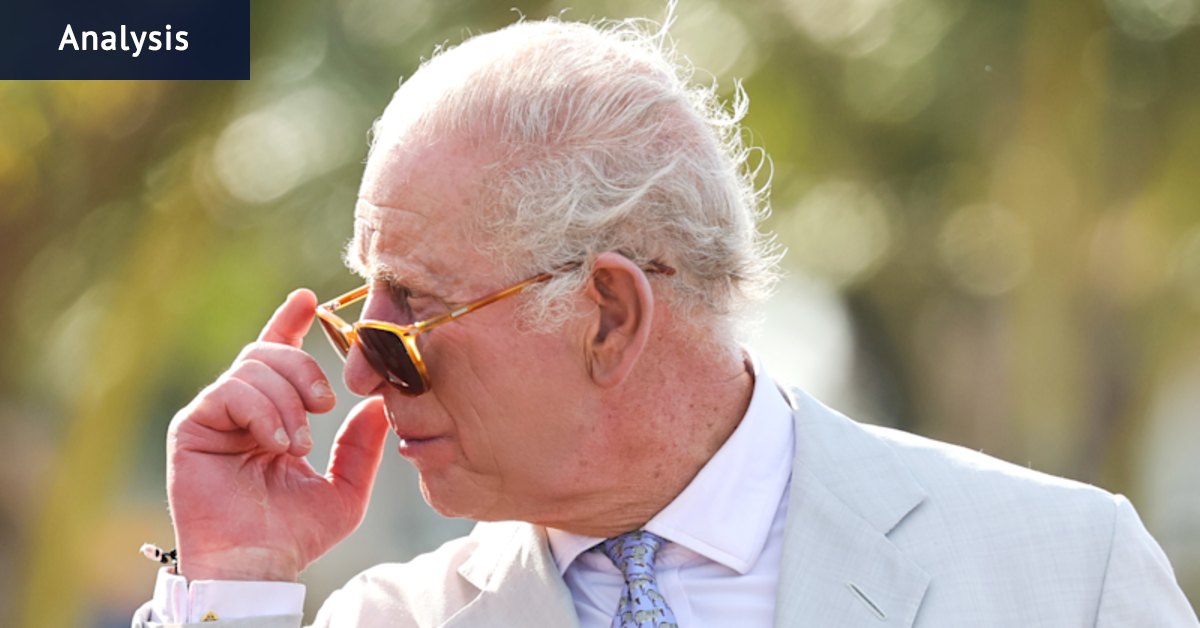
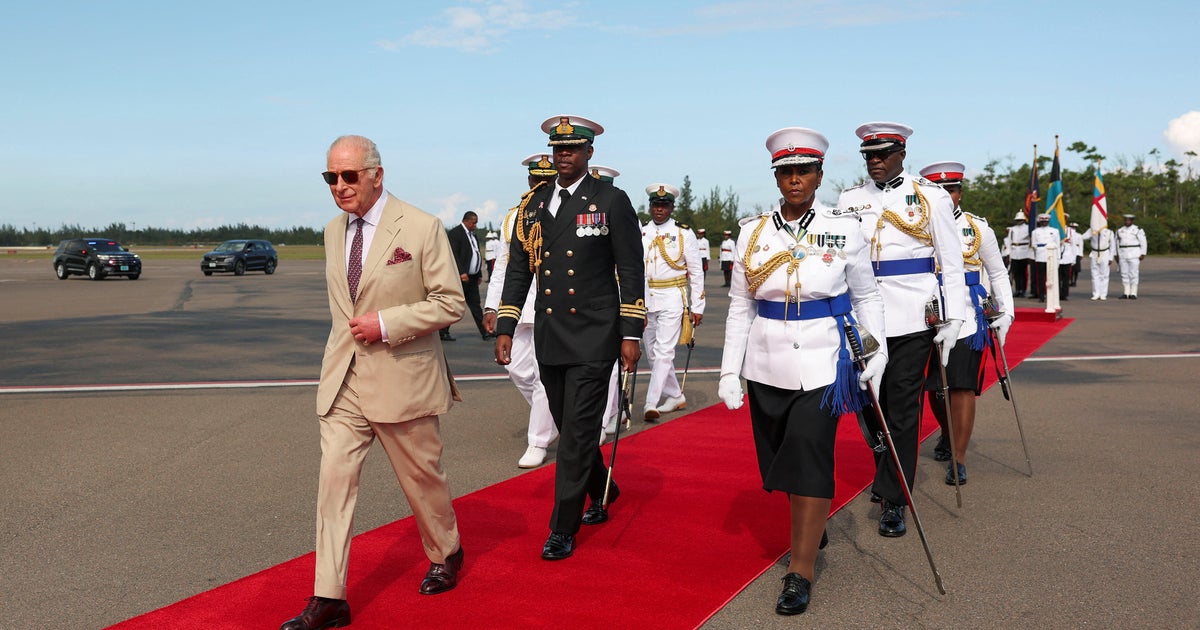
King Charles and the UK prime minister, Andy Burnham, will be greeted with messages as they travel through Antigua’s capital, St John’s, to attend meetings at the Commonwealth leaders’ summit next week.
asserted
they → greet → summit
On billboards, placards and T-shirts, in letters and at a candlelight vigil for the thousands of Africans trafficked to Antigua and Barbuda during the transatlantic slave trade, the message from the Caribbean will be pervasive: slavery reparations is not an issue they “are going to be able to dodge”.
asserted
they → traffic → Caribbean
James Knight of Citizens for Reparatory Justice, which is organising some of the demonstrations, said the king and UK government had made protest necessary.
asserted
protest → organise → demonstrations
“It is definitely necessary that we make known our deep sense of indignation in response to what has been announced ahead of the meeting by the British government and King Charles that there will be no apology, no reparations,” he said, “and to make that announcement when you’re coming to a meeting where people have been asking to have the matter discussed, to us, is extremely insulting [and] insensitive”.
asserted
matter → make → us
On Friday, Burnham went further than any previous British prime minister in an article for the Guardian, writing: “We are offering a structured dialogue with those affected by the transatlantic slave trade.
asserted
We → go → trade
Listening to calls for a formal apology on behalf of the British state will form an important part of this process and I am open to them.”
asserted
I → listen → them
While that does not pass the threshold that Knight set out, it will be viewed by some as a significant development.
asserted
it → pass → development
The Commonwealth heads of government meeting (Chogm), usually a collegial gathering of leaders from the bloc’s 56 member countries, will be surrounded by reparations events.
asserted
meeting → surround → events
Though outside the official agenda, protests, a beach vigil to remember the enslaved and the launch of a “global reparations caravan” – described by organisers as an international movement combining reparations advocacy, demonstrations and culture – are intended to ensure the issue is difficult to ignore.
asserted
issue → remember → advocacy
For campaigners, this Chogm is the culmination of more than a decade of calls from Caribbean leaders for Britain to acknowledge its role in the enslavement of millions of Africans and the colonisation of African and Caribbean countries, and to address the enduring consequences.
asserted
Britain → acknowledge → consequences
Last week, the chair of the Caribbean Community (Caricom) reparations commission, Hilary Beckles, emphasised that the absence of a dedicated official event did not mean reparations would remain peripheral.
asserted
reparations → emphasise → event
He described the gathering as “the Chogm of reparations” and the “first round of reparations negotiations”.
asserted
He → describe → negotiations
“This is the meeting of the Commonwealth in the Caribbean, and the number one item in the Caribbean as far as this gathering is concerned is reparatory justice,” Beckles said.
asserted
Beckles → concern → Caribbean
The Guardian understands that organisations and groups supporting the reparations movement, including representatives from the Repair Campaign, the UK law firm Leigh Day, the Open Society Foundations, the African philanthropic organisation TrustAfrica and the UK’s all-party parliamentary group for Afrikan reparations, will get together outside the main meeting to discuss the issue.
asserted
organisations → understand → issue
Caribbean leaders are also expected to push the issue during closed-door meetings.
asserted
leaders → expect → meetings
But while the reparations movement views the summit as a potential turning point, successive British prime ministers have maintained that the UK will not pay slavery reparations, a position Burnham stuck to in his article, writing: “I do not think that British people today can be held liable for historical wrongs”.
asserted
people → view → wrongs
The Caricom reparations commission has also revealed that the Caribbean was unable to secure unanimous Commonwealth agreement for foreign ministers to advance discussions on historical harms from the transatlantic slave trade through “structured, inclusive, and good faith dialogue”.
asserted
ministers → reveal → dialogue
Meanwhile, Buckingham Palace has sought to draw a line between the monarch and government policy.
asserted
Palace → seek → monarch
In a letter, seen by the Guardian, to the ambassador Dorbrene O’Marde, the chair of the Antigua and Barbuda reparations support commission, the palace said questions relating to the UK’s position on reparations were for the British government.
asserted
questions → see → government
The response followed a letter from O’Marde describing “blanket ‘no apologies’ statements from both government and monarchy” as “shameful” and a refusal to accept historical responsibility.
asserted
response → follow → responsibility
O’Marde said that despite strong declarations about the suffering caused by slavery and the monarch’s own calls for conversation and acknowledgment of the past, there had been no progression towards action.
asserted
O’Marde → say → action
Instead, he said, the UK appeared to rely on “verbal gymnastics” to avoid an apology.
asserted
UK → say → apology
“They’re all schooled not to make an apology,” he said.
asserted
he → school → apology
But for O’Marde, the obstacles are unlikely to withstand the growing tide of international support for reparations, including a UN resolution in March describing the trafficking and racialised chattel enslavement of Africans as the gravest crime against humanity.
asserted
obstacles → withstand → humanity
The resolution was backed by 123 countries.
asserted
resolution → back → countries
Reparations, he said, now had a sound legal and political backbone that made progress increasingly plausible.
asserted
progress → say → backbone
In September, Jamaican officials lodged a landmark petition to the king seeking legal advice on its claim for slavery reparations, which will be heard by the privy council in March.
uncertain
which → lodge → March
Verene Shepherd, the vice-chair of the Caricom reparations commission, who was involved in drafting the 25 March UN resolution and an August recommendation from the UN committee on the elimination of racial discrimination (Cerd), said the developments reiterated that “crime does not rot”.
asserted
crime → involve → discrimination
Shepherd said Cerd’s recommendation that countries are legally obliged to consider reparations for the transatlantic slave trade and take other measures to address the enduring legacy of racial discrimination was “grounded in international law and historical evidence” about slavery and colonisation and their continuing impact.
asserted
countries → say → slavery
She described it as “a concrete step towards remedying historical wrongs against Africans and people of African descent”.
asserted
She → describe → descent
“As far as former colonists and Africans are concerned, a crime does not rot.
asserted
crime → concern → ?
It is carried forward until justice is achieved,” she said, adding that Cerd’s involvement “certainly strengthens the movement’s international legitimacy”.
asserted
involvement → carry → legitimacy
The Caricom reparations commission’s manifesto and 10-point plan, which sets out what it describes as the “moral, ethical and legal case for reparations” for the enslavement of African people, puts a “full and formal apology” first.
asserted
it → set → apology
For Shepherd, its importance lies in accepting responsibility.
asserted
importance → lie → responsibility
“It would accept responsibility for these crimes, commit to non-repetition and pledge to repair the harms caused to the victims and their descendants, the men, the women, the children harmed by chattel enslavement.
asserted
It → accept → enslavement
It would represent an ethical and legal acknowledgment of how present inequalities and racial injustices are rooted in the history of such criminal conduct,” she said.
asserted
she → represent → conduct
O’Marde said an apology would create a pathway towards what the Caribbean ultimately wants: fruitful negotiations with the UK on reparations.
asserted
Caribbean → say → reparations
But among Caribbean citizens there is still scepticism over whether even that would be enough.
asserted
that → be → citizens
In Guyana, where the king visited on Thursday and Friday, Ron ChangYuen, a visual designer, said unless the king could shift the reparations conversation towards “actual results in some significant way”, he saw little point in the visit.
uncertain
he → visit → visit
…and 6 more, not listed.
 The Aporia