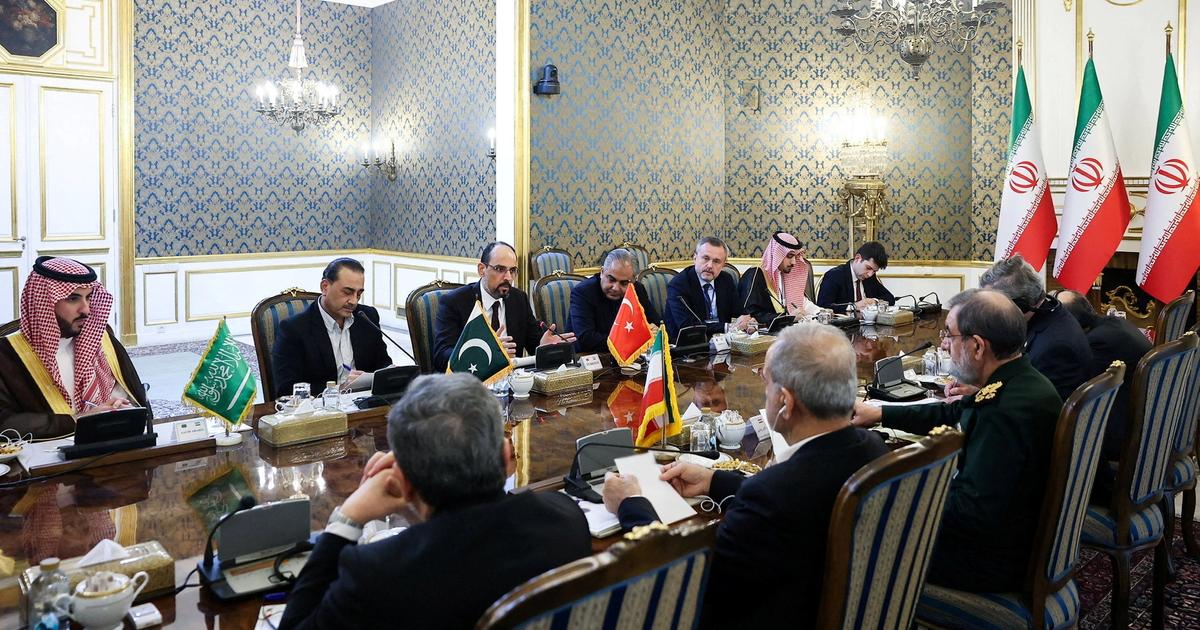
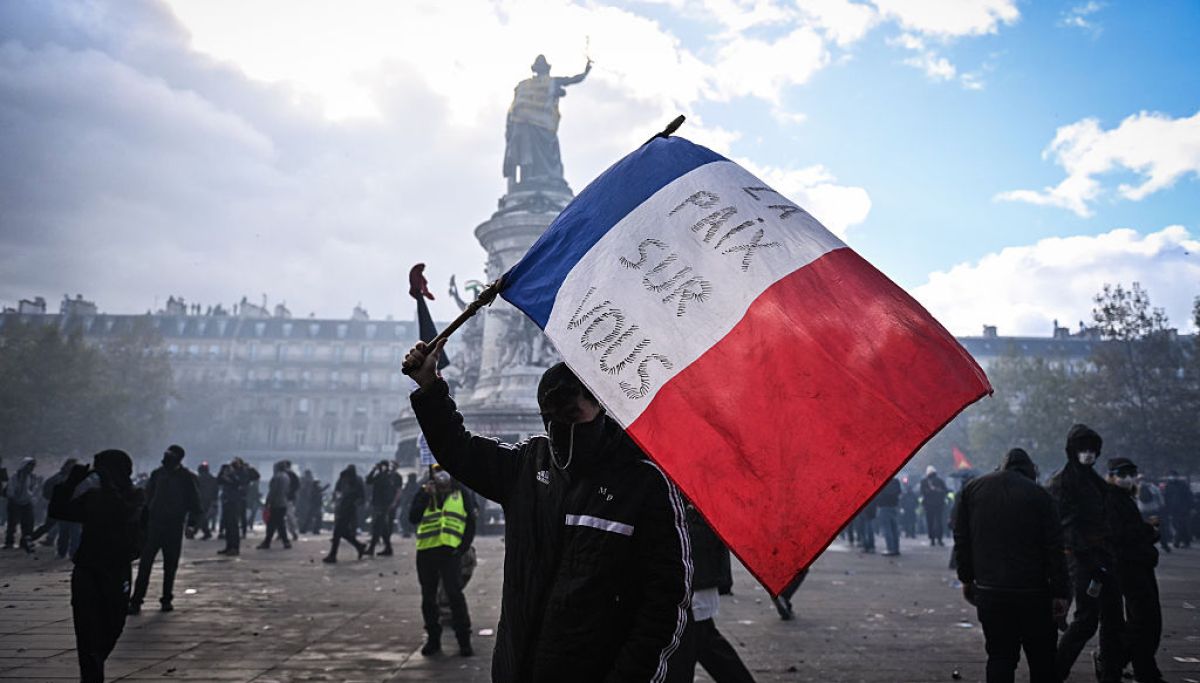
Photo via The Guardian

As Trump fans the flames of a world on fire, can diplomacy take back control?

Read the original at The Guardian ↗
Cite

editor, P. W. D. (2026, October 31). As Trump fans the flames of a world on fire, can diplomacy take back control? The Guardian. https://www.theguardian.com/us-news/2026/oct/31/as-trump-fans-the-flames-of-a-world-on-fire-can-diplomacy-take-back-control

Dated from the outlet's own feed. Check the original for its byline.

The Guardian · collected 2026-10-31 · by Patrick Wintour Diplomatic editor

Quick Summary

This article discusses how current global conflicts are interconnected, making each issue more complex and difficult to resolve. It highlights comments by Tom Barrack, a counselor to former President Donald Trump, who admits that U.S. intervention in Iran has had unintended consequences across multiple regions. The piece also references Indian external affairs minister Subrahmanyam Jaishankar’s statement emphasizing the indivisibility of global existence and how war in one area threatens peace globally.
Written by AI on 2026-10-31, from this article's own text only (the story summary below draws on all the coverage).

AI analysis

Story summary

As global tensions escalate, interconnected crises in various regions highlight the lack of effective leadership from major powers like the US. Trump's policies are seen as exacerbating these issues. For instance, fuel prices have soared in Poland, with the Polish prime minister, Donald Tusk, blaming Trump rather than his own government for the high costs. Meanwhile, conflicts in Iran, Yemen, and Gaza continue to intensify, underscoring the complex interdependence of global problems. The inability of multilateral systems to address issues such as those involving Iran further complicates diplomatic efforts.

Written for “Trump's Influence On Diplomacy” on 2026-10-31, grounded in this article and the 0 other(s) covering the same event.
Why this leaning score
The article's own words the score was based on. Each is quoted verbatim and was checked against the article text before being stored, so you can find it in the original.
Reading Leans left (beta estimate) Confidence high 1 quote(s) discarded as not found in the article
Leaning: leans left for article 119115 (high confidence, 1 verified quote) · logged 2026-10-31

Story

📰 Trump's Influence On Diplomacy
Politics · 1 article(s) covering the same event.

Compared with similar articles

This article reads leans left and hedges 5% of its claims. Each row says how that neighbour differs.
The Guardian
⚖️ Leans strongly left further left than this Hedges 9 of 53 claims Outlet record 66/100
“The articles discuss broader geopolitical concerns and do not describe the same specific incident.”
Semafor
⚖️ Leans left Hedges 0 of 7 claims Outlet record 60/100
“The articles discuss general global diplomatic situations but do not describe the same specific incident or meeting.”
Washington Examiner
⚖️ Leans right further right than this Hedges 0 of 4 claims Outlet record 70/100
“The articles discuss broader geopolitical issues and interconnections rather than describing the same specific incident or occurrence.”
How this article was measured signals, leaning charts, publisher record, byline, topics and claims

Signals How these are calculated →

Claims extracted
97
sentences that state something as happening or true
Uncertain
5%
5 of 97 hedged ("reportedly", "may", "according to")
Leaning
Leans left
of the writing, not the subject · beta estimate
Publisher signals
66/100
The Guardian's corrections and hedging, across everything collected from it. Not a measure of accuracy.
Outlets on this story
1
Politics
Same framing elsewhere
1
articles that frame the event the way this one does
Analyzed 2026-10-31 · how these are computed

How this is being covered How these are calculated →

Article leaning vs. publisher reliability
Source leaning vs. consistency

Publisher

The Guardian · 1850 article(s) · 6 correction(s) detected
Running correction rate · 6 correction(s)

Who wrote this

Patrick Wintour Diplomatic editor
22 article(s) here · 1 carrying a prediction
🔮 Any US president would have had to address the Iran issue, itself a product of system failure, the inability of the multilateral system to incorporate and change Iran.
🔮 Iran would portray either a reduction or complete withdrawal of US forces from the Gulf region as “a strategic success and vindication of its steadfastness, but also use it to embarrass the Gulf states about their decades-long courtship of US protection”.
🔮 Vowing the people of Taiz would resist until the end, he said statements of solidarity were of no use and that what was needed was access for aid agencies, including the UN, to deliver supplies to the city.
🔮 Lingering hopes of averting a major new conflagration between Iran and the US soon after Tuesday’s midterm elections could rest on Iran’s response to a personal letter from the US vice-president, JD Vance, offering to restart diplomacy.
🔮 The US is aware of the talks’ progress but is holding out for a concession that European powers suggest could involve Iran allowing UN weapons inspectors back into the country.
🔮 Security officials and diplomats at Monday’s meeting were expected to discuss how Iran could persuade the Houthis in Yemen to end their crippling missile and drone attacks on infrastructure in Saudi Arabia.
🔮 She has justified her late – but widely predicted – entry into the race on the grounds that the UN security council appears to be close to deadlock on the six remaining candidates in the race, with no one as yet able to establish a clear lead after six rounds of voting, the latest on 16 October.
🔮 Foreign ministers at a summit of eight European and Middle Eastern countries have urged the US and Israel not to renews their attacks on Iran, warning a fresh outbreak of fighting would spread conflict and push oil prices even higher.
🔮 They are trying to burn it, but we can only anticipate there will be diseases such as cholera in the near future.
🔮 Col Javad Mokhtar Rezaei, the deputy head of cultural and social affairs for Iran’s cyber police (Fata), told the Tasnim news agency: “In some cases, the phones offered may actually exist, but exposing electronic components to saltwater and extreme humidity can cause corrosion of internal components, damage to the boards, battery and display, and cause hidden malfunctions in the device’s performance.” Meysam Doost-Mohammadi, a spokesperson for the Iranian mobile association, said it would be unusual for valuable phones to be transported by ship. The bulk of the recent spate of attacks have occurred close to the coast with Oman, a route that Iran regards as unauthorised.
Also by Patrick Wintour Diplomatic editor
Nothing else under this byline is closely related to this article, so these are simply their most recent.
All 22 articles by Patrick Wintour Diplomatic editor →

Topics

American Gaza Iran Tehran Yemen

Subjects

Iran GPE · 6× Trump PERSON · 4× Barrack PERSON · 3× American NORP · 2× Gaza GPE · 1× Indian NORP · 1× Milan GPE · 1× Paris GPE · 1× Tehran GPE · 1× Yemen GPE · 1×

Narrative

The Polish prime minister, Donald Tusk, in his parliament admitted fuel prices for ordinary people were “devilishly expensive”, but added that the Donald responsible for this was not him but Trump, the hero of the Polish opposition. The second knock-on impact is that Musk’s meddling with SpaceX has made it even more apparent to Europe that it has to end its debate on digital sovereignty and instead regulate to reduce its future dependence on US technology.
framing: assertive · carried by 1 article(s) · first seen 2026-10-31
🔮 Any US president would have had to address the Iran issue, itself a product of system failure, the inability of the multilateral system to incorporate and change Iran.

Claims (97 extracted, 5 hedged)

What happens in the secretive inner councils in Tehran, the mountains of south-west Yemen, the steppe of the Donbas, the still bloody wasteland that is Gaza and even the elegant boulevards of Paris and Milan have a common thread. asserted
that → happen → thread
One cannot understand one set of conflicts without weaving them into another, and it is this very interdependence that is making each problem so contagious, layered and difficult to resolve, leaving the world to live as if trapped inside a pressure cooker on the brink of an explosion. asserted
problem → understand → explosion
Each night it seems the world has reached a collective rock bottom, only to wake in the morning to the sound of knocking from below. asserted
world → seem → knocking
In this great age of noncooperation and lawlessness, the need for one crisis to be resolved before another can be addressed leads to a collective paralysis, especially in the total absence of clear leadership by the world’s leading power. asserted
another → resolve → power
Speaking this week, the Indian external affairs minister, Subrahmanyam Jaishankar, said: “The indivisibility of our existence permeates every aspect of human activity and it has deepened as globalisation has advanced. asserted
globalisation → speak → activity
The fact now is that war anywhere threatens peace everywhere.” asserted
war → threaten → peace
Tom Barrack, Donald Trump’s envoy to Turkey and wider counsellor to the president on the Middle East, in remarks in Doha last week highlighted these threads, admitting the war on Iran launched by his president and Israel in late February had brought unexpected consequences, turning “camp fires into forest fires”. asserted
war → highlight → fires
He likened the Middle East to a Rubik’s Cube, whereby a single move can inadvertently affect the whole picture. asserted
move → liken → picture
“When you adjust one thing in the region what we have seen is everything then changes. asserted
everything → adjust → what
Those unintended consequences, and the sequential pace of what is happening, is unexpected,” said Barrack. asserted
Barrack → happen → ?
He then admitted: “We started trying to do something with our allies in Iran that spread through Hamas, Hezbollah, to six Iranian militias, the Houthis and is now going to north Africa. asserted
that → admit → Africa
So where does it stop? asserted
it → stop → ?
How much does this US intervention help or hurt?” asserted
intervention → help → ?
Without breaking from Trump, he answered his own question pretty unambiguously. asserted
he → break → question
“We have had 23 regime changes take place across the greater Middle East and Levant instituted one way or another by some American hand or influence, and none of them have worked. asserted
none → have → them
“Every time we try to intervene and change the person or the regime, it seems to have been a mistake,” Barrack said, pointing to Iraq, Libya and Afghanistan, but discreetly omitting Iran. asserted
Barrack → try → Iran
So it is easy to blame what has gone wrong on excessive interventionism and failed multilateralism. asserted
what → blame → interventionism
In his new book, the American international relations expert Charles Kupchan explains: “The world is experiencing deep tectonic transformations. asserted
world → explain → transformations
Power is rapidly diffusing across the international system, decentering global politics and reawakening great power competition. asserted
Power → diffuse → competition
“At the same time the advance of the digital era is eroding the social contract of the industrial era producing massive socioeconomic disruption that is affecting political life inside nations as well as relations among them.” Trump, he argues, is a symptom of a trend that is systemic and widespread. asserted
that → erode → trend
But it is also hard not to believe that in this interconnected world the disruptive damage that a capricious, vain and amoral US president can inflict has grown tenfold, and that is what we are experiencing. asserted
we → believe → what
World disorder meets personality disorder. asserted
disorder → meet → disorder
The Iran war, for instance, as Barrack implied, remains Trump’s most consequential and most mysterious mistake, and its repercussions reverberate across the world. asserted
repercussions → imply → world
Any US president would have had to address the Iran issue, itself a product of system failure, the inability of the multilateral system to incorporate and change Iran. asserted
president → have → Iran
But the way in which the Iran issue was addressed is down to Trump, and his psyche. asserted
issue → address → Trump
The Democratic candidate for senate in Michigan, Abdul El-Sayed, put it simply: “Everybody could have told you this is a dumb idea. uncertain
this → put → you
There was really only one person in the whole world who had a 40-year project to get us to fight this war. asserted
us → be → war
He’s a prime minister of another government [Netanyahu]. asserted
He → ’ → government
And he finally found the dumbass who was willing to do it.” asserted
who → find → it
The foreign minister of Oman, and mediator in the February Iran-US talks, speaking in Cambridge this week reminded his audience an agreement on the core issue – Iran’s nuclear programme – had been within reach before the bombing started. asserted
bombing → speak → reach
On every test the war has been a catastrophic failure, whose consequence keeps spreading beyond its initial boundaries, pushing worldwide inflation to 4%. asserted
consequence → keep → %
The strait of Hormuz, a waterway open to commercial traffic for centuries, has become an Iranian bargaining chip. asserted
strait → become → centuries
Less than a fortnight before the midterms, the price of Brent oil per barrel reached $117 – 50% higher than prewar levels. asserted
price → reach → levels
The GDP of Saudi Arabia, the Middle East’s economic powerhouse, is forecast by the IMF to contract 3.3%, a five percentage-point downgrade from the 1.7% growth forecast issued only in July. asserted
GDP → forecast → July
As the House of Saud analysis explains: “The country’s Vision 2030 plan was constructed as a hedge against oil-price volatility. asserted
plan → explain → volatility
It assumed open sea lanes, functioning airports, and a US security umbrella that would deter kinetic threats to the kingdom’s export infrastructure. asserted
that → assume → infrastructure
Every one of those assumptions has failed since February.” asserted
one → fail → February
On 30 September, Saudi Arabia’s government felt forced to raise its 2026 budget deficit projection to $65.3bn, 48% above the original forecast. asserted
government → force → forecast
Nor did the conflict lead to a more stable Iran. asserted
conflict → lead → Iran
The Iranian with most strategic nous, Ali Larijani, was blown up on the first day of the war. asserted
Iranian → blow → war
…and 57 more, not listed.

💬Give feedback
🕘History 🎫Support