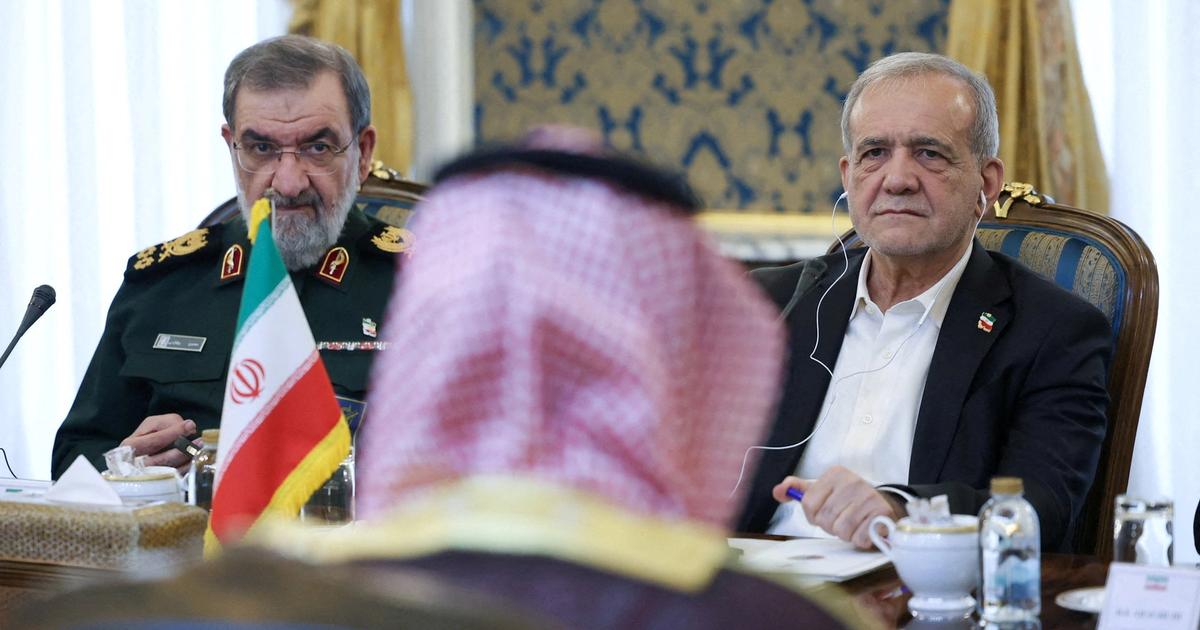
Photo via The Guardian

Gulf states must rethink trillion-dollar defence in light of US-Iran war, says report

Read the original at The Guardian ↗
Cite

editor, P. W. D. (2026, October 30). Gulf states must rethink trillion-dollar defence in light of US-Iran war, says report. The Guardian. https://www.theguardian.com/world/2026/oct/30/gulf-states-rethink-trillion-dollar-defence-us-iran-war-iiss-report

Dated from the outlet's own feed. Check the original for its byline.

The Guardian · collected 2026-10-30 · by Patrick Wintour Diplomatic editor

Quick Summary

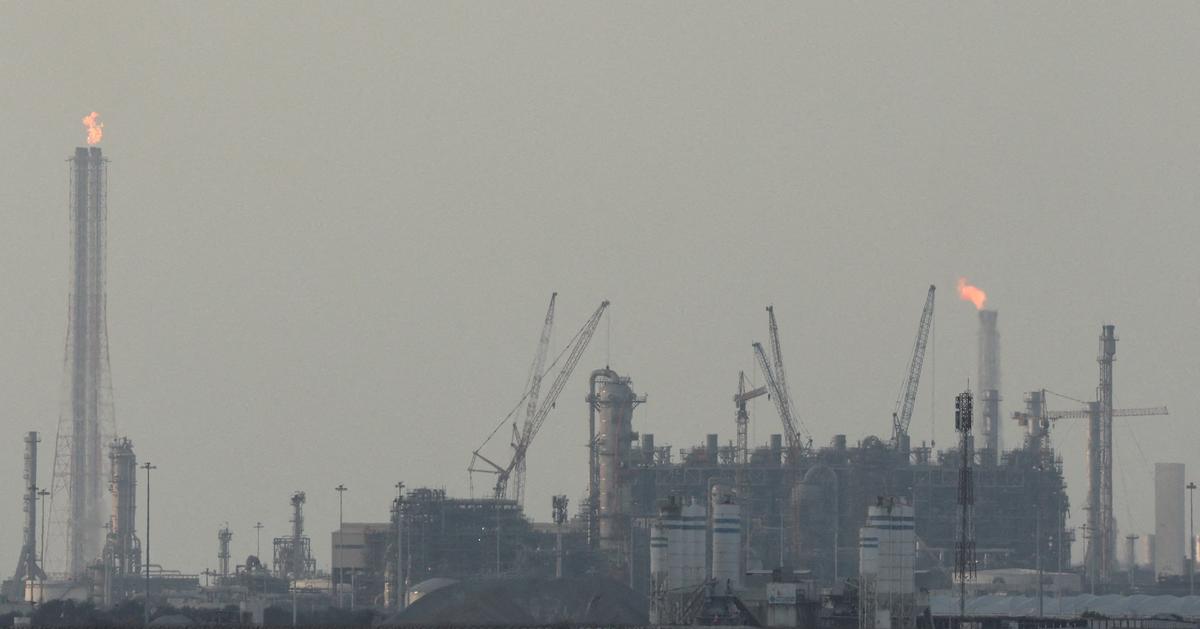
A report by the International Institute for Strategic Studies suggests that Gulf states need to reconsider their trillion-dollar defence strategies due to economic strain and doubts about the continued value of US military bases during a potential conflict with Iran. The study highlights that before an 8 April ceasefire, regional states faced over 4,670 Iranian drones and more than 1,400 ballistic missiles, causing significant damage estimated at up to $58 billion. It also notes that despite substantial investment in US weapons systems, Gulf militaries are unprepared for the new type of warfare they face, with a heavy reliance on US defence systems and limited retaliatory options.
Written by AI on 2026-10-30, from this article's own text only (the story summary below draws on all the coverage).

AI analysis

Story summary

As of October 30, 2026, a report by the International Institute for Strategic Studies suggests that Gulf states need to reconsider their trillion-dollar defense strategies in light of recent conflicts with Iran, particularly given the reliance on US-supplied weapons. The report identifies significant shortcomings, including an over-reliance on US armaments and inadequate regional military integration. During the weeks preceding a ceasefire on April 8, these states faced approximately 4,670 Iranian drones and over 1,400 ballistic missiles, with nearly half targeting the United Arab Emirates. Although most attacks were repelled, damage to energy infrastructure was estimated at up to $58 billion (£43 billion). The report warns that Iran would likely see any reduction or withdrawal of US forces from the Gulf as a strategic success and use it to criticize the reliance on American protection by these states.

Written for “Gulf States Defence Strategy Review” on 2026-10-30, grounded in this article and the 0 other(s) covering the same event.
Why this leaning score
The model judged this article politically coded and scored it -0.50, but all 3 of its quote(s) are attributed speech - words the article quotes from someone, not the article's own narration, so the score is not published.
Written under an earlier scoring contract, which gave a paragraph rather than checkable quotes. Re-analysing this article replaces it.
Leaning score withheld for article 117194: attributed speech only · logged 2026-10-30

Story

📰 Gulf States Defence Strategy Review
Politics · 1 article(s) covering the same event.

Compared with similar articles

This article reads unscored and hedges 13% of its claims. Each row says how that neighbour differs.
Semafor
⚖️ Leans right Hedges 2 of 5 claims Outlet record 60/100
“The articles discuss different aspects and implications of the US-Iran conflict in relation to Gulf states, but do not describe the same specific incident or occurrence.”
Semafor
Hedges 1 of 7 claims Outlet record 60/100
“The articles discuss different topics related to the US-Iran war and its effects on Gulf states, but do not describe the same specific incident or occurrence.”
Daily Mail
Hedges 7 of 52 claims Outlet record 68/100
“The articles describe different aspects of the ongoing US-Iran conflict: Article A discusses a potential renewal of strikes post-midterms, while Article B refers to a report about Gulf states' defense strategies in light of past Iranian attacks leading up to a ceasefire.”
Regional security Different event
Dawn
⚖️ Leans strongly left Hedges 3 of 20 claims Outlet record 72/100
“The articles discuss different aspects of regional security and defense in the Gulf but do not describe the same specific incident.”
Semafor
Hedges 1 of 2 claims Outlet record 60/100
“The articles discuss different aspects of conflicts in the Middle East and do not describe the same specific incident.”
The Straits Times
Hedges 1 of 4 claims Outlet record 66/100
“The articles describe different events - Article A is about Iran's warning regarding a potential Israeli-led attack, while Article B discusses a report on Gulf states' defense strategies due to the damage from previous Iranian attacks.”
The Straits Times
⚖️ Leans left Hedges 8 of 44 claims Outlet record 66/100
“The articles discuss different aspects of the US-Iran war: one focuses on the economic impact in Iran, while the other discusses Gulf states' defense strategies and military engagements.”
New York Post
⚖️ Leans right Hedges 2 of 8 claims Outlet record 66/100
“The articles describe different aspects and timespans related to US-Iran tensions in the Gulf, not a single specific incident.”
Semafor
Hedges 1 of 4 claims Outlet record 60/100
“The articles describe different aspects of the US-Iran conflict and related defense strategies rather than the same specific incident.”
Al Jazeera
⚖️ Leans left Hedges 3 of 14 claims Outlet record 60/100
“The articles discuss different aspects of regional security and conflict in Saudi Arabia without describing the same specific incident.”
How this article was measured signals, leaning charts, publisher record, byline, topics and claims

Signals How these are calculated →

Claims extracted
15
sentences that state something as happening or true
Uncertain
13%
2 of 15 hedged ("reportedly", "may", "according to")
Leaning
withheld
no quote in the article backed the model's score
Publisher signals
66/100
The Guardian's corrections and hedging, across everything collected from it. Not a measure of accuracy.
Outlets on this story
1
Politics
Same framing elsewhere
1
articles that frame the event the way this one does
Analyzed 2026-10-30 · how these are computed

How this is being covered How these are calculated →

Article leaning vs. publisher reliability
Source leaning vs. consistency

Publisher

The Guardian · 2714 article(s) · 6 correction(s) detected
Running correction rate · 6 correction(s)

Who wrote this

Patrick Wintour Diplomatic editor
21 article(s) here · 1 carrying a prediction
🔮 Iran would portray either a reduction or complete withdrawal of US forces from the Gulf region as “a strategic success and vindication of its steadfastness, but also use it to embarrass the Gulf states about their decades-long courtship of US protection”.
🔮 Vowing the people of Taiz would resist until the end, he said statements of solidarity were of no use and that what was needed was access for aid agencies, including the UN, to deliver supplies to the city.
🔮 Lingering hopes of averting a major new conflagration between Iran and the US soon after Tuesday’s midterm elections could rest on Iran’s response to a personal letter from the US vice-president, JD Vance, offering to restart diplomacy.
🔮 The US is aware of the talks’ progress but is holding out for a concession that European powers suggest could involve Iran allowing UN weapons inspectors back into the country.
🔮 Security officials and diplomats at Monday’s meeting were expected to discuss how Iran could persuade the Houthis in Yemen to end their crippling missile and drone attacks on infrastructure in Saudi Arabia.
🔮 She has justified her late – but widely predicted – entry into the race on the grounds that the UN security council appears to be close to deadlock on the six remaining candidates in the race, with no one as yet able to establish a clear lead after six rounds of voting, the latest on 16 October.
🔮 Foreign ministers at a summit of eight European and Middle Eastern countries have urged the US and Israel not to renews their attacks on Iran, warning a fresh outbreak of fighting would spread conflict and push oil prices even higher.
🔮 They are trying to burn it, but we can only anticipate there will be diseases such as cholera in the near future.
🔮 Col Javad Mokhtar Rezaei, the deputy head of cultural and social affairs for Iran’s cyber police (Fata), told the Tasnim news agency: “In some cases, the phones offered may actually exist, but exposing electronic components to saltwater and extreme humidity can cause corrosion of internal components, damage to the boards, battery and display, and cause hidden malfunctions in the device’s performance.” Meysam Doost-Mohammadi, a spokesperson for the Iranian mobile association, said it would be unusual for valuable phones to be transported by ship. The bulk of the recent spate of attacks have occurred close to the coast with Oman, a route that Iran regards as unauthorised.
🔮 Unlawful settlement activity will be captured through a breach of international humanitarian law, including the Geneva convention on occupation.
Also by Patrick Wintour Diplomatic editor
Nothing else under this byline is closely related to this article, so these are simply their most recent.
All 21 articles by Patrick Wintour Diplomatic editor →

Topics

Democrat Iran Iranian the International Institute for Strategic Studies the United Arab Emirates

Subjects

Iran GPE · 4× Iranian NORP · 4× American NORP · 1× Chris Murphy PERSON · 1× Democrat NORP · 1× foreign relations committee ORG · 1× the International Institute for Strategic Studies ORG · 1× the United Arab Emirates GPE · 1×

Narrative

Despite huge investment in mainly US armaments, the report identified significant shortcomings: “overwhelming reliance on US-supplied air- and missile-defence systems and munitions; a failure to achieve regional defence integration; a shortage of minesweeping capability; limited retaliatory options; and the prohibitive costs stemming from an over-dependence on expensive, high-end systems to take down relatively inexpensive drones and missiles”.
framing: assertive · carried by 1 article(s) · first seen 2026-10-30
🔮 Iran would portray either a reduction or complete withdrawal of US forces from the Gulf region as “a strategic success and vindication of its steadfastness, but also use it to embarrass the Gulf states about their decades-long courtship of US protection”.

Claims (15 extracted, 2 hedged)

Gulf states are going to have to reconfigure their trillion-dollar defences given the damage inflicted on their economies and the questionable continued value of US bases in the face of Iranian attack, according to a study by the International Institute for Strategic Studies. uncertain
states → go → Studies
The report says that in the weeks before the 8 April ceasefire, 12 regional states, overwhelmingly in the Gulf, faced 4,670 Iranian one-way attack drones and more than 1,400 ballistic missiles. asserted
states → say → drones
Nearly half were aimed at the United Arab Emirates. asserted
half → aim → Emirates
Although the vast majority were repelled, one estimate of the damage to energy infrastructure cited by the report is put as high as $58bn (£43bn). asserted
estimate → repel → 58bn
Iran would portray either a reduction or complete withdrawal of US forces from the Gulf region as “a strategic success and vindication of its steadfastness, but also use it to embarrass the Gulf states about their decades-long courtship of US protection”. asserted
Iran → portray → protection
The report says the war also highlights another “uncomfortable truth for the Gulf states: not only has their trillion-dollar acquisition of US weapons not translated into US protection at the crucial time, but their respective militaries are also not adequately prepared for the new kind of attritional air war to which they are being exposed”. asserted
they → say → which
Despite huge investment in mainly US armaments, the report identified significant shortcomings: “overwhelming reliance on US-supplied air- and missile-defence systems and munitions; a failure to achieve regional defence integration; a shortage of minesweeping capability; limited retaliatory options; and the prohibitive costs stemming from an over-dependence on expensive, high-end systems to take down relatively inexpensive drones and missiles”. asserted
report → identify → drones
The report is neutral on whether the divided Gulf states should seek a new non-aggression pact with Iran, but notes that the US-Iran war has shown that longstanding defence and security partnerships with the US “have failed to ensure adequate protection against Iranian aggression … “If anything, US military bases and defence partnerships with the US have provided Iran with another pretext for attacks against the Gulf states. asserted
bases → divide → states
Public opinion on the US in the Gulf has also been shifting, “from security provider to strategic liability”. asserted
opinion → shift → liability
Any reduction or withdrawal of US forces from the Gulf region would be portrayed by Iran “as a strategic success and vindication of its steadfastness” and would also be used “to embarrass the Gulf states about their decades long courtship of US protection,” the report notes. asserted
report → portray → protection
The study comes after Chris Murphy, the Democrat senator and member of the senate foreign relations committee, said a live debate was under way in the US military about the value of seeking to rebuild the damaged US bases in the Gulf. asserted
debate → come → Gulf
He said the Gulf state leadership “want us to rebuild” and “to keep a presence in the region”, but said: “What good is it to have a base in the region to protect American interests if within 24 hours of a hot war starting, it is wiped off the map? asserted
it → say → map
“We would be criminally incompetent as stewards of taxpayer dollars if we were to rebuild bases that are blown up within hours of the next war starting. asserted
war → rebuild → hours
“So clearly, we are going to have to have a smaller footprint in the region, and the limiting principle on the footprint that we rebuild will be ‘What can we protect?’ because we clearly cannot protect the scope of our footprint today and if we can’t protect it, it is useless.” asserted
it → go → it
He suggested that, at the very least, the US may need to relocate its bases in the eastern Mediterranean further away from Iranian missiles. uncertain
US → suggest → missiles

💬Give feedback
🕘History 🎫Support