Greed is on California’s state ballot, and it appears to be winning.
asserted
it → appear → ballot
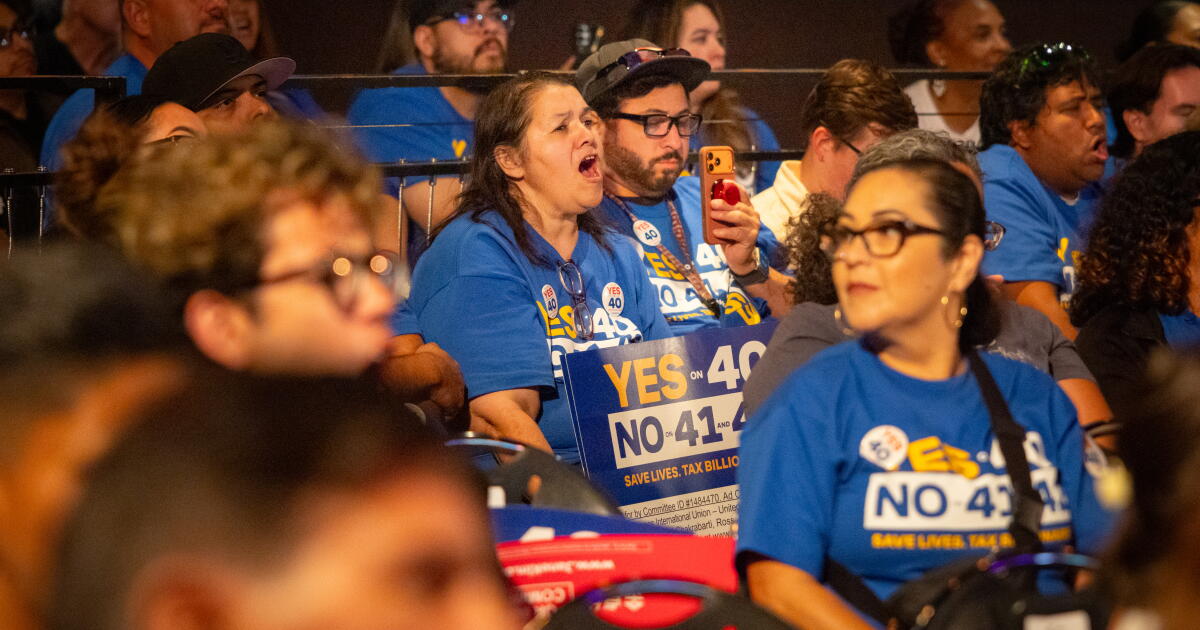
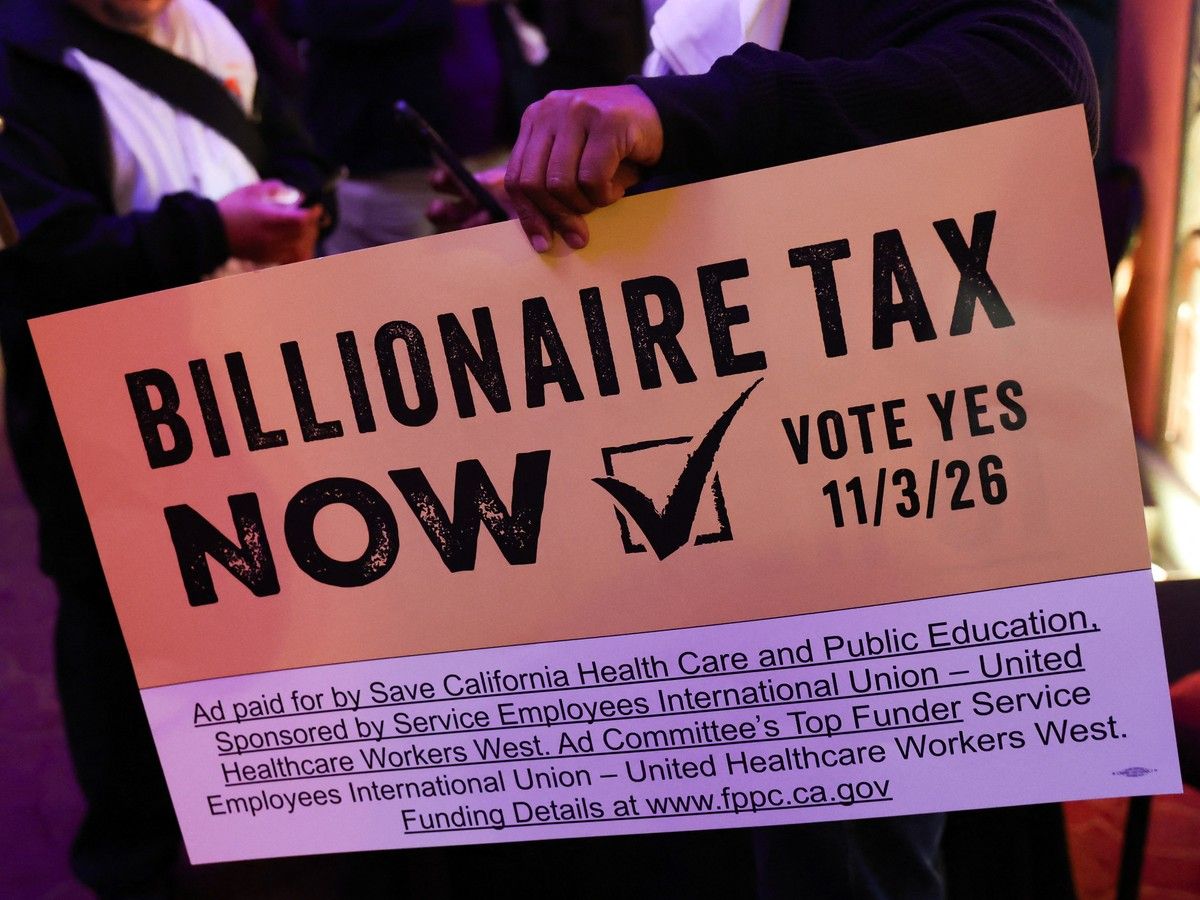
For a while, Prop. 40, the Billionaire Tax initiative, which is supported by the state Democratic Party but opposed by many unions and prominent Democrats, was polling well.
asserted
which → support → unions
The notion of taxing the excessive wealth of the super-rich, or the basis of that wealth—the “paper profits” on a sea of unsold investments—has become increasingly popular across the nation.
asserted
notion → tax → nation
Nobody much likes taxation, but the way the economic spoils are distributed just isn’t working out well for most Americans, whose costs of living are growing faster than their wages, even as the wealth of the 0.00001 percent goes completely haywire.
asserted
wealth → like → percent
Add to that the specter of a wealthy, hyper-transactional president openly using his office to enrich himself, and his family and friends, often at taxpayer expense.
asserted
president → add → expense
The public, too, is finally starting to grasp the full extent to which our billionaires, most notably Elon Musk, are using their largely untaxed and godlike fortunes for political gain: dictating our ballot choices, messing with elections, harming the nation, and dodging accountability.
asserted
billionaires → start → accountability
If Prop. 40 passes, it would be the first-ever tax on excessive wealth, as opposed to income, in the United States.
asserted
it → pass → States
It would place a one-time, 5 percent levy on the net assets of California residents in excess of $1 billion.
asserted
It → place → billion
The measure, put forth by a health workers union to plug holes in the state Medicaid and education budgets created by Trump’s One Big Beautiful Bill, immediately raised the hackles of California’s three-comma club, whose members tend to be allergic to taxation.
asserted
members → put → taxation
These moguls, led by Google co-founder Sergey Brin (who now claims residence in Nevada), started a group called Building a Better California, which they’ve bankrolled to the tune of $333 million—about 0.1 percent of the combined net worth of its top 5 backers: Brin, Google’s Steve Schmidt, venture capitalist John Doerr, Stripe co-founder Patrick Collison, and investor Vinod Khosla.
uncertain
they → lead → backers
The group has blanketed the state political landscape with anti-Prop 40 advertising and propaganda.
asserted
group → blanket → advertising
It also bankrolled two poison pill initiatives, Props. 41 and 42, that we’ll talk about in a minute.
asserted
we → bankroll → minute
There are legitimate critiques of Prop. 40: Voter initiatives are a lousy way to do tax policy.
asserted
initiatives → be → policy
Maybe it won’t bring in as much cash as projected.
asserted
it → bring → cash
It’ll be challenged in court.
asserted
It → challenge → court
Voters might conflate it with another measure, Prop. 3, that would extend an existing tax on income in excess of $371,000 ($742,000 for joint filers) to fund public education.
uncertain
that → conflate → education
One big (valid) gripe about Prop. 40 is that it’s one-and-done.
asserted
it → ’ → .
The California Teachers Union, for instance, says it opposes the measure on the grounds that it “will not provide the sustainable and long-lasting funding that our schools and communities deserve.”
asserted
schools → say → that
Such arguments are politically safe for Democratic politicians such as Xavier Becerra—who will almost certainly replace Gavin Newsom as governor, and who opposes Prop. 40 (though, in true weasel fashion, he has declined to take a position on the competing propositions, 41 and 42).
asserted
he → replace → propositions
The fact that most of the Prop. 40 revenues are earmarked for health care also may have miffed some of the other unions that oppose it, and that would prefer some of the money go toward their own interests.
uncertain
some → earmark → interests
But the billionaires have been hawking other, dubious concerns, which Democratic foes of Prop. 40, including Newsom, have parroted without a lot of scrutiny.
asserted
foes → hawk → scrutiny
For instance, the claim that Prop. 40 will end up costing California money because billionaires will flee the state, and that this would be terrible for its economy.
uncertain
this → end → economy
US Rep. Katie Porter, who lost her recent run for governor, posted a video of her top three reasons to vote against Prop. 40.
asserted
who → lose → .
To paraphrase: It doesn’t accomplish any of the big things Democrats have always longed for, such as Medicare for All; It’s “big bucks for Big Insurance;” and “It’s a one-time tax that would create long-term harms” by driving “hundreds of billions in potential tax revenues out of California.”
asserted
that → paraphrase → California
The second is misleading: State legislators would sort out the details but, per the legislative analyst, 90 percent of the tax revenue would have to be spent on “health care services for the public.”
asserted
percent → sort → public
To the extent this would “line the pockets of health-care executives,” as Porter put it, well, that’s a function of America’s dysfunctional health care system, which Prop. 40 wasn’t designed to fix.
asserted
. → line → Prop
But the alternative, proponents say, is to leave millions of low-income Californians, including many children, without health insurance, and put tens of thousands of health care providers out of work.
asserted
proponents → say → work
Her third talking point is echoed by other opponents, including Newsom, who has close ties to the Getty clan and is likely running for president, which means he needs billionaires in his corner.
asserted
he → echo → corner
This one is straight from the No on 40 playbook: the notion that if the measure passes, these captains of industry will pull up stakes and depart for other jurisdictions, crippling the tax base and stifling California’s engine of innovation.
asserted
captains → pass → innovation
Early on, a handful of billionaires announced their intention to leave.
asserted
handful → announce → intention
“The departure of these individuals alone,” the No on 40 campaign asserted, “is estimated to remove $536 billion, or nearly 30 percent of aggregate billionaire wealth, from the tax base.”
asserted
campaign → assert → base
This claim, though, is based on an analysis by the conservative Hoover Institution that prompted a detailed rebuttal from the economists who helped write Prop. 40, arguing that the Hoover study is deeply flawed.
uncertain
study → base → .
There are other, more basic problems with the notion that significant wealth flight will occur and that it will harm California and stifle innovation.
asserted
it → be → innovation
As I’ve written elsewhere, the choice of whether to stay or go also depends on many factors unrelated to taxation, and nobody can accurately predict how most billionaires would react if Prop. 40 passed.
asserted
. → write → taxation
The people making such predictions either have an agenda or are “delusional,” the former chief economist for California’s tax authority told me.
asserted
economist → make → me
Nvidia’s Jensen Huang, an outlier, has made clear he’ll stay put, and says he has no problem paying whatever taxes the state may impose.
uncertain
state → make → taxes
It’s a “privilege,” he told CBS News.
asserted
he → ’ → News
Of course, most of these tech billionaires weren’t wealthy when they started out—Huang once worked as a dishwasher at Denny’s.
asserted
Huang → start → Denny
New scrappy founders will come around and start ventures with or without the help of their predecessors.
asserted
founders → come → predecessors
And even if all of California’s billionaires (Forbes counts 255) were to leave and quit investing in new Silicon Valley companies, there’d still be tons of money available.
asserted
counts → count → money
…and 44 more, not listed.
 The Aporia