In June, Elon Musk became the world's first trillionaire when SpaceX began trading on the Nasdaq.
asserted
SpaceX → become → Nasdaq
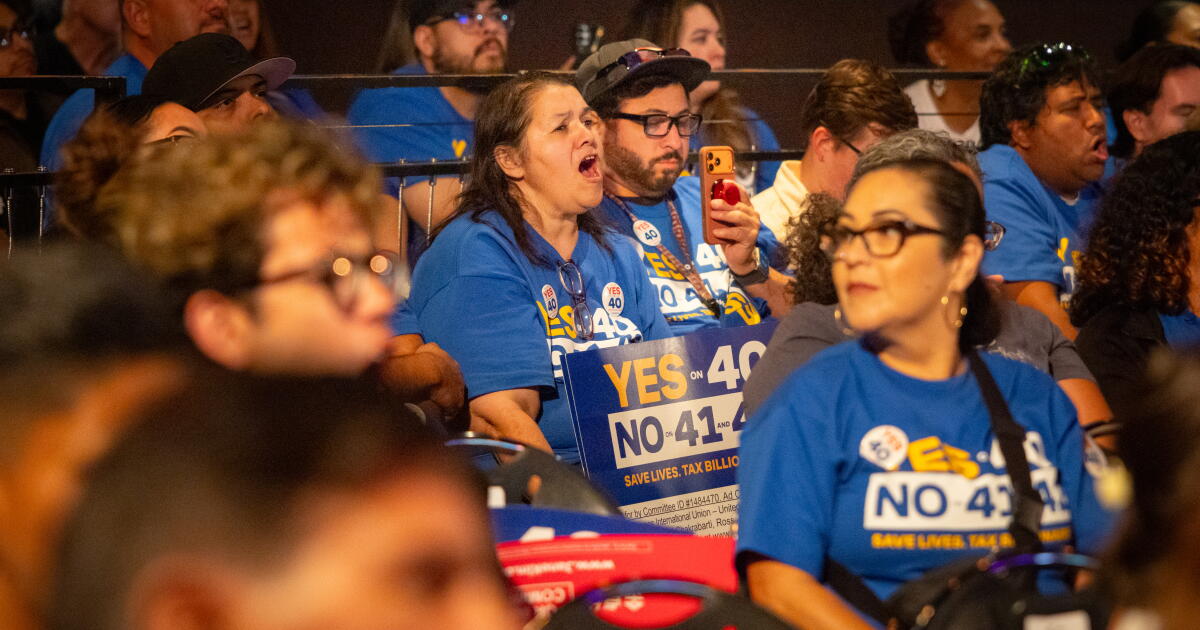
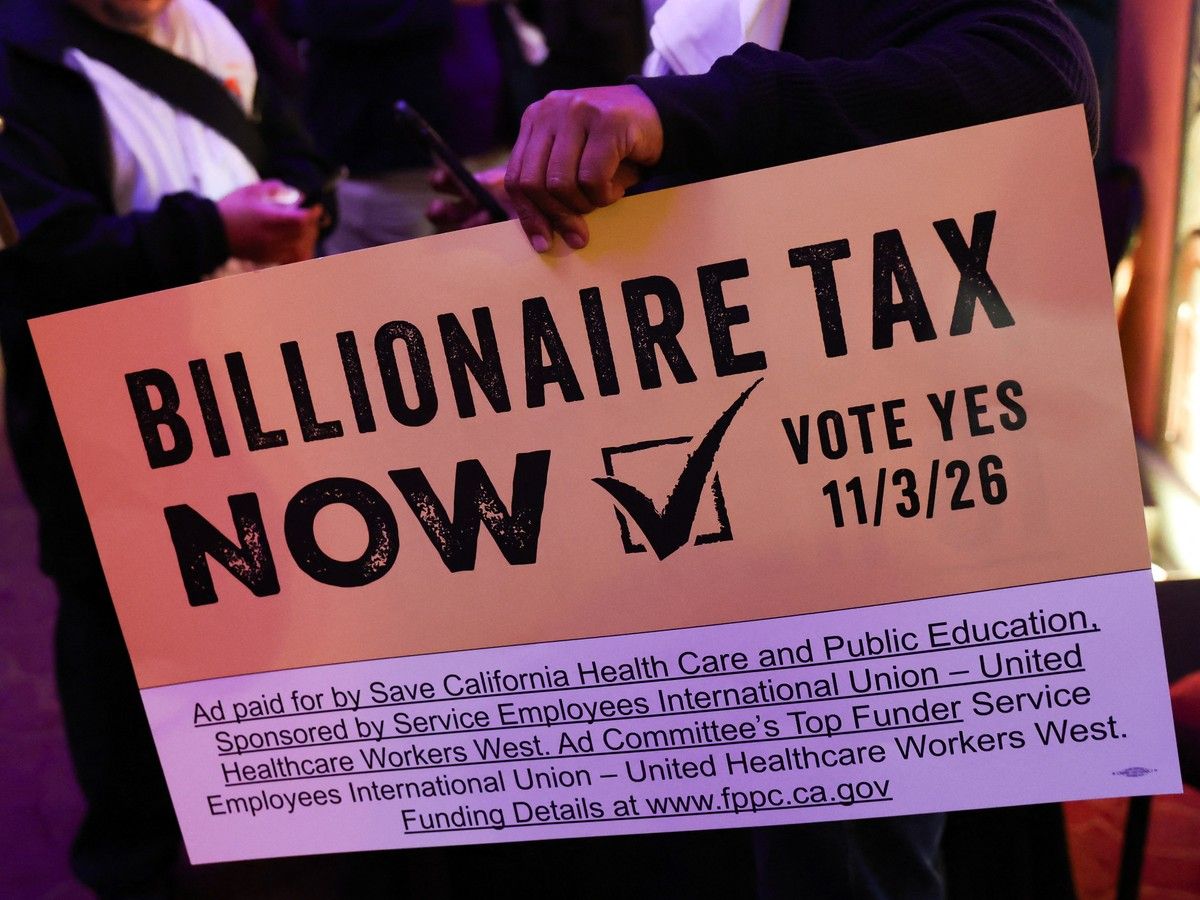
Californians are set to vote on Proposition 40, which would take 5% of fortunes above $1 billion, once, and send nine-tenths of the revenue to fund California’s Medicaid program.
asserted
which → set → program
A swarm of Silicon Valley billionaires, including Google co-founder Sergey Brin, has spent more than $333 million campaigning against the potential tax, warning it will backfire and push the wealthy to flee the sunshine state.
asserted
it → include → state
Even the income tax once looked like an assault on property.
asserted
tax → look → property
The Supreme Court struck one down as unconstitutional in 1895, and it took the 16th Amendment in 1913 to make it ordinary.
asserted
it → strike → 1913
Taxes on great fortunes may travel the same road and become unremarkable within a decade.
uncertain
Taxes → travel → decade
Plus, research indicates that the wealthiest households often pay lower effective tax rates than the people who work for them.
asserted
who → indicate → them
I support Proposition 40.
asserted
I → support → Proposition
But it is not sufficient in addressing the underlying economic issues at hand.
asserted
it → address → hand
A wealth tax like Proposition 40 tries to recover a share of value long after that value has been created, compounded, and defended.
asserted
value → try → value
By then, the money has lawyers.
asserted
money → have → lawyers
Which is why the origins of this extreme wealth matter, now that the prospect of redistribution has so agitated the people holding it.
asserted
prospect → matter → it
To understand how these systems work, think of the iPhone.
asserted
systems → understand → iPhone
As I argued in my book The Entrepreneurial State, the iPhone's foundational technologies came from public research: the internet, GPS, the touchscreen, and the voice recognition behind Siri.
asserted
technologies → argue → Siri
Speech understanding research at Carnegie Mellon, MIT, and Stanford Research Institute was funded by the Defense Advanced Research Projects Agency (DARPA) in the 1970s.
asserted
research → fund → 1970s
Researchers then spent two more decades on language and learning systems no company would finance, because the payoff lay thirty years out.
asserted
payoff → spend → systems
The search algorithm that made Brin's fortune grew out of a National Science Foundation project at Stanford.
asserted
that → make → Stanford
And then there’s SpaceX, whose listing made Musk a trillionaire, took $396 million from NASA to develop the Falcon 9 and the Dragon capsule, then $1.6 billion to fly cargo to the space station and $2.6 billion to fly astronauts.
asserted
Musk → make → astronauts
The world’s richest man was also the biggest political donor this election cycle, spending $366 million supporting Republican causes.
asserted
man → spend → causes
Other people see them as tech bros.
asserted
people → see → bros
I see them as a brologarchy.
asserted
I → see → brologarchy
They surfed off publicly financed research to earn enormous rents, and continue to profit off of them through what I call “algorithmic rents”: returns from owning the platforms, data, and models the rest of us must pass through, and manipulating what our “attention” sees.
asserted
attention → surf → what
None of this takes anything away from the entrepreneurs.
asserted
None → take → entrepreneurs
Turning a research program into a reusable rocket is hard.
asserted
Turning → turn → rocket
The public carried the risk in the years when these technologies had no market and no buyer.
asserted
technologies → carry → market
The state carries the blame: for not setting out, in the contracts, the terms of that initial investment and a fair share of the rewards for the risk the public took.
asserted
public → carry → risk
The Department of Energy made the asymmetry explicit in 2009, issuing two near-identical loan guarantees to two of Musk’s companies: $465 million to Tesla and $500 million to Solyndra.
asserted
asymmetry → make → Solyndra
Solyndra, a now-bankrupt solar panel manufacturer, collapsed two years later, and the taxpayer absorbed the loss and the political damage.
asserted
taxpayer → collapse → loss
Tesla, by contrast, succeeded.
asserted
Tesla → succeed → contrast
Under its loan agreement, the government held warrants it could exercise only if Tesla failed to repay on schedule; Tesla repaid nine years early and the warrants lapsed.
uncertain
warrants → hold → schedule
The public took the downside on one deal and wrote itself out of the upside on the other.
asserted
public → take → other
Economists call this socializing risk and privatizing reward.
asserted
Economists → call → this
It describes a contract drafted without the confidence to ask for anything.
asserted
It → describe → anything
NASA once had that confidence.
asserted
NASA → have → confidence
In the early 1960s, it moved Apollo contracts from cost-plus-fixed-fee to incentive contracts tying a contractor's fee to cost, schedule, and performance, setting terms rather than writing blank checks.
asserted
it → move → checks
More recently, the CHIPS and Science Act attached conditions to $52.7 billion of semiconductor funding, covering where plants get built and what jobs they create.
asserted
they → attach → jobs
I believe those conditions did not go far enough.
asserted
conditions → believe → ?
Wage standards covered laborers and mechanics rather than every worker, and affected communities got no formal seat in the decisions.
asserted
communities → cover → decisions
Public money can come with terms.
asserted
money → come → terms
This is called “pre-distribution,” shaping how value is created and shared at the outset, rather than waiting for the tax code to repair the damage, and it is a crucial principle for making capitalism work for us all.
But establishing this kind of capitalism requires that we commit to another principle: access for all and reward sharing.
asserted
we → call → all
…and 21 more, not listed.
 The Aporia