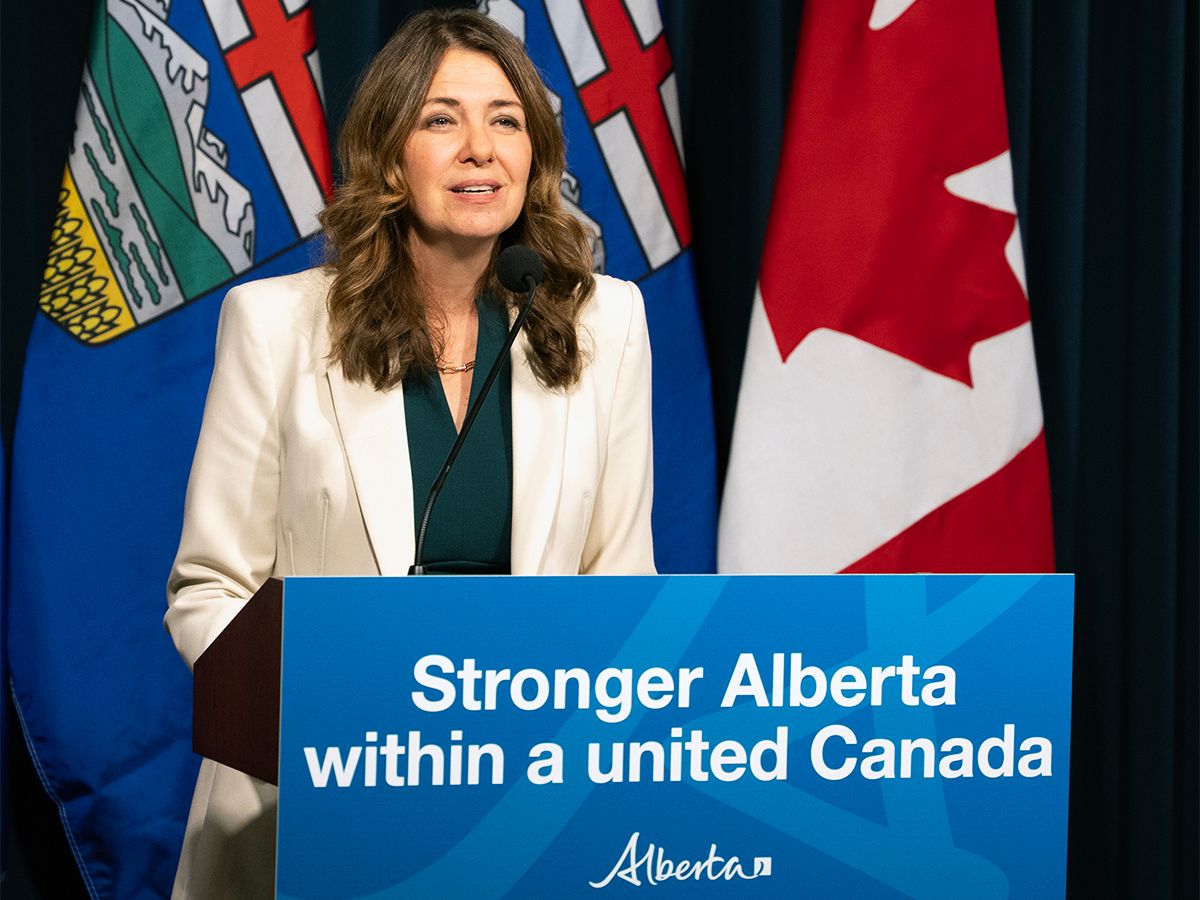
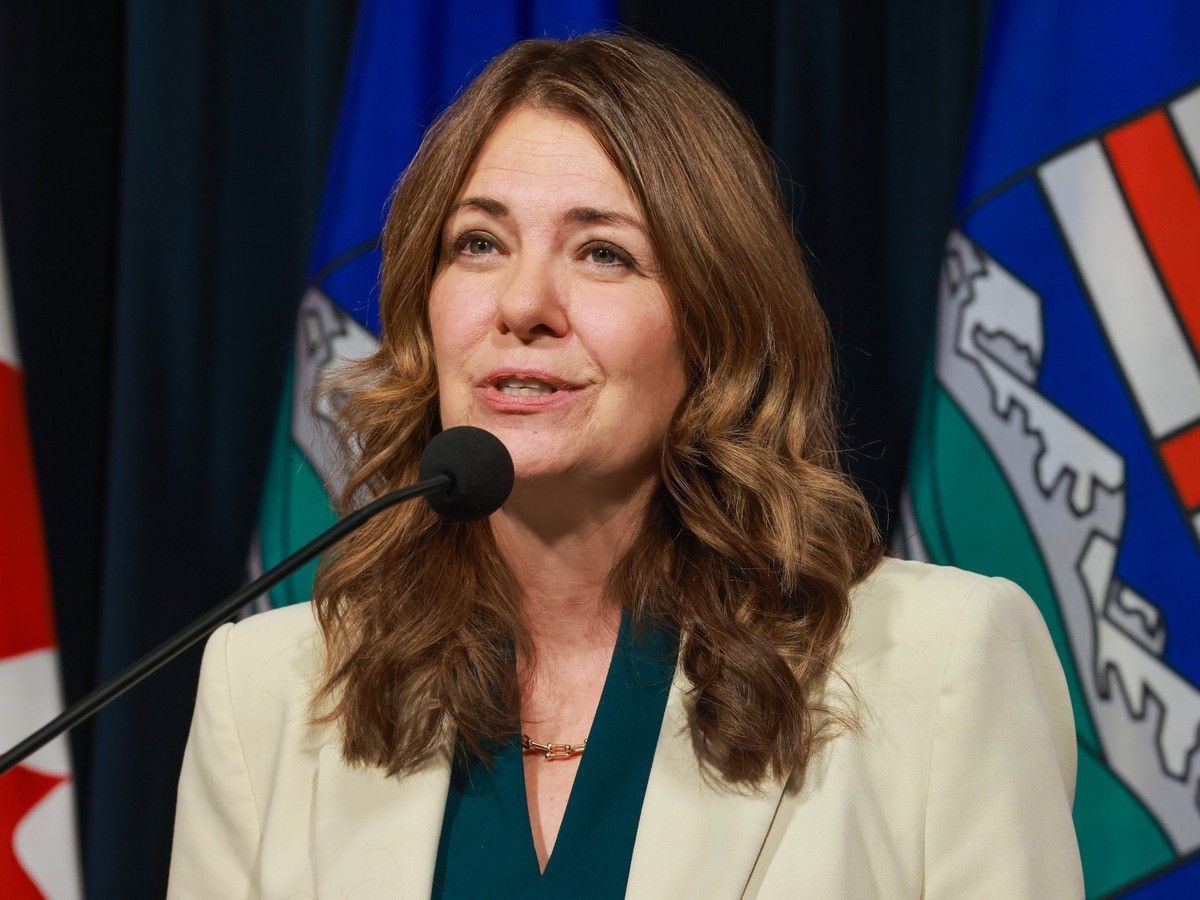
Edmonton and Calgary rejected her referendum.
asserted
Edmonton → reject → referendum
Does Danielle Smith have a city problem?
asserted
Smith → have → problem
Nowhere in Alberta was the idea of a second referendum less popular
This week the Alberta government pivots back to governing, with MLAs returning to the legislature for the first time since a contentious referendum on separation exposed the divide between, among other things, urban and rural Albertans.
asserted
referendum → pivot → Albertans
Much of the pushback on the 10 referendum questions came from the province’s two largest centres.
asserted
Much → come → centres
Calgary collectively voted "no" on all questions except proof of citizenship to vote, while Edmonton was a "no" across the board.
asserted
Edmonton → vote → board
“We all know there’s an urban-rural divide in Alberta politics,” says Lisa Young, a political scientist at the University of Calgary.
asserted
Young → know → Calgary
“But the referendum results make it really stark.”
asserted
it → make → ?
This presents a quandary for Premier Danielle Smith, who has historically been supported by — and focused her attention on — rural Alberta.
asserted
who → present → attention
Now, she must contend with a sizable group of urban Albertans who appear to have rejected her latest political project, while she publicly spars with councillors over local issues such as zoning.
asserted
she → contend → zoning
Meanwhile, it remains to be seen whether her list of priorities for the upcoming sitting, which include public sector hiring based on "merit," protections for data centre development and the future of bike lanes, will speak to the cities.
asserted
which → remain → cities
“I think a lot of the recent focus on the more performative politics has served the UCP minority base really well,” said Calgary Mayor Jeromy Farkas on Tuesday.
asserted
Farkas → think → Tuesday
“But the more we debate … which books should be in a library,” he said, referring to a recent bill to limit sexually explicit material in public libraries, “the more you lose the mainstream Calgarians who actually just want to get things done, want to know that life is safe and affordable.”
asserted
life → debate → Calgarians
Smith herself has talked about the need to refocus on voters in Edmonton and Calgary, telling CBC News last week that her government needed to “identify the issues” that were important to residents of the two urban centres, which together make up just over half of the provincial population.
asserted
which → talk → population
Danielle Smith has said no to a second referendum.
asserted
Smith → say → referendum
But that decision might not be hers to make
Fight for independence won't end after referendum: Alberta Prosperity Project leader
Urban voters are focused on issues like education, health care and affordability, which is why her government has (temporarily) paused the gas tax at the pumps and rolled out “complexity teams” in classrooms, Smith said.
uncertain
Smith → make → classrooms
“The issues that were of the referendum, I think it’s pretty clear those are ... of greater interest to those who are in political parties and punditry circles and in rural Alberta than they were in Calgary or Edmonton."
asserted
they → think → Calgary
It’s a change of script from 2022 when Smith, then a newly-minted party leader, made waves by suggesting she didn’t need much urban support.
asserted
she → ’ → support
Instead, she had mapped out a “rural-based” path to electoral victory, telling a columnist that she’d done the math and would only need a relative handful of city seats if she won everywhere else.
asserted
she → map → seats
Smith delivered, winning a majority the following year.
asserted
Smith → deliver → majority
She took a dozen seats in Calgary and a few on the outskirts of Edmonton, but painted most of the map blue everywhere else.
asserted
She → take → map
But Calgary has since rejected most of Smith’s referendum questions and, Young points out, flipped the reliably right-leaning riding of Calgary-Shaw to the NDP in a recent byelection.
asserted
Young → reject → byelection
“It looks like Calgary is in a different place than it was a couple of years ago,” Young said.
asserted
Young → look → years
It may not help that Smith, a frequent critic of federal overreach, has waded into municipal issues in recent months, essentially overturning the decisions of city councils on issues like infill housing and zoning, and now appears to have her sights set on bike lanes, Young added.
uncertain
Young → help → lanes
It “doesn’t really signal wanting to have a relationship of respect with these urban governments,” she said.
asserted
she → signal → governments
“It’s going to be really interesting to watch and see whether there’s a softening of the hostility with Edmonton and Calgary city governments.”
asserted
It → go → governments
Mayor Jeromy Farkas says he's not surprised most Calgarians rejected the referendum questions, and he will be looking to see how the provincial government prioritizes investment in his city over the next year.
asserted
government → say → year
But as Farkas points out, a year away from a provincial election, there’s still time for Smith to turn it around.
asserted
Smith → point → it
He’s waiting to see what’s in the provincial budget: “I don’t watch what the politicians are saying; I watch what the politicians are doing.”
asserted
politicians → wait → what
“We want to see much more substantive investment here locally in Calgary around affordability, public safety and essential infrastructure.”
asserted
We → want → affordability
The idea of Alberta as the land of cowboys and open prairie can clash with its urban reality as, contrary to stereotypes, Alberta is actually one of the country’s most urbanized provinces.
asserted
Alberta → clash → provinces
According to Statistics Canada, it had the third smallest proportion of rural residents as of 2021 at roughly 15 per cent.
uncertain
it → accord → cent
That makes it more urbanized than the national average, and close on the heels of uber-urban provinces like Ontario and British Columbia.
asserted
it → make → Ontario
But rural issues play a big role in provincial politics here, Young notes.
asserted
Young → play → politics
That’s in part a result of the electoral map, which allows for a smaller number of residents in some rural ridings, in order to ensure remote areas have adequate representation.
asserted
areas → ’ → representation
Drawing the map to ensure each riding has roughly the same number of people while making sure some don’t become unmanageably large is a longstanding struggle in Alberta.
asserted
become → draw → Alberta
The report from the 2017 electoral boundary commission noted that at the time, the constituency of Lesser Slave Lake had a population of 28,858 people while Calgary-South East had 92,148.
asserted
East → note → 92,148
In other words, a vote in Lesser Slave Lake had about three times the punch of a vote in Calgary.
asserted
vote → have → Calgary
But there’s also the consideration of the economic importance of rural areas, given the extent to which the actual action of key industries like oil and gas take place outside of urban centres, Young said.
asserted
Young → ’ → centres
History plays a role, too: “There’s a sense, historically, of people in rural communities seeing themselves as the authentic Albertans, the people who are generating value and prosperity for the province,” said Young.
asserted
Young → play → province
The issues faced by urban and rural communities are actually not that different, but they show up in different ways, said Colin Aitchison, a former United Conservative press secretary who is now a managing director at communications and public affairs firm Enterprise Canada.
asserted
who → face → Canada
…and 17 more, not listed.
 The Aporia