Alberta referendum tallies reveal rural-urban divide on ‘the 9’

Read the original at CBC News ↗
Cite

Frew, N. (2026, October 26). Alberta referendum tallies reveal rural-urban divide on ‘the 9’. CBC News. https://www.cbc.ca/news/canada/edmonton/alberta-2026-referendum-results-rural-urban-divide-9.7394776?cmp=rss

Dated from the outlet's own feed. Check the original for its byline.

CBC News · collected 2026-10-26 · by Nicholas Frew

Quick Summary

Elections Alberta officials have completed an unofficial count of referendum ballots in Alberta, revealing significant differences between rural and urban voters' stances on immigration and constitutional issues. Rural areas predominantly supported the first five questions regarding immigration policies, while opposition to the latter four constitutional reform questions was stronger overall, particularly in Calgary and Edmonton. Political science professor Feodor Snagovsky notes that this divide aligns with typical conservative leanings in rural regions compared to urban centers. Premier Danielle Smith suggests her government will proceed cautiously based on voter feedback, prioritizing immigration policies over constitutional changes.
Written locally by qwen2.5:14b on 2026-10-26, using this article's own text rather than the other coverage of the same event (that is the story summary below).

AI analysis runs on qwen2.5:14b, locally

Story summary

As Albertans headed to polls from October 13-19 for a historic referendum on whether Alberta should separate from Canada, Premier Danielle Smith aimed to gain leverage in negotiations with the federal government. The voting concluded on October 25, revealing that three-quarters of voters chose to remain within Canada, despite significant debate and anticipation over the outcome. Advance voting began on October 13 at 311 polling stations across Alberta for five days. Albertans were presented with ten questions, including whether the province should initiate a legal process toward separation from Canada, and nine others related to immigration and constitutional issues. While rural areas showed greater support for changes like limiting federal influence over provincial matters, urban centers largely opposed such measures, reflecting broader ideological differences within the province.

Written for “Alberta Separation Referendum Voting Opens” on 2026-10-26, grounded in this article and the 103 other(s) covering the same event.
Why this leaning score
The article's own words the score was based on. Each is quoted verbatim and was checked against the article text before being stored, so you can find it in the original.
Reading Leans right (beta estimate) Confidence high 1 quote(s) discarded as not found in the article
Leaning: leans right for article 107964 (high confidence, 2 verified quotes) · logged 2026-10-26

Story

📰 Alberta Separation Referendum Voting Opens
Politics · 104 article(s) covering the same event. Compare every outlet's account →

Compared with similar articles

This article reads leans right and hedges 7% of its claims. Each row says how that neighbour differs.
CBC News
⚖️ Leans right 🔴 8% hedged 5 of 60 📰 publisher trust 74
“Both articles discuss the same Alberta referendum results regarding immigration questions and constitutional changes on the same day.”
The Globe and Mail
⚖️ Leans left further left than this 🔴 15% hedged 5 of 33 📰 publisher trust 53
“Both articles describe the results of the same Alberta referendum, highlighting the urban-rural divide in support for immigration and constitutional issues.”
Global News
⚖️ leaning not scored 🔴 8% hedged 2 of 26 📰 publisher trust 63
“The articles discuss different aspects of the referendum; one focuses on labor implications while the other highlights the rural-urban divide in voting patterns.”
CBC News
⚖️ leaning not scored 🔴 22% hedged 10 of 46 📰 publisher trust 74
“Article A discusses the implications of the Alberta referendum results, while Article B reports specifically on the rural-urban divide observed in the tallies of the referendum. They cover related but distinct aspects of the event.”
National Post
⚖️ leaning not scored 🔴 8% hedged 3 of 39 📰 publisher trust 60
“Article A discusses Quebec's election results and Albertans' vote on a sovereignty referendum step, while Article B focuses specifically on the rural-urban divide in Alberta's referendum voting patterns.”
National Post
⚖️ Leans left further left than this 🔴 16% hedged 5 of 32 📰 publisher trust 60
“The articles describe different aspects of public opinion regarding immigration but do not refer to the same specific event or poll results.”
CBC News
⚖️ leaning not scored 🔴 4% hedged 4 of 96 📰 publisher trust 74
“Article A discusses the reactions of supporters of Alberta independence post-referendum, while Article B focuses on the rural-urban divide in referendum results related to immigration and constitutional questions.”
Global News
⚖️ leaning not scored 🔴 0% hedged 0 of 9 📰 publisher trust 63
“The articles discuss different aspects of the referendum; one focuses on First Nations' voting issues while the other covers the rural-urban divide in results.”
Toronto Star
⚖️ leaning not scored 🔴 7% hedged 2 of 27 📰 publisher trust 64
“Article A discusses labor shortages concerning a specific union's viewpoint in the aftermath of the referendum, while Article B covers the overall results and divides between rural and urban areas on immigration proposals.”
National Post
⚖️ Leans left further left than this 🔴 16% hedged 10 of 64 📰 publisher trust 60
“Article A discusses the broader implications of Alberta's referendum vote result, while Article B focuses specifically on the rural-urban divide revealed by the tallies of the referendum ballots.”
How this article was measured signals, leaning charts, publisher record, byline, topics and claims

Signals How these are calculated →

Claims extracted
28
sentences that state something as happening or true
Uncertain
7%
2 of 28 hedged ("reportedly", "may", "according to")
Leaning
Leans right
of the writing, not the subject · beta estimate
Publisher signals
74/100
CBC News's corrections and hedging, across everything collected from it. Not a measure of accuracy.
Outlets on this story
104
Politics
Same framing elsewhere
1
articles that frame the event the way this one does
Analyzed 2026-10-26 · how these are computed

How this is being covered How these are calculated →

Article leaning vs. publisher reliability
Source leaning vs. consistency

Publisher

CBC News · 1588 article(s) · 5 correction(s) detected
Running correction rate · 5 correction(s)

Who wrote this

Nicholas Frew
2 article(s) here · 1 carrying a prediction
🔮 The referendum was worth holding, she said, and it showed her that Albertans are more concerned about immigration policy than pursuing constitutional change — and her government will prioritize taking action on those proposed measures.
🔮 Looking ahead, Thomson worries about how the upcoming provincial referendum — and the uncertainty surrounding it — could affect Alberta's economy.
Also by Nicholas Frew
Nothing else under this byline is closely related to this article, so these are simply their most recent.

Topics

Alberta Albertans Calgary Canada Edmonton

Subjects

Alberta GPE · 5× Smith PERSON · 5× Albertans NORP · 4× Calgary GPE · 2× Canada GPE · 2× Edmonton GPE · 2× CBC News ORG · 1× Canadian NORP · 1× Feodor Snagovsky PERSON · 1× the University of Alberta ORG · 1×

Narrative

Most support for any of the questions that have come to be known as “the nine” — because so much focus was on Question 10, which asked about Alberta’s place in Canada — came from rural ridings, while voters in Calgary and Edmonton were more divided, if not firmly against them. “We've long seen urban-rural divide over things like immigration, and that partly tracks with the fact that … rural places tend to be more conservative than urban places,” Feodor Snagovsky, an associate professor of political science at the University of Alberta, told CBC News, adding that those on the political right tend to have “more restrictive views” on immigration.
framing: assertive · carried by 1 article(s) · first seen 2026-10-26
🔮 The referendum was worth holding, she said, and it showed her that Albertans are more concerned about immigration policy than pursuing constitutional change — and her government will prioritize taking action on those proposed measures.
2026-10-26 · CBC News
Alberta referendum tallies reveal rural-urban divide on ‘the 9’ · assertive framing

Claims (28 extracted, 2 hedged)

Alberta referendum tallies reveal rural-urban divide on ‘the 9’ Support for immigration, constitutional questions stemmed mostly from rural ridings Elections asserted
Support → reveal → ridings
Alberta officials are finishing counting referendum ballots, but the results so far suggest Albertans in rural areas seem to hold different views on immigration and constitutional fights than those living in urban areas. asserted
Albertans → finish → areas
The agency confirmed its unofficial count Saturday night. asserted
agency → confirm → count
Results suggest more Albertans overall support the proposals in questions 1 to 5, which focused on immigration and access to services for non-permanent residents, and oppose the proposals in questions 6 to 9, which pertained to various constitutional issues. asserted
which → suggest → issues
Most support for any of the questions that have come to be known as “the nine” — because so much focus was on Question 10, which asked about Alberta’s place in Canada — came from rural ridings, while voters in Calgary and Edmonton were more divided, if not firmly against them. “We've long seen urban-rural divide over things like immigration, and that partly tracks with the fact that … rural places tend to be more conservative than urban places,” Feodor Snagovsky, an associate professor of political science at the University of Alberta, told CBC News, adding that those on the political right tend to have “more restrictive views” on immigration. asserted
those → come → immigration
Follow all of our Alberta referendum coverage Smith scores slim majority on immigration questions, Albertans reject constitutional changes The immigration questions focused on ideas like requiring voters to prove their Canadian citizenship to cast ballots in provincial elections, the provincial government taking more control of immigration — more of a federal responsibility, historically — and imposing conditions on non-permanent residents’ access to services like health care and education. asserted
government → follow → care
The constitutional questions regarded issues like provinces — not the feds — being able to make judicial appointments and trying to abolish the federal Senate. asserted
provinces → regard → Senate
Given the results so far, political analysts suggest Premier Danielle Smith’s government did not get a strong mandate on the proposals it put forward in the referendum. asserted
it → give → referendum
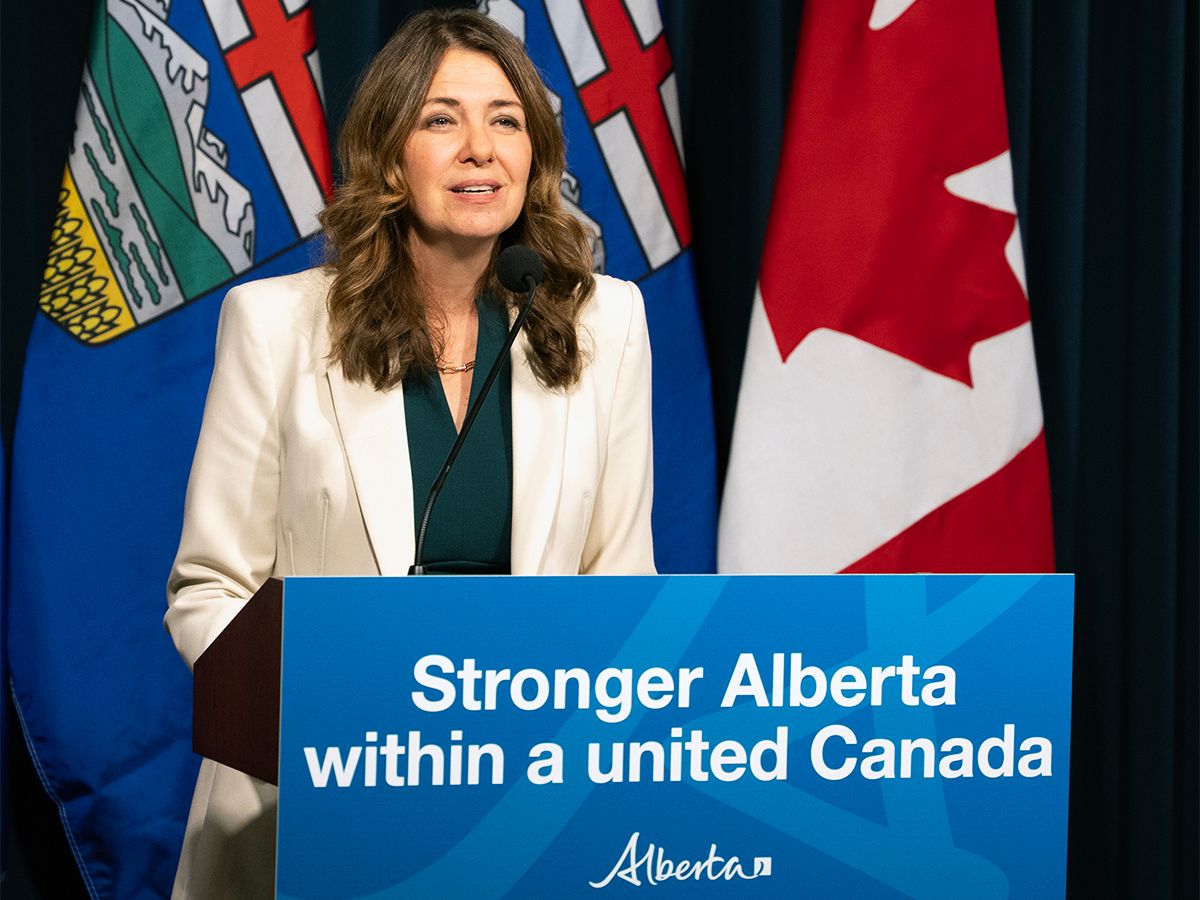
During an interview with CBC podcast West of Centre Friday, Smith said she believes voters told her government to proceed with caution, but that there is a desire to get more control over economic migration. asserted
voters → say → migration
The referendum was worth holding, she said, and it showed her that Albertans are more concerned about immigration policy than pursuing constitutional change — and her government will prioritize taking action on those proposed measures. asserted
government → hold → measures
“People want to be fair, they want to be generous, but we can solve a lot of the problems by focusing our newcomer population on the jobs that are available,” Smith said, adding that someone landing in the province with a well-paying job probably relies less on social services. asserted
someone → want → services
“When somebody makes a commitment to being a permanent taxpayer, as a permanent resident, they’ll get the same programs as everyone else. asserted
they → make → everyone
If we can fix that part, then I think it will reduce some of the stress on our health-care and education and other systems.” asserted
it → fix → care
When asked about the dissension in Alberta’s two largest cities, Smith argued that most of the jobs that the province needs to attract people from elsewhere to fill are located outside of those centres, thus rural voters might have felt more strongly about immigration. uncertain
voters → ask → immigration
Opposition to immigration in rural areas, at least in part, stems from concerns about Canada’s Temporary Foreign Worker Program, Snagovsky said, adding he believes there is room for a conversation about ensuring employers are using that appropriately. asserted
employers → stem → that
Moving forward, however, the referendum’s apparent rural-urban divide forces Smith to walk a political tightrope, said Lisa Young, a University of Calgary political science professor. asserted
Young → move → Calgary
Most MLAs for the governing United Conservative Party represent rural ridings, but 11 of them represent Calgary ridings. asserted
11 → govern → ridings
Edmonton’s districts are all represented by the Opposition NDP. asserted
districts → represent → NDP
Data suggests Question 5 — about proving Canadian citizenship to vote in provincial elections — was the only one of “the nine” that a majority of voters supported across all UCP-held ridings. uncertain
majority → suggest → ridings
But for the rest, some of the UCP’s Calgary ridings — including those held by cabinet ministers like Demetrios Nicolaides and Mike Ellis — either objected to, or narrowly supported, the proposals that were put forward. asserted
that → include → proposals
“The results of the referendum suggest that [Smith’s] hold on Calgary seats is maybe not as strong as it was in the past, so the viability of her coalition strategy now is in question,” Young said. asserted
Young → suggest → question
The next general election is set for October 2027. asserted
election → set → October
For the governing UCP to hold on to power, Young said, the premier must figure out how to maintain rural support, while also appealing to at least some urban Albertans. asserted
premier → govern → Albertans
Elections Alberta is set to release its official referendum results Thursday, two days after the fall session gets underway in Alberta’s legislature. asserted
session → set → legislature
The provincial government issued a news release Friday that listed multiple issues about which it intends to propose legislation. asserted
it → issue → legislation
Young said she assumes the government has already drafted legislation related to the referendum issues. asserted
government → say → issues
She said she will be watching for whether the government hesitates to introduce anything because of the referendum results, and if it uses Section 33 of the Canadian Charter of Rights and Freedom — the notwithstanding clause — to pass certain items. asserted
it → say → items
“It’s going to be telling whether this legislation now comes forward — and in what form,” Young said. asserted
Young → go → form

💬Give feedback
🕘History 🎫Support