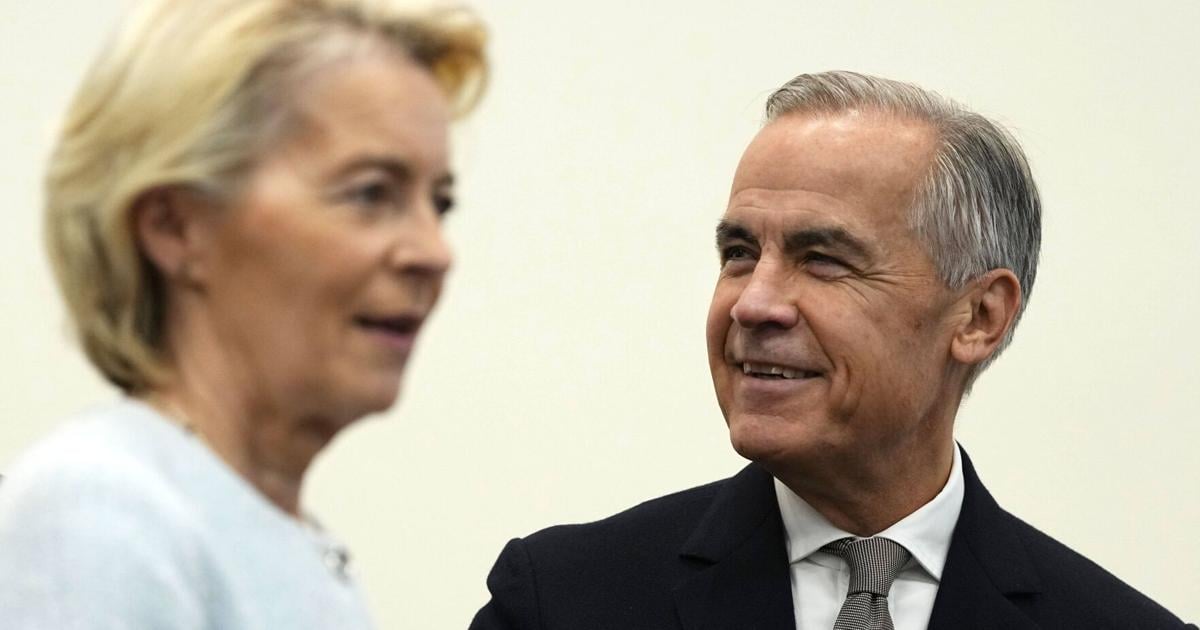
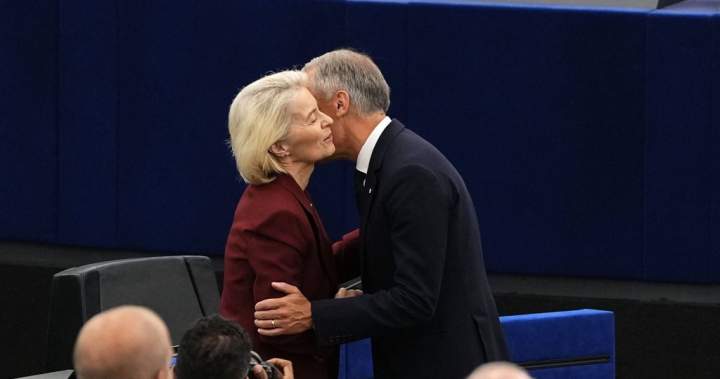
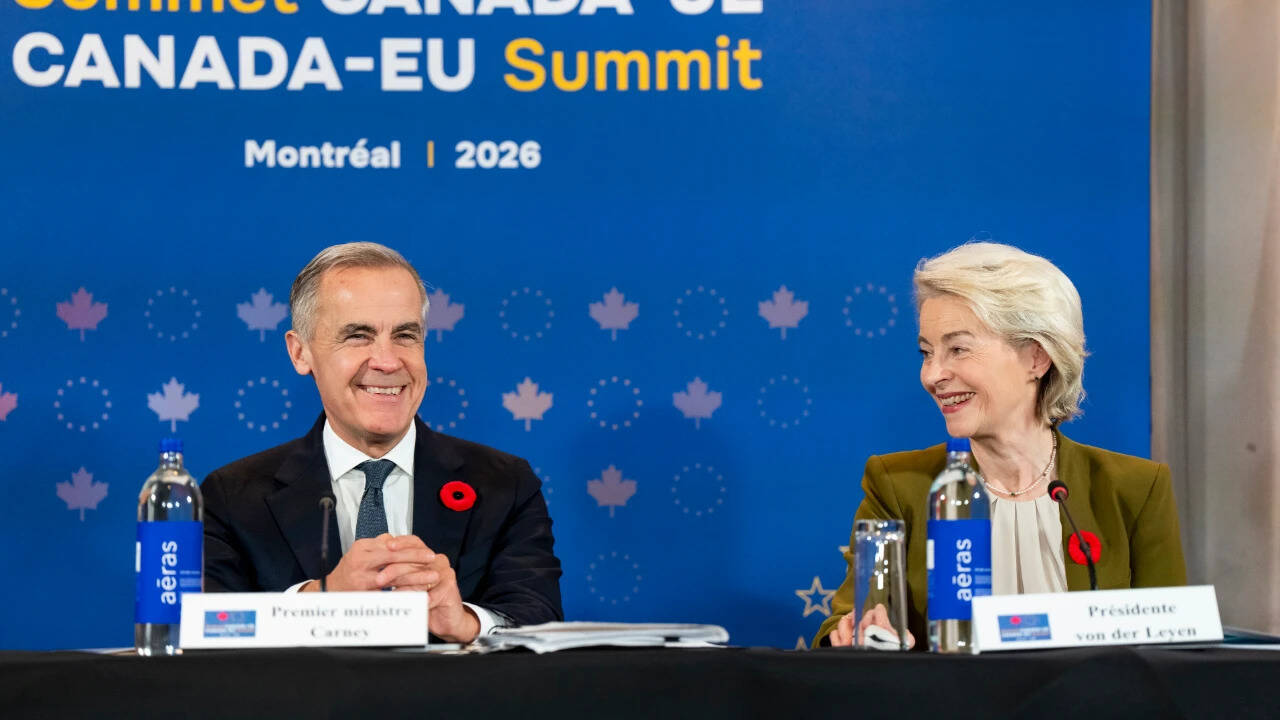
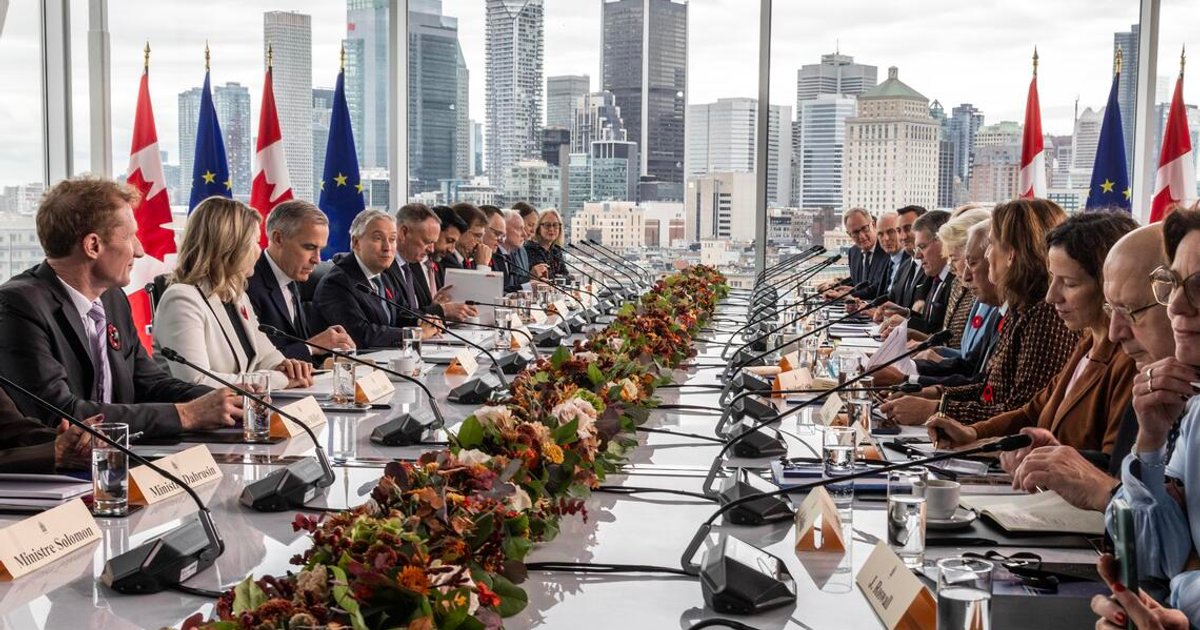
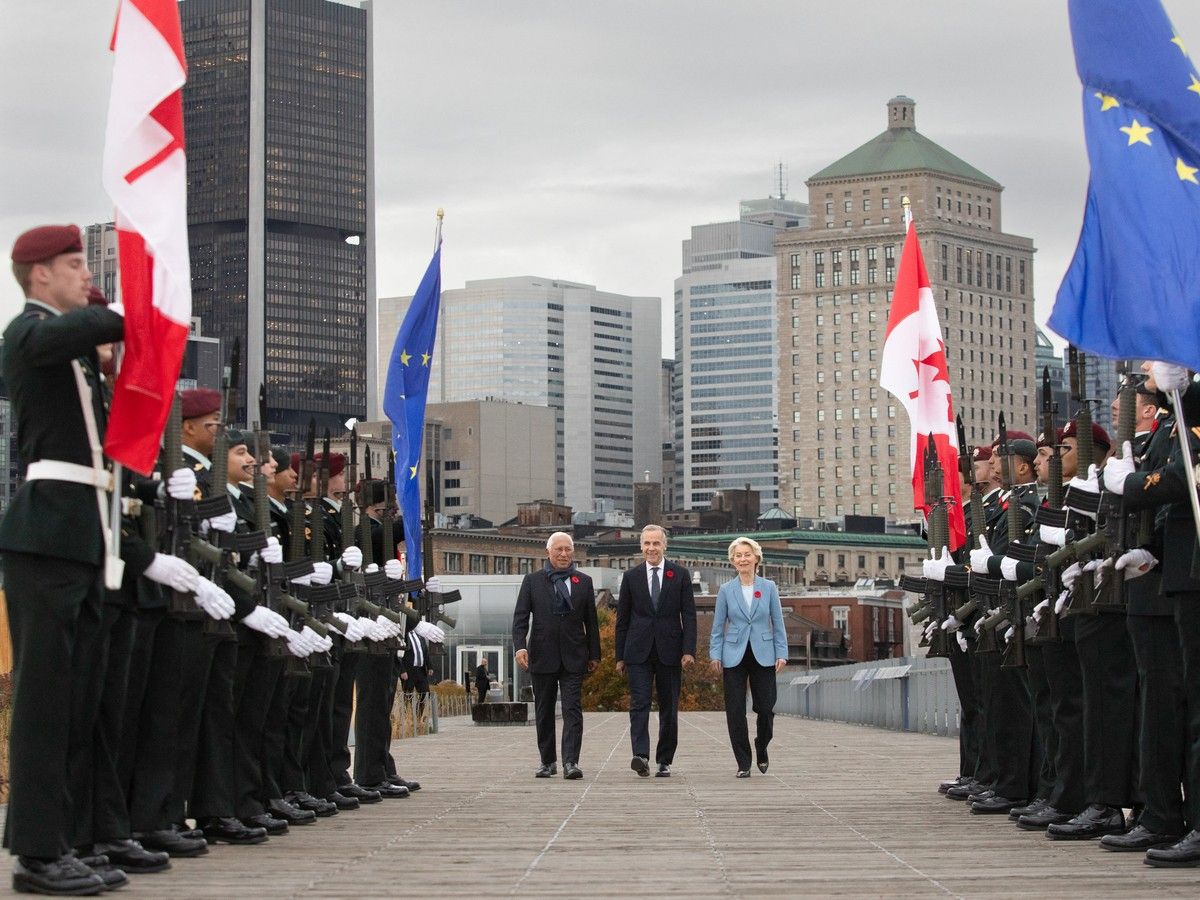
When Prime Minister Mark Carney and the European Union’s top officials meet in Montreal later this month, they’ll have metal on their minds.
asserted
they → meet → minds
Among other tactics for strengthening the Canada-EU partnership, both Carney and European Commission President Ursula von der Leyen have called recently for increasing trade and investment around critical metals — the basket of minerals needed for the 21st century’s most important technologies, including electric vehicles, renewable energy, digital tech and military weapons systems.
asserted
Carney → strengthen → vehicles
It seems like a no-brainer: Canada has the supply, in the form of some of the world’s biggest reserves of many critical metals.
asserted
Canada → seem → metals
Europe has the demand, with its refineries and high-tech industries.
asserted
Europe → have → refineries
Plus, we share history and culture, already have trade agreements, and are both (at least in principle) committed to decarbonizing our economies.
asserted
we → share → economies
But at the moment, Canada-EU critical metal trade is minuscule — a tiny fraction of what goes on between Canada and the U.S.
asserted
what → go → Canada
Changing that will not be easy or quick.
asserted
Changing → change → that
Critical metals, such as lithium, copper, cobalt, nickel and rare earths, are used to make everything from cellphone touch screens to electric car batteries to the motors that drive military drones.
asserted
that → use → drones
Demand for these minerals is exploding worldwide, sparking a global scramble for new sources.
asserted
Demand → explode → sources
Carney rolled out the measures Thursday as part of a strategy to buffer the Canadian automotive industry from the fallout of the U.S.-led tariff
Carney rolled out the measures Thursday as part of a strategy to buffer the Canadian automotive industry from the fallout of the U.S.-led tariff
Today, the world’s main source for these metals is a single country: China.
asserted
source → roll → metals
From mining to refining to creating finished products, Chinese companies control much, and often most, of the entire supply chain for just about every critical mineral.
asserted
companies → create → mineral
In some cases, like rare earths — a set of metals vital to EVs, digital and military technologies — China produces as much as 90 per cent of all the world’s supply.
asserted
China → produce → supply
That gives Beijing powerful geopolitical leverage, which it has not been shy about using.
asserted
it → give → which
In recent years, China has tightened controls on rare earth exports, sparking supply crunches that disrupted European factories.
asserted
that → tighten → factories
And just last year, when President Donald Trump threatened China with massive tariffs, Beijing responded by threatening to shut off the flow of rare earths.
asserted
Beijing → threaten → earths
The U.S. quickly backed down, making clear just how vulnerable even the world’s biggest economy is to this particular trade weapon.
asserted
economy → back → weapon
Meanwhile, Trump has been blasting away at friend and foe alike with his own trade weapons, hitting the EU and Canada with painful tariffs — while insulting their leaders and musing about pulling out of NATO.
So, for Canada and European nations that want to stop depending so heavily on both China and the U.S., a critical metal team-up makes all kinds of sense.
asserted
up → blast → sense
It’s an obvious opportunity to diversify trade and shore up sovereignty.
asserted
It → ’ → sovereignty
It was more than half a century ago, but there are many modern echoes in the twists and turns of this earlier attempt at securing our economy.
asserted
It → be → economy
It was more than half a century ago, but there are many modern echoes in the twists and turns of this earlier attempt at securing our economy.
asserted
It → be → economy
Canadian mines already produce many of the most sought after minerals, from copper in British Columbia to cobalt in Quebec, and our vast nation holds much, much more.
asserted
nation → produce → more
Canada’s known reserves of critical metals are estimated to be worth well over $300 billion.
asserted
reserves → know → metals
The list includes not just mines producing raw ore but also processing facilities that can keep some of the higher-value links of the supply chain in Canada.
asserted
that → include → Canada
The EU, meanwhile, is building up electric vehicle and renewable energy industries that need huge amounts of those metals.
asserted
that → build → metals
Europe’s demand for lithium, for instance, a central ingredient in batteries for EVs as well as laptops and other digital paraphernalia, is on track to increase as much as 12-fold in the next few years.
asserted
demand → increase → years
“With the bloc taking new steps to reduce reliance on fossil fuel imports and increase renewable deployment and electrification following the spike in oil and gas prices triggered by the war in Iran, critical mineral demand will only intensify,” predicts a recent report from the think tank Clean Energy Canada.
asserted
report → take → tank
The EU has refineries and high-tech factories, but most of the raw critical metals to feed them are imported from overseas.
asserted
most → have → them
We supply the EU with only four per cent of its copper, one per cent of its graphite and none of its lithium.
asserted
We → supply → lithium
Even the vast nickel mines of Eastern Canada provided just 12 per cent of Europe’s supply in 2024.
asserted
mines → provide → 2024
The potential benefits to both sides of boosting that trade are clear.
asserted
benefits → boost → trade
It’s a lot cheaper and easier to truck a ton of metal across the U.S. border than it is to ship it across the Atlantic.
asserted
it → ’ → Atlantic
Though Trump’s tariffs have crimped trade somewhat, the U.S. is still by far Canada’s biggest customer for critical metals, buying more than the rest of the world combined — nearly $29 billion worth last year.
asserted
U.S. → crimp → world
In the European Union, our biggest customer is the Netherlands — which buys less than one-tenth of that amount.
asserted
which → buy → amount
Cutting new deals between Canadian and European companies and building up the ports, rail and other infrastructure that will be needed to support them will take time and money.
asserted
that → cut → time
With an already colossal critical metal industrial base that is less encumbered by environmental and labour standards, it can offer metals to Europe at prices Canada will be hard pressed to match.
asserted
Canada → offer → prices
Union and industry representatives hail the announcement aimed at countering the effects of
While they may be more expensive, however, Canadian metals do have some advantages.
uncertain
metals → hail → advantages
By and large, they are extracted with low carbon energy, more attention to environmental impacts and in consultation with Indigenous nations.
asserted
they → extract → nations
Those things matter to European companies.
asserted
things → matter → companies
“Europe has a higher bar when it comes to the conditions under which the metals it uses are produced,” says John Steen, a professor of mining at the University of British Columbia.
asserted
Steen → have → Columbia
“Canada isn’t perfect, but we’re pretty good by global standards.
asserted
we → ’re → standards
…and 10 more, not listed.
 The Aporia