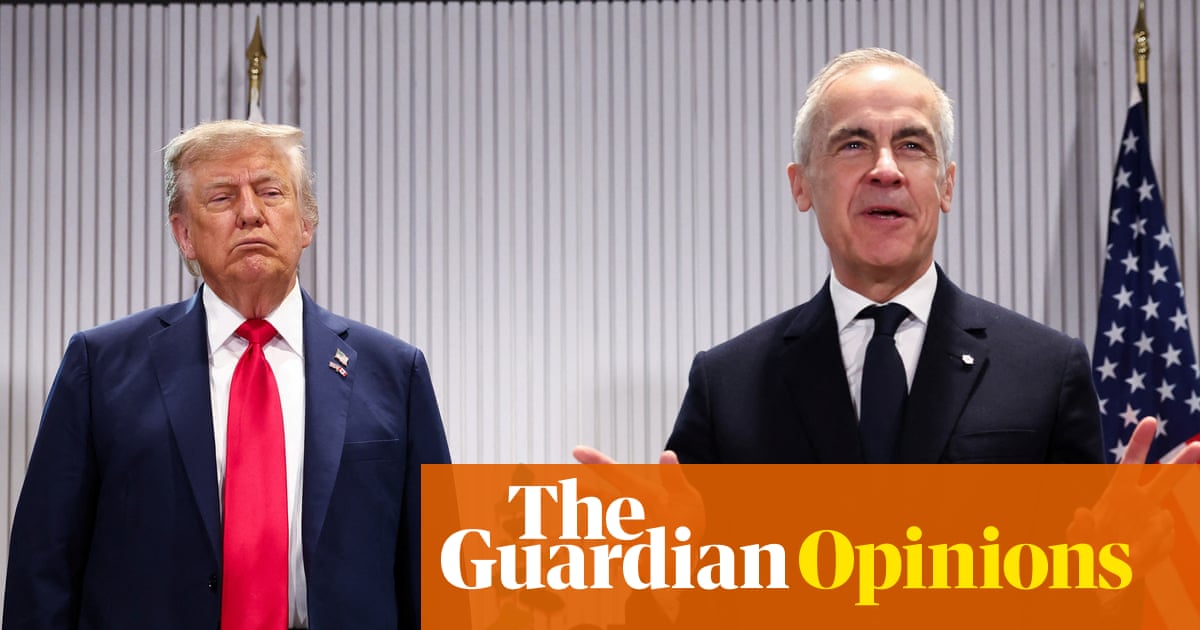
As trade talks with Canada shambled toward collapse in late August, Donald Trump brayed on Truth Social: “WE DON’T NEED CANADA, THEY NEED US!”
asserted
THEY → shamble → US
But in fact, Canada, like China, has something the US needs badly: critical metals that undergird modern military technology.
asserted
that → have → technology
Canada is the United States’s biggest foreign source of minerals, supplying about $47bin worth each year.
asserted
Canada → supply → worth
Sixty percent of all the aluminum the US uses each year, for instance, comes from Canada, where mighty, remote rivers provide smelting plants vast quantities of cheap, low-carbon electricity.
asserted
rivers → use → electricity
The US military uses the lightweight metal for everything from shell casings to ship hulls and aircraft fuselage.
asserted
military → use → hulls
“This country desperately needs aluminum,” Trump complained last month.
asserted
Trump → need → aluminum
“We get it all from Canada for the most part, and we need it badly.
asserted
we → get → it
That dependence explains why the US quietly exempted almost all metals from the list of Canadian products subject to the new 50% import levies.
asserted
US → explain → levies
But just because Americans want to keep buying Canadian metals doesn’t mean Canada will keep selling them.
asserted
Canada → want → them
Shortly after trade talks collapsed last month, the Ontario premier Doug Ford threatened to cut off nickel exports if the tensions heat up further.
asserted
tensions → collapse → exports
Nickel is a vital ingredient in the steel alloys that go into jet engines and armor plating for vehicles and ships, not to mention a wide range of industrial products.
asserted
that → go → products
The US gets about half of its supply from Canada.
asserted
US → get → Canada
The US has only a single nickel mine, but no refineries – so even the raw ore from that one lonely mine gets sent to Canada to be refined, and then sold back to US companies.
asserted
ore → have → companies
The premier of British Columbia has also suggested that his province could ban exports to the US of germanium, which is used to make military equipment such as night-vision goggles and laser rangefinders, as well as solar panels and fiber optics.
uncertain
which → suggest → goggles
That would present a real problem to US manufacturers, since China, which produces the bulk of the world’s germanium, has already largely stopped selling that metal to the US.
asserted
which → present → US
China has also restricted exports to the US of gallium, an ingredient in high-performance computer chips that power missile defense and radar systems.
asserted
that → restrict → systems
The US doesn’t produce any primary gallium at all.
asserted
US → produce → gallium
But a new gallium plant is slated to open next year in, yes, Canada.
asserted
plant → slat → Canada
And it’s not only the US military that depends on Canada’s minerals.
asserted
that → ’ → minerals
Canada also supplies US nuclear reactors with much of the uranium they use to generate nearly a fifth of the country’s electricity.
asserted
they → supply → electricity
Even the US’s food supply is propped up with Canadian minerals.
asserted
supply → prop → minerals
Almost 90% of the potash, a crucial fertilizer, that US farmers spread on their fields comes from their northern neighbor.
asserted
farmers → spread → neighbor
(It’s a similar story with peat, another agricultural input.)
asserted
It → ’ → peat
Of course, Canada isn’t the only place that has these materials.
asserted
that → have → materials
The US has deposits of many of them, too, and is trying to rebuild its once-mighty domestic critical metal industries.
asserted
US → have → industries
But getting the financing and regulatory approvals needed to open a single new mine in the US takes years, and the metals that come out are often more expensive than those produced elsewhere.
asserted
that → get → those
The US could also turn to non-Canadian foreign suppliers.
uncertain
US → turn → suppliers
But that would require a hugely expensive project of unravelling cross-border supply chains that have been built up over decades and support countless US jobs, and rebuilding them to more distant countries.
asserted
that → require → countries
The US’s second-biggest source of potash is Russia – not exactly a trading partner most countries would choose to rely on.
asserted
countries → choose → potash
And the world’s biggest producer of most of the critical metals the US needs happens to also be its biggest rival: China.
asserted
US → need → metals
This is precisely why the US has for the last several years been pushing to build up a supply chain of critical metals that isn’t under Beijing’s control.
asserted
that → push → control
Clearly, someone has explained all of this to Trump since last year, when he was threatening to tariff everything coming from Canada.
asserted
he → explain → Canada
He’s learned that the US can’t afford to lose its supply of Canadian critical metals – especially at a time when China is already throttling exports of those badly-needed commodities.
asserted
China → learn → commodities
That’s why they’ve been exempted this time
asserted
they → ’ → ?
But Canada knows it too.
asserted
Canada → know → it
Cutting off metal supplies would seriously escalate the trade war, and would be a painful punch to Canada’s economy.
asserted
Cutting → cut → economy
But it has been proven to be a very effective weapon.
asserted
it → prove → ?
Among many other commodities, China produces approximately 90% of the world’s refined rare earths, another set of minerals vital to military and other technologies.
asserted
China → produce → technologies
When Trump threatened China with tariffs last year, Beijing responded by threatening to ban exports of rare earths and the magnets and other products made from them.
asserted
Beijing → threaten → them
The US quickly backed down.
asserted
US → back → ?
…and 3 more, not listed.
 The Aporia