A panel of federal appellate judges on Sunday questioned the timing, constitutionality and authority of the Justice Department’s demand that California election officials set aside thousands of mail ballots from people the federal government suspects may not be citizens.
uncertain
government → question → people
During rare weekend arguments, two of the three judges on the 9th U.S. Circuit Court of Appeals appeared skeptical of a lawsuit brought by President Donald Trump’s administration in mid-October.
asserted
two → appear → October
The lawsuit accuses California officials of failing to meet a 48-hour deadline to review 20,000 names the administration flagged as likely noncitizens on the state’s voter rolls.
asserted
administration → accuse → rolls
The administration asked a federal judge to require the state to withhold counting those ballots until the voters’ immigration status could be verified.
uncertain
status → ask → ballots
The district judge scheduled a hearing for Oct. 27, days after the case was assigned, but the federal government appealed to the 9th Circuit Court of Appeals, seeking an expedited decision.
asserted
government → schedule → decision
Justice Department attorney Matthew Donnelly told the panel that California is causing irreparable harm “by allowing noncitizens to vote in violation of their own state laws.
asserted
noncitizens → tell → laws
The Trump administration has made efforts to identify noncitizen voters a priority this year, even though noncitizen voting is exceptionally rare.
asserted
voting → make → voters
Circuit Judge Mark Bennett, a Trump appointee, questioned whether the appellate court even has jurisdiction to hear the case even before a ruling by the lower court.
asserted
court → question → court
Donnelly argued that the schedule set by the lower court judge was too slow and effectively a denial of the government’s request, as state elections officials process thousands of mail ballots every day.
asserted
officials → argue → ballots
Judge Gabriel Sanchez, appointed by former President Joe Biden, questioned whether the federal government was violating the Tenth Amendment, essentially commandeering the state to enforce a federal law that makes it a misdemeanor for a noncitizen to vote.
asserted
noncitizen → appoint → law
The federal government is simply asking California to enforce their own law, which also bans noncitizens from voting, Donnelly said.
asserted
Donnelly → ask → noncitizens
He argued the state’s refusal to comply with the federal request to set aside the ballots for review was “frustrating the purpose” of the federal law against noncitizen voting.
asserted
refusal → argue → voting
The Elections Clause of the U.S. Constitution gives state legislatures the power to set the time, place and manner of congressional elections, Bennett said.
asserted
Bennett → give → elections
The executive branch may be “unhappy with what they’re doing, and doesn’t like the manner,” Bennett said, but under the Election Clause the state has the right to determine those issues — including how it sorts out any noncitizen voters.
uncertain
it → do → voters
Attorney Seth Waxman, representing Los Angeles County Clerk Dean Logan, said the federal government’s list was unreliable and that segregating the ballots for a review process would effectively disenfranchise thousands of eligible voters.
asserted
segregating → represent → voters
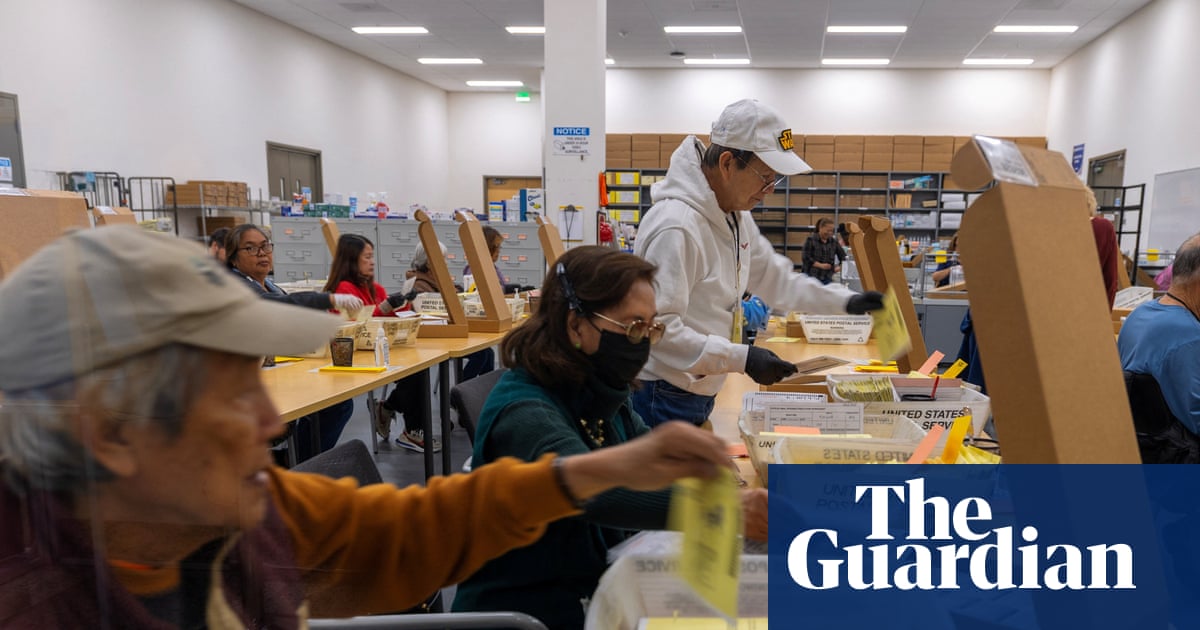
Even if election staffers spent just three minutes checking each of the expected 2.75 million mail ballots against the government’s list, the process would take 140,000 man-hours, Waxman said — or about 16 years of working time.
asserted
Waxman → spend → time
Waxman cited a review of 200 records from the Trump administration’s list conducted by Los Angeles County staffers.
asserted
Waxman → cite → staffers
Assistant Registrar-Recorder Monica Flores said in a court filing that the sample included canceled or inactive registrations, individuals with no voting history and voters who appeared to have been born in the United States, which the filing notes “is strong evidence of citizenship.”
asserted
filing → say → citizenship
If the administration disagrees with how California runs its elections, it can ask Congress to change that process, said attorney Sam Siegel, representing California Secretary of State Shirley Weber.
asserted
Siegel → disagree → Weber
The federal government has provided no credible evidence to support its suspicions, said Siegal.
asserted
Siegal → provide → suspicions
“It has no basis in law or in fact,” he told the panel.
asserted
he → have → panel
“We just dispute the premise that noncitizens are voting.”
asserted
noncitizens → dispute → premise
But Judge Patrick Bumatay, who was appointed by Trump, said everyone has an interest in ensuring that only eligible citizens vote.
asserted
citizens → appoint → interest
He suggested that granting the administration’s request for an emergency order could provide clarity.
uncertain
granting → suggest → clarity
“Without an injunction, you will never know” if that is happening, Bumatay told Seigel.
asserted
Bumatay → know → Seigel
Bennett said the panel would try to issue a ruling as quickly as possible.
asserted
panel → say → ruling
Boone reported from Boise, Idaho.
asserted
Boone → report → Boise
 The Aporia