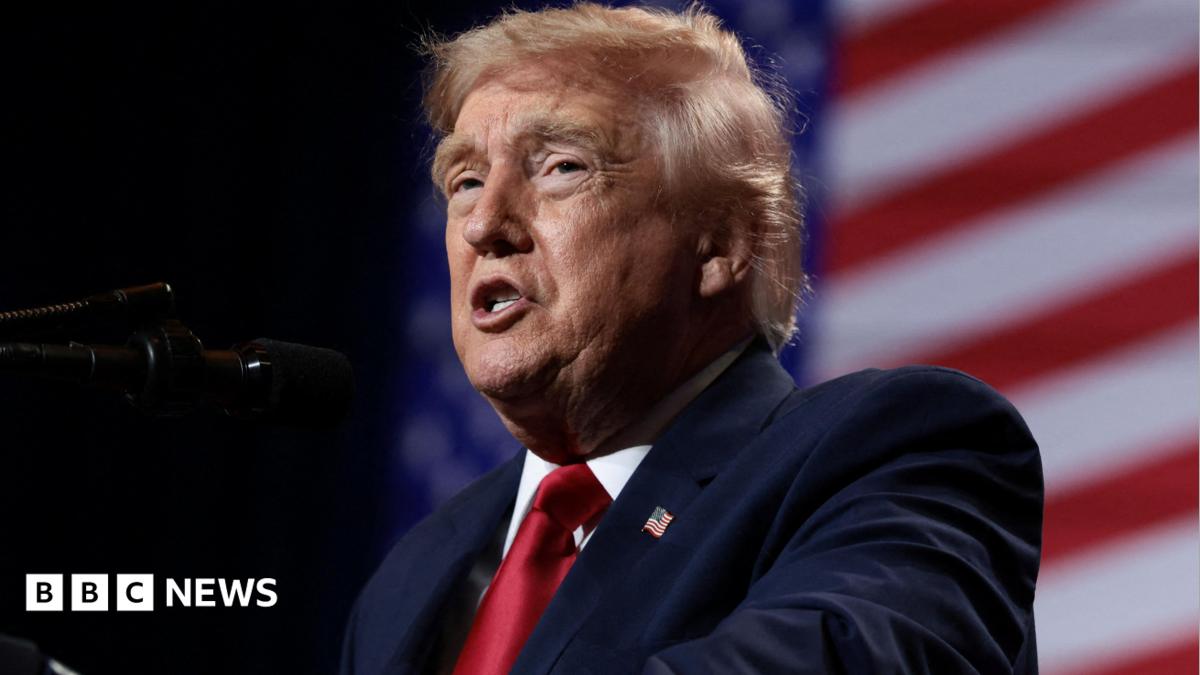
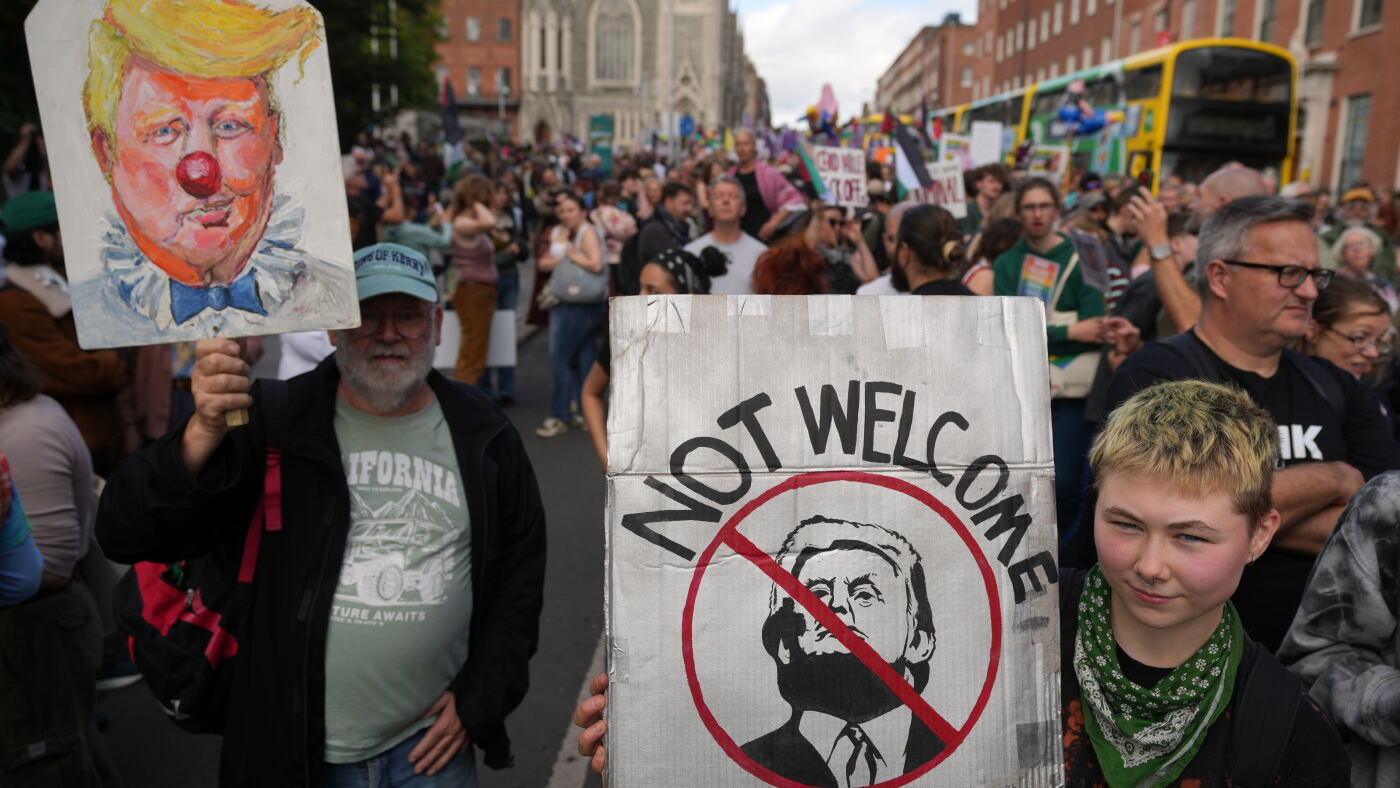
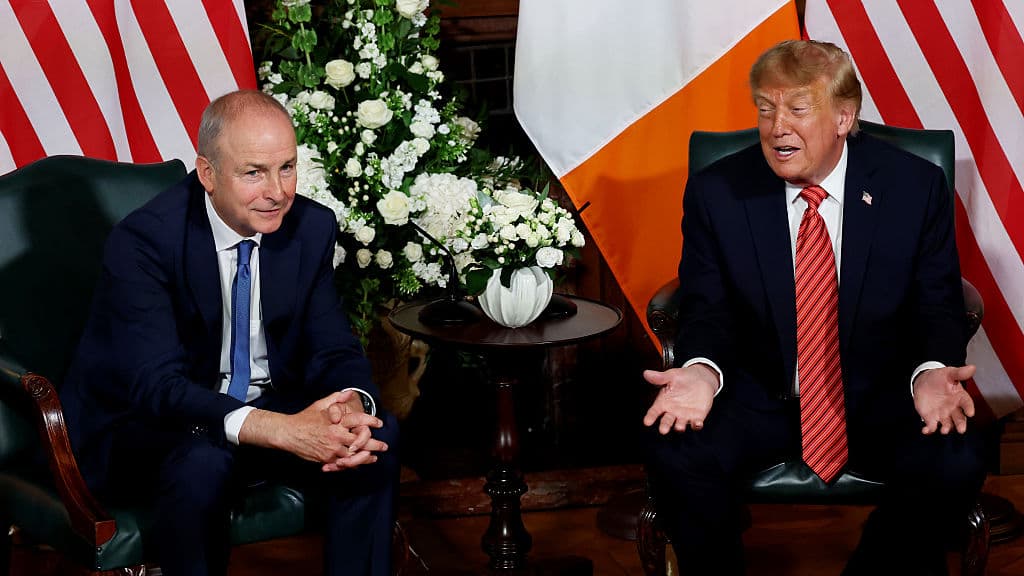
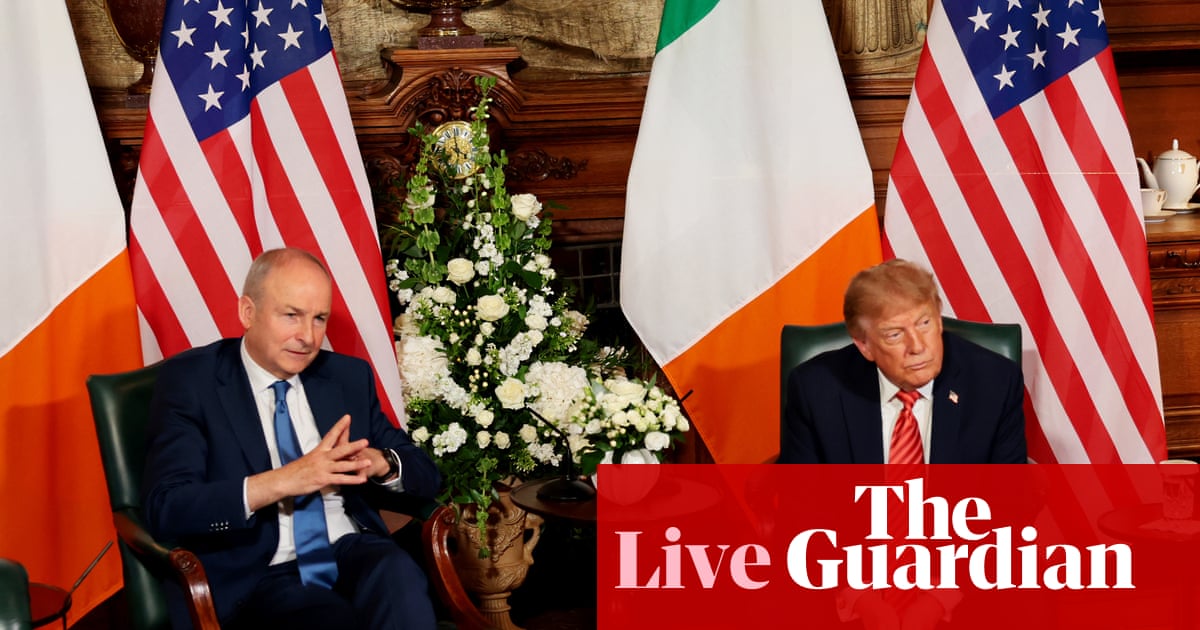
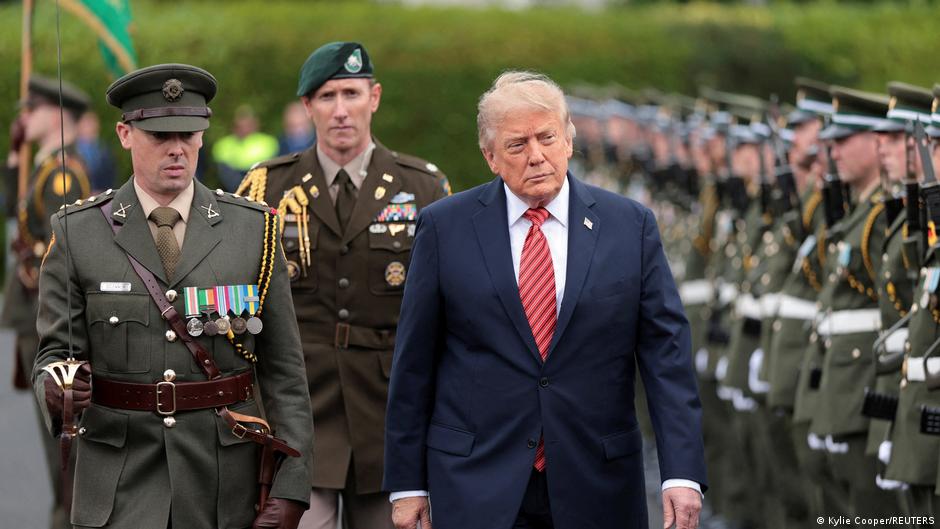
During President Trump's visit to Ireland, he unexpectedly expressed support for a united Ireland, sparking international debate. Former Congressman Mick Mulvaney clarified that this did not signal a shift in U.S. foreign policy regarding Northern Ireland. Trump’s comments were made during press engagements and later echoed at an event with Irish and Irish American business leaders, suggesting his remarks may have been aimed at influencing voters ahead of the upcoming midterm elections in the United States.
Written by the local model on 2026-09-15,
using this article's own text rather than the other coverage of the
same event (that is the story summary below).
Story summary
US President Donald Trump, during a visit to Ireland in September 2023, stated that he would "love" to see a unified Ireland and predicted it would happen eventually. He made these comments after meeting with the Irish Prime Minister Micheál Martin in Dublin. Despite expressing his support for unification, Trump acknowledged that the United Kingdom (UK) would have a say on the matter.
Trump's remarks touched on sensitive political issues in Northern Ireland, where the majority of people are Protestant and identify as British, while the Republic of Ireland is predominantly Catholic and has long sought unity with the north. His comments were met with criticism from Northern Irish unionist parties like the Democratic Unionist Party (DUP) and Ulster Unionist Party, who oppose such a move.
The UK government also responded swiftly to Trump's remarks, with British Prime Minister Rishi Sunak insisting that unity was "off the table." Meanwhile, Ireland's President Mary McAleese emphasized during her meeting with Trump the importance of building shared peace and rejecting normalization of war and genocide. Despite these contentious statements, Trump continued his visit by attending the Amgen Irish Open at his golf resort in Doonbeg, Co Clare, where he handed over the winner’s trophy before leaving Ireland. The event was marked by significant security measures due to protests against his presence.
Written for “Trump Visits Ireland Unity Remarks” on 2026-09-17,
grounded in this article and the 11 other(s) covering the same event.
Why this leaning score
The model judged this article politically coded and scored it -0.25, but every quote it verified points right, so the score is not published.
Written under an earlier scoring contract, which gave a paragraph
rather than checkable quotes. Re-analysing this article replaces it.
Leaning score withheld for article 10447: score contradicts its own evidence · logged 2026-09-15
- Published
When another world leader meets US President Donald Trump the only certainty about what might happen is the uncertainty about what might happen.
uncertain
what → publish → Trump
Nobody could have predicted that by the end of the first day, the main global headline would be his desire to see a unified Ireland.
uncertain
headline → predict → Ireland
As the shockwaves of his remarks rippled through this island and Great Britain, it was unclear whether this represented a new US administration policy, or an off-the-cuff remark from a president who likes to take questions from reporters, and likes to give answers.
uncertain
who → ripple → answers
He cautioned against anyone reading too much into the president's remarks.
asserted
anyone → caution → remarks
"This does not represent a shift in US foreign policy," he said.
asserted
he → represent → policy
"We're still very much committed to the Good Friday Agreement."
asserted
We → commit → Agreement
Democratic Congressman Brendan Boyle agreed.
asserted
Boyle → agree → ?
"There is bipartisan support for that deal, and that is not going to change."
asserted
that → be → deal
Although both agreed that Donald Trump was probably right to say that "eventually" unification would happen, that did not mean the US was about to start pushing for it.
Giving an answer to a question that is asked at a free-flowing press conference is one thing, but Donald Trump repeated his sentiments a short time later when he was delivering a speech to an invited audience at the US Ambassador's residence.
asserted
he → agree → residence
In fact it was almost the first thing he mentioned, hinting that maybe he realised he had kicked over a can of worms at his earlier appearance.
asserted
he → mention → appearance
It was billed as a 20-minute address to Irish and Irish American business leaders, but was about twice that and strayed largely into domestic US matters.
asserted
It → bill → matters
President Trump has a speaking style that he describes himself as "the weave".
asserted
he → have → weave
He can bounce from topic to topic during any speaking engagement, veering off the script and then returning to the matter at hand.
asserted
He → bounce → hand
Today he lauded his own achievements, as he sees them, such as clamping down on illegal immigration, doing deals and boosting defence production.
asserted
he → laud → production
He repeated his criticisms once again of what he views as the UK's lack of support for his military operation in Iran.
asserted
he → repeat → Iran
Midterm elections fast approaching
asserted
elections → approach → ?
The gathered business leaders in Dublin or a US audience tuning in before it was even dawn in much of that country?
asserted
it → gather → country
This November's crunch midterm elections are fast approaching and the Republican party is under intense pressure because of the president's policies.
asserted
party → approach → policies
They may lose control of one or both houses of Congress.
uncertain
They → lose → Congress
About one tenth of the US population claim Irish heritage but they are not a homogeneous voting bloc.
uncertain
they → claim → heritage
Was he trying to target Irish-American independent or swing voters in the US, of which there are many who have flip-flopped between the Republican and Democratic party in recent years?
asserted
who → try → years
Some of them do support a unified Ireland and so in this time of chasing every vote, perhaps that played a part.
asserted
that → support → part
Bill Clinton secured a lot of Irish-American support when he was running for president, by promising to get engaged in the peace process.
asserted
he → secure → process
They voted for him and he followed through on his promise and much of that work led to the foundations of the Good Friday Agreement.
But, Irish America is a different place now.
asserted
America → vote → Agreement
Indeed, America is a different place now as politics have become more polarised.
asserted
politics → become → ?
The November election campaigns show no indication that will change anytime soon.
asserted
that → show → indication
But political leaders in Ireland will be hoping the only debate tomorrow is about the play on the golf course.
asserted
debate → hop → course
 The Aporia