During a golfing trip in Ireland, U.S. President Donald Trump expressed support for the unification of Northern Ireland and the Republic of Ireland, stating it would be "fantastic," despite the lack of majority public support in Northern Ireland. Trump also discussed Iran, predicting an imminent end to conflicts there and asserting that military action was necessary to prevent Iran from developing nuclear weapons. Additionally, he commented on trade relations with Canada, claiming a resolution could happen soon, while reiterating his belief that Canadian tariffs have unfairly targeted U.S. farmers.
Written by the local model on 2026-09-12,
using this article's own text rather than the other coverage of the
same event (that is the story summary below).
Story summary
During his visit to Dublin on September 12, US President Donald Trump expressed support for a unified Ireland, saying he would "love" to see Northern Ireland and the Republic of Ireland united. He met with Irish Prime Minister Micheál Martin, suggesting that unification might happen now and emphasizing it would be positive despite potential objections from the UK. This statement drew criticism from unionist parties in Northern Ireland, such as the DUP, who oppose a unified Ireland, while Irish politicians acknowledged the complexities of the issue tied to historical tensions between Protestants and Catholics.
Written for “Trump visits Ireland unification remarks” on 2026-09-12,
grounded in this article and the 6 other(s) covering the same event.
Why this leaning score
The model judged this article politically coded and scored it -0.25, but 1 quote(s) could not be found in the article and the other 1 are attributed speech rather than the article's own narration, so the score is not published.
Written under an earlier scoring contract, which gave a paragraph
rather than checkable quotes. Re-analysing this article replaces it.
Leaning score withheld for article 8170: no verified evidence · logged 2026-09-12
US President Donald Trump has said he would "love" to see the Republic of Ireland, an EU member, unite with British-run Northern Ireland as he faced reporters' questions on a range of issues on Saturday.
asserted
he → say → Saturday
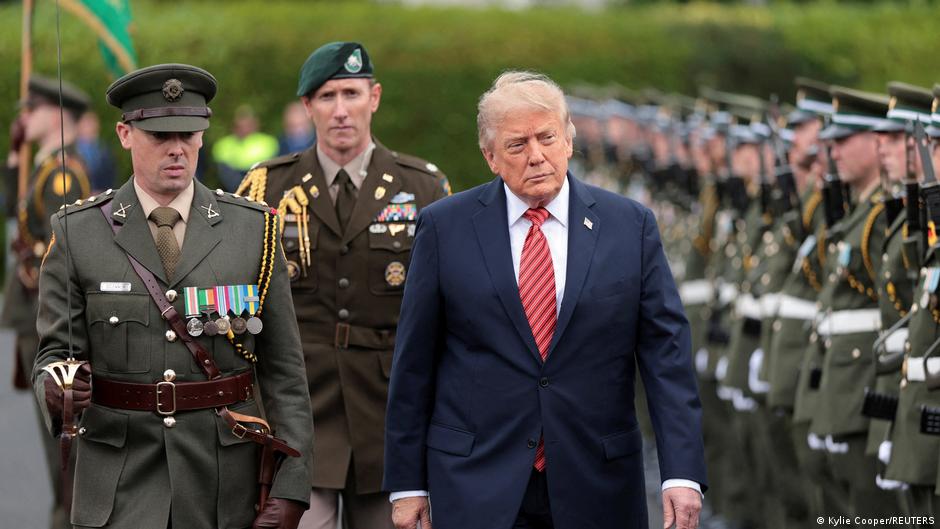
Trump is taking the weekend trip largely to watch the Irish Open golf tournament held on a course he owns on the country’s Atlantic coast, but he met as well with the Irish president and prime minister, or taoiseach.
asserted
he → take → president
The US leader also spoke optimistically about his country's war with Iran and its trade conflict with Canada, among several other topics.
asserted
leader → speak → topics
What did Trump say about Ireland?
asserted
Trump → say → Ireland
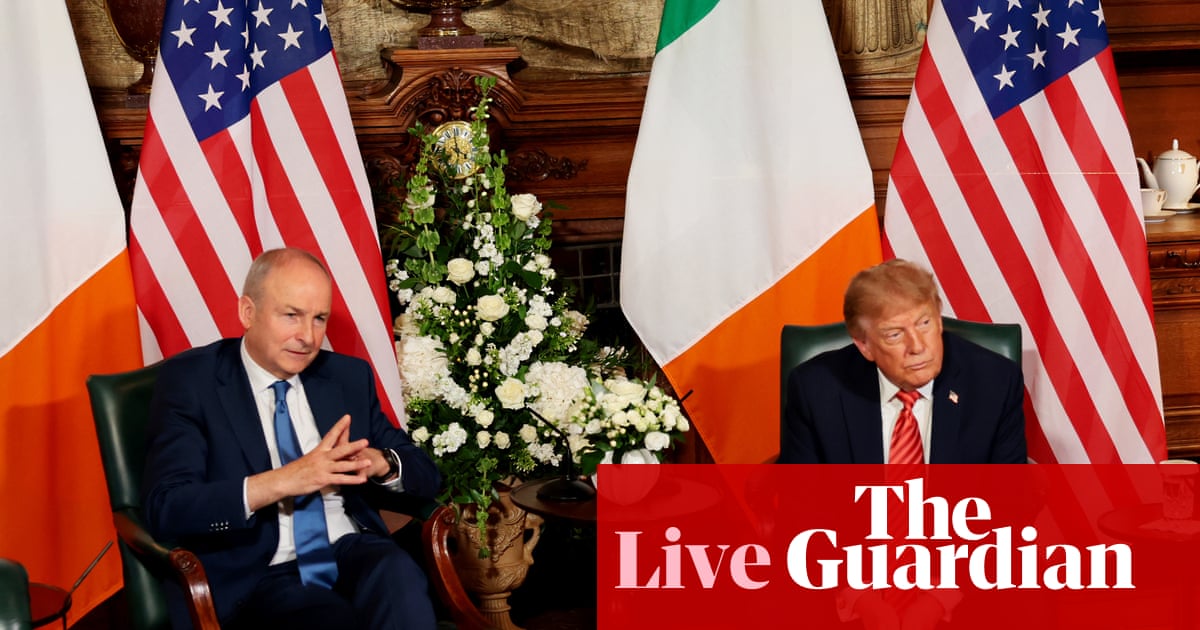
After a meeting with Irish Prime Minister Micheal Martin in the capital, Dublin, Trump said he very much supported what he said would be the eventual unification of the two parts of the island of Ireland.
"Well, I don't want to cause any problems, but I will tell you, I'd love to see it unified," Trump told reporters.
asserted
Trump → say → reporters
"The way I look at it, it's going to happen eventually ...
asserted
it → look → it
I think it would be a fantastic thing," he added.
asserted
he → think → ?
"Now the UK will have something to say about it ... but I think it would be a great thing."
asserted
it → have → it
The British government responded swiftly to the remarks, with Prime Minister Andy Burham's office saying that in his view, there was no majority public support for a referendum on the issue and that there would not be another one until that changed.
asserted
that → respond → issue
Previous US presidents have avoided touching on the subject in view of the delicate nature of the issue, with Northern Ireland seeing decades of of deadly sectarian violence in the 20th century over the question of whom it should belong to.
asserted
it → avoid → whom
What did Trump say about the Iran war?
asserted
Trump → say → war
Trump also said that the US war with Iran, which began on February 28, would "end very soon" — a view he has frequently expressed in the past, but which has not yet materialized.
asserted
which → say → past
He also said that the end of the conflict would mean that the price of oil, which has soared as a result of the war, would "come tumbling down."
asserted
which → say → war
However, he vehemently defended his decision to mount the military operation against Iran.
asserted
he → defend → Iran
He said that the US attacked because "Iran cannot have a nuclear weapon", adding: "They were two weeks away from having a nuclear weapon."
asserted
They → say → weapon
"If they had it, they would have blown up Israel, they would have blown up the Middle East, and they would have hit some [...] in my opinion, [of] Europe's cities and beyond cities, and they would probably hit us soon before we put out the fire.
asserted
we → have → fire
But they cannot have a nuclear weapon."
asserted
they → have → weapon
The war with Iran is not supported by a majority of the US population, particularly in view of promises made by Trump on the campaign trail to keep his country out of foreign "forever" conflicts.
asserted
war → support → conflicts
What did Trump say about Canada?
asserted
Trump → say → Canada
The president sounded a similarly optimistic note regarding the US trade war with Canada.
asserted
president → sound → Canada
He said Canada was keen to make a deal and that one could be struck "fairly soon," while reiterating his claims that Canada had treated US farmers unfairly with its tariffs.
"Canada wants to make a deal very badly," he said.
uncertain
he → say → deal
Canada has to treat our farmers better.
asserted
Canada → have → farmers
They can't charge our farmers tariffs," he said, adding: "You'll probably see a deal with Canada fairly soon."
asserted
You → charge → Canada