Photo via CBC News

Trump's call for united Ireland draws swift rejection from pro-British unionists

Read the original at CBC News ↗
Cite

Trump's call for united Ireland draws swift rejection from pro-British unionists. (2026, September 13). CBC News. https://www.cbc.ca/news/world/trump-united-ireland-9.7341803?cmp=rss

Dated when The Aporia collected the article, usually within hours of publication. Check the original for its exact date and byline.

CBC News · collected 2026-09-13 · by CBC

Quick Summary

During a visit to Dublin, U.S. President Donald Trump expressed support for the reunification of Northern Ireland and Ireland, suggesting it would be "a fantastic thing." This statement prompted swift opposition from pro-British unionists in Northern Ireland who view such unification as destructive to their country's identity. The Democratic Unionist Party leader Gavin Robinson rejected Trump’s comments on social media, emphasizing that Northern Ireland's future should be decided by its people. Unlike previous U.S. presidents who have maintained neutrality on the issue, Trump broke with this tradition during his remarks in Dublin.
Written by AI on 2026-09-13, from this article's own text only (the story summary below draws on all the coverage).

AI analysis

Story summary

US President Donald Trump, during a visit to Ireland in September 2023, stated that he would "love" to see a unified Ireland and predicted it would happen eventually. He made these comments after meeting with the Irish Prime Minister Micheál Martin in Dublin. Despite expressing his support for unification, Trump acknowledged that the United Kingdom (UK) would have a say on the matter.

Trump's remarks touched on sensitive political issues in Northern Ireland, where the majority of people are Protestant and identify as British, while the Republic of Ireland is predominantly Catholic and has long sought unity with the north. His comments were met with criticism from Northern Irish unionist parties like the Democratic Unionist Party (DUP) and Ulster Unionist Party, who oppose such a move.

The UK government also responded swiftly to Trump's remarks, with British Prime Minister Rishi Sunak insisting that unity was "off the table." Meanwhile, Ireland's President Mary McAleese emphasized during her meeting with Trump the importance of building shared peace and rejecting normalization of war and genocide. Despite these contentious statements, Trump continued his visit by attending the Amgen Irish Open at his golf resort in Doonbeg, Co Clare, where he handed over the winner’s trophy before leaving Ireland. The event was marked by significant security measures due to protests against his presence.

Written for “Trump Visit's Ireland Unity Remarks” on 2026-10-30, grounded in this article and the 11 other(s) covering the same event.

Story

📰 Trump Visit's Ireland Unity Remarks
Politics · 12 article(s) covering the same event. Compare every outlet's account →

Compared with similar articles

This article reads unscored and hedges 0% of its claims. Each row says how that neighbour differs.
The Straits Times
Hedges 0 of 5 claims Outlet record 66/100
CBS News
Hedges 1 of 22 claims Outlet record 66/100
NPR
Hedges 4 of 48 claims Outlet record 60/100
Deutsche Welle
Hedges 1 of 23 claims Outlet record 95/100
The Independent
Hedges 0 of 44 claims Outlet record 59/100
TIME
Hedges 2 of 41 claims Outlet record 59/100
BBC News
Hedges 5 of 27 claims Outlet record 69/100
Evening Standard
Hedges 1 of 25 claims Outlet record 65/100
“Article A reports on Trump's remarks about Ireland unity during a visit to Dublin, while Article B discusses Taoiseach Martin's concerns regarding Sinn Féin's strategic move with other parties concerning unity referendums. These are different events.”
Dawn
Hedges 6 of 30 claims Outlet record 72/100
“While both articles refer to Trump's controversial statement about a united Ireland, Article A focuses more on his activities and remarks during his visit to promote business interests, whereas Article B specifically emphasizes the reaction from pro-British unionists to Trump's comments.”
How this article was measured signals, leaning charts, publisher record, byline, topics and claims

Signals How these are calculated →

Claims extracted
20
sentences that state something as happening or true
Uncertain
0%
0 of 20 hedged ("reportedly", "may", "according to")
Leaning
withheld
no quote in the article backed the model's score
Publisher signals
60/100
CBC News's corrections and hedging, across everything collected from it. Not a measure of accuracy.
Outlets on this story
12
Politics
Same framing elsewhere
1
articles that frame the event the way this one does
Analyzed 2026-09-13 · how these are computed

How this is being covered How these are calculated →

Article leaning vs. publisher reliability
Source leaning vs. consistency

Publisher

CBC News · 758 article(s) · 1 correction(s) detected
Running correction rate · 1 correction(s)

Who wrote this

No reporter is named on this article, beyond the feed's “CBC”.

Topics

British Ireland Irish Northern Ireland U.S.

Subjects

Trump PERSON · 9× Northern Ireland GPE · 7× Irish NORP · 6× U.S. GPE · 6× Ireland GPE · 5× Dublin GPE · 4× British NORP · 3× U.K. GPE · 3× Donald Trump PERSON · 2× pro-British NORP · 2×

Narrative

The accord ended three decades of violence between Irish nationalists seeking a united Ireland and unionists who wanted Northern Ireland to remain in the U.K. Unlike England, Scotland, Wales and Northern Ireland, the Republic of Ireland is not part of the United Kingdom.
framing: assertive · carried by 1 article(s) · first seen 2026-09-13
🔮 Trump's call for united Ireland draws swift rejection from pro-British unionists Reunification would mean 'destruction of our country,' says Democratic Unionist Party

Claims (20 extracted, 0 hedged)

Trump's call for united Ireland draws swift rejection from pro-British unionists Reunification would mean 'destruction of our country,' says Democratic Unionist Party asserted
Party → draw → country
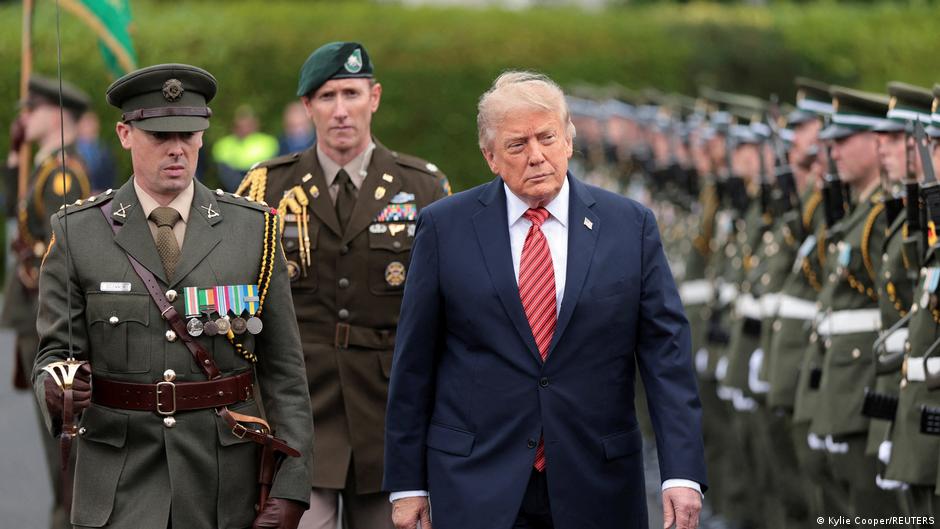
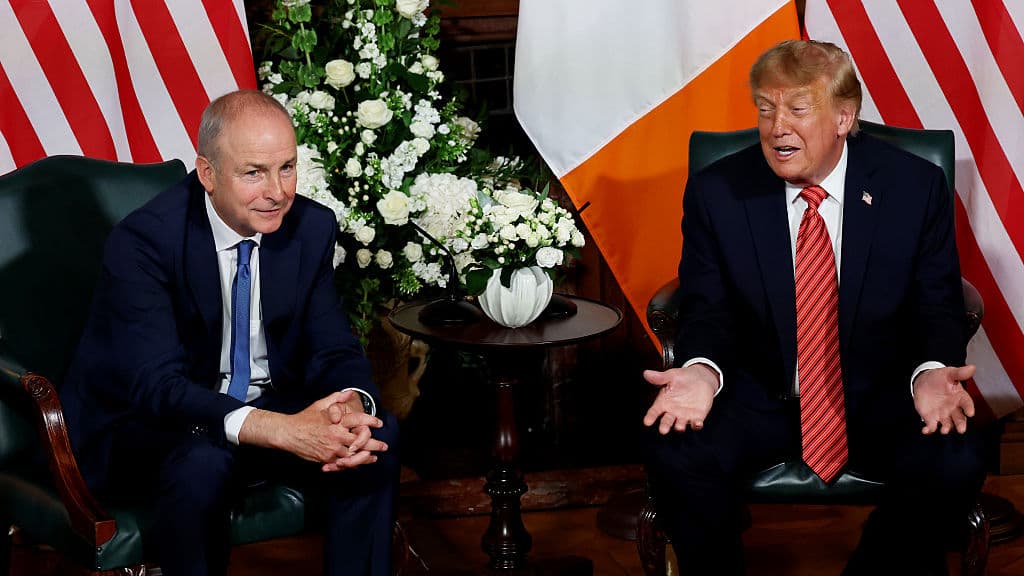
U.S. President Donald Trump said on Saturday that he would "love" to see British-run Northern Ireland unify with Ireland, remarks made during a visit to Dublin that drew a sharp response from pro-British unionists in Northern Ireland. asserted
that → say → Ireland
Trump's comments come weeks after new British Prime Minister Andy Burnham said a referendum on Northern Ireland leaving the United Kingdom was "off the table," a position Downing Street on Saturday said remained unchanged. asserted
Street → come → Saturday
"Well, I don't want to cause any problems, but I will tell you, I'd love to see it unified," Trump told reporters as he sat next to Irish Prime Minister Micheál Martin after the pair met in Dublin. asserted
pair → want → Dublin
"It's going to happen eventually.... asserted
It → go → ?
I think it would be a fantastic thing." asserted
it → think → ?
He added: "Now the U.K. will have something to say about it ... but I think it would be a great thing." asserted
it → add → it
Trump later said that there "was no good answer" to the question on Irish unity but repeated that he thought it would be "a very cool thing." asserted
it → say → unity
Under the terms of the 1998 Good Friday Agreement, which then-U.S. president Bill Clinton played a key role in brokering, a referendum can be held only at the discretion of the British government. asserted
referendum → play → government
The accord ended three decades of violence between Irish nationalists seeking a united Ireland and unionists who wanted Northern Ireland to remain in the U.K. Unlike England, Scotland, Wales and Northern Ireland, the Republic of Ireland is not part of the United Kingdom. asserted
Republic → end → Kingdom
While polls show a comfortable majority in Northern Ireland favour remaining in the U.K., the gap has narrowed slightly since Britain's departure from the European Union pushed unity higher up the political agenda. asserted
departure → show → agenda
The leader of the Democratic Unionist Party, Northern Ireland's largest party advocating continued union with Britain, rejected Trump's prediction, saying unification with Ireland would lead to "the destruction of our country." asserted
unification → advocate → country
"Northern Ireland's constitutional future will be decided by the people of Northern Ireland, not by commentary in London, Dublin or Washington," Gavin Robinson, who has publicly supported Trump in the past, wrote on social media platform X. - asserted
who → decide → X.
CBC Explains Your guide to the U.S. midterms, and why they're crucial for Donald Trump asserted
they → explain → Trump
Carney says he's still regularly speaking with Trump despite latest trade rift In Belfast, supporters of Irish unity gave a guarded response. asserted
supporters → say → response
"I think it's just headline grabbing.... asserted
it → think → ?
I don't think he gives a toss whether there is a United Ireland or not," said Eamon Hanna, a supporter of the nationalist Social Democratic and Labour Party, which has been a strong critic of Trump's policies. asserted
which → think → policies
Previous U.S. presidents, including those with strong Irish heritage like Joe Biden, have been careful to remain neutral on Irish unification. asserted
presidents → include → unification
The U.S. government played a key role in brokering the 1998 peace deal. asserted
government → play → deal
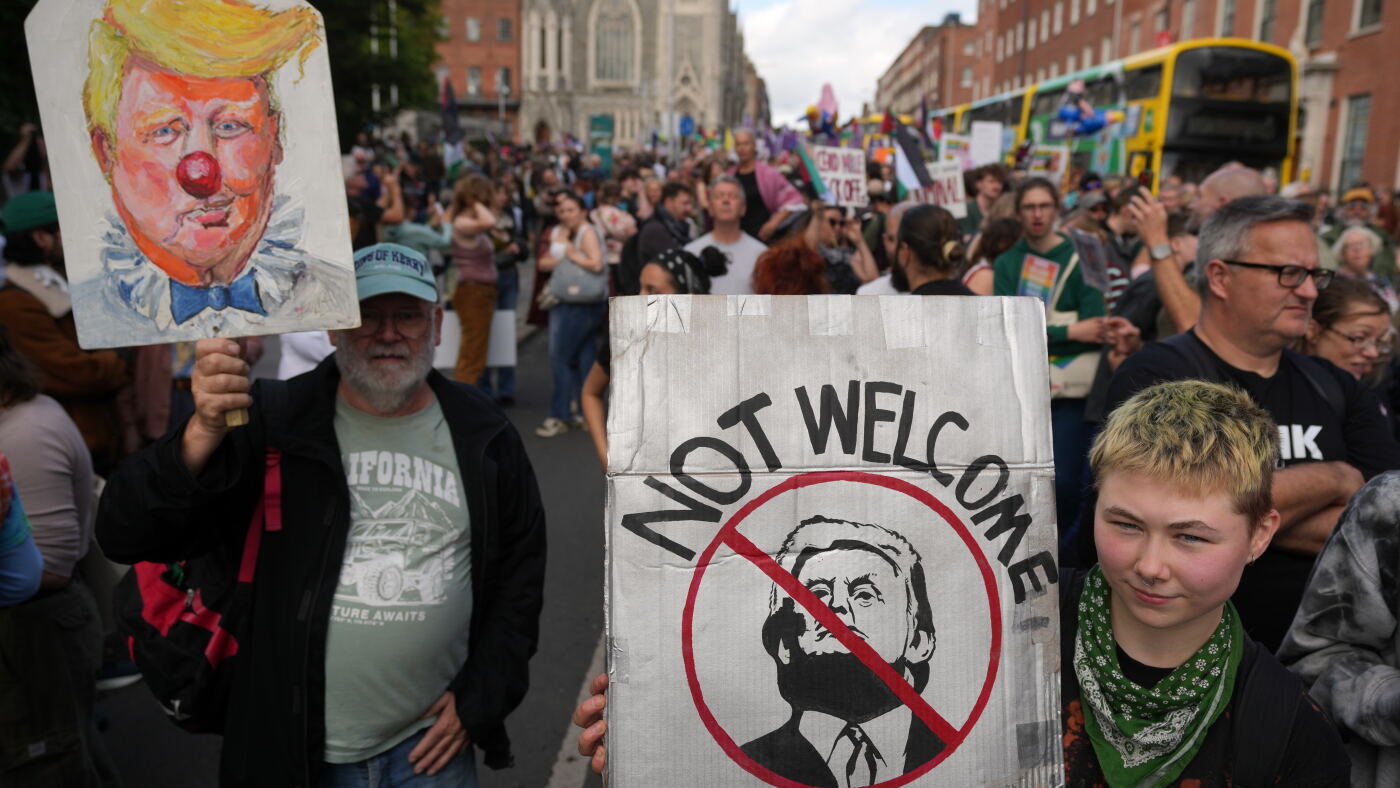
Shortly after Trump left to watch a golf tournament at one of his resorts in the west of Ireland, thousands of protesters, some holding posters calling the U.S. president a warmonger and chanting "Free free Palestine," marched through central Dublin. asserted
some → leave → Dublin

💬Give feedback
🕘History 🎫Support