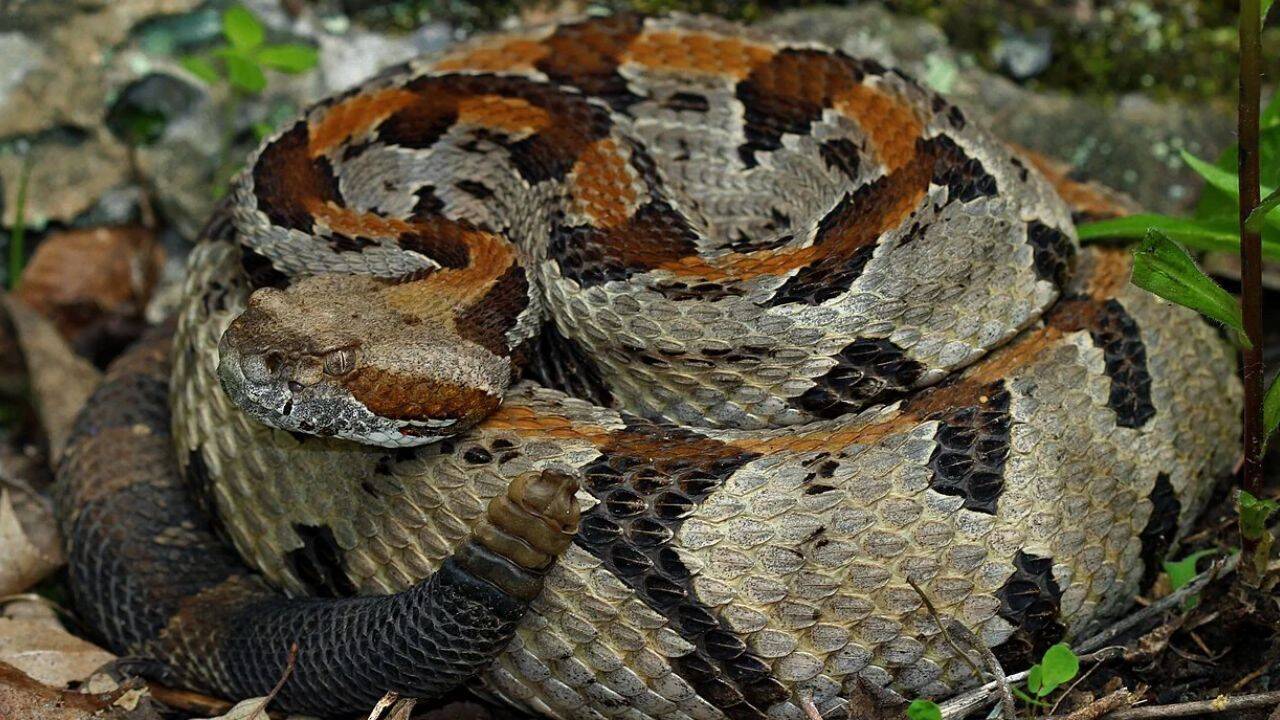
Timber rattlesnakes spend much of the year near underground shelters where they escape the cold winter months.
asserted
they → spend → months
A study found that the snakes also spend several weeks waiting near these shelters before entering them in autumn and moving away in spring.
asserted
snakes → find → spring
Researchers monitored 38 timber rattlesnakes, 20 of them fitted with radio transmitters, in Jersey County, Illinois, over two autumns and two springs to understand this behaviour.
asserted
20 → monitor → behaviour
They found that temperature may have influenced when the snakes arrived, entered their shelters, and left in warmer weather.
uncertain
snakes → find → weather
According to the research published in Ecology and Evolution titled ‘
Fall and Spring Staging in a Refugia‐Dependent Migratory Snake’, the snakes spent more than 6 months inside their winter shelters.
uncertain
snakes → accord → shelters
Including the waiting periods before and after winter, their association with these shelters lasted nearly 8 months.
asserted
association → include → shelters
Timber rattlesnakes spend weeks near winter shelters before entering
The researchers found that the snakes did not move directly from their summer ranges into underground refuges.
asserted
snakes → spend → refuges
In autumn, they first reached the overwintering habitat and stayed nearby before entering.
asserted
they → reach → habitat
This fall staging period averaged 29.23 days in 2021, but was shorter in 2022, at 8.2 days.
asserted
period → average → days
Of 27 paired seasonal records from 17 snakes, 6 animals entered refuges on the day they arrived.
asserted
they → pair → day
The other 21 remained on the surface before going underground.
asserted
21 → remain → surface
They sheltered beneath leaves, rocks, or hollow logs, at an average distance of 58.17 metres from refuges.
asserted
They → shelter → refuges
They used an average of 1.91 locations and stayed at each for about 12.29 days.
asserted
They → use → days
Entry took place mainly at night at the monitored refuges in Jersey County.
asserted
Entry → take → County
PC: Ecology and Evolution
Why do timber rattlesnakes wait near winter shelters after emerging in spring
Spring brought a second pause after the snakes emerged from their underground refuges.
asserted
snakes → wait → refuges
Rather than immediately moving towards their summer habitats, the radio-tracked animals stayed in nearby bluff areas.
asserted
animals → move → areas
The spring staging period averaged 21.81 days in 2022 and 26.35 days in 2023.
asserted
period → average → 2023
Researchers recorded 31 paired seasonal records from 20 tracked snakes.
asserted
Researchers → record → snakes
After emerging, the snakes concealed themselves beneath leaves, rocks and hollow logs, an average of 75.50 metres from their overwintering refuges.
asserted
snakes → emerge → refuges
They occupied an average of 2.4 locations and remained at each for about 10.63 days.
asserted
They → occupy → days
Some returned to staging locations they had used during the previous autumn or in earlier years.
asserted
they → return → years
Most emerged at night, although a smaller midday peak was recorded during the monitoring period.
asserted
peak → emerge → period
How do temperature changes influence rattlesnakes' seasonal movements
asserted
changes → influence → movements
Temperature measurements showed different conditions for the snakes’ arrival, entry, emergence and departure.
asserted
measurements → show → arrival
In autumn, they reached overwintering habitat at an average temperature near 19°C, but entered refuges at about 14°C.
asserted
they → reach → C
In spring, they emerged at around 14°C and began moving towards summer habitats at approximately 19°C.
asserted
they → emerge → C
The researchers found that snakes began entering refuges after a rapid fall in temperature.
asserted
snakes → find → temperature
Spring departures followed a sharp and sustained rise over several consecutive days.
asserted
departures → follow → days
Emergence was staggered, as snakes came out during warm periods before colder weather interrupted activity.
asserted
weather → stagger → activity
The study suggests temperature may be an important cue for these movements, although the authors said further data would be needed to assess other influences across the two years covered in each season.
uncertain
data → suggest → season
Staging periods help snakes navigate seasonal temperature changes
The authors describe the pauses as staging periods that separate migration from entry into or exit from winter refuges.
asserted
that → stag → refuges
They suggest these intervals may act as buffers, helping snakes match seasonal movements with suitable temperatures.
uncertain
snakes → suggest → temperatures
In autumn, arriving early may allow the reptiles to reach shelter before conditions become too cold, while delaying entry leaves time for remaining active-season opportunities.
uncertain
delaying → arrive → opportunities
In spring, emerging before moving away may reduce the risk of travelling during cold conditions.
uncertain
emerging → emerge → conditions
The researchers said this behaviour could help temperate reptiles manage unpredictable seasonal changes.
uncertain
reptiles → say → changes
However, they noted that the study could not establish every reason for staging, and that additional multi-year research is needed to examine the role of temperature alongside other environmental or internal factors.
uncertain
research → note → factors
 The Aporia