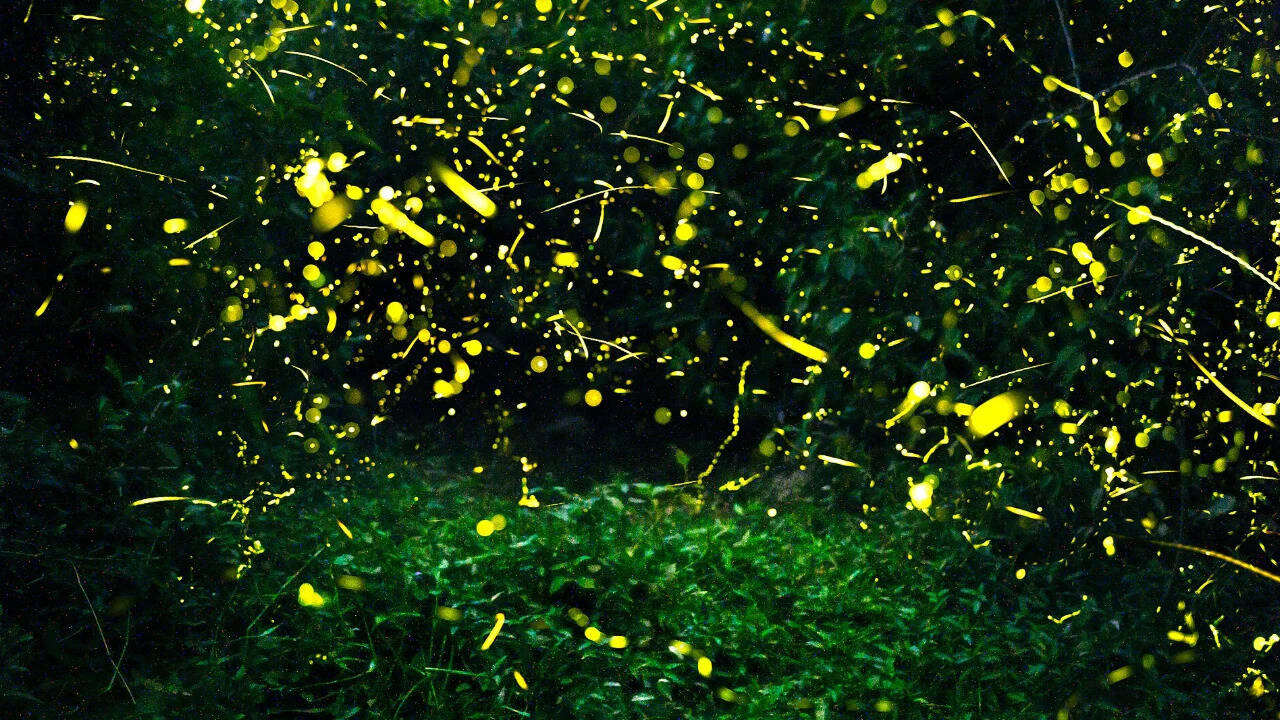
Fireflies represent different things for most people, but most popularly, represent hope in a world of darkness.
asserted
Fireflies → represent → darkness
For this one species of firefly, all hope was lost of spotting it again.
asserted
hope → lose → it
Last seen in 1983, scientists had considered it lost to science.
asserted
it → see → science
But, like a ray of hope dancing across a dark canvas, the firefly has been spotted again in Delaware and Virginia by Christopher Heckscher, a Delaware State University scientist.
asserted
firefly → dance → Heckscher
The firefly in question is the similar firefly, scientifically known as
Pyractomena similis.
asserted
firefly → know → similis
Although it had not been recorded for more than four decades, it had not disappeared from the planet.
asserted
it → record → planet
It had been quietly flashing away somewhere, waiting for someone to recognise its distinctive pattern.
asserted
someone → flash → pattern
And that is precisely what happened in the spring of 2026, when three sightings brought the little-known species back into
scientific records.
asserted
sightings → happen → records
A string of amber flashes gives it away
The first sighting was recorded on May 15, 2026, when an observer named Aljoscha Nern spotted male similar fireflies flashing over a meadow in Virginia.
uncertain
fireflies → give → Virginia
He shared his observation on iNaturalist, a community science platform where people can document and identify species.
asserted
people → share → species
Another population was spotted in the same region approximately two weeks later.
asserted
population → spot → region
Meanwhile, Christopher Heckscher was conducting targeted surveys across Delaware and Maryland in search of the missing species.
asserted
Heckscher → conduct → species
He visited Fair Hill Natural Resources Management Area in Maryland and White Clay Creek State Park in Delaware, but neither location yielded any results.
asserted
location → visit → results
On June 3, during his final night of surveys, Heckscher visited Brandywine Creek State Park in Delaware.
asserted
Heckscher → visit → Delaware
As the evening turned into night and fireflies began emerging from the vegetation, he noticed something unusual.
asserted
he → turn → something
Most fireflies have their own flashing patterns, which they use to communicate with potential mates.
asserted
they → have → mates
Males produce between 10 and 20 short amber flashes in quick succession, pause briefly and then repeat the sequence.
asserted
Males → produce → sequence
Heckscher immediately recognised that this was unlike anything he had seen from other fireflies in the region.
asserted
he → recognise → region
However, recognising a familiar flash pattern was not enough to establish the discovery scientifically.
asserted
recognising → recognise → discovery
He collected a specimen and examined it under a microscope, looking at its genitalia for characteristics that could distinguish it from closely related species.
uncertain
that → collect → species
The examination confirmed that it was indeed
Pyractomena similis.
asserted
it → confirm → ?
He also estimated that between 8-12 fireflies were producing the distinctive flashing pattern in the meadow.
asserted
fireflies → estimate → meadow
This was particularly significant because it marked the first recorded sighting of the species in Delaware.
asserted
it → mark → Delaware
Why was it missing for so long?
asserted
it → miss → ?
Illustration of Pyractomena similis by Mauricio Alvarez, @mauricio_alvarez_art / Re:wild
The similar firefly was historically recorded across parts of the eastern and southern United States, including Washington, D.C., Maryland, Virginia, South Carolina, Alabama and Mississippi.
asserted
firefly → record → Washington
However, scientists had never studied it extensively, which meant that even basic information about its behaviour, population and habitat requirements remained limited.
asserted
information → study → requirements
One of the few things researchers know is that the species prefers open fields and meadows close to water.
asserted
species → know → water
Heckscher believes that the availability of such habitats could have something to do with why it became difficult to find.
uncertain
it → believe → something
We imagine meadows to be endless stretches of open greenery, but natural meadows are not always easy to come by.
asserted
meadows → imagine → greenery
Many are regularly mowed, converted into agricultural land or managed for livestock.
asserted
Many → mow → livestock
The meadow at Brandywine Creek, however, had been allowed to grow naturally, with shrubs, brush and low vegetation providing the conditions the firefly appears to favour.
asserted
firefly → allow → conditions
Other factors could also have contributed to its disappearance from scientific records.
uncertain
factors → contribute → records
The species has a relatively short breeding season, is nocturnal and may have lost parts of its natural habitat.
uncertain
species → have → habitat
It is also possible that scientists simply were not looking for it in the right places.
asserted
scientists → look → places
Not the only firefly missing from the records
The rediscovery comes alongside a wider study published in the
Journal of Lost Species, titled 'Extinguished or overlooked? An examination of lost firefly species of the US and Canada'.
asserted
rediscovery → miss → US
The research examines 28 firefly species that have not been recorded in the wild for at least a decade.
asserted
that → examine → decade
Of the approximately 178 native firefly species known in the United States and Canada, these 28 account for around 16%.
asserted
28 → know → %
In other words, nearly one in six native firefly species in the region has gone missing from scientific records.
asserted
species → go → records
However, missing from the records does not automatically mean extinct.
asserted
missing → miss → records
Researchers point out that some species may simply have been overlooked because of insufficient surveys, difficulties in identifying them or a lack of information about where they live.
uncertain
they → point → information
…and 10 more, not listed.
 The Aporia