That is 0 articles you have read today.
The Aporia is free and carries no advertising, so readers are the only
thing paying for it. If you are getting this much out of it, a small
donation is what keeps it independent.
Daily limit reached
You have read 0 articles today.
That is more than the 15 a day The Aporia gives away,
and well past what it can carry on nothing. Your allowance resets at
midnight.
There is no advertising here and nothing about you is sold, so readers
are the only thing paying for it. If the site is worth this much of
your day, it is worth a few dollars.
Everything else stays open: the
maps, the
directory and
search do
not count against this, and neither does re-opening something you have
already read today.
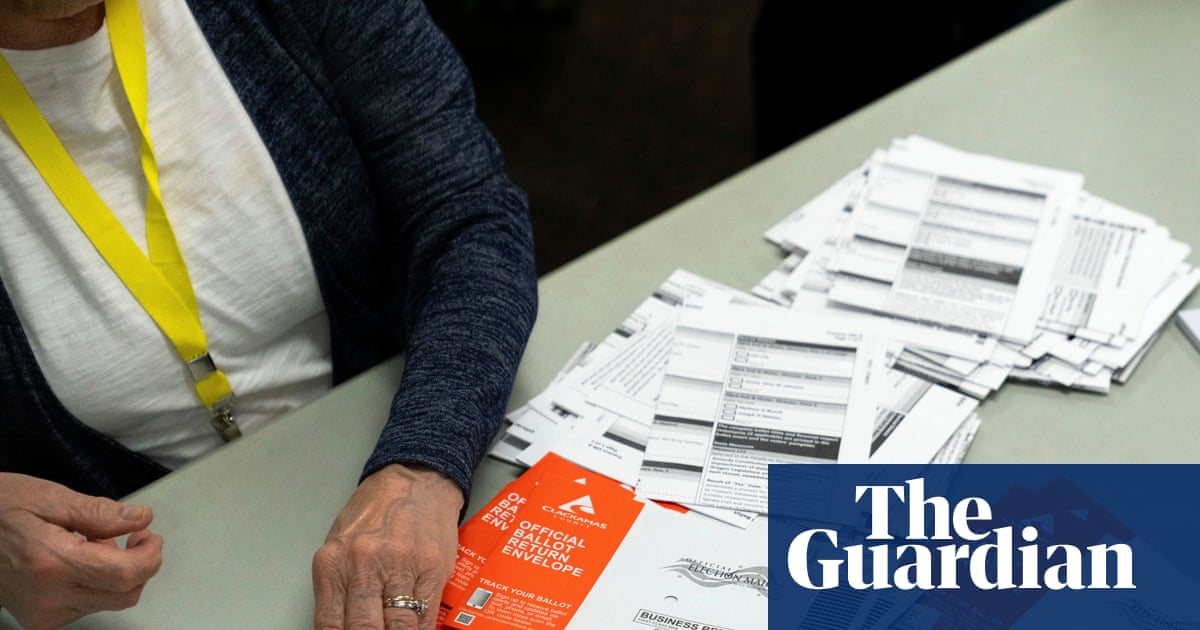
The Supreme Court, in a 7-2 decision, declined to block a lower-court ruling against the Postal Service's policy implementing Donald Trump’s executive order aimed at restricting mail-in voting. Justice Brett Kavanaugh agreed with the majority but added that state election officials needed more time to adapt to the new rules before upcoming elections. Justices Alito and Thomas dissented, arguing that the USPS has the authority under existing statutes to implement such policies despite concerns about federalism and separation of powers.
Written by the local model on 2026-09-15,
using this article's own text rather than the other coverage of the
same event.
Claims extracted
15
claim-shaped sentences
Uncertain
7%
1 of 15 hedged
Leaning
Leans strongly left
of the writing, not the subject
Correction & hedging signals
92.4
corrections and hedging in what we collected;
not a measure of accuracy
Outlets on this story
unclustered
not grouped into a story yet
Narrative spread
1
articles carrying this framing
Why this leaning score
The article's own words the score was based on. Each is quoted
verbatim and was checked against the article text before being
stored, so you can find it in the original.
Leaning score -0.65 for article 9807 (high confidence, 1 verified quote) · logged 2026-09-15
Earlier tonight, the Supreme Court, in a 7-2 ruling, refused to stay a lower-court decision blocking the Postal Service's policy implementing Donald Trump's executive order intended to curb mail-in voting.
asserted
Court → refuse → voting
I have previously written about the First Circuit ruling in this case, and about how Trump's order is a blatant assault on federalism and separation of powers.
asserted
order → write → powers
As is often the case with "shadow docket" decisions, the majority opinion offers almost no analysis.
asserted
opinion → offer → analysis
But they do state that "[t]he Government is unlikely to succeed on the merits of its challenge to the District Court's preliminary injunction [against the USPS policy]."
asserted
Government → state → policy
That indicates they believe that Trump's policy is indeed illegal, likely for reasons similar to those outlined by the district court and the First Circuit.
asserted
policy → indicate → court
In a concurring opinion, Justice Brett Kavanaugh states that he thinks "there is at least a fair prospect that the final rule falls within the Postal Service's statutory authority," but that the district court was still right to block it, under the Administrative Procedure Act "because state and local election officials do not have sufficient time to reasonably implement the rule before the elections."
asserted
officials → concur → elections
In a dissent joined by Justice Thomas, Justice Samuel Alito argues that the policy is within the authority of the USPS, but bases it on statutes that nowhere mention altering mail-in ballot election rules, but only authorize USPS to make rules for the collection and delivery of the mail.
asserted
that → join → mail
Alito largely ignores the massive federalism and separation of powers issues arising from conflating the latter with the former.
asserted
Alito → ignore → former
In addition, as the district court and the First Circuit noted, twisting this language into a sweeping power to override state mail-in ballot rules raises serious "major questions doctrine" issues.
asserted
twisting → note → issues
As the District Court noted, Congress must speak clearly when delegating a "highly consequential power" to the executive, and the power to rewrite state election rules is pretty obviously highly consequential.
asserted
power → note → rules
and, to put it mildly, the statutes granting authority to the USPS come nowhere near clearly giving it such power.
asserted
statutes → put → power
Indeed, they don't even mention voting rules.
asserted
they → mention → rules
To put it a different way, inferring a power to regulate mail-in voting from a power to make rules necessary for the delivery of the mail is a classic example what Justice Antonin Scalia famously called "hid[ing] elephants in mouseholes," warning courts to avoid assuming Congress did that.
asserted
Congress → put → that
The Trump administration claims there is a truly enormous elephant in a very tiny mousehole here.
uncertain
administration → claim → mousehole
The Court was right to reject that position.
asserted
Court → reject → position
 The Aporia