Story summary
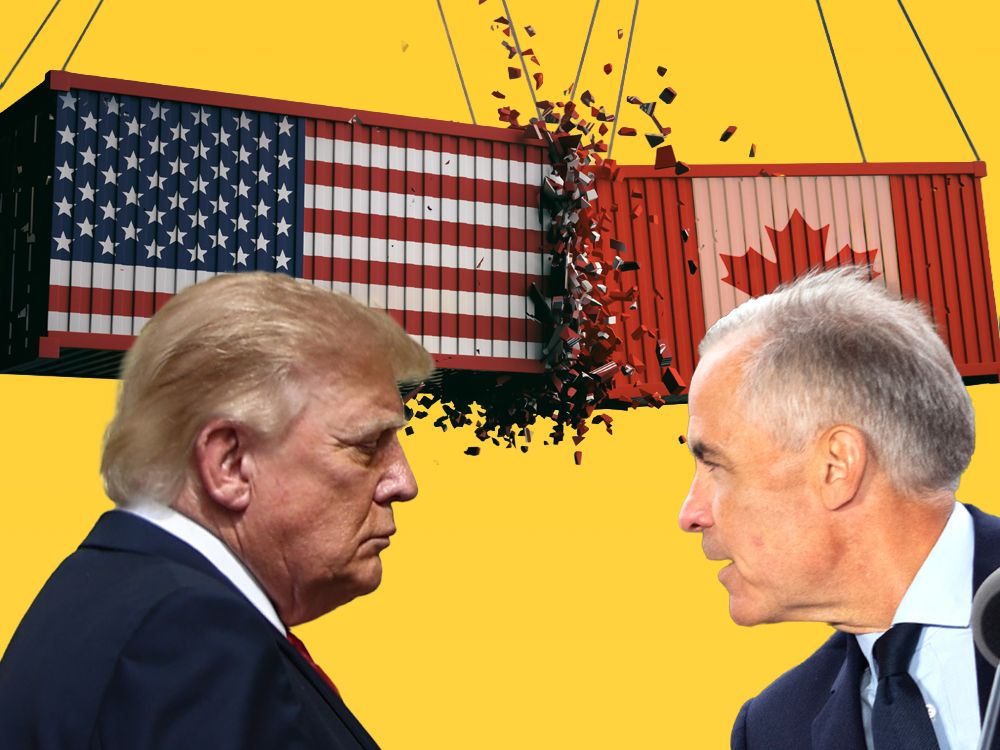
In September 2024, Canada imposed retaliatory tariffs on about $20 billion worth of American goods as a response to the U.S.'s imposition of 50% tariffs on approximately C$27.6 billion in Canadian goods earlier that August. The White House had targeted around 0.6% of U.S. imports from Canada, including items like outboard motorboats and metal products. In turn, Canada's retaliatory measures hit American goods valued at about $20 billion.
These actions escalated an ongoing trade war between the U.S. and Canada, stemming from failed formal negotiations in August 2024. The tensions were further heightened when President Trump announced tariffs on nearly $28 billion worth of Canadian products, including alcoholic beverages, among others. In response to these developments, Canadian Prime Minister Mark Carney began to pivot towards diversifying trade relations with countries like China and India, aiming to reduce Canada's dependence on the U.S. market.
In January 2026, Carney became the first Canadian prime minister since 2017 to visit China, focusing on agriculture, energy, and investment partnerships. This marked a significant shift in Canada’s trade strategy as it sought new economic alliances amidst deteriorating relations with the United States.
Written for “US Tariffs On Canada” on 2026-09-15,
grounded in this article and the 2 other(s) covering the same event.
Trade tensions heated up this week between the United States and Canada, with Canada issuing retaliatory tariffs against American goods.
asserted
Canada → heat → goods
The tariffs, which took effect Sept. 8, target about $20 billion and 700 types of American goods, in retaliation for the 50% tariffs the U.S. applied on approximately C$27.6 billion in Canadian goods in August.
asserted
U.S. → take → August
Sure, U.S. leverage is easy to impose — but for how long?
asserted
leverage → impose → ?
The Trump administration aims to use America’s economic leverage to demand closer trade and policy alignment with Canada.
asserted
administration → aim → Canada
With a president-elect Trump promising new Canadian tariffs to this end in 2024, Canada planned accordingly.
asserted
Canada → promise → 2024
Canadian Prime Minister Mark Carney began negotiations toward new accommodations with China and India.
asserted
Carney → begin → China
In January 2026, Carney announced a state visit to China intended to diversify Canadian trade and attract new investment.
asserted
Carney → announce → investment
He became the first Canadian prime minister to visit China since 2017, with the aim of the two countries working together on agriculture, energy, and other investments.
asserted
countries → become → agriculture
Carney then made similar overtures to India with a subsequent state visit.
asserted
Carney → make → visit
In March, Carney announced a Comprehensive Economic Partnership Agreement between the two countries in an effort to double two-way trade to an annual $70 billion by 2030.
asserted
Carney → announce → 2030
The countries also announced a Strategic Energy Partnership on minerals, renewables, and even nuclear generation.
asserted
countries → announce → minerals
“At a time of global trade disruption, Canada is focused on building a more competitive, sustainable, and independent economy.
asserted
Canada → focus → economy
We’re forging new partnerships around the world to transform our economy from one that has been reliant on a single trade partner, to one that is stronger and more resilient to global shocks,” Carney said.
asserted
Carney → forge → shocks
Washington only has itself to blame.
asserted
Washington → have → itself
By creating a trade vacuum, Canada has little choice but to court Beijing and New Delhi — for both strategic and practical reasons.
asserted
Canada → create → reasons
Because Canada depends more heavily on the American market than America depends on Canada, this retaliatory cycle will likely continue.
asserted
cycle → depend → Canada
The Trump administration estimates that the impacted $20 billion only amounts to 0.06% of the American economy, but considerably more to Canada’s.
asserted
billion → estimate → Canada
In response to the latest tariffs, Washington issued new bans on Canadian imports to take effect September 29.
asserted
Washington → issue → effect
The national impact of tariffs may feel negligible due to the size and power of the American economy.
uncertain
impact → feel → economy
So Canada is targeting specific industries, hoping the businesses themselves will pressure Washington to rethink its America First Trade Policy.
asserted
businesses → target → Policy
But producers receive temporary insulation because tariffs raise the price of their competition.
asserted
tariffs → receive → competition
Instead, consumers will primarily bear the cost.
asserted
consumers → bear → cost
And it takes quite a while for public opinion to shift national policy.
asserted
opinion → take → policy
It makes practical sense for Canada to foster trade with U.S. competitors because it has virtually no leverage to coerce the U.S. into changing course.
asserted
it → make → course
Absent total capitulation, Carney has little reason to believe trade tensions will de-escalate anytime soon.
asserted
tensions → have → reason
So he is making the logical market choice to look elsewhere for trade.
asserted
he → make → trade
Yet these practical relationships may themselves offer strategic leverage.
uncertain
relationships → offer → leverage
China is a U.S. competitor at best, while many in the administration would call it an adversary.
asserted
many → call → it
In only a few decades of development, its economy grew to outpace the U.S. in many metrics — and its global ambitions have shifted accordingly.
asserted
ambitions → grow → metrics
India, meanwhile, is one of the few markets large enough and fast-growing enough to offer Canada a real alternative to U.S. trade dependence.
asserted
India → grow → dependence
So much of Washington’s leverage comes from America being the biggest and strongest economy in the world.
asserted
America → come → world
That only holds as long as America maintains robust trade relationships.
asserted
America → hold → relationships
If American losses turn into Chinese and Indian gains, then the global landscape starts to level — and America loses its unique economic leverage.
asserted
America → turn → leverage
Knowing this, it’s no surprise that the rising powers of China and India would themselves seek to court Canada and undermine their biggest economic competitor.
asserted
powers → know → competitor
None of this is lost on the U.S. trade delegation.
asserted
None → lose → delegation
By turning to near-peer competitors, Canada threatens the one thing Washington actually fears: the loss of its singular economic status.
asserted
Washington → turn → status
The threat of cozying up to U.S. adversaries is far more potent than any economic damage Canadian tariffs can inflict alone.
asserted
tariffs → cozye → damage
Washington can easily win this tariff battle.
asserted
Washington → win → battle
But in the process, it is teaching a close trading partner how to plan for a future when they might need us less.
uncertain
they → teach → us
 The Aporia