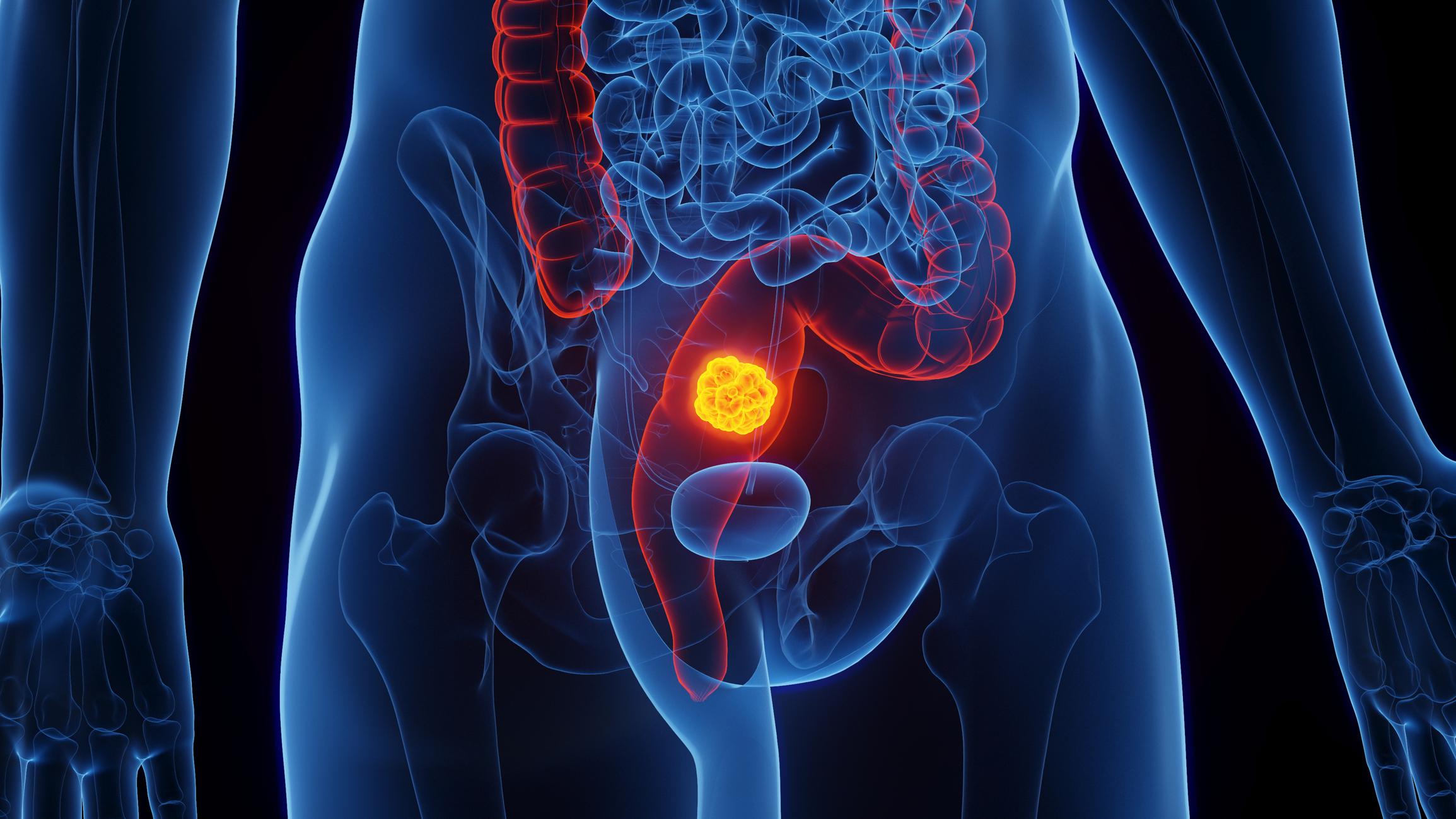
Immune-based treatments for cancer have become the biggest new advance in tackling tumors, and the latest approval could make a big difference for some people with rectal cancer.
uncertain
approval → base → cancer
On Oct. 19, the U.S. Food and Drug Administration (FDA) approved dostarlimab (brand name: Jemperli) to treat a specific type of rectal cancer called microsatellite instability-high (MSI-H)/mismatch repair deficient cancer.
asserted
Administration → approve → cancer
This cancer is caused by the accumulation of certain genetic mutations that prevent rectal cells from repairing DNA damage and accounts for 5-10% of rectal cancers.
asserted
that → cause → cancers
In a study of 154 people with this type of rectal cancer who were treated with dostarlimab, 68% had a complete clinical response at one year, which meant doctors could not see evidence of tumors on imaging or other methods for tracking the tumors.
uncertain
doctors → treat → tumors
In the study, which the drug's manufacturer, GSK, submitted to the FDA, people received nine infusions of the drug: once every three weeks for six months.
asserted
people → submit → months
“Not only did they reach clinical complete response, but they maintained that for a year,” says Dr. Andrea Cercek, section head of colorectal cancer at Memorial Sloan Kettering Cancer Center and principal investigator of the study.
asserted
Cercek → reach → study
(Some of the earliest patients have continued to remain tumor-free for even longer. )
asserted
Some → continue → patients
“That really suggests that the response is durable and real.”
uncertain
response → suggest → ?
Dostarlimab is a checkpoint inhibitor, which means it releases the brakes that hold back the immune system from recognizing and attacking tumors.
asserted
that → mean → tumors
The drug allows immune cells to destroy cancer, making it a powerful weapon for seeking out cancer cells no matter where they spread or hide.
asserted
they → allow → cells
“We have completely leapfrogged over standard of care with a simple immunotherapy that melts the tumor away,” says Dr. Luis Diaz, head of solid tumor oncology at Memorial Sloan Kettering and one of the trial investigators.
asserted
Diaz → leapfrog → investigators
The benefits of avoiding standard rectal-cancer treatment
Standard treatment for rectal cancer involves chemotherapy, radiation, and surgery to remove the rectum that requires patients to wear colostomy bags for the rest of their lives.
asserted
that → avoid → lives
The dostarlimab approval means more patients whose tumors have specific mutations could avoid those aggressive therapies altogether.
uncertain
tumors → mean → therapies
“We have patients who would have lost the ability to bear children who have had children because this therapy replaced chemotherapy, radiation, and life-altering surgery in one swoop," Diaz says.
asserted
Diaz → have → swoop
"That’s a big deal.
asserted
That → ’ → ?
Diagnosed in 2020 when she was 29, shortly after having her first baby, Spill spent nearly nine months trying to figure out why she continued to have constipation and see bloody discharge in the toilet.
asserted
she → diagnose → toilet
Because she had recently given birth, doctors first attributed the symptoms to her pregnancy, and when they persisted after delivery, to internal hemorrhoids.
asserted
they → give → hemorrhoids
It wasn’t until a doctor ordered a colonoscopy that they found a tumor.
asserted
they → order → tumor
“The doctor told me it was Stage III colorectal cancer, and that the treatment plan would include chemo, radiation, and surgery.
asserted
plan → tell → chemo
And that I would never carry another baby again, and would most likely have a colostomy bag for the rest of my life,” says Spill.
asserted
Spill → carry → life
“It didn’t seem real until I heard the words that I was not going to carry another baby.
asserted
I → seem → baby
I immediately stopped thinking about me, and started thinking about my husband and what it meant for my son.
asserted
it → stop → son
We had just started our lives together; we were supposed to have all these kids.”
asserted
we → start → kids
Sascha Roth also faced devastating news when she was diagnosed with rectal cancer in 2019 after seeing blood in her stool.
asserted
she → face → stool
A resident of Washington, D.C., she had a friend with a similar diagnosis who had received chemotherapy, radiation, and surgery and recommended his surgeon at Memorial Sloan Kettering.
asserted
who → have → Kettering
Roth assumed she would follow the same strategy, but she learned that she had Stage III cancer and that she wasn’t a good candidate for surgery because the tumor was located so low in the rectum.
asserted
tumor → assume → rectum
Her tumor also had mutations that suggested it wouldn’t respond well to chemotherapy.
uncertain
it → have → chemotherapy
“It was a double whammy that threw me down,” she says.
asserted
she → throw → me
But the surgeon introduced her to Cercek, who was waiting to hear from the FDA about starting an immunotherapy trial for patients like Roth.
asserted
who → introduce → Roth
“They told me I would be the first patient in the study, and there wasn’t scientific evidence that it would work.”
asserted
it → tell → study
Still, Roth wanted to try.
asserted
Roth → want → ?
She agreed to become Memorial Sloan Kettering’s first patient on the study, and then spent two months waiting for the FDA to greenlight the trial so she could begin receiving the drug.
uncertain
she → agree → drug
“I was calling Sloan Kettering incessantly to see if the FDA approved [the study],” she says.
asserted
she → call → study
“The second the FDA gave its stamp of approval, Dr. Cercek’s team called me to New York to start the first round of treatment less than a week later.”
asserted
team → give → treatment
Not long after that, at Spill's first appointment at Memorial Sloan Kettering to discuss chemotherapy, she learned that the mutations on her tumor made her a good candidate for a study they had just begun.
asserted
they → discuss → study
Only three patients had enrolled ahead of her (including Roth), so there was no data on whether it would actually treat her cancer.
asserted
it → enrol → cancer
Spill, who was at the appointment with her mother, decided she had nothing to lose by joining the trial.
asserted
she → decide → trial
“If it doesn’t go well, we could go back to option A,” Spill remembers her mother saying.
uncertain
mother → go → A
By her second infusion, Spill felt the tumor was shrinking because she no longer had major constipation.
asserted
she → feel → constipation
By the fourth infusion, scans showed the tumor had shrunk by 50%.
asserted
tumor → show → %
…and 26 more, not listed.
 The Aporia