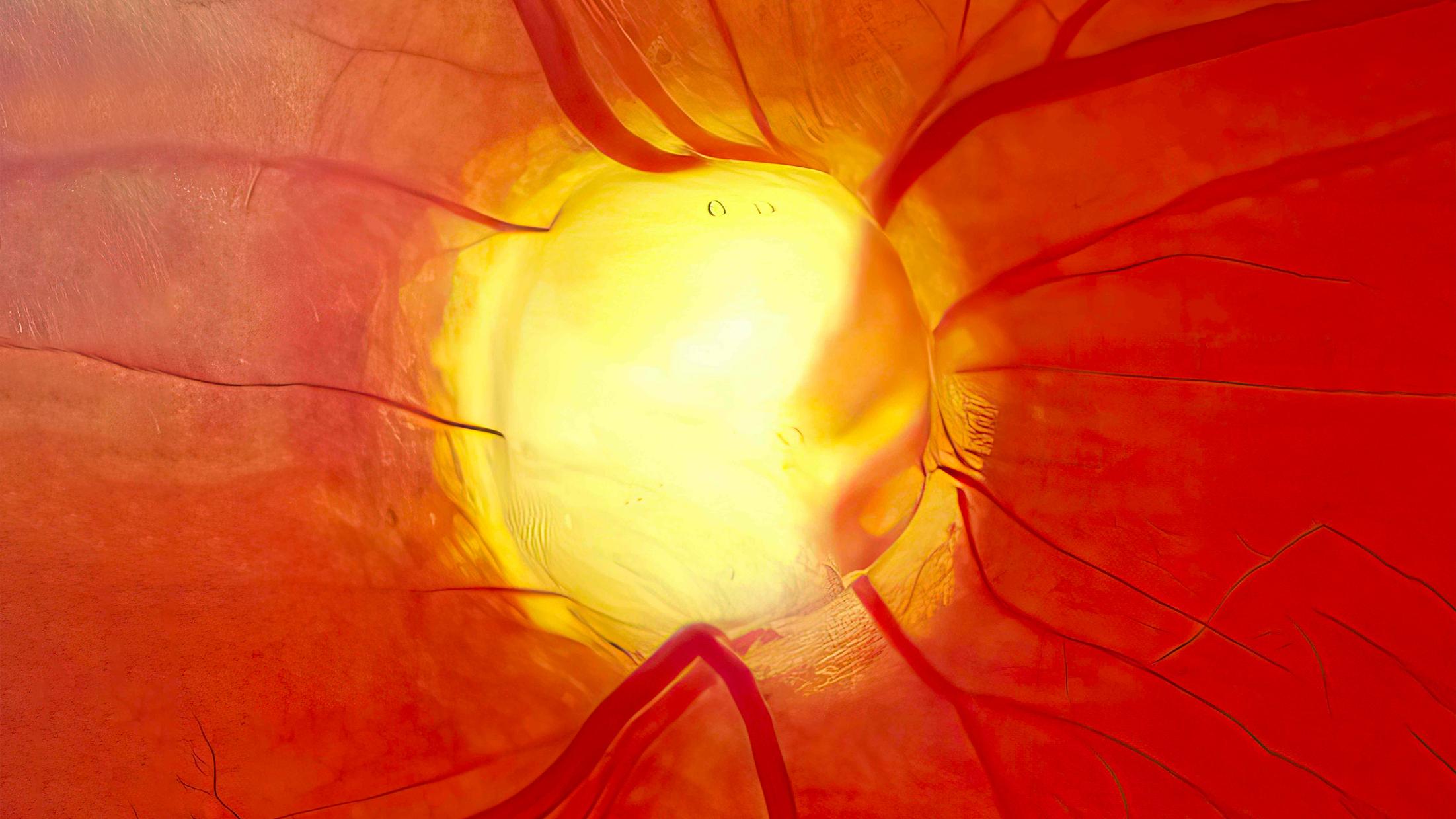
Three people have received an innovative treatment designed to rejuvenate vision cells.
asserted
people → receive → cells
In a presentation at the annual meeting of the American Academy of Ophthalmology, researchers from Life Biosciences reported that the treatment appears safe, and two of the recipients show early signs of improved vision.
asserted
two → report → vision
The study is among the first approved by the U.S. Food and Drug Administration using a novel strategy of reprogramming cells to restore their normal function—essentially rejuvenating them.
asserted
study → approve → them
The scientists used a modified version of a reprogramming strategy that earned a Nobel Prize in 2012 for turning mature, adult cells back to an embryonic-like state from which they could become any of the cells in the body—including healthy new versions of diseased or older cells.
uncertain
they → use → cells
In that work, Japanese scientist Shinya Yamanaka used four genes to trigger the cellular time warp.
asserted
Yamanaka → use → warp
In the current Phase 1 trial, which is ongoing, scientists used three of the four factors to perform a modified reprogramming of diseased retinal ganglion cells in the eye in people with a form of glaucoma—not returning the cells all the way back to their embryonic-like state, but to a point before they stopped functioning properly.
asserted
they → use → point
Retinal ganglion cells have long arms that connect them from the retina in the eye to the optic nerve, which transmits visual signals to the brain.
asserted
which → have → brain
In some people, over time, fluid in the eye fails to drain properly, putting pressure on the retinal ganglion cells, which lose their delicate connections to the optic nerve, causing loss of vision.
asserted
which → fail → vision
While the cells don’t necessarily die, they become dramatically less able to do their job of transmitting critical visual signals.
asserted
they → die → signals
To try to restore their function, in the trial, scientists injected specially designed proteins, or transcription factors, coding for three of the genes into the vitreous: the gel-like fluid cavity at the back of the eye near the retina.
asserted
scientists → try → retina
It’s an advantageous location to test such a therapy, since it’s protected from the body’s immune defenses which could attack the newly made proteins.
uncertain
which → ’ → proteins
The proteins then did their work to reprogram the damaged and aging cells so they became functional again.
asserted
they → do → cells
The experimental therapy is based on work from the lab of David Sinclair, professor of genetics at Harvard Medical School and co-founder of Life Biosciences.
asserted
therapy → base → Biosciences
It's a test of his theory that aging cells lose their ability to work properly because they accumulate too many confusing instructions for which genes they need to turn on or off—so-called epigenetic noise that disrupts the original marching orders cells follow.
asserted
cells → age → orders
Sinclair believes that restoring the proper epigenetic information, and removing the epigenetic “noise” by reprogramming the cells to a younger, more functional state could address diseases associated with aging, such as glaucoma.
uncertain
restoring → believe → glaucoma
“We are scientifically reversing epigenetic age to restore youthful function,” Sinclair says.
asserted
Sinclair → reverse → function
“We think of it as restoration,” says Sharon Rosenzweig-Lipson, chief scientific officer at Life Biosciences, who presented the new data at the conference.
asserted
who → think → conference
“We’re restoring the code back to what it was when [the cells] were healthy and functional.”
asserted
cells → restore → code
Full reprogramming with the four Yamanaka factors comes with a risk of cells growing out of control and forming teratomas, a type of tumor that can sprout partially or fully developed tissues like teeth, muscle, and bone.
asserted
that → come → teeth
Sinclair’s goal was to exploit this reprogramming process to help cells regain their proper instruction manual, and together with his graduate student Yuancheng Lu, launched studies involving just three of the genes, dropping one that is most associated with cancers.
asserted
that → exploit → cancers
There was no guarantee that using three of the factors would trigger reprogramming, since all of the previous studies employed all four.
asserted
all → be → four
And for three years, Lu learned why—while working with mice with age-related vision loss like glaucoma, he struggled to reprogram retinal ganglion cells with only three of the factors.
asserted
he → learn → factors
Experiment after experiment failed.
asserted
Experiment → fail → experiment
Frustrated, Lu sought out Sinclair, hoping to move onto another project.
asserted
Lu → seek → project
“He said reversing aging is probably the hardest biological question in the world, and if it were easy, it would have been done already,” Lu says.
asserted
Lu → say → world
“Removing the fourth factor allowed the three other factors to be small enough to fit into the viral tool we used to deliver them into [animals],” he says.
asserted
he → remove → animals
“If the three genes were a little bigger, then we couldn’t fit them into the viral vector.
asserted
we → fit → vector
In 2018, Lu finally succeeded and texted Sinclair images of the first mouse with glaucoma that had regenerated the delicate connections between the retinal ganglion cells and the optic nerve that had been lost.
asserted
that → succeed → cells
When Lu asked Sinclair what he saw, Sinclair replied: “the future.”
asserted
Sinclair → ask → future
Lu and Sinclair published their findings in 2020, and that therapy is very close to the one that Life Biosciences ended up using in its trial in people.
asserted
Biosciences → publish → people
Two days before the trial was launched in June, Rosenzweig-Lipson gave Lu the good news that the experiment he had worked on for three years was ready to test in the first people with glaucoma.
asserted
he → launch → glaucoma
“I was in the lab, and I couldn’t believe it,” Lu says.
asserted
Lu → believe → it
“I know these patients are suffering.
asserted
patients → know → ?
My own family has the macular degeneration risk allele, and I carry the risk allele.
asserted
I → have → allele
So it means a lot to me.
asserted
it → mean → me
My great aunt died when she crossed the street because she couldn’t see well, so I feel like it’s destiny helping these people.”
While the study’s main goal is to show that the therapy is safe, two of the three participants showed early signs of improved vision as well, Rosenzweig-Lipson says.
asserted
Lipson → die → vision
All three took a test before receiving the therapy to establish their visual field by noting when they could see strategically placed lights that flashed above, below, or to the left or right when they looked straight ahead.
uncertain
they → take → left
Eight weeks after receiving the reprogramming factors, two of the participants had improvements in their visual fields.
asserted
two → receive → fields
“In places where they weren’t seeing as well, or weren’t identifying lights, we are now seeing better evidence that they can,” says Rosenzweig-Lipson.
asserted
Lipson → see → evidence
She says the results are encouraging enough to begin testing a higher dose—three times that of the initial one—to determine if the treatment remains safe, and, ultimately, what dose would bring the biggest improvement in vision to patients.
asserted
dose → say → patients
…and 12 more, not listed.
 The Aporia