Israel's election may change its leader, but not Iran war policy

Read the original at The Straits Times ↗
Cite

The Straits Times. (2026, October 21). Israel's election may change its leader, but not Iran war policy. The Straits Times. https://www.straitstimes.com/world/middle-east/israels-election-may-change-its-leader-but-not-iran-war-policy

Dated from the outlet's own feed. Check the original for its byline.

The Straits Times · collected 2026-10-21 · by The Straits Times

Quick Summary

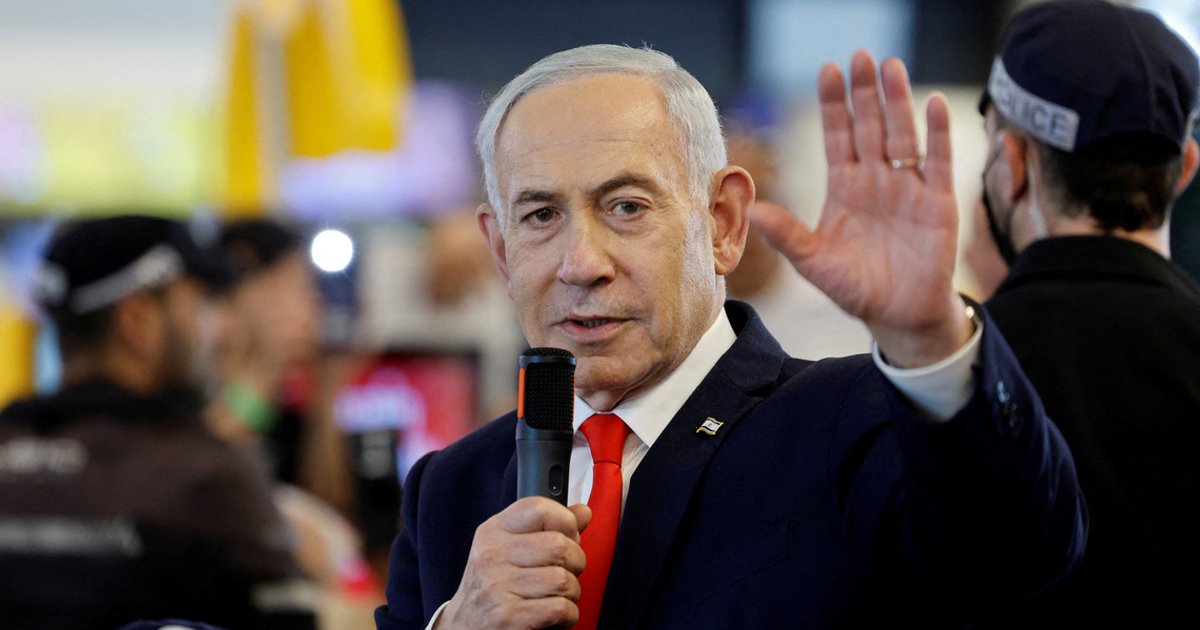
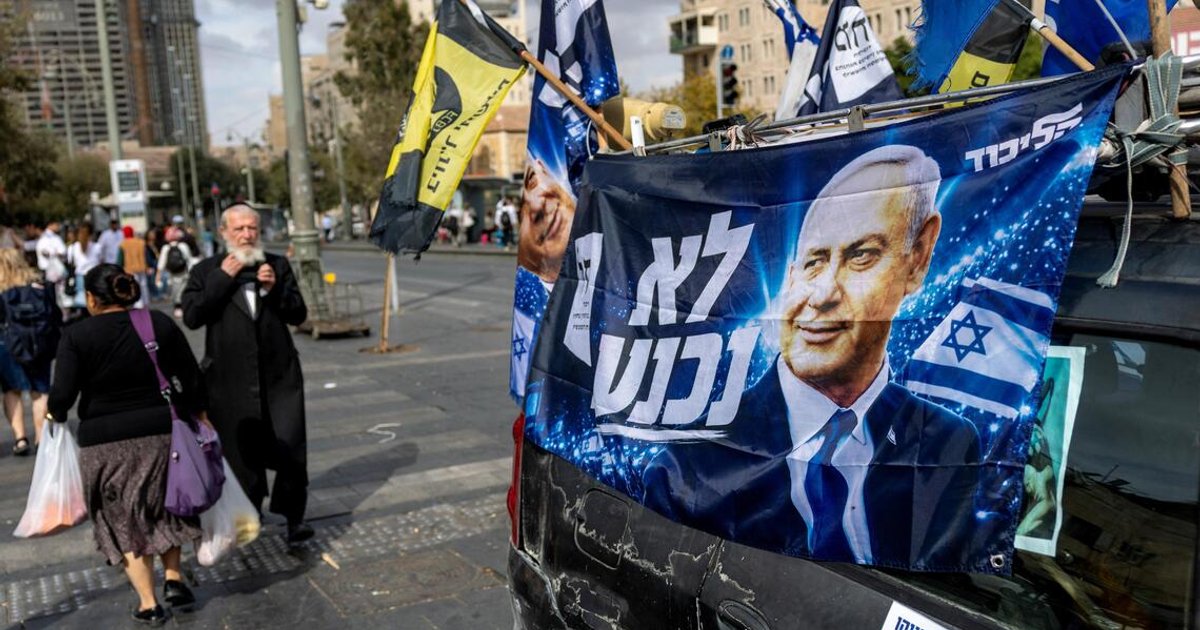
Israel's upcoming election may change its leader but is unlikely to alter its core security policies regarding Iran and the Palestinians, according to regional analysts. The strategic focus remains on countering Iran, maintaining buffer zones, and employing military force against adversaries. Analysts predict that a victory for Prime Minister Benjamin Netanyahu could lead to an even tougher stance towards Iran and continued expansion of Jewish settlements in the West Bank. Palestinian analyst Ghassan al-Khatib notes that all major parties agree on opposing a Palestinian state and supporting settlement growth, indicating little room for policy change regardless of election outcomes.
Written locally by qwen2.5:14b on 2026-10-21, using this article's own text rather than the other coverage of the same event (that is the story summary below).

AI analysis runs on qwen2.5:14b, locally

Story summary

Israel's upcoming election may change who leads the country but is unlikely to alter its core strategy regarding Iran. According to regional policymakers and analysts, Iran remains Israel's primary adversary, with military force still preferred over diplomatic solutions. This stance was solidified after Hamas attacks on southern Israeli communities in October 2023 and subsequent conflicts in Gaza, Lebanon, and Iran.

Analysts predict that if current Prime Minister Benjamin Netanyahu wins, backed by far-right coalition partners, Israel's approach towards Iran might become more aggressive. The election outcome could also affect policies related to Jewish settlements in the occupied West Bank. However, the fundamental direction of Israel's security policy, focusing on confronting Iran and maintaining military deterrence, is expected to remain unchanged regardless of who becomes the new leader.

Written for “Israel Election And Iran Policy” on 2026-10-21, grounded in this article and the 0 other(s) covering the same event.
Why this leaning score
The article's own words the score was based on. Each is quoted verbatim and was checked against the article text before being stored, so you can find it in the original.
Reading Leans strongly right (beta estimate) Confidence high
Leaning: leans strongly right for article 96195 (high confidence, 2 verified quotes) · logged 2026-10-21

Story

📰 Israel Election And Iran Policy
Politics · 1 article(s) covering the same event.

Compared with similar articles

This article reads leans strongly right and hedges 22% of its claims. Each row says how that neighbour differs.
The Straits Times
⚖️ Leans left further left than this 🔴 14% hedged 6 of 42 📰 publisher trust 60
“Both articles discuss an upcoming Israeli election but focus on different aspects of it; Article A emphasizes the potential political shift towards hard-right nationalism, while Article B focuses on the continuity of Israel's policy towards Iran and the strategic implications of recent conflicts.”
TIME
⚖️ leaning not scored 🔴 24% hedged 23 of 96 📰 publisher trust 59
“The articles discuss different aspects of Israeli policy and politics without focusing on the same specific incident.”
Daily Mail
⚖️ Leans strongly right 🔴 11% hedged 2 of 18 📰 publisher trust 64
“The articles discuss different aspects of the Israeli election without describing the same specific incident.”
Al Jazeera
⚖️ Leans left further left than this 🔴 4% hedged 2 of 54 📰 publisher trust 60
“While both articles discuss the upcoming Israeli election of 2026, they do not describe the same specific incident or occurrence but rather different aspects and analyses of the event.”
The Straits Times
⚖️ Leans left further left than this 🔴 0% hedged 0 of 12 📰 publisher trust 60
“The articles discuss different aspects of Israel's political landscape around the upcoming election but do not describe the same specific incident or occurrence.”
Al Jazeera
⚖️ Leans left further left than this 🔴 4% hedged 3 of 71 📰 publisher trust 60
“Both articles discuss the upcoming Israeli election, but they focus on different aspects: Article A emphasizes the impact of recent laws and motions affecting Palestinians, while Article B focuses on the continuity of Iran war policy.”
How this article was measured signals, leaning charts, publisher record, byline, topics and claims

Signals How these are calculated →

Claims extracted
36
sentences that state something as happening or true
Uncertain
22%
8 of 36 hedged ("reportedly", "may", "according to")
Leaning
Leans strongly right
of the writing, not the subject · beta estimate
Publisher signals
60/100
The Straits Times's corrections and hedging, across everything collected from it. Not a measure of accuracy.
Outlets on this story
1
Politics
Same framing elsewhere
1
articles that frame the event the way this one does
Analyzed 2026-10-21 · how these are computed

How this is being covered How these are calculated →

Article leaning vs. publisher reliability
Source leaning vs. consistency

Publisher

The Straits Times · 3286 article(s) · 3 correction(s) detected
Running correction rate · 3 correction(s)

Who wrote this

The Straits Times
2113 article(s) here · 1 carrying a prediction
🔮 Although Hunter still sees plenty of demand for Hermes bags, particularly the most high-end ones, she said the decline in resale prices might dissuade some from buying directly from Hermes.
🔮 PHP underpins large parts of the internet, raising concerns that a significant number of websites could be vulnerable to attack. "
🔮 “If they adhere to these conditions, they should know that the Strait will be fully opened, and after that, we will hold further rounds of negotiations until a final agreement is reached,” he said.
🔮 Russia is willing in principle to join new Ukraine peace talks in November, Kremlin says
🔮 Global diesel prices seen staying high despite Trump’s deal with Russia AI generated NEW YORK - US President Donald Trump’s deal with Russia to supply diesel to US and global markets is unlikely to meaningfully lower diesel prices, market watchers and analysts said, noting that the promised volumes are too small to ease a global supply squeeze. Diesel prices have shot to record highs during the US-Israeli war on Iran, creating a political liability for Trump and his Republican party as they campaign to maintain thin majorities in the US Congress in the Nov 3 midterm elections. Critics of Trump’s move said lifting sanctions on Russian diesel could help Moscow fund further attacks on Ukraine, undermining years of efforts to curb Russian energy revenues and raising the risk the Kremlin could profit while consumers get little relief from high fuel prices. Trump said Russia would immediately export 300,000 metric tons, or 2.25 million barrels, followed by 500,000 tons in November and 1 million tons “immediately thereafter”. Analysts have said it may not be possible for Russia to produce enough excess diesel in the near-term to meet those ambitious goals, while a strained global tanker market may also make timely shipments difficult. Analysts also said the announced volumes are unlikely to meaningfully lower diesel prices. US retail diesel prices topped US$6 a gallon in September for the first time ever and have remained above that level since. Big promises, limited impact Michelle Brouhard, head of policy and geopolitical risk at Kpler, said it would take an additional 400,000 barrels per day of diesel supply to materially ease prices in the current market. But the initial shipment of roughly 2.2 million barrels would amount to only about 73,000 bpd if distributed over a month. She said that volume on its own would probably not significantly affect global diesel prices. Caspian Conran, lead economist at consulting firm Baringa, estimated that the market would require an additional 850,000 bpd of supply to produce an immediate softening in prices. Trump initially said Russia would immediately supply diesel to the US and global markets to help bring down fuel prices, but later said the Russian cargoes would be released to global markets rather than shipped to the US. This raised questions about whether the deal will deliver the domestic supply relief the president promised. “The diesel that Putin was going to sell, they were going to make it available to the global market one way or the other,” Secretary of State Marco Rubio said over the weekend.
🔮 JERUSALEM - Prime Minister Benjamin Netanyahu’s main rival in Oct 27 elections, ex-army chief Gadi Eisenkot, said on Oct 21 that he would refuse to serve as a minister in a new government led by the current premier.
🔮 Even if countries deliver their latest climate pledges in full, global temperatures could still rise 2.6 deg C above pre-industrial levels by 2100, said the annual Emissions Gap Report.
🔮 Mitsotakis' government has said state subsidies and other aid to prop up households and businesses against rising energy costs would reach about €1 billion.
🔮 Israel's election may change its leader, but not Iran war policy
🔮 But the US leader faces key midterm elections in November while the Israeli premier will fight for his political life in elections in October.
Also by The Straits Times
Nothing else under this byline is closely related to this article, so these are simply their most recent.
All 2113 articles by The Straits Times →

Topics

Hamas Iran Israel Israeli Palestinian

Subjects

Israel GPE · 11× Iran GPE · 8× Netanyahu PERSON · 7× Palestinian NORP · 5× Israeli NORP · 4× Hamas ORG · 2× Tehran GPE · 2× the West Bank GPE · 2× DUBAI GPE · 1× Gaza GPE · 1×

Narrative

Michael Young of the Carnegie Middle East Center said Israel's security establishment and much of its political class share a common strategic outlook, centred on confronting Iran, maintaining "forward defence" and preserving military deterrence, reducing the scope for big policy shifts.
framing: mixed · carried by 1 article(s) · first seen 2026-10-21
🔮 Israel's election may change its leader, but not Iran war policy
2026-10-21 · The Straits Times
Israel's election may change its leader, but not Iran war policy · mixed framing

Claims (36 extracted, 8 hedged)

Israel's election may change its leader, but not Iran war policy uncertain
election → change → leader
Israel's election next week may change its leader, but not its strategy: Iran will remain its chief adversary, military force will continue to be its preferred tool and Palestinian statehood a distant prospect, regional policymakers and analysts say. uncertain
policymakers → change → leader
That is because the strategic assumptions underpinning Israeli policy were hardened by the October 7, 2023, attacks on southern Israeli communities by Palestinian militant group Hamas and by the wars in Gaza, Lebanon and Iran. asserted
assumptions → underpin → Gaza
If anything, Israel could toughen its security policy, the analysts said, as victory for Prime Minister Benjamin Netanyahu with the backing of far-right coalition partners could embolden him to step up the war with Iran, tighten Israel's grip on the occupied West Bank and push diplomacy further to the margins. uncertain
victory → toughen → margins
Israel's security doctrine now rests on three pillars: breaking Iran, holding buffer zones beyond its borders and using force to deter enemies. asserted
doctrine → rest → enemies
The real divide is one of degree rather than direction — how aggressively Israel fights its wars, how far it expands Jewish settlements in the West Bank and whether any leader opts for diplomacy, the analysts said. asserted
analysts → fight → diplomacy
From Tehran to Riyadh, Tuesday's election is not seen as a potential turning point but as a test of whether the Middle East is settling into a long confrontation, where wars ebb and flow while the underlying conflicts are unresolved. asserted
conflicts → see → confrontation
"If Netanyahu is elected, he'll do whatever he thinks he wants to do," said Aviv Bushinsky, a former adviser to Netanyahu. asserted
Bushinsky → elect → Netanyahu
"Expansion of the settlements will continue. asserted
Expansion → continue → settlements
The wars against Iran, Hamas and Hezbollah will continue." asserted
wars → continue → Iran
"What you see now is what you'll see after the election, maybe even more aggressively," he said. asserted
he → see → election
"As long as Iran is in such a situation, it's a waste of time talking about Palestine.” asserted
it → talk → Palestine
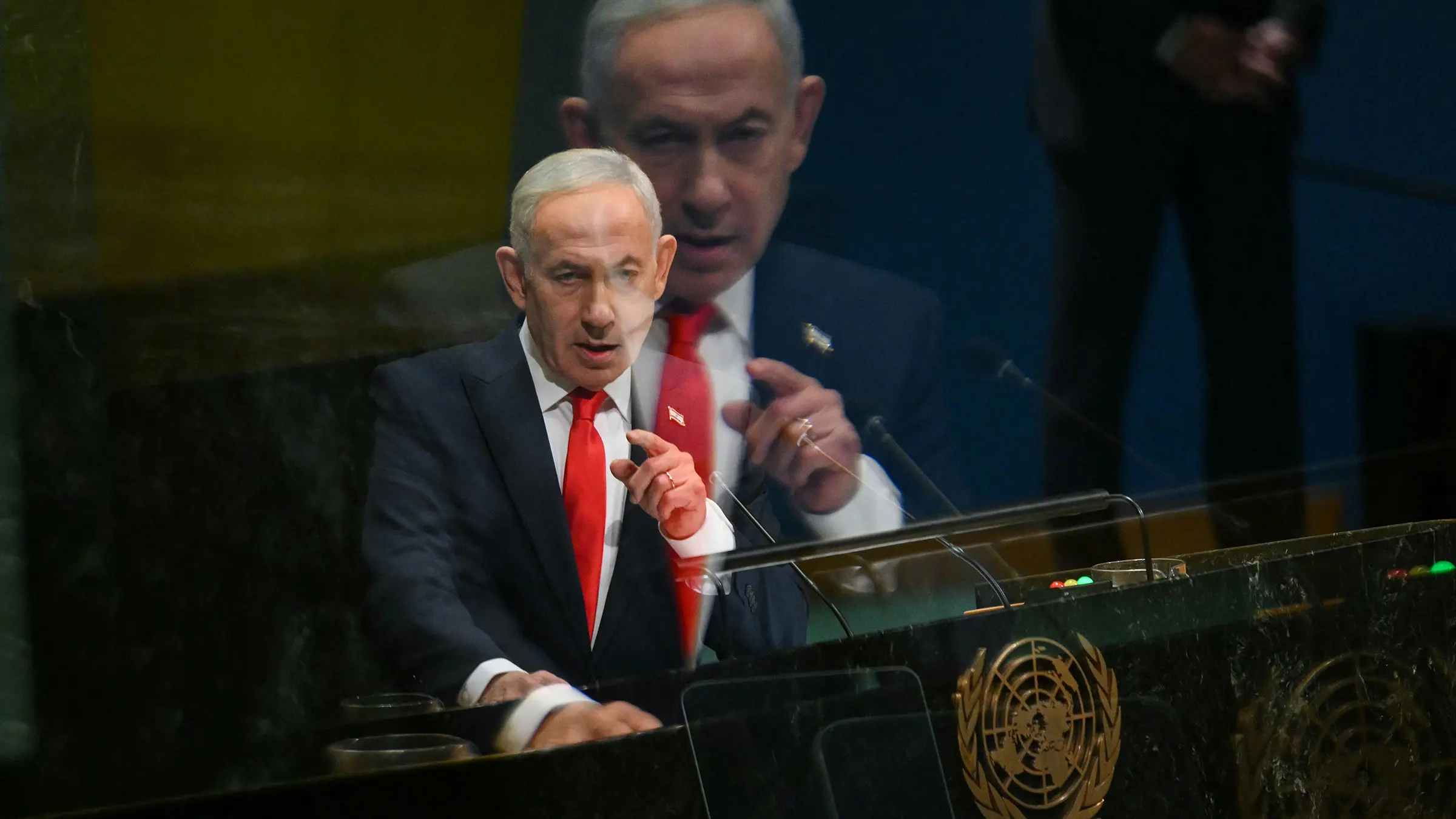
Netanyahu said on Sunday that Israel must prioritise “prevention and offence over containment and defence”, including pre-emptive strikes to thwart emerging threats, while establishing Israel as a regional power and maximising its independence in armaments. asserted
Israel → say → armaments
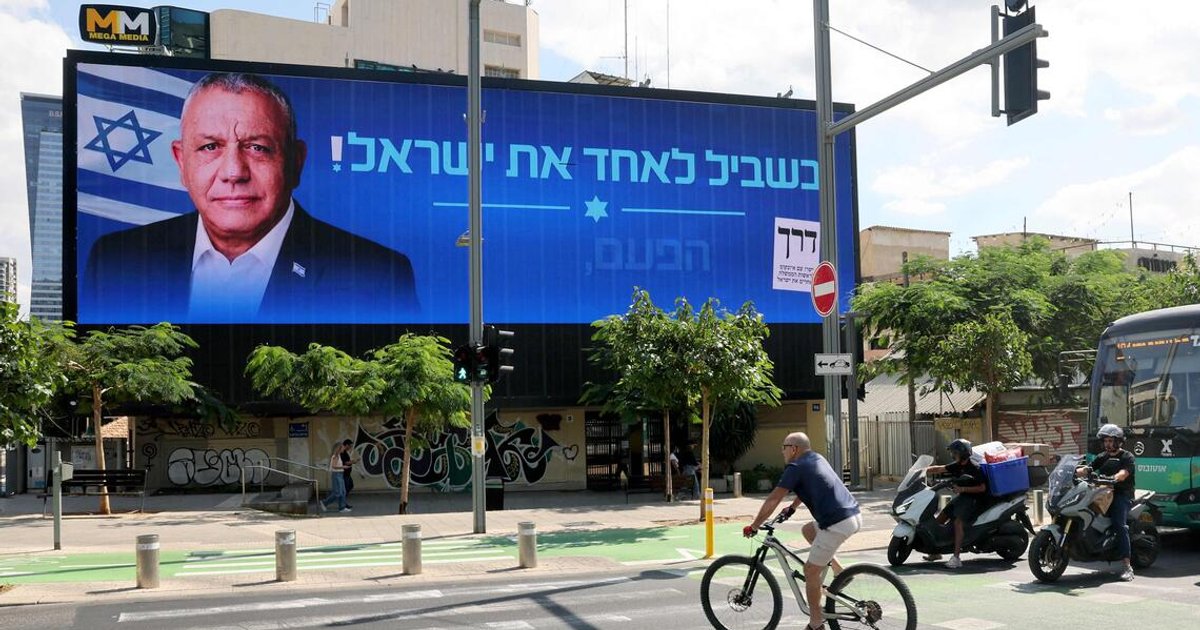
WHY THE COURSE IS UNLIKELY TO CHANGE The election pits Netanyahu's right-wing Likud and its ultranationalist allies against an opposition led by former military chief Gadi Eisenkot's Yashar party. asserted
election → change → party
Palestinian analyst Ghassan al-Khatib sees no prospect of a fundamental shift in policy towards the Palestinians, with Israeli political parties competing to project harder-line positions as public opinion moves further to the right. asserted
opinion → see → right
“The substance of the policy remains the same: No to a Palestinian state and yes to further settlement expansion. asserted
substance → remain → expansion
On this, they are all in agreement,” he said. asserted
he → say → agreement
A government led by Netanyahu's opponents might seek to repair Israel's international standing by curbing some settler violence or pursuing settlement expansion with less fanfare. uncertain
government → lead → fanfare
But such changes would be a shift in style rather than substance, al-Khatib said. asserted
Khatib → say → style
Michael Young of the Carnegie Middle East Center said Israel's security establishment and much of its political class share a common strategic outlook, centred on confronting Iran, maintaining "forward defence" and preserving military deterrence, reducing the scope for big policy shifts. asserted
establishment → say → shifts
Joost Hiltermann of the International Crisis Group, who has conducted research in the West Bank, said growing settler violence, mounting Palestinian frustration and the absence of a "political horizon" had created combustible conditions, where even a minor trigger could spark a wider uprising. uncertain
trigger → conduct → uprising
Some regional policymakers ask whether Israel's confrontation with Iran has become the organising principle of Middle East security, regardless of who wins the election. asserted
who → ask → election
US President Donald Trump's praise of Netanyahu as a "great warrior prime minister" has reinforced expectations that the Israeli leader will try to finish the campaign against Tehran if he retains power. asserted
he → reinforce → power
Netanyahu has made clear his ambitions extend beyond containing Iran to toppling its clerical rulers. asserted
extend → make → rulers
“Completing the task means toppling the terrorist regime in Iran, the head of the venomous octopus,” he said in a speech this week. asserted
he → complete → speech
But military and political analysts question whether anything short of a US-Israeli ground invasion would force Tehran to abandon what it views as its core security interests in what it sees as an existential fight. asserted
it → question → fight
After surviving months of war, Iran may be betting it can outlast its opponents while continuing to exert pressure through regional allies. uncertain
it → survive → allies
"This is a quagmire," Young said. asserted
Young → say → ?
"The Iranians can outlast Trump." asserted
Iranians → outlast → Trump
Hezbollah in Lebanon and Hamas in Gaza have been weakened, but the broader network of Iran-aligned groups has survived and the conflict could strengthen Tehran's determination to pursue a nuclear deterrent, the analysts said. uncertain
analysts → weaken → deterrent
For all the alarm Netanyahu causes in the Arab world, some Gulf leaders still see him as the Israeli politician most likely to keep Iran under pressure. asserted
leaders → cause → pressure
This creates a dilemma for them. asserted
This → create → them
They oppose what they view as his expansionist policies but want Iranian influence curbed. asserted
influence → oppose → policies
"Netanyahu's policies in Gaza, the West Bank, Syria and Lebanon are damaging," said Abdulaziz Sager, chairman of the Gulf Research Center. asserted
Sager → say → Center
"As for Iran, a settlement is needed before the conflict escalates further. asserted
conflict → need → Iran
If Iran's role is not curbed, the region could be heading toward 50 years of Iranian hegemony." uncertain
region → curb → hegemony

💬Give feedback
🕘History 🎫Support