That is 0 articles you have read today.
The Aporia is free and carries no advertising, so readers are the only
thing paying for it. If you are getting this much out of it, a small
donation is what keeps it independent.
Daily limit reached
You have read 0 articles today.
That is more than the 15 a day The Aporia gives away,
and well past what it can carry on nothing. Your allowance resets at
midnight.
There is no advertising here and nothing about you is sold, so readers
are the only thing paying for it. If the site is worth this much of
your day, it is worth a few dollars.
Everything else stays open: the
maps, the
directory and
search do
not count against this, and neither does re-opening something you have
already read today.
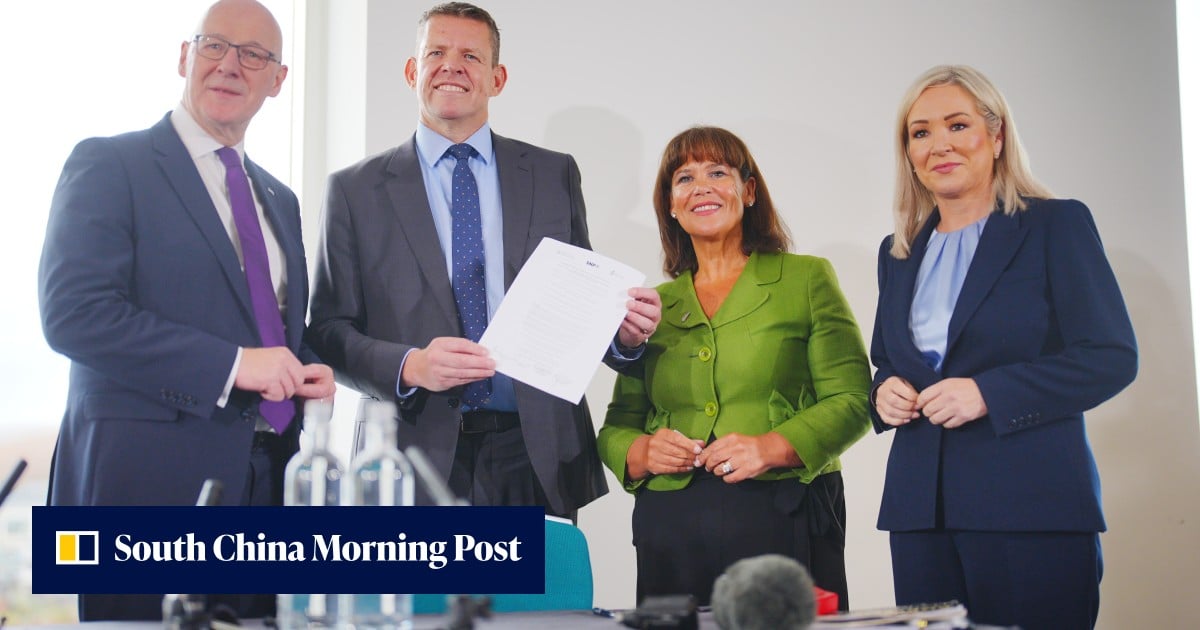
Leaders of the SNP, Plaid Cymru, and Sinn Féin met in Cardiff on Monday to discuss independence referendums for their respective regions, viewing it as a "landmark" event that signals the end of Westminster's dominance. The first ministers signed a memorandum committing to facilitate constitutional change and emphasized the right of their nations to self-determination, predicting that Andy Burnham might be the last Prime Minister of the UK. Downing Street responded by affirming the Prime Minister’s commitment to the Union while focusing on addressing the cost-of-living crisis.
Written by the local model on 2026-09-15,
using this article's own text rather than the other coverage of the
same event (that is the story summary below).
Story summary
On September 14, 2026, in Cardiff, John Swinney (SNP), Rhun ap Iorwerth (Plaid Cymru), and Michelle O'Neill (Sinn Féin) met as party leaders to sign a memorandum of understanding pushing for referendums on independence from the UK. The agreement asserts their right to self-determination, stating that Westminster has no authority to block democracy. Despite this joint declaration, Wales’ Rhun ap Iorwerth did not provide a timeline for a referendum in his country, while Scotland and Northern Ireland’s leaders called explicitly for referendums. This comes amidst continued opposition from the UK government under Prime Minister Andy Burnham.
Written for “UK Independence Movement” on 2026-09-15,
grounded in this article and the 11 other(s) covering the same event.
Why this leaning score
The article's own words the score was based on. Each is quoted
verbatim and was checked against the article text before being
stored, so you can find it in the original.
Leaning score -0.65 for article 9581 (high confidence, 1 verified quote) · logged 2026-09-15
The breakup of the UK is imminent, leaders of the SNP, Plaid Cymru and Sinn Féin have forecast during a “landmark” summit aimed at putting pressure on Downing Street to hold independence referendums.
asserted
leaders → forecast → referendums
The first ministers of the UK’s three devolved nations – SNP leader John Swinney, Plaid Cymru leader Rhun ap Iorwerth and Sinn Féin vice president Michelle O’Neill – met in Cardiff on Monday morning to declare jointly that “Westminster’s time is coming to an end”.
asserted
time → meet → end
Along with Sinn Féin president Mary Lou McDonald, who is the leader of the opposition in the Irish Dáil, the group called on the Government to “prepare for, plan and facilitate constitutional change”.
asserted
group → call → change
During what Mr Swinney described as a “landmark day”, he predicted Andy Burnham would be “the last Prime Minister of the United Kingdom” and said a Scottish independence referendum should happen within the next five years.
asserted
referendum → describe → years
The leaders – who met on Monday morning in their capacity as party leaders, rather than as officials in their respective governments – signed a memorandum of understanding which reiterated their commitment to independence.
asserted
which → meet → independence
The joint agreement signed by the three parties said: “The political landscape across these islands is changing.
“
asserted
landscape → sign → islands
For the first time ever, people across these islands have first ministers in Scotland, in Wales and in the north of Ireland who are all committed to independence from the United Kingdom.
asserted
who → have → Kingdom
“For people watching across these islands – for people watching around the world – there could be no clearer sign that Westminster’s time is coming to an end.”
uncertain
time → watch → end
The leaders added: “Our nations have the right to self-determination.
asserted
nations → add → determination
No Westminster government has the right to block democracy or undermine the principle that our people will decide their own future.
asserted
people → have → future
“We recognise that our parties have different constitutional positions and that each nation will determine its own future in its own way and in its own time.
asserted
nation → recognise → time
“We call for the British Government to prepare for, plan and facilitate constitutional change in each jurisdiction.”
asserted
Government → call → jurisdiction
The two leaders pledged to make the case for “greater fairness” and power over the “constitutional futures” of their countries together.
asserted
leaders → pledge → countries
Asked by reporters whether the summit was an “appropriate use” of their offices, the First Minister of Scotland told reporters that he was “simply advancing the mandate that was given to me by the public”.
asserted
that → ask → public
Mr ap Iorwerth added: “Everything that my government does is about seeking better outcomes for the people of Wales.”
asserted
government → add → Wales
Following the press conference on Monday morning, Downing Street said Andy Burnham believes strongly in the United Kingdom and is focused on easing the cost-of-living crisis for households across the country rather than on “constitutional debates”.
asserted
Burnham → follow → debates
Mr Burnham’s official spokesman said: “The Prime Minister is committed to delivering change across all four nations of the United Kingdom and believes strongly in the Union.
asserted
Minister → say → Union
“The United Kingdom is at its best when people come together around our shared values and problem-solving, rather than division, and the Prime Minister will continue to ease pressures on household finances, and delivering greater economic security, rather than engaging in constitutional debates or further referendums.”
asserted
Minister → come → debates
 The Aporia