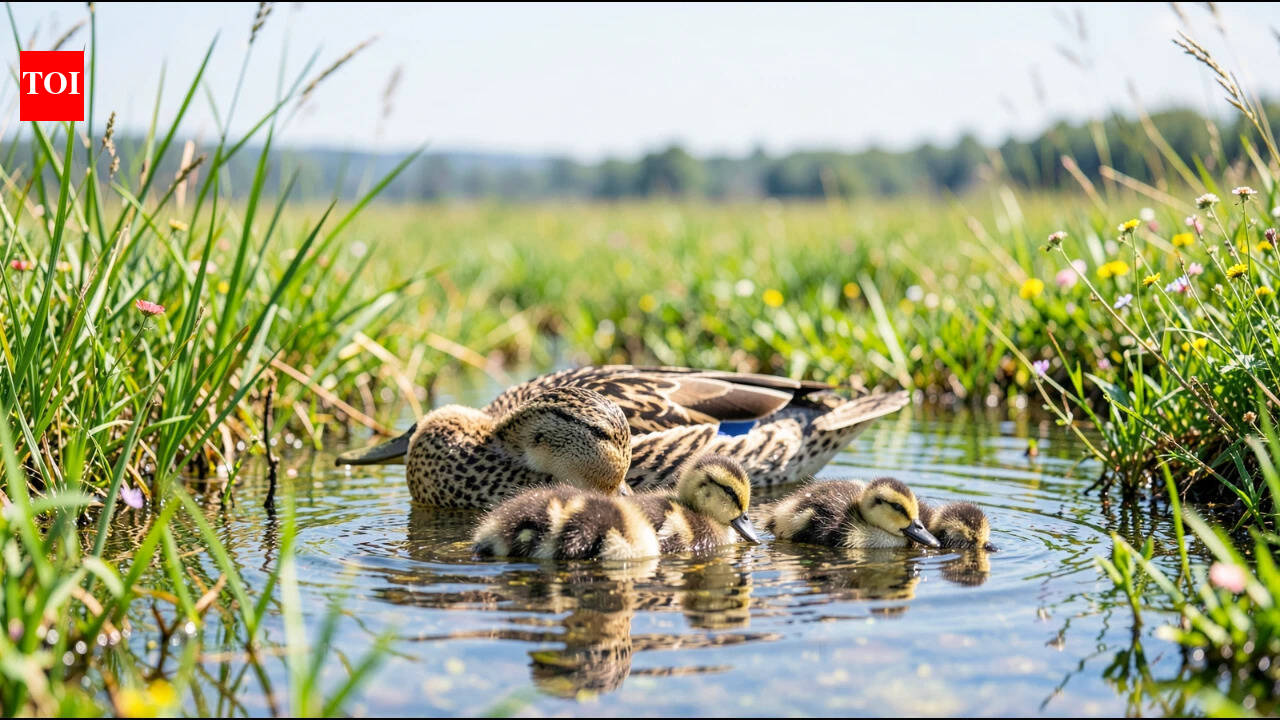
Spain recorded 172 breeding females and 1,427 chicks in 2025, a marked improvement from the 20 breeding pairs recorded in the country in 2009.
asserted
Spain → record → 2009
The figures follow years of conservation work focused on wetland restoration, captive breeding and cooperation with local stakeholders.
asserted
figures → follow → stakeholders
LIFE Cerceta Pardilla, co-financed by the European Union’s LIFE programme and Spain’s Ministry for the Ecological Transition and the Demographic Challenge through its Directorate-General for Water, restored more than 3,600 hectares of wetlands and released 3,769 captive-bred ducks in Spain, Italy and Portugal.
asserted
Pardilla → co → Spain
The project’s final results, published in March 2026, document the scale of the work.
asserted
results → publish → work
However, reintroductions complicate efforts to determine how much of the increase reflects natural population growth.
asserted
much → complicate → growth
The species remains at risk from habitat degradation, water shortages and other pressures on wetlands.
asserted
species → remain → wetlands
How Spain’s marbled duck breeding numbers changed between 2009 and 2025
The marbled duck (Marmaronetta angustirostris), also known as the marbled teal, is a wetland bird found across parts of the Mediterranean region, North Africa and Asia.
asserted
duck → change → region
In Spain, its breeding population declined sharply, reaching just 20 pairs in 2009.
asserted
population → decline → 2009
Conservation efforts have since focused on protecting the wetlands the species needs to breed and feed.
asserted
species → focus → wetlands
Spain recorded 130 females with broods and 806 chicks in 2024.
asserted
Spain → record → 2024
In 2025, the national working group recorded 172 breeding females and 1,427 chicks, increases of approximately 32% and 77%, respectively.
asserted
group → record → %
The ministry’s monitoring counts females observed with chicks, allowing the 2024 and 2025 breeding figures to be compared.
asserted
figures → count → chicks
The 2024 breeding season also brought important milestones at individual sites.
asserted
season → bring → sites
At Moreras Lagoon in Murcia, breeding was recorded for the first time since 2008, according to Spain’s environment ministry.
uncertain
breeding → record → ministry
The project also reported breeding at the Tancat de la Pipa bird reserve in Valencia.
asserted
project → report → Valencia
In Málaga, 13 pairs were detected at the Río Guadalhorce natural area, where breeding had not been recorded since 2004.
asserted
breeding → detect → 2004
Murcia recorded five breeding females and 42 chicks in 2025, according to the national monitoring figures.
uncertain
Murcia → record → figures
LIFE Cerceta Pardilla restored more than 3,600 hectares of wetlands
asserted
Pardilla → restore → wetlands
Habitat restoration was central to LIFE Cerceta Pardilla, which began in January 2021 and concluded in 2026.
asserted
which → begin → 2026
-financed by the EU LIFE programme and Spain’s Directorate-General for Water, the project combined restoration work with species monitoring, captive breeding and agreements with local stakeholders.
asserted
project → combine → stakeholders
Its final results report more than 3,600 hectares of wetlands restored.
asserted
results → report → wetlands
In 2024, the project acquired the 90-hectare La Raja estate within El Hondo Natural Park in Alicante province.
asserted
project → acquire → province
Together, the La Raja and El Espigar estates total 141 hectares, according to Spain’s environment ministry.
uncertain
estates → total → ministry
Work at these sites included improvements to water management and measures to provide suitable habitat for breeding birds.
asserted
Work → include → birds
Elsewhere, restoration work in the Brazo del Este Natural Area in Seville covered 24 hectares and, together with two rehabilitated meanders of a former branch of the Guadalquivir River, created 50 hectares in total.
asserted
work → cover → total
In Murcia, interventions at Moreras Lagoon and Rambla included revegetation, reedbed management and measures to improve wetland conditions.
asserted
interventions → include → conditions
El Hondo is part of Natura 2000, the European Union’s network of protected areas for important habitats and species.
asserted
Hondo → protect → habitats
The project’s restoration work also supported the objectives of EU legislation covering birds, water and habitats.
asserted
work → support → birds
Captive-bred releases and land stewardship agreements supported the conservation effort
The project’s final results record the release of 3,769 captive-bred marbled ducks in Spain, Italy and Portugal, three times the original target.
asserted
results → breed → Spain
It also established 15 land stewardship agreements involving a range of stakeholders, including ranchers, rice growers, non-profit organisations and public administrations.
asserted
It → establish → ranchers
These voluntary arrangements support cooperation in the management and protection of natural habitats.
asserted
arrangements → support → habitats
Researchers tracked 164 birds fitted with GPS/GSM transmitters to investigate movement patterns, survival and habitat use.
asserted
Researchers → track → patterns
The project identified more than 60 wetlands used by the species and developed measures to address threats including accidental hunting, poaching and disease outbreaks associated with botulism and cyanobacteria.
asserted
project → identify → botulism
Captive breeding and reintroductions have helped reinforce the Spanish population, but they complicate efforts to determine how much of the increase reflects natural population growth.
asserted
much → help → growth
BirdLife International’s marbled duck factsheet notes that reintroductions make population trends in the Iberian Peninsula difficult to interpret.
asserted
trends → note → Peninsula
Citing a 2022 estimate, the factsheet states that potentially 95% of the Iberian breeding population consisted of released birds.
asserted
% → cite → birds
This estimate should not be assumed to represent the population in 2025.
asserted
estimate → assume → 2025
Why the marbled duck remains at risk
The marbled duck is classified as Near Threatened on the global IUCN Red List, with a declining population trend suspected across its range.
asserted
trend → remain → range
Habitat loss and degradation, disturbance, climate change and hunting in parts of its range remain concerns.
asserted
loss → remain → range
Spain classifies the species as Critically Endangered.
asserted
Spain → classify → species
…and 4 more, not listed.
 The Aporia