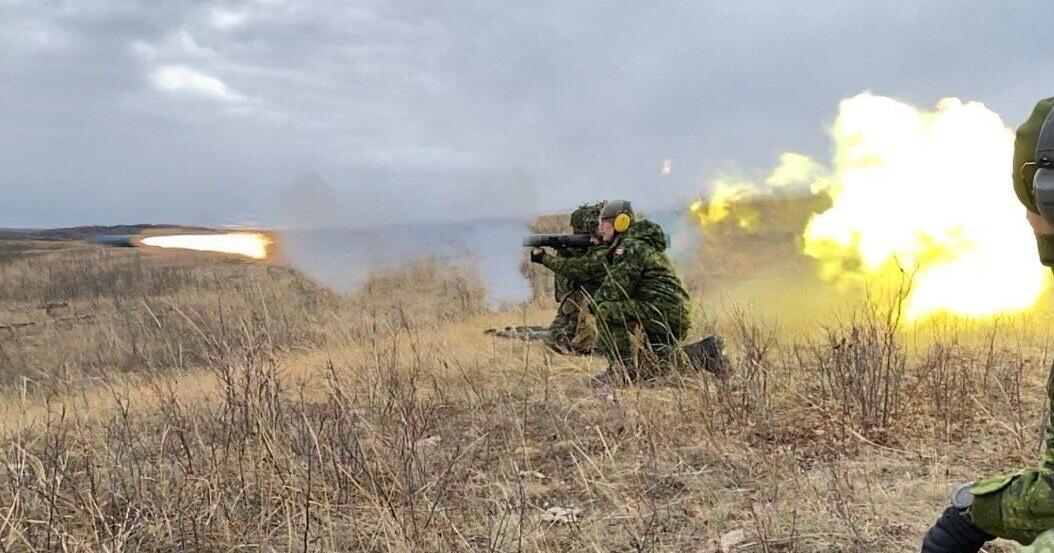
The rolling terrain at CFB Wainwright makes it great for military training, but horrible for managing wildfires, says a former soldier and wildfire fighter who once trained at the facility.
asserted
who → make → facility
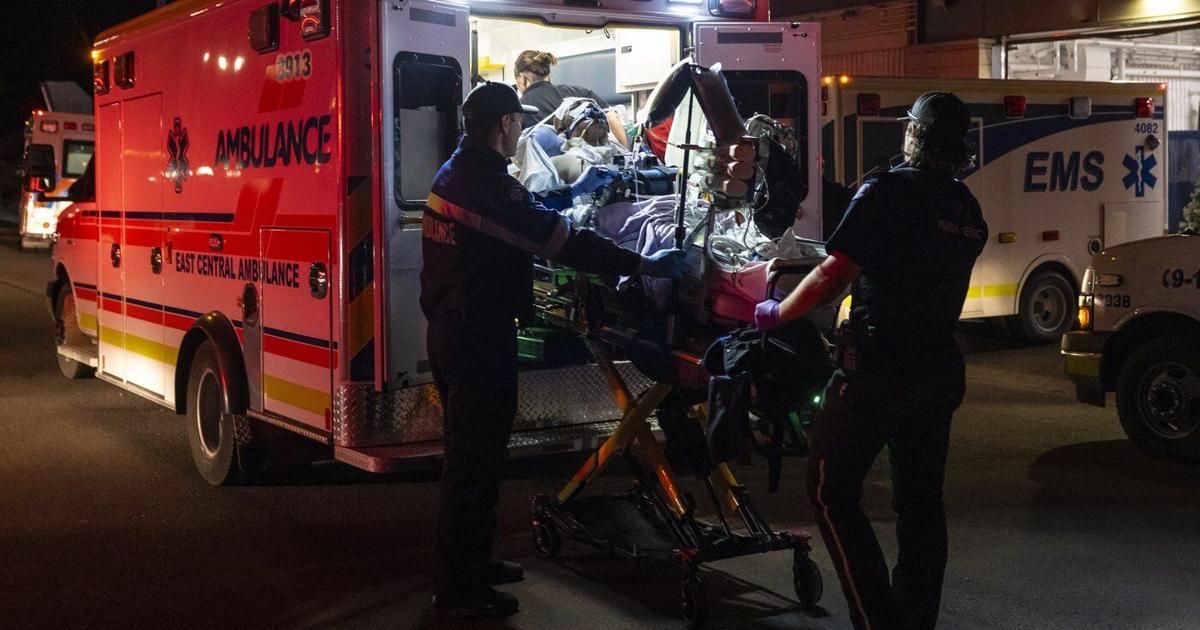
Between the unexploded ordnance that keeps fire trucks from being able to manoeuvre freely, to the high grasses that have had all summer to dry out, and the hidden gullies that can hide small fires until they grow into larger conflagrations, the area where a massive grass fire killed four soldiers and critically injured 19 others over the weekend is exceptionally prone to fire, which can become difficult to manage once it breaks out, said former infantryman Andrew Pearson.
asserted
Pearson → keep → fire
“In the nature of the training, as it relates to a lot of ammunition we use, wildfires, especially grass fires, are inevitable,” said Pearson, who trained at the base before leaving the military in 2022.
asserted
who → relate → 2022
But when people talk about black swan events, this is certainly one of them.”
asserted
this → talk → them
Pearson, who also fought forest fires for Parks Canada in Jasper and St. Albert, Alta., says preparation for wildfires was part of every military training exercise he participated in, and soldiers were equipped with hand tools and water-filled backpacks, so that they could react to wildfires as soon as they broke out — and often did.
Soldiers training at CFB Wainwright paused their training to approach and put out grass fires “multiple times,” said Pearson, who served in the Loyal Edmonton Regiment for eight years.
uncertain
who → fight → years
The land where training was carried out was marked by retreating glaciers, he said, which left deep gullies that can hide wetlands and lakes, entire groups of soldiers, or even wildfires.
asserted
that → carry → soldiers
“The terrain in Wainwright makes it very, very challenging to see what’s going on, which makes it great for military training, but makes it hard for wildland firefighting situational awareness,” he said.
asserted
he → make → awareness
On this landscape, “it’s very hard to gauge fire progress,” he said.
asserted
he → ’ → progress
“Unless you have a bird dog or a helicopter, or some other resource in the sky, it’s very hard to figure out how far away things are.”
asserted
things → have → sky
The base is located much closer to Saskatchewan than the Rocky Mountains and has a distinctly prairie-like feel, he said, with tall grasses that have had all summer to dry out.
asserted
that → locate → summer
This created the proverbial tinderbox that caught fire over the weekend.
asserted
that → create → weekend
“We think of grass fires not being as bad as forest fires,” said Kent Moore, a professor of physics at the University of Toronto who studies climate.
asserted
who → think → climate
“But with really strong winds, grass fires can grow much more quickly.”
asserted
fires → grow → winds
While grass fires might not last as long as fires in the boreal forest, they can be extremely intense for short periods of time, he said, citing the example of 2023’s devastating fires in Hawaii, where more than 100 were killed when a grass fire overtook the city of Lahaina.
uncertain
fire → last → Lahaina
“They don’t have the staying capacity, but of course you don’t need it.
asserted
you → have → it
Because all you need is to cause the initial damage, and it can be severe.
asserted
it → need → damage
Grass is what firefighters call “flashy fuels,” because they dry fast and can ignite easily, said Jen Beverly, a professor of environmental science at the University of Alberta and former wildfire fighter.
asserted
Beverly → call → Alberta
Grass doesn’t need an extended drought to dry out, she said.
asserted
she → need → drought
A couple of days would suffice.
asserted
couple → suffice → days
“Because grass is in open areas, it’s exposed to the full force of the wind,” fanning the flames much faster than it would in a sheltered forest, she said.
asserted
she → expose → forest
On Saturday afternoon, a particular combination of meteorological conditions combined to make “the worst-case scenario,” said Beverly.
asserted
Beverly → combine → scenario
The day started out warm and dry.
asserted
day → start → ?
The Canadian Wildland Fire Information System listed the Fire Weather Index as extreme in the area around CFB Wainwright on Saturday.
asserted
System → list → Saturday
At 2 p.m., the temperature was above 23 C, and the humidity was below 17 per cent, according to Environment Canada data.
uncertain
humidity → accord → data
When the relative humidity drops below the temperature, it’s called a “crossover event” when conditions are both hot and dry, said Beverly, and high risk for wildfire ignition.
asserted
Beverly → drop → ignition
Then a cold front came through, causing the wind to shift and increase in intensity.
asserted
wind → come → intensity
By 3 p.m., the temperature had plummeted below 13 C, and the wind picked up, shifting 70 degrees from the southwest to the northwest, the data show.
asserted
data → plummet → northwest
“A fast-moving fire that’s subjected to a sudden wind change, it’s the worst-case scenario,” she said.
asserted
she → move → change
By 4 p.m., winds were gusting above 80 km/h, according to Environment Canada data.
uncertain
winds → guste → data
This is “off the charts,” Beverly said, comparing it to the wind speeds that led to the evacuation of Slave Lake in 2011 or Jasper in 2024.
asserted
that → say → 2024
When looking at typical wildfire behaviour, 30 to 40 km/h winds are already considered “high,” she said.
asserted
she → look → behaviour
“Having people embedded within a flashy fuel land cover, with a cold front coming over, when it’s abnormally dry and the humidity is low, these are all kind of red flag scenarios for dangerous, fast-moving fire that could threaten public safety,” she said.
uncertain
she → have → safety
CFB Wainwright was crisscrossed with firebreaks, said the former firefighter and soldier Pearson.
asserted
firefighter → crisscross → firebreaks
This network of roads is used to get personnel in and out as well as to bring in first responders, like fire trucks.
asserted
network → use → trucks
But because the base has live-fire exercises, there’s significant unexploded ordnance risk, and fire trucks are not allowed to leave the firebreaks to battle the blaze, he said.
asserted
he → have → blaze
“It’s very hard to get firefighting apparatus into these areas,” he said.
asserted
he → ’ → areas
 The Aporia