California, others challenge Trump effort to deny green cards over past use of public aid

Los Angeles Times · collected 2026-09-14 · by Kevin Rector
Read the original at Los Angeles Times ↗

Summary

California, along with other Democratic-led states and localities, has filed lawsuits challenging new Trump administration rules that allow immigration officials to deny green cards to applicants whose families have previously used public assistance programs. The plaintiffs argue these changes unlawfully reinterpret over a century of immigration law and will unfairly penalize immigrants while shifting costs onto state and local governments. In response, the Department of Homeland Security claims the rule changes aim to prevent abuse of benefits intended for U.S. citizens.
Written by the local model on 2026-09-16, using this article's own text rather than the other coverage of the same event (that is the story summary below).

Signals How these are calculated →

Claims extracted
34
claim-shaped sentences
Uncertain
6%
2 of 34 hedged
Leaning
Leans left
of the writing, not the subject
Correction & hedging signals
95.0
corrections and hedging in what we collected; not a measure of accuracy
Outlets on this story
5
Politics
Narrative spread
1
articles carrying this framing
Analyzed 2026-09-16 · source text last changed 2026-09-15 · how these are computed

AI analysis (generated at analysis time, not now)

Story summary

New York led a coalition of 22 states and the District of Columbia in suing the Trump administration over new immigration rules set to take effect on September 18. These rules allow immigration officers to deny green cards based on potential future use or past use of public benefits like Medicaid, food stamps, and housing vouchers. The plaintiffs argue that this policy violates long-standing laws and federal guidance by giving officials broad discretion to deny visas to immigrants who might require public assistance.

The lawsuits also include separate actions from New York City, Chicago, Seattle, and surrounding counties in California. They claim the rule changes will discourage legal residents from accessing necessary benefits, potentially leading up to 4.1 million Medicaid and CHIP enrollees in mixed-status households to disenroll out of fear. The coalition fears this could strain emergency services and local businesses reliant on federal programs.

In response, the Department of Homeland Security defended the policy as curbing abuse of public assistance programs intended for U.S. citizens. However, critics argue it targets hardworking families and unfairly penalizes states by forcing them to bear additional costs when immigrants avoid needed benefits due to fear of immigration repercussions.

Written for “Legal Battle Over Trump Green Card Rule” on 2026-09-15, grounded in this article and the 4 other(s) covering the same event.
Why this leaning score
The article's own words the score was based on. Each is quoted verbatim and was checked against the article text before being stored, so you can find it in the original.
Score -0.45 Confidence high 2 quote(s) discarded as not found in the article
Leaning score -0.45 for article 9487 (high confidence, 1 verified quote) · logged 2026-09-16

Story

📰 Legal Battle Over Trump Green Card Rule
Politics · 5 article(s) covering the same event.

How this is being covered How these are calculated →

Article leaning vs. publisher reliability
Source leaning vs. consistency

Compared with similar articles

This article reads leans left and hedges 6% of its claims. Each row says how that neighbour differs.
The Guardian
⚖️ Leans strongly left further left than this 🔴 14% hedged 3 of 21 📰 publisher trust 60
“Both articles describe the identical lawsuit filed by states and cities against the Trump administration over the new policy restricting green card benefits based on use of public assistance, occurring on the same day.”
Mother Jones
⚖️ Leans strongly left further left than this 🔴 6% hedged 1 of 16 📰 publisher trust 95
“Both articles describe the same lawsuit filed by states and municipalities against the Trump administration's new immigrant 'wealth test' rule scheduled to take effect on September 18, 2026.”
Times of India
⚖️ Leans strongly left further left than this 🔴 0% hedged 0 of 11 📰 publisher trust 94
“Both articles describe the same lawsuit filed by multiple states and local governments against Trump's new Green Card rule, initiated on September 14, 2026.”
The Independent
⚖️ Leans left 🔴 12% hedged 2 of 17 📰 publisher trust 59
“Both articles describe the identical legal challenge to Trump administration rules regarding green card denials based on public aid use, involving multiple states filing lawsuits on the same day.”

Publisher

Los Angeles Times · 117 article(s) · 0 correction(s) detected
No corrections detected for this publisher. That may mean careful reporting, or simply that nothing has been checked.

Who wrote this

Kevin Rector
9 article(s) here · 1 carrying a prediction
🔮 Fewer than half of Americans believe the upcoming midterm elections will be “free and fair,” amid a broader decline in confidence in vote counts, according to a new nationwide poll.
🔮 - Click here to listen to this article - - The administration could try to impose new regulations for the 2028 elections.
🔮 California Atty. Gen. Rob Bonta, whose office is helping lead the states’ challenge, said the rule changes seek to “rewrite more than 100 years of law” by making even brief use of public benefits in years past grounds for the federal government to deny a person’s application for legal permanent residency in the future — which he said was clearly illegal and would push tremendous costs onto states, counties and cities.
🔮 - The Supreme Court is expected to rule relatively quickly, given the emergency nature of the appeal.
🔮 California has led the legal charge against the rules, arguing they could cause chaos and disenfranchise millions of voters.
🔮 A Postal Service whistleblower says a rushed, error-filled computer system tied to President Trump’s new mail voting order could delay or block ballots for millions of Americans this fall.
🔮 “This mail-in voting rule is an unlawful overreach that shows just how far President Trump will go to control elections, but as I’ve said before, this fight is far from over and we are confident that the facts and the law are on our side,” California Atty. Gen. Rob Bonta said.
🔮 California leaders immediately noted the limits of the high court ruling and said they would file a lawsuit to prevent Trump’s desired changes from taking effect. “The Supreme Court just let the Trump administration move ahead (for now) with its plan to disenfranchise voters across the country.
🔮 Big-city mayors are giving poll workers panic buttons in case election skeptics question their work.
More on this subject from Kevin Rector
All 9 articles by Kevin Rector →

Topics

American California Democratic The Department of Homeland Security U.S.

Subjects

Trump PERSON · 7× American NORP · 5× California GPE · 4× U.S. GPE · 4× Congress ORG · 2× Democratic NORP · 2× The Department of Homeland Security ORG · 2× Bonta PERSON · 1× Rob Bonta PERSON · 1× San Francisco GPE · 1×

Narrative

However, the states argue that Congress, the courts and federal government agencies have for “over 140 years” understood the term “public charge” to mean a person “who has become, or is likely to become, primarily dependent on the government for long-term subsistence” — not someone who has ever taken public assistance of any kind in the past, even in the short term. And yet, the new policy promulgated by Homeland Security and U.S. Citizenship and Immigration Services gives immigration officers “unprecedented, sweeping new discretion to deny admission” to families that have tapped any number of public assistance programs for which both Congress and individual states have chosen to make them eligible, the states wrote.
framing: assertive · carried by 1 article(s) · first seen 2026-09-16
🔮 California Atty. Gen. Rob Bonta, whose office is helping lead the states’ challenge, said the rule changes seek to “rewrite more than 100 years of law” by making even brief use of public benefits in years past grounds for the federal government to deny a person’s application for legal permanent residency in the future — which he said was clearly illegal and would push tremendous costs onto states, counties and cities.

Claims (34 extracted, 2 hedged)

California, others challenge Trump effort to deny green cards over past use of public aid - asserted
California → challenge → aid
Click here to listen to this article - - California and other plaintiffs say the new rules unlawfully rewrite more than a century of immigration law. - asserted
rules → click → law
The Department of Homeland Security defends the rules as curbing abuse of programs intended for U.S. citizens. asserted
Department → defend → citizens
California and other Democratic-led states and localities filed a pair of lawsuits Monday challenging new Trump administration rules giving immigration officials more power to deny green cards to applicants whose families have relied on public assistance programs in the past. asserted
families → lead → past
The challenge mirrors another by a similar coalition that successfully halted such changes during the first Trump administration. asserted
that → mirror → administration
California Atty. Gen. Rob Bonta, whose office is helping lead the states’ challenge, said the rule changes seek to “rewrite more than 100 years of law” by making even brief use of public benefits in years past grounds for the federal government to deny a person’s application for legal permanent residency in the future — which he said was clearly illegal and would push tremendous costs onto states, counties and cities. asserted
he → help → states
“No family should have to choose between accessing healthcare and nutrition assistance today — or protecting their pathway to a green card tomorrow,” Bonta said. asserted
Bonta → have → card
“We’re going to court on behalf of the millions of immigrants who call this state home — and we will fight to get this unlawful rule undone.” asserted
rule → go → immigrants
San Francisco City Atty. David Chiu, whose office is helping lead a separate challenge from Democratic-led cities and counties, said in a statement that the new Trump administration policies are “a blatant attempt to sow fear and confusion in our immigrant communities and coerce people into withdrawing from critical government services” — which he also said would shift millions in costs to local governments. asserted
he → help → governments
A spokesperson for the Department of Homeland Security, which promulgated the new rules, said the lawsuits were proof that immigrants are unlawfully tapping into benefits programs intended for U.S. citizens. asserted
immigrants → promulgate → citizens
“Sanctuary states are terrified they will lose federal funds because hundreds of thousands of illegals and noncitizens might remove themselves from American welfare programs,” the spokesperson said. uncertain
spokesperson → terrify → programs
“This is the ideological contortion required by left-wing leaders to justify their defrauding of the American taxpayer at the hands of illegal criminals. asserted
This → require → criminals
‘I used to call my presentations ‘Know Your Rights’ workshops. asserted
I → use → Rights
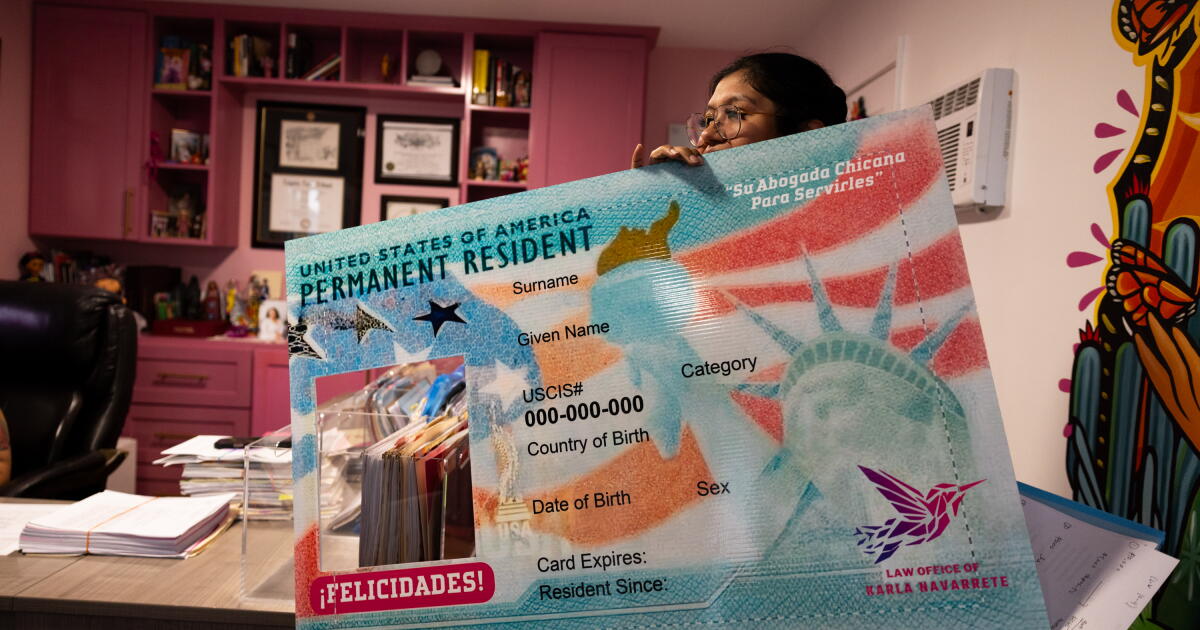
Now they’re just workshops, because there are no rights,’ attorney Karla Navarrete said. asserted
Navarrete → ’re → ?
Lauren Bis, a White House spokesperson, said Democrats “are once again fighting to give benefits to illegal aliens at the expense of American taxpayers,” while Trump and his administration are putting American citizens first. asserted
Trump → say → citizens
“Immigrants must be able to support themselves and not depend on hard-working American taxpayers,” she said. asserted
she → support → taxpayers
President Trump won office on a promise to rein in illegal immigration. asserted
Trump → win → immigration
Since taking office, his administration has launched a mass crackdown that has targeted both undocumented and documented immigrants. asserted
that → take → immigrants
It has done so in part by targeting federal and state programs that offer immigrant assistance — which Trump has derided as diverting resources away from U.S. citizens. asserted
Trump → do → citizens
In their lawsuit, the states acknowledge that federal law enacted by Congress in 1882 allows the U.S. to deny noncitizens entry to the country if they would be a “public charge,” or someone who is unable to support themselves and must rely on the government for assistance. asserted
who → acknowledge → assistance
However, the states argue that Congress, the courts and federal government agencies have for “over 140 years” understood the term “public charge” to mean a person “who has become, or is likely to become, primarily dependent on the government for long-term subsistence” — not someone who has ever taken public assistance of any kind in the past, even in the short term. And yet, the new policy promulgated by Homeland Security and U.S. Citizenship and Immigration Services gives immigration officers “unprecedented, sweeping new discretion to deny admission” to families that have tapped any number of public assistance programs for which both Congress and individual states have chosen to make them eligible, the states wrote. asserted
states → argue → which
The lawsuit, joined by Bonta, the attorneys general of 19 other states and the District of Columbia, and the governor of Pennsylvania, was filed in federal court in New York. asserted
lawsuit → join → York
A separate lawsuit was filed in the same court by San Francisco and Santa Clara County in California, as well as New York City, Chicago, and Seattle and surrounding King County, Wash. asserted
lawsuit → file → California
In a morning news conference, Bonta said the Trump administration’s new rules target families in unprecedented ways. asserted
rules → say → ways
The policy was first implemented in February 2020 as one of President Trump’s moves to limit legal immigration during his first administration, but it was reversed after Democratic President Biden came to power. asserted
Biden → implement → power
As one example, he said the new rules would potentially allow immigration officials to deny permanent residency to immigrant parents based on their U.S. citizen children accessing public benefits that they are clearly entitled to under the law. asserted
they → say → law
As another, he said the new rules could penalize immigrant families for accessing basic, preventative healthcare that actually helps control the broader public cost of illness to localities and states. uncertain
that → say → localities
Chiu said federal limits on residency for those who would be a “public charge” have in the past been applied in a “narrow and consistent way,” focusing on certain cash assistance and long-term medical needs. asserted
who → say → assistance
The new rules, he said, make “almost any” kind of government assistance grounds for residency denial. asserted
kind → say → denial
The states’ lawsuit — California’s 92nd against the current Trump administration — revises a policy battle that began during Trump’s first administration, when it attempted in 2019 to implement similar policies, was sued by California, San Francisco and Santa Clara County, and lost. asserted
it → revise → California
The Biden administration later dropped the plans to change the rules. asserted
administration → drop → rules
Tony LoPresti, county counsel for Santa Clara County — which has per capita one of the largest foreign-born populations in the country — said that it was “déjà vu all over again.” asserted
it → have → country
and that the Trump administration will lose again because the new “public charge” policy is “outright illegal. asserted
policy → lose → ?
It “bullies our community members into dropping health insurance, bypassing food assistance and turning their back on critical services out of fear” and constitutes “a wealth test for residents who are lawfully seeking status,” LoPresti said. asserted
LoPresti → bully → status

💬 Give feedback
🕘 History 🎫 Support