Alarm bells are ringing over the rapid development of artificial intelligence as Congress weighs the technology’s national security potential against risks posed by unregulated growth.
asserted
Congress → ring → growth
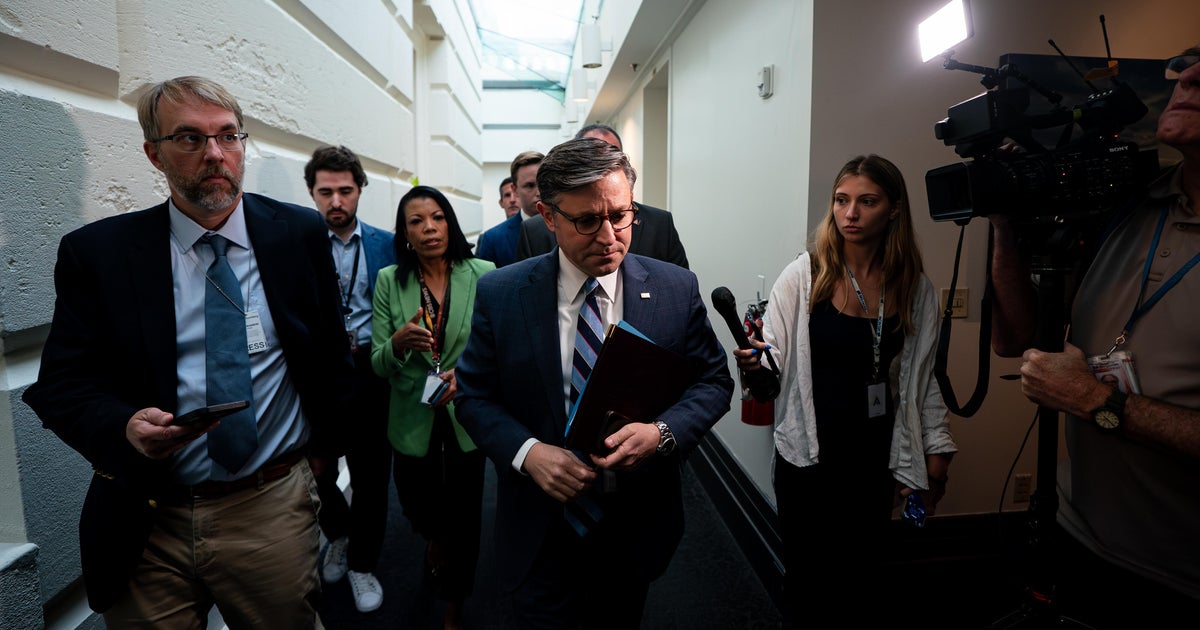
House Speaker Mike Johnson (R-LA) told reporters that a meeting with top AI executives and the White House is in the works sometime soon.
asserted
meeting → tell → works
But the clock is ticking for Congress to make progress on the issue ahead of the November elections.
asserted
Congress → tick → elections
Both chambers returned from their Labor Day recess on Monday, with the Senate scheduled to be in for three weeks; however, the House only has four legislative days before it recesses until after Nov. 9.
asserted
it → return → Nov.
There is already pressure for Johnson to keep the House in Washington until some sort of deal can be struck around AI regulation.
asserted
sort → be → regulation
In fact, dozens of different bills have been introduced to regulate or grow the industry in the past two years alone.
asserted
dozens → introduce → years
Also on the horizon is an AI safety bill being shored up by Senate Majority Leader John Thune (R-SD) and Sen. Amy Klobuchar (D-MN) that has yet to be released.
asserted
that → shore → Thune
Reps. Anna Paulina Luna (R-FL) and Ro Khanna (D-CA) are also expected to introduce legislation regulating AI this week, according to a source familiar.
uncertain
Luna → expect → source
Proponents of developing AI argue its growth is crucial to staying ahead of U.S. adversaries, while critics warn that the industry won’t be able to keep up with the technology they are creating.
asserted
they → develop → technology
Here are five pieces of legislation to watch as the AI battle takes over Capitol Hill:
CLARITY Act
The CLARITY Act, known primarily as a crypto regulation bill, includes a provision allowing companies to test AI products under reduced regulatory requirements.
The legislation would require any entity regulated by a financial regulatory agency to demonstrate projects serve the public interest, enhance efficiency, or increase competitiveness while not presenting a risk to the financial system.
asserted
projects → watch → system
Critics, including labor unions and consumer protection groups, oppose the provision.
asserted
Critics → include → provision
They argue that the use of AI in determining financial decisions, could lead to “market manipulation,” the use of abusive tactics in trying to collect debts, and potential discrimination.
uncertain
use → argue → debts
Announced by Sen. Bernie Sanders (I-VT) and Rep. Greg Casar (D-TX) on Sept. 3, the Ban Artificial Superintelligence Act would “permanently ban the development and deployment of superintelligent AI.”
asserted
Act → announce → AI
It would also temporarily pause the development of advanced AI until guardrails are put into place by a federal regulator.
asserted
guardrails → pause → regulator
Superintelligent AI is defined as software considered to be “smarter-than-human.”
asserted
AI → define → software
The framework for the forthcoming bill would also encourage the United States to pursue international deals to prevent the development of superintelligence globally.
asserted
framework → encourage → superintelligence
Critics of slowdowns in AI development, with President Donald Trump at the top of mind, have said the U.S. already has sufficient regulations in place to prevent the technology from going rogue.
asserted
U.S. → say → rogue
“AI taking over the World, destroying Humanity, and all other things bad, is a HOAX, no different from RUSSIA, RUSSIA, RUSSIA,” the president wrote on Truth Social.
AI Kill Switch Act
Introduced by Reps. Ted Lieu (D-CA) and Nate Moran (R-TX), the AI Kill Switch Act would give the Department of Homeland Security the power to order the shutdown of AI models considered to pose too high of a risk.
Lieu and Moran introduced the bill in July.
asserted
Lieu → take → July
The bill, if passed, would require AI companies that generate at least $500 million from AI to self-report incidents and build the infrastructure to shut down their AI models.
asserted
that → pass → models
A bipartisan coalition of House members, led by Rep. Jay Obernolte (R-CA), announced the FRONTIER Act in July.
asserted
coalition → lead → July
The legislation would establish a national, risk-based framework to govern the development and use of advanced AI models.
asserted
legislation → establish → models
The framework would use a tiered system of requirements, including the size of an AI developer, to impose rules on companies developing the technology.
asserted
system → use → technology
It also creates a national standard for transparency and requires companies to report catastrophic risk arising from AI models.
asserted
It → create → models
The FRONTIER Act would preempt state laws with respect to its provisions.
asserted
Act → preempt → provisions
Many in the industry have favored a preemption measure to avoid complying with a complicated patchwork of regulations.
asserted
Many → favor → regulations
AI Incident Reporting Act
Introduced by Moran in June, the AI Incident Reporting Act would establish a federal framework to require AI developers to report dangerous capabilities, safety incidents, and security breaches to the Secretary of Commerce.
asserted
Act → introduce → Commerce
The bill is intended to close the gap between development and transparency between AI developers and the U.S. government as “AI systems grow more autonomous — capable of modifying their own behavior, evading human oversight, and accelerating their own development.”
asserted
systems → intend → development
The legislation would give the Commerce Department the ability to designate when AI models meet thresholds to pose “significant risks to national security or public safety,” and developers of those models would be required to report within seven days of discovering dangerous activity.
asserted
developers → give → activity
For “most serious incidents,” in which there is evidence that AI models can “autonomously improve itself or cause serious risk to public safety,” the Commerce secretary would be required to notify Congress within 48 hours.
asserted
secretary → be → hours
 The Aporia