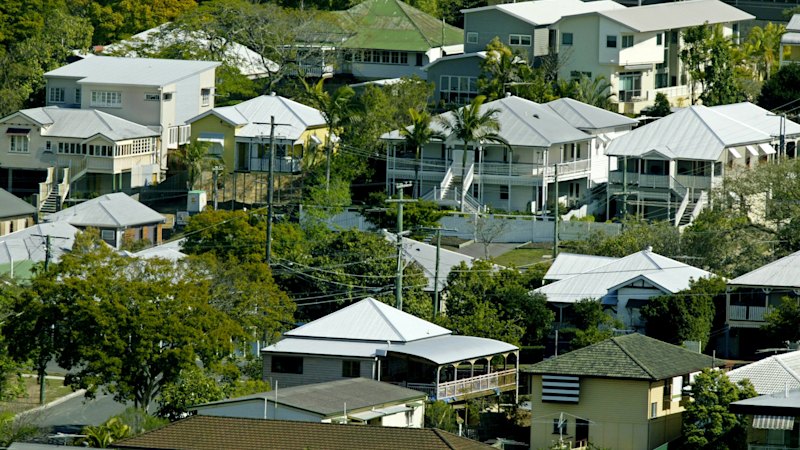
Thousands of Queenslanders in social housing will have access to new insulation, fans, solar power and electric stoves to make energy bills cheaper under an almost $100 million funding injection.
asserted
bills → have → injection
The Albanese government will announce the $97.1 million investment for Queensland social homes, delivered through the Social Housing Energy Performance Initiative (SHEPI), on Tuesday, with 8000 properties to receive upgrades to improve energy efficiency and reduce power bills.
asserted
properties → announce → bills
Measures covered by the program include ceiling insulation, energy-efficient fans, electric stoves, improved hot water systems and rooftop solar.
asserted
Measures → cover → insulation
A joint $116 million funding agreement between the federal and state government for SHEPI was first announced in September 2024.
asserted
agreement → announce → September
Since then, more than 15,000 Queensland properties have received energy upgrades.
asserted
properties → receive → upgrades
Federal Assistant Minister for Climate Change and Energy Josh Wilson said the new funding allocation would help thousands more Queensland social housing tenants lower energy bills and improve living conditions.
asserted
tenants → say → conditions
“Energy efficiency is one of the most effective ways to reduce household energy costs, particularly for people facing disadvantage,” he said.
asserted
he → reduce → disadvantage
A report by Power Together, a coalition of organisations advocating for renewables and energy cost relief, found low-income households spend double the amount of their disposable income on energy compared to average-income households, and were disproportionately affected by market fluctuations.
asserted
households → advocate → fluctuations
When Ipswich resident Chloe* first moved into her four-bedroom social housing property three years ago, there were no ceiling fans in the house, only air conditioning.
asserted
Chloe → move → house
She said her family had to forgo cooling the house in summer after cost-of-living pressures caused her energy costs to rise exponentially.
asserted
costs → say → living
“I literally had a $1000 power bill after using the air con for three months, so that’s why I was like ‘yeah, no, not again’,” she said.
asserted
she → have → months
Through the SHEPI program, five new ceiling fans have been installed, which Chloe said has made the house more comfortable and affordable.
asserted
house → instal → program
Analysis by the Australian Housing and Urban Research Institute places social housing dwellings among the least energy efficient in Australia, mainly due to age and maintenance backlogs.
asserted
Analysis → place → backlogs
Public housing renters are more likely to report not being able to heat or cool their home adequately, AHURI continued, with tenants adopting a range of strategies to reduce energy consumption, including sleeping outside on hot nights and using ovens for heating.
asserted
tenants → report → heating
Queensland Council of Social Service chief executive Aimee McVeigh said Queenslanders are particularly vulnerable to extreme temperatures, and that the program will deliver critical improvements for thousands of social housing tenants.
asserted
program → say → tenants
“Many social housing properties were built before current energy efficiency standards were introduced,” McVeigh said.
asserted
McVeigh → build → ?
“In a state where extreme temperatures are a regular part of life, energy efficiency improvements help make homes cooler in summer, more comfortable year-round and less expensive to run.
asserted
homes → help → summer
“Measures such as insulation, solar panels and energy-efficient appliances deliver a double benefit.
asserted
Measures → deliver → benefit
They help reduce energy bills while also supporting health, wellbeing and everyday comfort.”
asserted
They → help → health
The Queensland government has pledged to build 53,500 social properties across the state by 2044.
asserted
government → pledge → 2044
New homes will be built to updated mandatory energy standards, with houses and townhouses required to meet a 7-star thermal performance rating, and units under 50 square metres to meet a 5-star rating.
asserted
houses → build → rating
 The Aporia