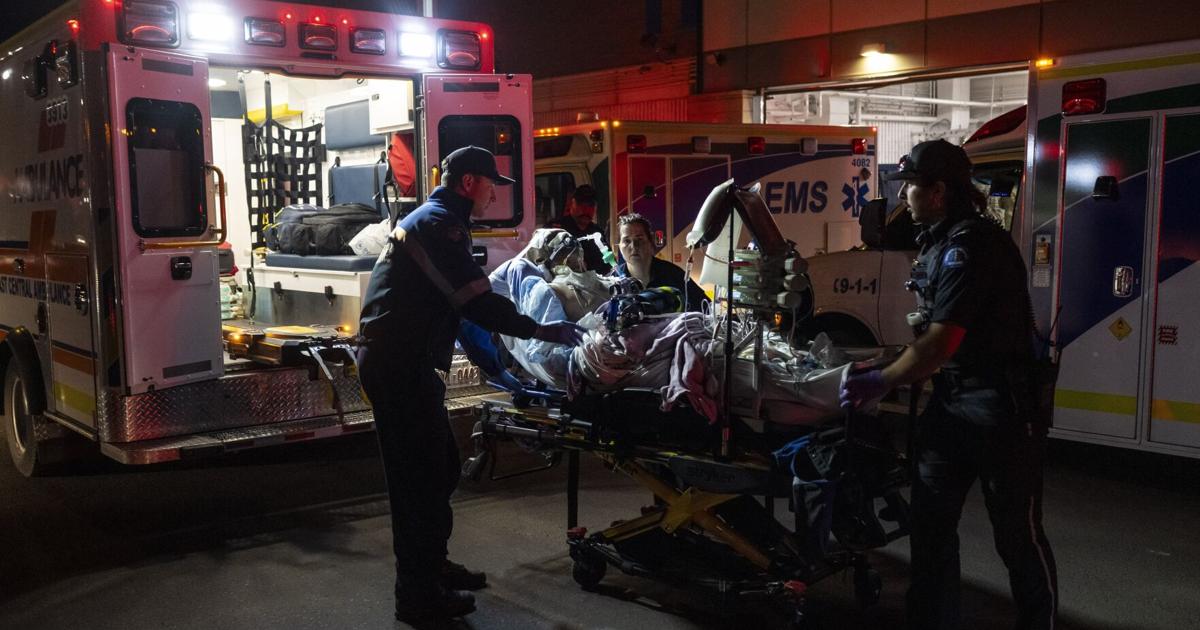
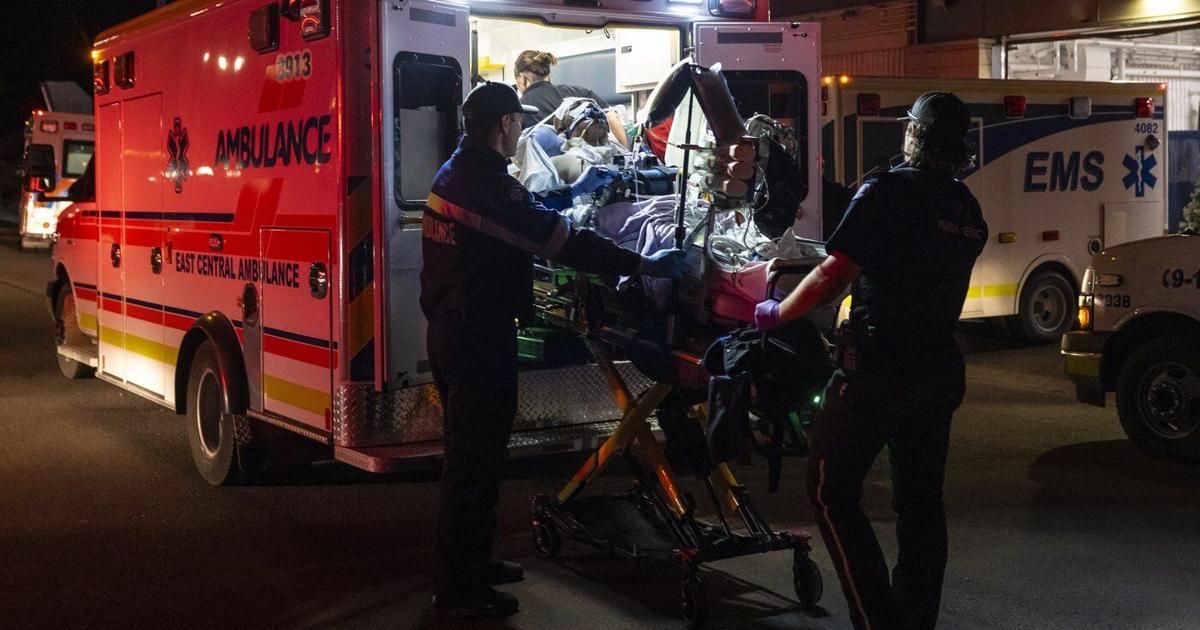
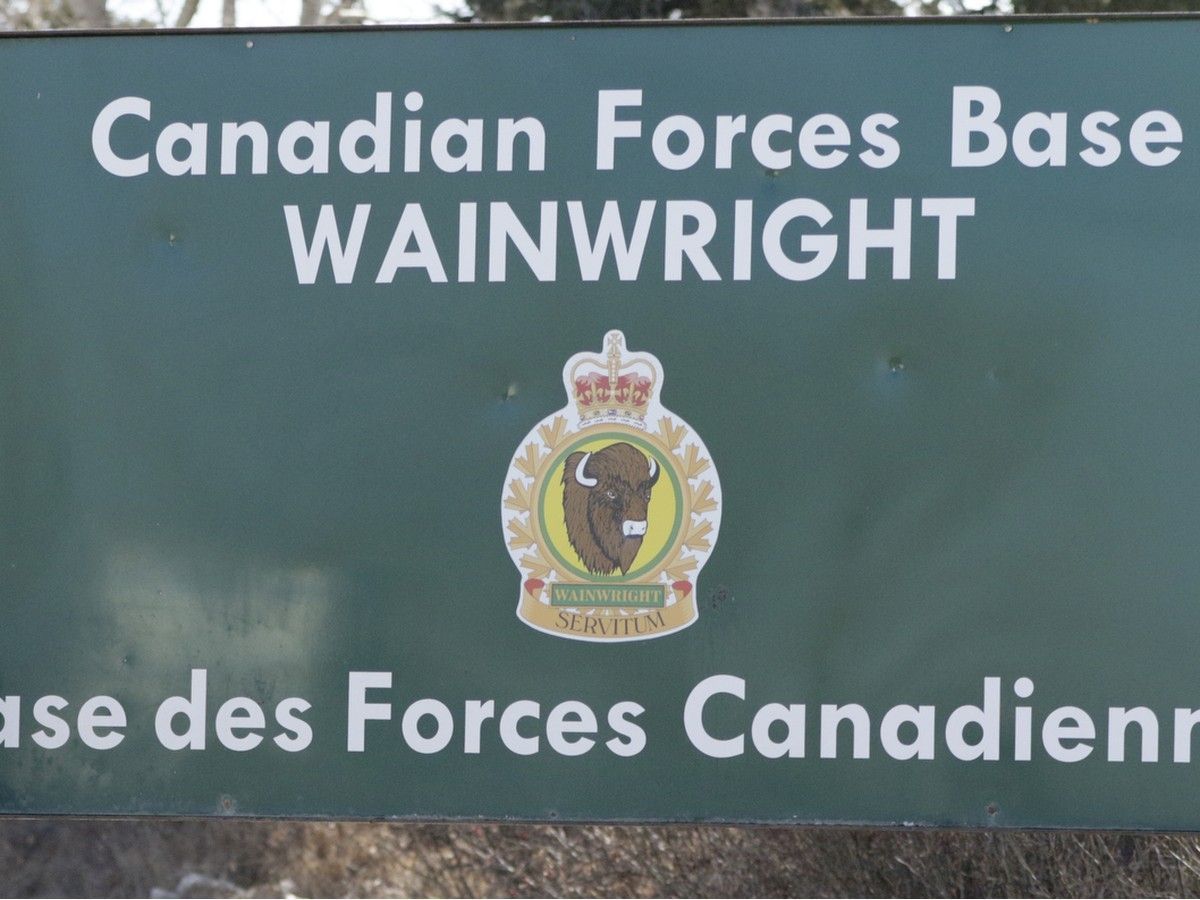
Burn centres in Toronto, Hamilton offer to help CFB Wainwright victims: 'Unique type of trauma'

Read the original at Toronto Star ↗
Cite

Ogilvie, M. (2026, October 20). Burn centres in Toronto, Hamilton offer to help CFB Wainwright victims: 'Unique type of trauma'. Toronto Star. https://www.thestar.com/news/canada/alberta/burn-centres-in-toronto-hamilton-offer-to-help-cfb-wainwright-victims-unique-type-of-trauma/article_2556b3f8-705c-46df-a90d-b6cee7dca1cd.html

Dated from the outlet's own feed. Check the original for its byline.

Toronto Star · collected 2026-10-20 · by Megan Ogilvie

Quick Summary

Burn specialists from Toronto and Hamilton have offered assistance to hospitals in Alberta following a deadly fire at CFB Wainwright that killed four soldiers and injured dozens, including 19 critically. Dr. Alan Rogers from the Ross Tilley Burn Centre at Sunnybrook Health Sciences Centre stated that even five severely burned patients could overwhelm local resources, highlighting the urgent need for additional support. Ontario’s two primary burn centres have prepared to take in Alberta patients if needed, with Sunnybrook readying operating rooms and checking supplies. The article details the unique challenges of treating severe burns, including the urgency of surgery within 24 to 72 hours and potential shortages of medical resources.
Written locally by qwen2.5:14b on 2026-10-20, using this article's own text rather than the other coverage of the same event (that is the story summary below).

AI analysis runs on qwen2.5:14b, locally

Story summary

A fast-moving fire erupted at CFB Wainwright in Alberta on October 17, 2026, during a training exercise, leading to the deaths of four soldiers—Sgt. Morgan Wong, Pte. Shaun Farrell, Pte. Aidan Goulding, and Pte. Hayden Lykkemark—and injuries to 39 others, with 19 listed in critical condition.

The fire crossed into nearby areas beyond the base perimeter due to rolling terrain, dry grass, and sudden wind shifts, making it challenging to manage effectively. Loved ones of the fallen soldiers are calling for answers regarding safety measures amid forecasted high winds and a nearby blaze.

Among those demanding answers is Byran Farrell, brother of Pte. Shaun Farrell, who questions why more precautions were not taken during the training exercise. Andrew Pearson, a former soldier and wildfire fighter, notes that while wildfires were anticipated due to the nature of military training involving ammunition, this incident was an unprecedented "black swan event."

Written for “Major Fire At CFB Wainwright” on 2026-10-20, grounded in this article and the 93 other(s) covering the same event.

Story

📰 Major Fire At CFB Wainwright
Other · 94 article(s) covering the same event. Compare every outlet's account →

Compared with similar articles

This article reads unscored and hedges 22% of its claims. Each row says how that neighbour differs.
Toronto Star · 0.90 cosine similarity
⚖️ leaning not scored 🔴 0% hedged 0 of 2 📰 publisher trust 63
“Both articles discuss burn specialists in Ontario offering support to Alberta hospitals dealing with patients injured from a fire at CFB Wainwright on the same day.”
The Globe and Mail
⚖️ leaning not scored 🔴 0% hedged 0 of 8 📰 publisher trust 52
“Both articles describe a major fire at CFB Wainwright in Alberta occurring on the same date.”
Global News
⚖️ leaning not scored 🔴 4% hedged 1 of 25 📰 publisher trust 63
“Both articles describe reactions and medical responses to a fire at CFB Wainwright on the same date with consistent details about victims needing treatment.”
The Globe and Mail
⚖️ leaning not scored 🔴 0% hedged 0 of 2 📰 publisher trust 52
“Both articles refer to the same fire incident at CFB Wainwright military base in Alberta that resulted in deaths and injuries.”
National Post
⚖️ leaning not scored 🔴 23% hedged 3 of 13 📰 publisher trust 60
“Both articles describe the aftermath of the same explosion and fire incident at CFB Wainwright on October 18, 2026.”
Global News
⚖️ leaning not scored 🔴 11% hedged 5 of 45 📰 publisher trust 63
“Both articles discuss victims from a deadly fire at CFB Wainwright on the same date.”
Toronto Star
⚖️ leaning not scored 🔴 9% hedged 2 of 23 📰 publisher trust 63
“Both articles describe the same fire incident at CFB Wainwright involving military training exercises, resulting in multiple casualties.”
Toronto Star
⚖️ leaning not scored 🔴 5% hedged 2 of 39 📰 publisher trust 63
“Both articles refer to a fire incident at CFB Wainwright and its immediate aftermath.”
Toronto Star
⚖️ leaning not scored 🔴 0% hedged 0 of 3 📰 publisher trust 63
“Both articles describe the aftermath of a fire incident at CFB Wainwright on Sunday, involving multiple burn victims requiring urgent medical attention and blood donations.”
Evening Standard
⚖️ leaning not scored 🔴 0% hedged 0 of 12 📰 publisher trust 66
“Both articles refer to the deadly fire at Canadian Forces Base Wainwright in Alberta on Saturday.”
How this article was measured signals, leaning charts, publisher record, byline, topics and claims

Signals How these are calculated →

Claims extracted
37
sentences that state something as happening or true
Uncertain
22%
8 of 37 hedged ("reportedly", "may", "according to")
Leaning
not political
takes no side on a contested political question
Publisher signals
63/100
Toronto Star's corrections and hedging, across everything collected from it. Not a measure of accuracy.
Outlets on this story
94
Other
Same framing elsewhere
1
articles that frame the event the way this one does
Analyzed 2026-10-20 · how these are computed

How this is being covered How these are calculated →

Article leaning vs. publisher reliability
Source leaning vs. consistency

Publisher

Toronto Star · 8463 article(s) · 23 correction(s) detected
Running correction rate · 23 correction(s)
2026-10-07
Correction
2026-09-24
Correction

Who wrote this

Megan Ogilvie
4 article(s) here · 1 carrying a prediction
🔮 As news broke that victims of the deadly fire at CFB Wainwright could overwhelm Alberta’s hospitals, Ontario burn specialists were trying to figure out how they could help.
🔮 The Ford government has tightened its policy on when it will fund out-of-country treatments, in the wake of a high-profile court fight by a Toronto man with terminal cancer.
🔮 After two failed attempts, doctors still believed they could treat the cancer, but it would take a risky stem cell transplant.
🔮 Doctors have told Alex Shved, a 37-year-old with metastatic melanoma, that a therapy exists that could extend his life.
Also by Megan Ogilvie
Nothing else under this byline is closely related to this article, so these are simply their most recent.

Topics

Alberta Canada Hamilton Health Sciences Ontario Sunnybrook

Subjects

Alberta NORP · 7× Canada GPE · 4× Jeschke PERSON · 4× Ontario GPE · 3× Rogers PERSON · 3× Sunnybrook ORG · 3× Hamilton Health Sciences ORG · 2× Alan Rogers PERSON · 1× CFB Wainwright ORG · 1× the Ross Tilley Burn Centre ORG · 1×

Narrative

Ontario’s Ministry of Health confirmed Monday afternoon that Alberta has not requested assistance but that Premier Doug Ford has stated the province “stands ready to help with the recovery efforts however we can.” What is Canada’s capacity to treat burns Dr. Marc Jeschke, a burn surgeon and director of the burn program at Hamilton Health Sciences, Ontario’s other primary burn centre, said his hospital has also offered help to Alberta colleagues, including patient transfers.
framing: mixed · carried by 1 article(s) · first seen 2026-10-20
🔮 As news broke that victims of the deadly fire at CFB Wainwright could overwhelm Alberta’s hospitals, Ontario burn specialists were trying to figure out how they could help.

Claims (37 extracted, 8 hedged)

As news broke that victims of the deadly fire at CFB Wainwright could overwhelm Alberta’s hospitals, Ontario burn specialists were trying to figure out how they could help. uncertain
they → break → hospitals
Though details were still sparse, they knew the high stakes and brutal demands of treating dozens of patients with severe burns. asserted
they → know → burns
Patients in critical condition would likely need to be intubated and put on a breathing machine. asserted
Patients → need → machine
Those with the most extensive and deepest burns would need urgent surgeries, ideally within 24 to 72 hours. asserted
Those → need → hours
Hospitals could run out of dressings and other supplies, including their stockpiles of frozen donor skin. uncertain
Hospitals → run → skin
“It’s a unique type of trauma,” said Dr. Alan Rogers, a burn surgeon at the Ross Tilley Burn Centre at Sunnybrook Health Sciences Centre. asserted
Rogers → ’ → Centre
“Any burn centre, in any province, could be overwhelmed with the numbers that we believe are injured in this accident. uncertain
we → overwhelm → accident
Even five severely burned patients could overwhelm available resources at any one time.” uncertain
patients → burn → time
Specialists offer to help Rogers said burn centres across Canada have offered help to their colleagues in Alberta, with some specialists volunteering to travel. asserted
specialists → offer → Alberta
He said Sunnybrook, the largest burn centre in Canada, has the capacity to take in several Alberta patients, and noted that the burn team has readied two operating rooms, checked their supplies of dressing materials and ensured the hospital’s skin bank has sufficient supply. asserted
bank → say → supply
“We stand ready to help as much as we possibly can,” Rogers said. uncertain
Rogers → stand → ?
The fire killed four soldiers and injured dozens, including 19 in critical condition. asserted
fire → kill → condition
It’s not yet clear what help Alberta hospitals might need; an initial “Code Orange” calling for hospitals to free up beds for a mass casualty event was later called off. uncertain
hospitals → ’ → event
The province has two dedicated burn centres, one in Edmonton and one in Calgary. asserted
province → have → Calgary
In a statement, Sunnybrook said its teams are in close touch with provincial and federal officials and have offered “any support needed to help those injured by the fire.” asserted
teams → say → fire
“As of right now, we have not been asked to take any patients but stand ready to do so,” the hospital said. asserted
hospital → ask → patients
Ontario’s Ministry of Health confirmed Monday afternoon that Alberta has not requested assistance but that Premier Doug Ford has stated the province “stands ready to help with the recovery efforts however we can.” What is Canada’s capacity to treat burns Dr. Marc Jeschke, a burn surgeon and director of the burn program at Hamilton Health Sciences, Ontario’s other primary burn centre, said his hospital has also offered help to Alberta colleagues, including patient transfers. asserted
hospital → confirm → transfers
He said Canada has 46 specialized beds for burn patients across 17 hospitals, with 14 at Sunnybrook and 10 in Hamilton, and that centre directors know each other and want to help. asserted
directors → say → other
“We told (Alberta colleagues) we’re here to support you,” said Jeschke, vice-president of research and innovation at Hamilton Health Sciences. asserted
Jeschke → tell → Sciences
How burn victims are treated asserted
victims → treat → ?
Patients with severe burns to more than 20 per cent of their total body surface area are “among the sickest patients in hospital” and need specialized care to survive, Jeschke said. asserted
Jeschke → need → care
He called burns to more than 40 to 60 per cent of a patient’s body “catastrophic.” asserted
He → call → body
Severely burned patients may need ventilation and intensive care, along with multiple surgeries, and often spend months recovering in hospital, Jeschke said. uncertain
Jeschke → burn → hospital
He noted burns are extremely painful and that severe burns are life-threatening due to their high risk of infection. asserted
burns → note → infection
Some patients, Jeschke said, can take years to recover due to extensive skin grafting surgeries that lead to scarring and require intensive rehabilitation. asserted
that → say → rehabilitation
“There’s no guarantee that you will ever be the same,” he said. asserted
he → ’ → ?
“Which is what makes it so sad that so many people were involved in this tragedy.” asserted
people → make → tragedy
Rogers said the extent, depth and location of a patient’s burns will determine their treatment, while other trauma and inhalation injuries also play a role. asserted
injuries → say → role
He said deep burns often require skin grafting but that surgeons may use donated cadaver skin to temporarily replace burned tissue. uncertain
surgeons → say → tissue
Much like organ donation, people can donate their skin after they die. asserted
they → donate → skin
Rogers said skin retrieved from a deceased person is screened for infection and quality, then processed and stored in antimicrobial fluid before it is cryopreserved. asserted
it → say → fluid
Sunnybrook’s skin bank, which Rogers said the hospital uses almost every day, typically has about 90,000 square centimetres of skin onsite. asserted
hospital → say → skin
He said that’s about enough to cover the entire body five times, though most patients don’t require that much. asserted
patients → say → much
Rogers called donor skin “life saving” because it allows for burn specialists to treat severe burns over multiple surgeries as they wait for patients to be stable enough to use their own skin for grafting. asserted
patients → call → grafting
He noted skin grafting “creates a new wound that has to heal.” asserted
that → note → wound
Though the goal is to help patients, and their families, get through the burn injury as smoothly as possible, Rogers said many will spend months in hospital. asserted
many → help → hospital
“It’s not just the injury itself, but its treatment … it can be a very traumatic process.” asserted
it → ’ → ?

💬Give feedback
🕘History 🎫Support