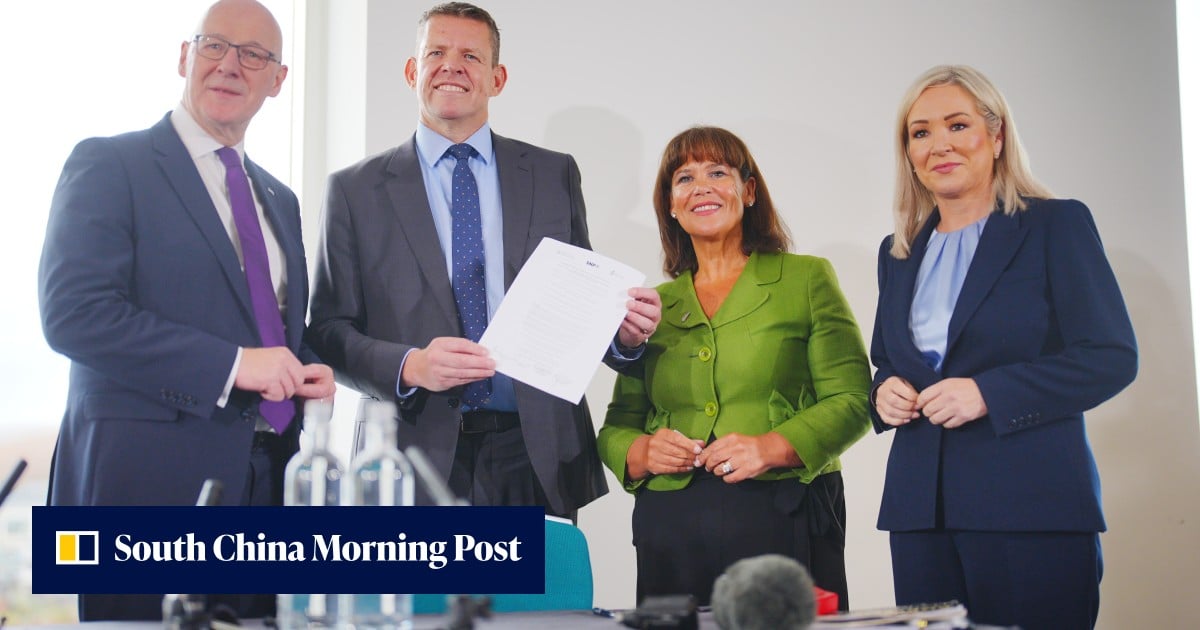
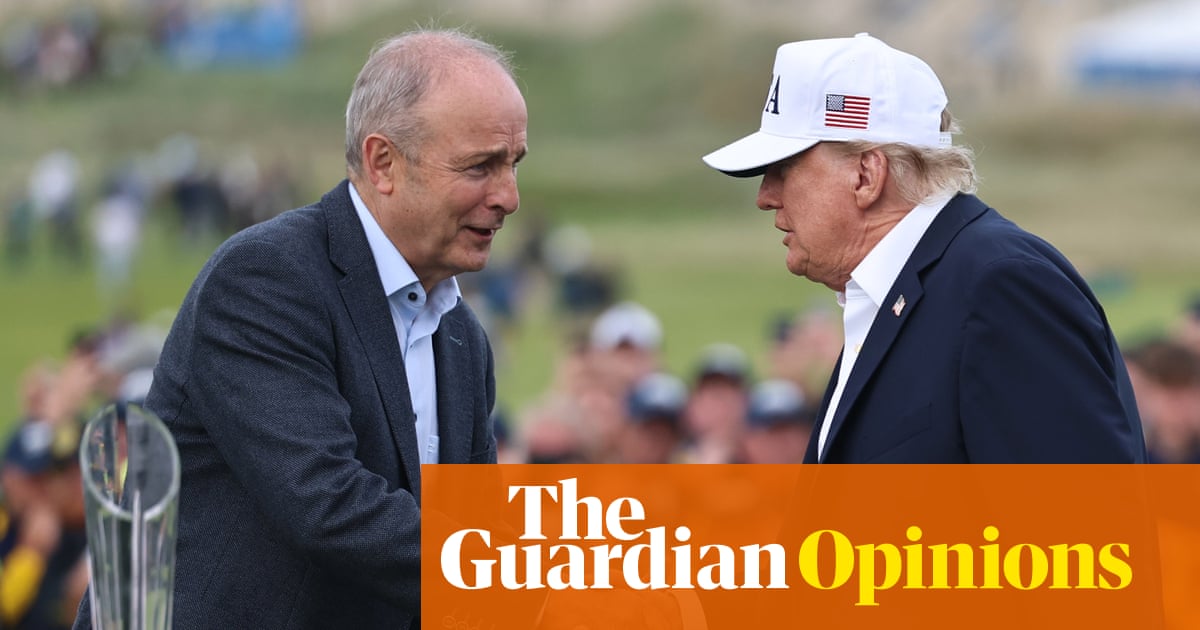
Scottish, Welsh, and Northern Irish nationalist leaders recently held a joint press conference in Cardiff to declare their right to decide whether to remain part of the United Kingdom, signing a memorandum emphasizing democratic self-determination. This comes days after U.S. President Donald Trump expressed support for a united Ireland during his visit to Dublin. The leaders from Sinn Féin, SNP, and Plaid Cymru met as party heads rather than in official capacities, underscoring their shared goal of independence within the European Union.
Written by the local model on 2026-09-14,
using this article's own text rather than the other coverage of the
same event (that is the story summary below).
In short:
The first ministers of Wales, Scotland and Northern Ireland have held a joint press conference declaring their right to choose whether to remain in the UK.
asserted
ministers → hold → UK
The leaders of Sinn Féin, SNP and Plaid Cymru signed a memorandum of understanding, saying "no Westminster government has the right to block democracy".
asserted
government → sign → democracy
It comes after US President Donald Trump said he backed Irish unity on a visit to Dublin last week.
asserted
he → come → Dublin
Leaders of the main Scottish, Northern Irish and Welsh nationalist parties have declared their right to choose whether to remain in the UK, with all three seeing their future as nations within the European Union.
asserted
three → declare → Union
The rare meeting in the Welsh capital on Monday, local time, comes just days after US President Donald Trump waded in on the issue, saying he would back a united Ireland.
asserted
he → come → Ireland
His comments showed "the unity debate is very much alive", Northern Ireland's Michelle O'Neill said alongside fellow party leaders as they announced a memorandum of understanding.
asserted
they → show → understanding
All three parties — the Scottish National Party (SNP), Plaid Cymru in Wales and the pro-Irish unity Sinn Féin — want to break away from the UK.
asserted
parties → want → UK
"Our nations have the right to self-determination.
asserted
nations → have → determination
No Westminster government (the UK government) has the right to block democracy or undermine the principle that our people will decide their own future," the agreement said.
asserted
agreement → have → future
John Swinney from the SNP, Rhun ap Iorwerth from Plaid Cymru in Wales, and Mary Lou McDonald and Ms O'Neill from Sinn Féin met in their capacity as party leaders, rather than as officials in their respective governments.
asserted
Swinney → meet → governments
Announcing the agreement, Mr Swinney said the three parties were "absolutely united by that principle of self-determination".
asserted
parties → announce → determination
For the first time, the nations each had first ministers "committed to independence from the United Kingdom", the agreement said, adding: "The future of our nations belongs in the European Union."
asserted
future → have → Union
The independence parties are the biggest in both the Scottish and Welsh parliaments for the first time since devolution measures began in 1999.
asserted
measures → begin → 1999
The regional parliaments of the United Kingdom — which comprises England, Scotland, Wales and Northern Ireland — have key powers on health, education, housing, transport and environment matters, along with some tax gathering.
asserted
which → comprise → gathering
Prime Minister Andy Burnham has said relatively little on devolution for the three nations since taking office in July.
asserted
Burnham → say → July
A spokesperson for his Downing Street Office said on Monday he believed "strongly in the Union", a reference to the constitutional union that makes Northern Ireland part of the UK.
asserted
Ireland → say → UK
While the three parties are united in their desire to break away from the UK they have varying positions on how and when this might take place.
uncertain
this → unite → place
The SNP wants a second independence referendum after an earlier ballot in 2014 saw Scotland narrowly vote to remain part of Britain.
asserted
Scotland → want → Britain
Successive UK governments have ruled out an immediate rerun.
asserted
governments → rule → rerun
Sinn Féin, the former political wing of the paramilitary Irish Republican Army (IRA), wants to see a vote on Ireland being reunified with the UK territory Northern Ireland.
asserted
Ireland → want → territory
Plaid Cymru seeks Welsh independence in the longer term but Mr Iorwerth has ruled out pressing for any referendum immediately.
asserted
Iorwerth → seek → referendum
Mr Burnham got a sharp response from Sinn Féin in August, shortly after taking power the previous month, when he said a referendum on Irish unity was "off the table".
asserted
referendum → get → table
The 1998 Good Friday peace agreement which largely ended three decades of conflict over British rule provides for a referendum if the British government's Northern Ireland minister believes a majority is likely to favour joining the Republic of Ireland.
Sinn Féin's Ms McDonald said the prime minister had no authority to remove any provisions of the agreement and Mr Burnham backtracked in parliament last week.
The meeting and Mr Trump's remarks sparked a range of opinions in Belfast.
"Ireland would be better off if it was one country and we were back in the EU," retiree Ray Dennison, 61, told AFP.
asserted
Dennison → end → AFP
But Jim Boyle, a 64-year-old environmental worker, said the nationalist leaders' meeting filled him with "trepidation".
asserted
meeting → say → trepidation
"Many years ago I may have wished for the break-up of the United Kingdom, now...
uncertain
I → wish → Kingdom
I just don't want anything that's unpredictable," he said.
asserted
he → want → anything
On Scotland, Mr Burnham told politicians there could be another vote if there was a "clear consensus" for it but later reportedly clarified that a referendum remained "off limits".
uncertain
referendum → tell → limits