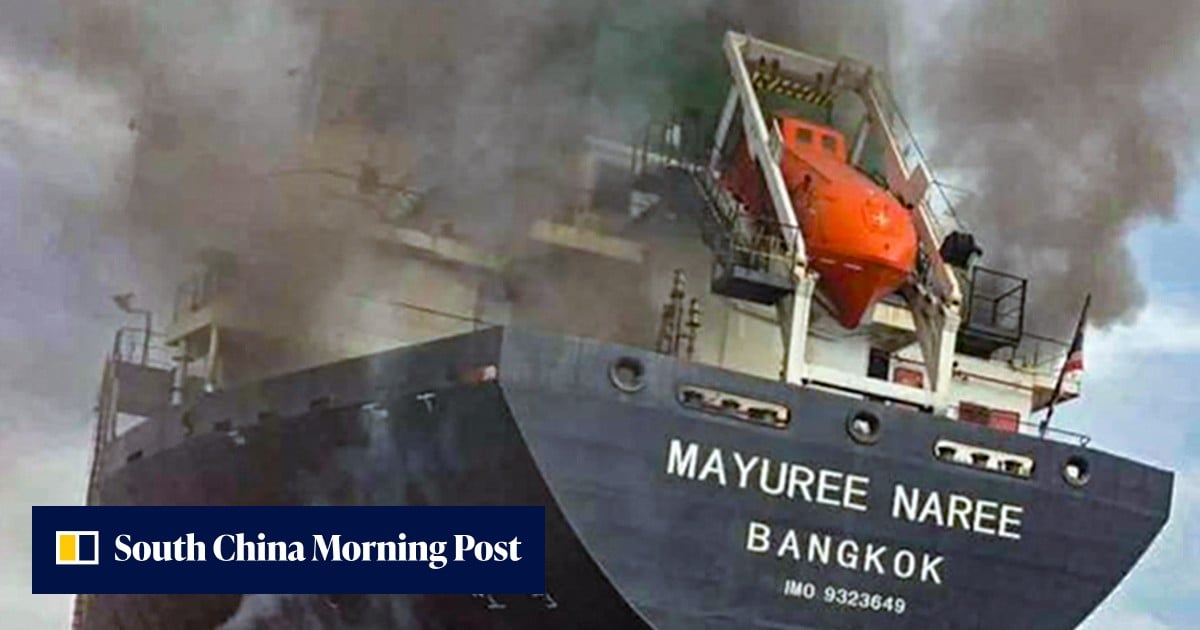
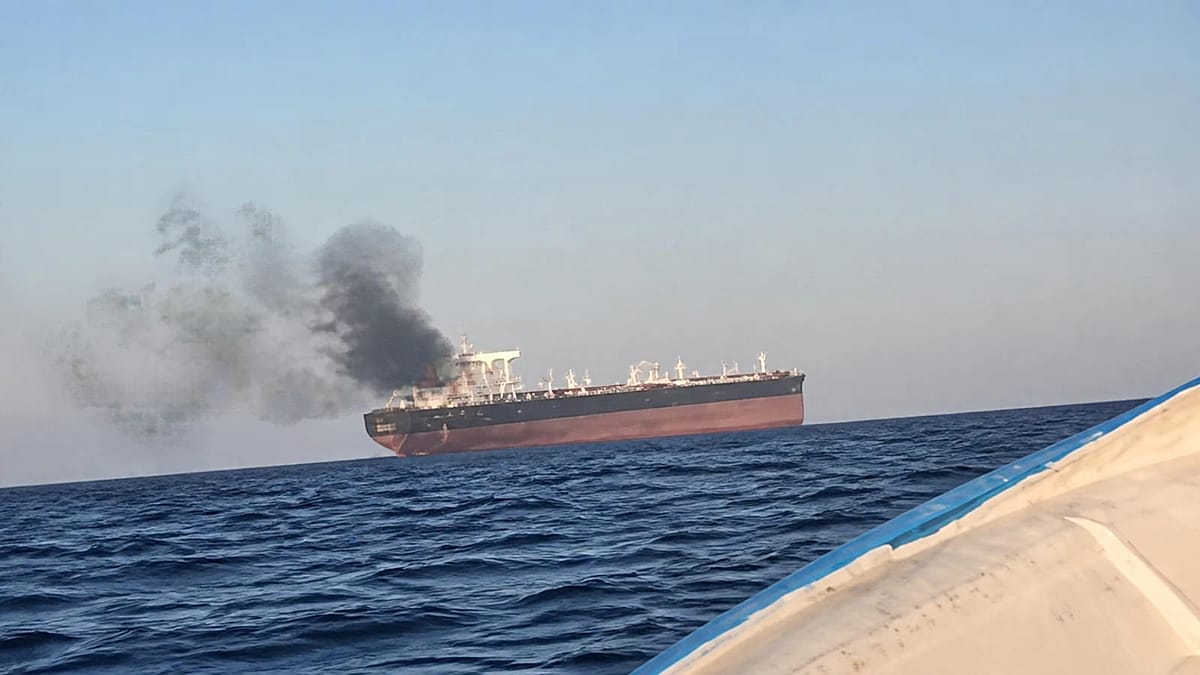
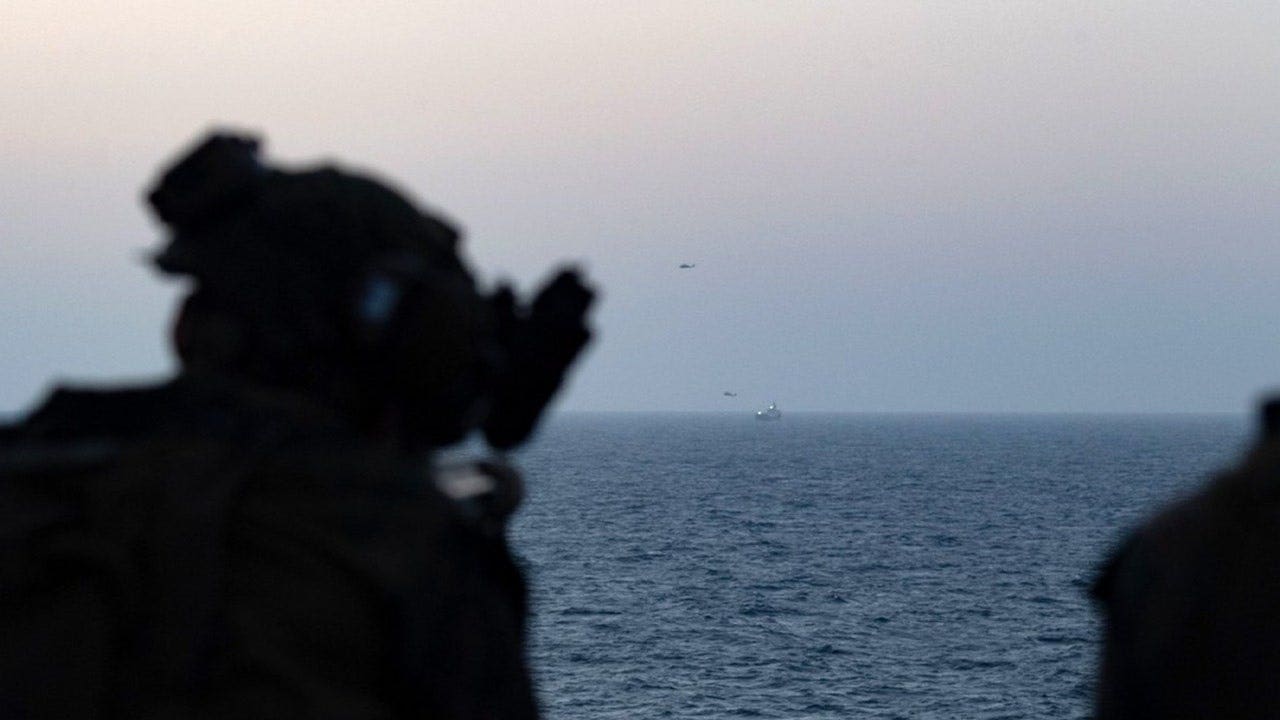
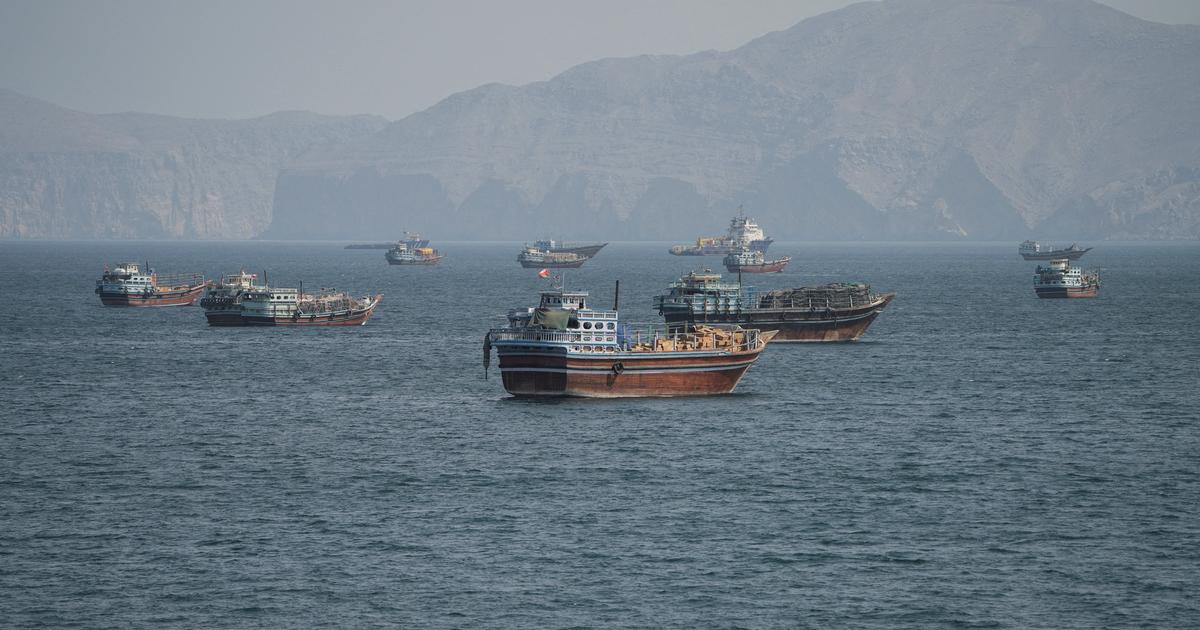
Dire straits: why Filipino sailors continue to brave troubled Middle East waters

Read the original at South China Morning Post ↗
Cite

Beltran, S. (2026, October 20). Dire straits: why Filipino sailors continue to brave troubled Middle East waters. South China Morning Post. https://www.scmp.com/week-asia/economics/article/3371457/dire-straits-why-filipino-sailors-continue-brave-troubled-middle-east-waters?utm_source=rss_feed

Dated from the outlet's own feed. Check the original for its byline.

South China Morning Post · collected 2026-10-20 · by Sam Beltran

Quick Summary

The article discusses why Filipino sailors continue working in dangerous areas like the Strait of Hormuz despite safety risks. With over 468,000 Filipino seafarers globally, financial needs often outweigh fears for their personal safety. The story includes a firsthand account from Jay, a 29-year-old sailor who witnessed an explosion near his ship while navigating through the strait, highlighting the traumatic yet routine nature of such incidents.
Written locally by qwen2.5:14b on 2026-10-20, using this article's own text rather than the other coverage of the same event (that is the story summary below).

AI analysis runs on qwen2.5:14b, locally

Story summary

Filipino sailors, despite facing dangerous conditions in the Middle East, continue to navigate troubled waters due to financial pressures and concerns over blacklisting by shipping companies if they refuse assignments. In August 2026, a Filipino seafarer named Jay experienced a harrowing encounter while on lookout duty in the Strait of Hormuz when drones approached his ship and two others it was following. An explosion occurred on a tanker ahead of them, causing trauma but no direct harm to Jay’s vessel or crew. Despite the dangers, Jay and other sailors proceed with their voyages, prioritizing job security over safety concerns. The Philippines has over 468,000 sailors worldwide who face such risks.

Written for “Filipino Sailors In Middle East Waters” on 2026-10-20, grounded in this article and the 0 other(s) covering the same event.
Why this leaning score
This article does not take a side on a contested political question, so it has no leaning score. That is an answer rather than a gap: a match report or a rescue can be warmly or critically written without being left or right, and scoring it anyway is how approval of a subject gets recorded as a political position.
No political leaning scored for article 92559 · logged 2026-10-20

Story

📰 Filipino Sailors In Middle East Waters
World · 1 article(s) covering the same event.

Compared with similar articles

This article reads unscored and hedges 0% of its claims. Each row says how that neighbour differs.
Euronews
⚖️ leaning not scored 🔴 16% hedged 3 of 19 📰 publisher trust 60
“Article A describes a fire on an unnamed tanker in the Gulf of Oman near Hormuz, while Article B recounts a Filipino sailor's experience witnessing an explosion from a tanker hit by drones in August, which are different specific incidents.”
New York Post
⚖️ leaning not scored 🔴 16% hedged 6 of 38 📰 publisher trust 66
“While both articles discuss incidents in the Strait of Hormuz involving attacks on ships and sailors being stranded, they describe different aspects and timeframes of a broader crisis.”
The Hindu
⚖️ leaning not scored 🔴 0% hedged 0 of 8 📰 publisher trust 95
“Article A describes a specific incident in October where an oil tanker hits a mine and catches fire. Article B mentions a similar but earlier incident in August, possibly involving a Filipino sailor's experience.”
Fox News
⚖️ leaning not scored 🔴 17% hedged 6 of 36 📰 publisher trust 67
“The articles discuss different aspects and timespans related to maritime safety in the Strait of Hormuz but do not clearly describe the same specific incident.”
Semafor
⚖️ leaning not scored 🔴 25% hedged 1 of 4 📰 publisher trust 60
“Article A covers a broad overview of attacks on ships globally, while Article B focuses specifically on an incident involving Filipino sailors in the Strait of Hormuz.”
Euronews
⚖️ leaning not scored 🔴 17% hedged 2 of 12 📰 publisher trust 60
“Article A describes a specific incident where a tanker struck a mine in the Strait of Hormuz and caught fire. Article B mentions Filipino sailors witnessing an explosion from a tanker ahead but does not provide details matching the exact event described in Article A.”
Al Jazeera
⚖️ leaning not scored 🔴 28% hedged 10 of 36 📰 publisher trust 60
“The articles describe different time periods and perspectives on incidents in the Strait of Hormuz.”
Times of India
⚖️ leaning not scored 🔴 0% hedged 0 of 13 📰 publisher trust 59
“The articles describe different incidents; one reports on two oil tankers hitting mines in October, while the other describes a Filipino sailor's experience witnessing an explosion from another tanker in August.”
The Guardian
⚖️ Leans left 🔴 18% hedged 6 of 33 📰 publisher trust 66
“The articles describe related incidents in the Strait of Hormuz but do not specify they are reporting on the exact same occurrence.”
How this article was measured signals, leaning charts, publisher record, byline, topics and claims

Signals How these are calculated →

Claims extracted
6
sentences that state something as happening or true
Uncertain
0%
0 of 6 hedged ("reportedly", "may", "according to")
Leaning
not political
takes no side on a contested political question
Publisher signals
64/100
South China Morning Post's corrections and hedging, across everything collected from it. Not a measure of accuracy.
Outlets on this story
1
World
Same framing elsewhere
1
articles that frame the event the way this one does
Analyzed 2026-10-20 · how these are computed

How this is being covered How these are calculated →

Article leaning vs. publisher reliability
Source leaning vs. consistency

Publisher

South China Morning Post · 2631 article(s) · 6 correction(s) detected
Running correction rate · 6 correction(s)

Who wrote this

Sam Beltran
21 article(s) here · 1 carrying a prediction
🔮 We would move on and proceed to the next voyage,” he said.
🔮 The Philippines’ telco industry wants the country to become a regional digital hub anchored by stable underwater cables, but a leading executive and analysts warn that slow approvals for repairs, limited monitoring and fragmented official oversight could undermine the ambition.
🔮 Advertisement Trump’s second Asean summit presence comes at a price for region On the president’s list are supply-chain security, critical minerals, technology cooperation, AI and investment in the US, experts say 4-MIN READ4-MIN US President Donald Trump is expected to drive hard bargains on tariffs and critical minerals in his return to the Asean summit in Manila next month, with Washington seeking greater economic and strategic concessions while remaining hawkish on China. The Philippines confirmed on Wednesday that Trump would fly in for the summit from November 16 to 18, before attending the Asia-Pacific Economic Cooperation (Apec) summit in Shenzhen that same week.
🔮 “I got worried, I got scared that maybe I wouldn’t be able to come home any more,” added the 29-year-old, whose six-year-old son lives in the Philippines under her parents’ care.
🔮 Aged 14, he already had accounts on Instagram and TikTok – among the platforms Jakarta said children would be banned from using – as well as popular video game Minecraft and gaming platform Roblox.
🔮 Before, in a 16-hour shift of driving, I could take home 400 to 500 pesos [US$6.30 to US$8] – now there’s a big cut to that income,” said Manlapig, who plies a two-hour daily round route from Malolos in Bulacan, north of Manila, to San Fernando, Pampanga.
🔮 The discovery of uranium-bearing minerals in Luzon comes as the country explores integrating nuclear power into its future energy mix The discovery, which could provide uranium for the nuclear fuel cycle if further exploration confirms its viability, was made in the Larap-Paracale mining district in Camarines Norte province, where exploration began in the 1950s. Researchers from the Philippine Nuclear Research Institute (PNRI), the University of the Philippines Diliman and Akita University in Japan confirmed that surface deposits collected from the area contained uraninite as the main uranium-bearing mineral, and that the material could be processed into a product with higher uranium content.
🔮 Before, a lot of us who could go out to Scarborough Shoal used to bring home around 15,000 pesos (US$238) a week, a comfortable amount for our families,” said Marabe, a resident of Masinloc town and provincial coordinator for the national fisherfolk federation Pamalakaya.
🔮 Poland eyes deeper Philippines defence ties following Black Hawk deal Warsaw is targeting drones, air defence and artillery exports to Manila as European rearmament fuels global arms ambitions Poland’s delivery of Black Hawk helicopters to the Philippines has given Warsaw a foothold in Manila’s defence market as it seeks to expand exports from its growing defence industry, with analysts saying drones, air defence and potentially co-production could pave the way for a broader partnership.
🔮 President Ferdinand Marcos Jnr is set to be the first Philippine leader to join the Brics Summit in New Delhi this weekend – presenting him with the perfect “low-risk opportunity” to engage the grouping as Manila continues to diversify its ties, analysts say.
Also by Sam Beltran
Nothing else under this byline is closely related to this article, so these are simply their most recent.

All 21 articles by Sam Beltran →

Topics

Filipino Philippines

Subjects

Filipino NORP · 2× Jay PERSON · 2× Philippines GPE · 1×

Narrative

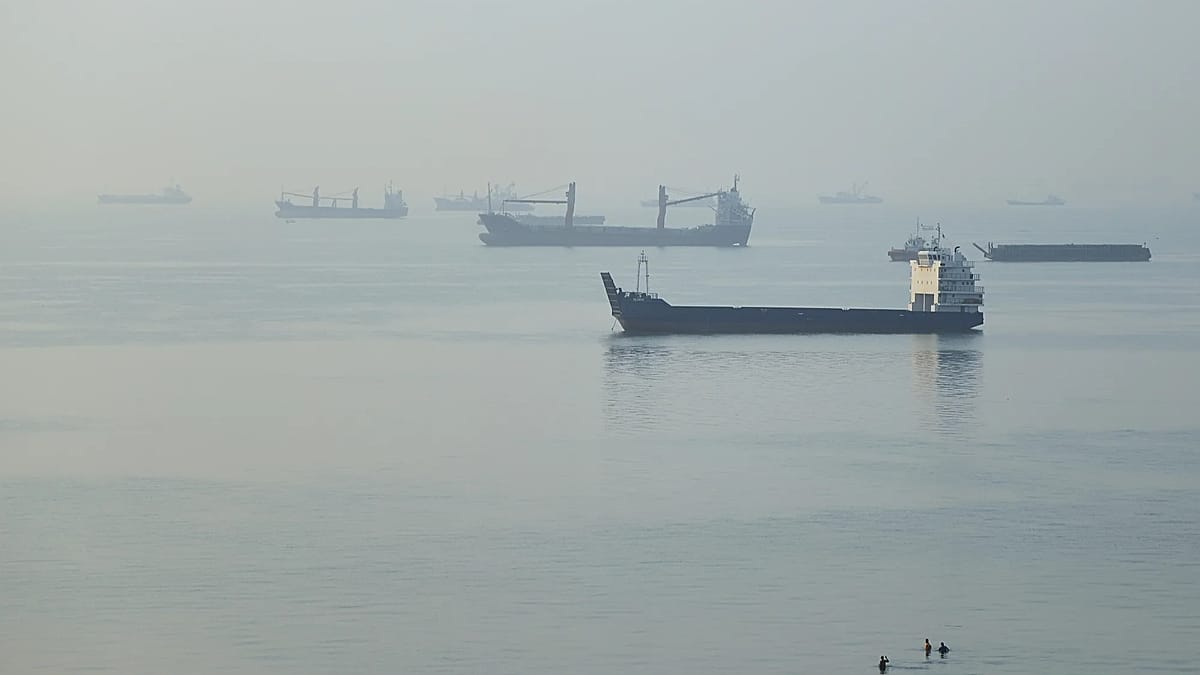
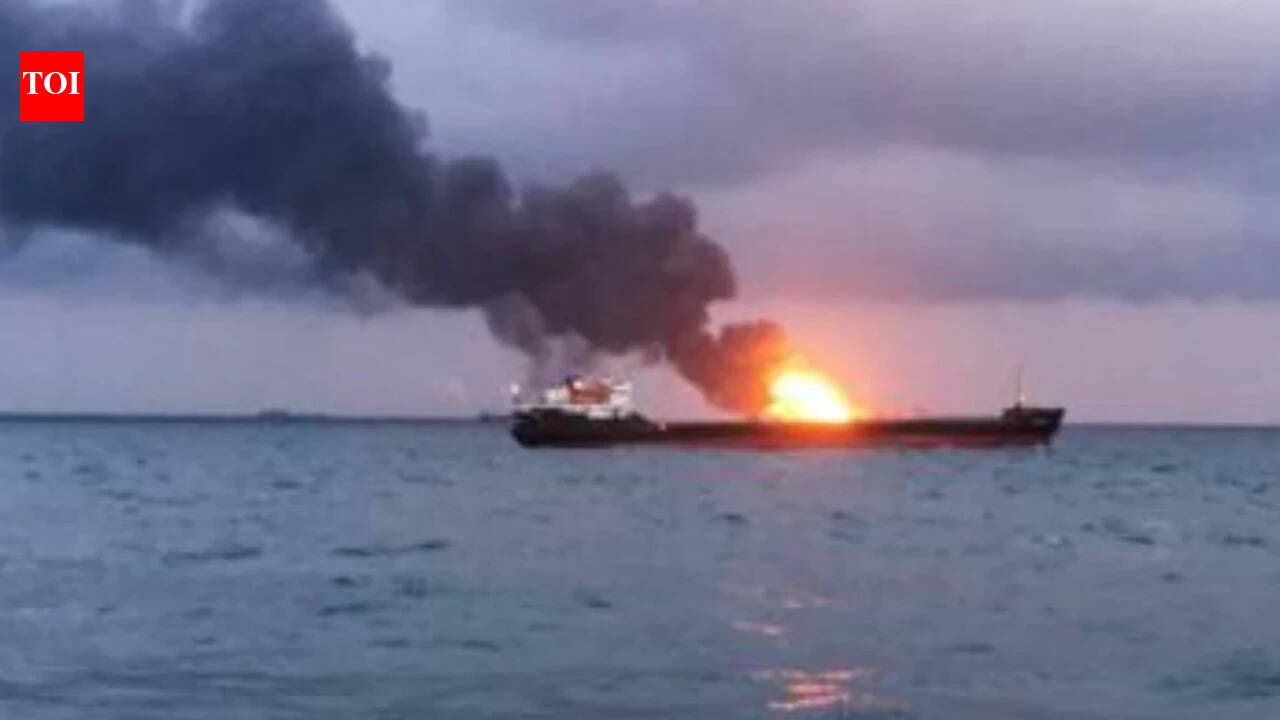
Dire straits: why Filipino sailors continue to brave troubled Middle East waters Financial concerns and blacklist worries outweigh safety fears for some of the Philippines’ over 468,000 sailors around the world Filipino seafarer Jay was on lookout duty aboard a vessel passing through the Strait of Hormuz one evening in August when drones swarmed overhead, darting past his ship and two others it was following.
framing: assertive · carried by 1 article(s) · first seen 2026-10-20
🔮 We would move on and proceed to the next voyage,” he said.
2026-10-20 · South China Morning Post
Dire straits: why Filipino sailors continue to brave troubled Middle East waters · assertive framing

Claims (6 extracted, 0 hedged)

Dire straits: why Filipino sailors continue to brave troubled Middle East waters Financial concerns and blacklist worries outweigh safety fears for some of the Philippines’ over 468,000 sailors around the world Filipino seafarer Jay was on lookout duty aboard a vessel passing through the Strait of Hormuz one evening in August when drones swarmed overhead, darting past his ship and two others it was following. asserted
it → continue → ship
Within seconds, an explosion rang out from the tanker ahead. asserted
explosion → ring → tanker
“That was traumatic for me when I saw that the tanker ahead of our vessel had been hit,” said Jay, whose real name has been withheld to protect him from possible employer retribution. asserted
name → see → retribution
The 29-year-old and his fellow crew members made it through the strait unscathed, but the experience stayed with him. asserted
experience → make → him
“We never talked about what happened; it was done. asserted
it → talk → ?
We would move on and proceed to the next voyage,” he said. asserted
he → move → voyage
💬Give feedback
🕘History 🎫Support