US and Iran both claim control of Strait of Hormuz amid attacks on vessels

Read the original at Al Jazeera ↗
Cite

Motamedi, M. (2026, October 17). US and Iran both claim control of Strait of Hormuz amid attacks on vessels. Al Jazeera. https://www.aljazeera.com/news-analysis/2026/10/17/us-and-iran-both-claim-control-of-strait-of-hormuz-amid-attacks-on-vessels?traffic_source=rss

Dated from the outlet's own feed. Check the original for its byline.

Al Jazeera · collected 2026-10-17 · by Maziar Motamedi

Quick Summary

In October, at least 12 ships were attacked in or near the Strait of Hormuz as tensions between the US and Iran escalated. The UK Maritime Trade Operations reported these attacks but noted difficulties verifying many incidents due to a lack of reports from affected vessels. Despite Iranian attacks, the US military asserted control over the strait, with General Brad Cooper stating that 400 ships and 100 million barrels of oil passed through it in the week ending October 16.
Written locally by qwen2.5:14b on 2026-10-17, using this article's own text rather than the other coverage of the same event (that is the story summary below).

AI analysis runs on qwen2.5:14b, locally

Story summary

As of October 17, 2026, 12 ships reported being attacked in and around the Strait of Hormuz between October 5 and 11, setting a record high since the start of the US-Israeli war with Iran on February 28. The UK Maritime Trade Operations (UKMTO) agency documented six attacks on a single day, Sunday, which is unprecedented. Despite these incidents, 400 ships and 100 million barrels of oil moved through the strait over the past week according to US Central Command (CENTCOM). The increased ship attacks are attributed by CENTCOM chief Brad Cooper to "desperation" by Iran's Islamic Revolutionary Guard Corps (IRGC), which asserts broader control over maritime routes. However, the UKMTO notes that its ability to accurately report these incidents is hindered due to vessels refusing to provide information post-attack, leading to uncertainty about the total number of attacks.

Written for “Strait Of Hormuz Attacks” on 2026-10-17, grounded in this article and the 2 other(s) covering the same event.
Why this leaning score
The model judged this article politically coded and scored it +0.35, but all 1 of its quote(s) are attributed speech - words the article quotes from someone, not the article's own narration, so the score is not published.
Written under an earlier scoring contract, which gave a paragraph rather than checkable quotes. Re-analysing this article replaces it.
Leaning score withheld for article 87047: attributed speech only · logged 2026-10-17

Story

📰 Strait Of Hormuz Attacks
World · 3 article(s) covering the same event. See how they differ ↓

Compared with similar articles

This article reads unscored and hedges 28% of its claims. Each row says how that neighbour differs.
Al Jazeera · 1.00 cosine similarity
⚖️ leaning not scored 🔴 28% hedged 10 of 36 📰 publisher trust 60
“Both articles describe the same incident of attacks on ships near the Strait of Hormuz, with identical details including the timeframe and source of information.”
The Straits Times
⚖️ Leans left 🔴 13% hedged 4 of 31 📰 publisher trust 60
“The articles describe different events related to Iran's actions during a US blockade, with Article A focusing on Iran exporting LPG and jet fuel via ship-to-ship transfers despite the blockade, while Article B reports attacks on ships in the Strait of Hormuz amid competing claims of control between the US and Iran.”
Al Jazeera
⚖️ leaning not scored 🔴 50% hedged 1 of 2 📰 publisher trust 60
“The articles discuss related events but different time frames and aspects: one focuses on a claim by Trump about a US Navy blockade stopping Iranian ships, while the other reports ongoing attacks on vessels in the Strait of Hormuz involving both Iran and the US.”
Dawn
⚖️ Leans right 🔴 21% hedged 3 of 14 📰 publisher trust 71
“Article A describes two specific ship sinkings near Hormuz within a 24-hour period, while Article B discusses multiple attacks on ships over a week-long period with no mention of the specific incidents in Article A.”
BBC News · 0.86 cosine similarity
⚖️ leaning not scored 🔴 18% hedged 6 of 34 📰 publisher trust 69
“While both articles discuss ship attacks near the Strait of Hormuz, they cover different time periods and details. Article A focuses on a record high number of attacks between October 5-11, while Article B discusses claims of control over the strait with reports of attacks up to October 16.”
The Independent
⚖️ leaning not scored 🔴 18% hedged 3 of 17 📰 publisher trust 59
“Article A focuses on a specific incident involving one ship carrying cargo containers sinking in the Strait of Hormuz, while Article B discusses multiple attacks on ships over several days and the broader competition between Iran and the US for control of the waterway.”
The Hindu
⚖️ leaning not scored 🔴 0% hedged 0 of 8 📰 publisher trust 95
“Article A describes a single oil tanker hitting a mine and catching fire, while Article B reports on multiple ship attacks over a period of time.”
BBC News
⚖️ leaning not scored 🔴 28% hedged 5 of 18 📰 publisher trust 69
“Article A describes a single incident involving two Singapore-flagged ships, while Article B discusses multiple attacks on dozens of ships over a period in the Strait of Hormuz.”
Daily Mail
⚖️ Leans right 🔴 25% hedged 4 of 16 📰 publisher trust 64
“While both articles discuss attacks on vessels in the Strait of Hormuz, they describe different aspects and details of the incident. Article A mentions multiple ship attacks over a period, while Article B focuses specifically on one container ship that was blown up by a mine.”
Al Jazeera
⚖️ Leans right 🔴 12% hedged 5 of 41 📰 publisher trust 60
“Article A discusses Iran's intentions to disrupt a US-UAE oil shuttle, while Article B reports on actual attacks on ships in or near the Strait of Hormuz. These appear to be different events despite occurring around the same time.”
How this article was measured signals, leaning charts, publisher record, byline, topics and claims

Signals How these are calculated →

Claims extracted
36
sentences that state something as happening or true
Uncertain
28%
10 of 36 hedged ("reportedly", "may", "according to")
Leaning
withheld
no quote in the article backed the model's score
Publisher signals
60/100
Al Jazeera's corrections and hedging, across everything collected from it. Not a measure of accuracy.
Outlets on this story
3
World
Same framing elsewhere
2
articles that frame the event the way this one does
Analyzed 2026-10-17 · how these are computed

How this is being covered How these are calculated →

Article leaning vs. publisher reliability
Source leaning vs. consistency

Publisher

Al Jazeera · 3253 article(s) · 2 correction(s) detected
Running correction rate · 2 correction(s)

Who wrote this

Maziar Motamedi
16 article(s) here · 1 carrying a prediction
🔮 It said it was aware of more incidents in the waterway via other sources but could not verify them due to a lack of information.
🔮 During a governance meeting at the end of September, Deputy Technology Minister Mohammad Hafez Hakami had warned authorities that Starlink could signify “the last nail in the coffin of the [cyberspace] governance” of Iran if it becomes prevalent, due to the unfettered internet access it provides.
🔮 In a statement late Monday, the Iranian ministry described the UK’s claims of an Iranian role as “an ugly plot” that would also serve to “evade accountability for Britain’s participation” in the ongoing war against Iran on February 28.
🔮 With the US naval blockade of Iran’s southern ports in place and sanctions tightening, Tehran has said it will pursue military and diplomatic efforts to put pressure on Washington to submit to its demands regarding reopening the Strait of Hormuz.
🔮 If anything else happens against Iran, we will strike them again,” said Habibollah Sayyari, chief of staff and joint coordinator of the army.
🔮 For Iranians who feel they were subject to an unprovoked attack by the US and Israel, this event could have modern-day relevance.
🔮 “And soon the Arabian Sea, too, will empty itself of them”.
🔮 But it has also said the strait will not fully reopen until the US blockade on Iranian ports ends.
🔮 Sea levels are projected to recede by an additional 8 to 21 metres (26ft to 69ft) by the end of the century.
Also by Maziar Motamedi
Nothing else under this byline is closely related to this article, so these are simply their most recent.
All 16 articles by Maziar Motamedi →

Topics

Iran Iranian Tehran UKMTO the United States

Subjects

Iran GPE · 8× UKMTO ORG · 5× Iranian NORP · 4× Hormuz GPE · 2× Tehran GPE · 2× the United States GPE · 2× Jubail GPE · 1× Saudi Arabia’s GPE · 1× Yemen GPE · 1× the United Kingdom Maritime Trade Operations ORG · 1×

Narrative

US Central Command (CENTCOM) chief Brad Cooper claimed in a video message late Friday that despite the Iranian attacks, 400 ships and 100 million barrels of oil moved through the Strait of Hormuz over the past week. “Let me be clear: The Strait of Hormuz is controlled by the United States and our regional partners, not Iran,” he said, attributing the greatly increased ship attacks to “desperation” by the Islamic Revolutionary Guard Corps (IRGC).
framing: mixed · carried by 2 article(s) · first seen 2026-10-17
🔮 It said it was aware of more incidents in the waterway via other sources but could not verify them due to a lack of information.

Claims (36 extracted, 10 hedged)

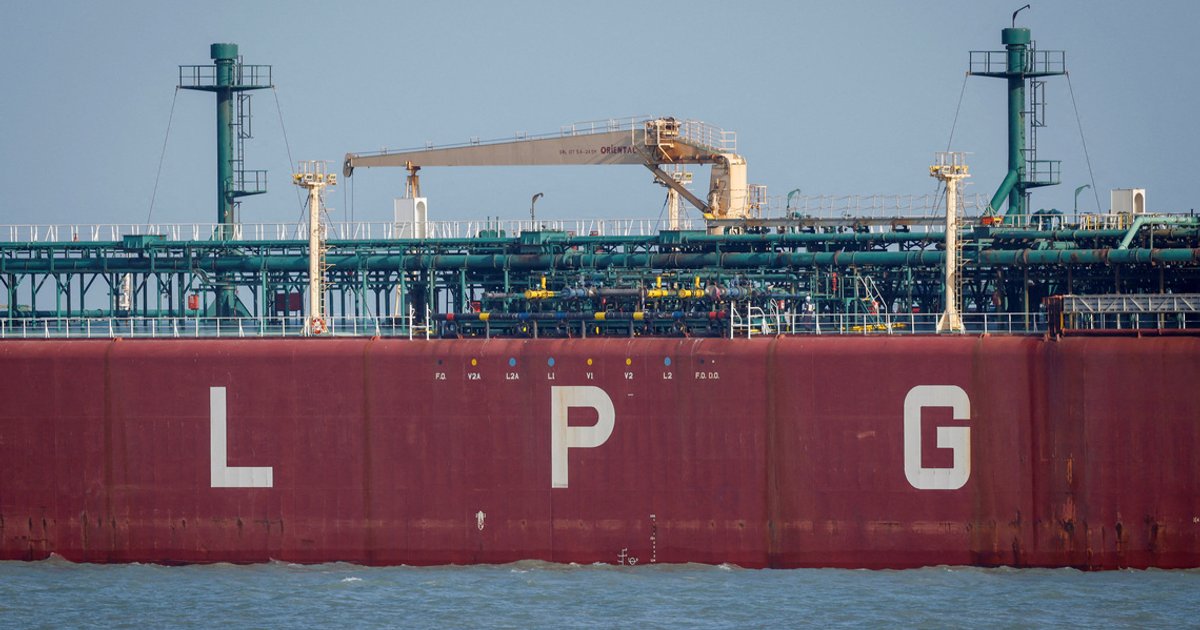
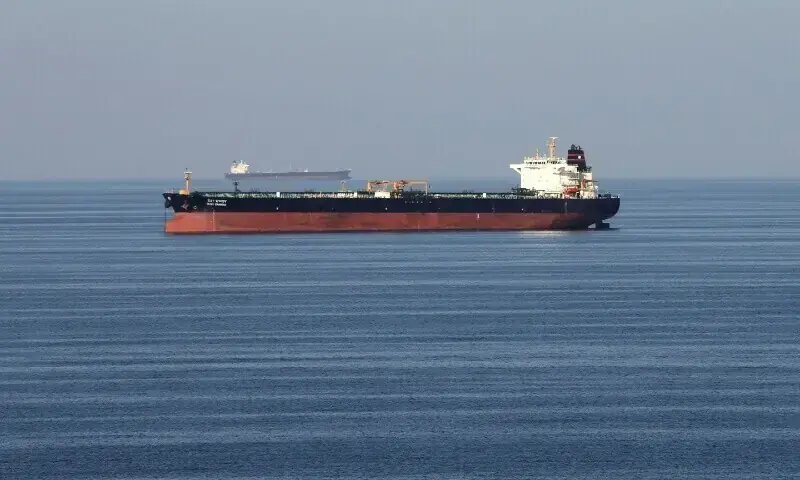
Dozens of ships were attacked in or near the Strait of Hormuz in October as Iran and the United States compete to assert their authority over the waterway. asserted
Iran → attack → waterway
At least 12 ships were attacked in the week ending on October 16, the United Kingdom Maritime Trade Operations (UKMTO) reported late Friday, with one important caveat. asserted
Operations → attack → caveat
Recommended Stories list of 3 items- list 1 of 3Fighting in Yemen intensifies: What’s the latest on the battlefield? - list 2 of 3Iraq devalues dinar to ease cash crunch, leaving traders in limbo - list 3 of 3Containers and debris captured floating around the Strait of Hormuz “UKMTO is struggling to accurately report true number of attacks with majority of vessels attacked refusing to report to UKMTO,” the maritime security organisation stated. asserted
organisation → intensify → UKMTO
It said it was aware of more incidents in the waterway via other sources but could not verify them due to a lack of information. uncertain
it → say → information
The month has seen the highest number of ship attacks since the start of the US-Israel war on Iran, which began on February 28. asserted
which → see → February
Of the 12 vessels that were confirmed attacked, the organisation said half continued to their destination or reached port. asserted
half → confirm → port
One sank, two were disabled, and three were either damaged or had an unconfirmed outcome. uncertain
three → sink → outcome
The UKMTO also reported a new type of attack on Saturday. asserted
UKMTO → report → Saturday
The master of a tanker said their vessel was hit by a rocket-propelled grenade (RPG) fired from a small boat 78 nautical miles (equivalent to about 144km) northeast of Saudi Arabia’s city of Jubail, Eastern province, resulting in damage to the aft port quarter. asserted
vessel → say → quarter
In recent months, the US has managed to increase energy transits through the Strait of Hormuz and surrounding waterways through a shuttle system coordinated with Arab powers. asserted
US → manage → powers
But volumes have oscillated weekly due to rising Iranian attacks. asserted
volumes → oscillate → attacks
This was about 68 percent of the 17.1 million bpd pre-war baseline, according to Kpler figures. uncertain
This → accord → figures
On Friday, Brent crude also touched $110 a barrel for the first time since May in light of ongoing attacks. uncertain
crude → touch → attacks
The situation has been exacerbated by the Iran-aligned Houthis’ attacks on Saudi energy infrastructure and their capture of the Bab al-Mandeb strait. asserted
situation → exacerbate → strait
Expectations that the conflict between the US and Iran was escalating have also impacted prices. asserted
conflict → escalate → prices
The US military has provided a starkly different outlook on the situation in and around the Strait of Hormuz, which accounted for roughly a fifth of global oil and natural gas flows before the war began. asserted
war → provide → flows
US Central Command (CENTCOM) chief Brad Cooper claimed in a video message late Friday that despite the Iranian attacks, 400 ships and 100 million barrels of oil moved through the Strait of Hormuz over the past week. “Let me be clear: The Strait of Hormuz is controlled by the United States and our regional partners, not Iran,” he said, attributing the greatly increased ship attacks to “desperation” by the Islamic Revolutionary Guard Corps (IRGC). asserted
he → claim → Corps
The US military also claimed that it continues to prevent Iranian exports and imports via its southern ports through an “ironclad” naval blockade. asserted
it → claim → blockade
It claims the blockade has cost Iran $25bn in oil export income, and that the US has recently seized $350m in Iranian cryptocurrency financing. uncertain
US → claim → financing
The UKMTO report said total outbound transit over the last seven days was 125 ships, with total inbound transits standing at 129. asserted
transits → say → 129
Over the week, most transits by the Western security agency were for dry bulk cargo, followed by tanker products and general cargo. asserted
transits → follow → products
Tehran has not provided exact figures on how many vessels have been attacked, or how many are passing through the Hormuz, although it has said Washington is exaggerating numbers to project success of its naval campaign. asserted
Washington → provide → campaign
It comes as two vessels were reportedly hit by naval mines in the Strait of Hormuz this week, with the US and Iran offering contradictory claims about the situation. uncertain
US → come → situation
The IRGC has increasingly reported that vessels are hitting mines across the strategic waterway, which it says remains unsafe for vessels which do not coordinate with Iran’s Persian Gulf Strait Authority, an entity set up during the war to manage passage through the Hormuz. asserted
which → report → Hormuz
The latest claim came on Saturday, when the IRGC said a supertanker carrying more than two million barrels of crude oil caught fire after striking a mine while moving through an “unauthorised” route. uncertain
supertanker → come → route
Iran’s state-run Press TV shared footage it says showed the tanker on fire. asserted
tanker → run → fire
But CENTCOM said it had cleared the strait of naval mines, and that vessels are being struck by projectiles. asserted
vessels → say → projectiles
The latest incident “fact-checked” by the US military was on Thursday, when it said a civilian container ship, the M/V GFS Pride, was hit by an IRGC projectile, not by a mine as the Iranians had claimed. asserted
Iranians → check → mine
The vessel sank as it was being towed to shore. asserted
it → sink → shore
The US has refrained from responding to any of the recent vessel attacks, but there are concerns that Washington could escalate the war after the November 3 midterm elections. uncertain
Washington → refrain → elections
Diplomacy has not fully halted, with messages continuing to be relayed between the two parties by regional mediators like Pakistan, Qatar and others. asserted
messages → halt → Pakistan
But no breakthrough in talks is expected any time soon. asserted
breakthrough → expect → talks
President Donald Trump has reportedly ordered the US military to remain prepared for launching bigger attacks after the elections. uncertain
Trump → order → elections
Those attacks could potentially include using the GBU-43/B Massive Ordnance Air Blast bomb, nicknamed the “mother of all bombs”, according to US media. uncertain
attacks → include → media
But Tehran has signalled that it intends to continue the attacks, with acting Defence Minister Majid Ibn Reza saying on Saturday that it will be Iranian missiles, not US bombs, that determine the future of the war. asserted
that → signal → war
“Your bombs will explode elsewhere; in your global reputation, the US economy, and even your electoral calculations,” he was quoted as saying by state media. asserted
he → explode → media

💬Give feedback
🕘History 🎫Support