Filipino migrants torn between safety and survival risks amid Middle East dangers

Read the original at South China Morning Post ↗
Cite

Beltran, S. (2026, October 15). Filipino migrants torn between safety and survival risks amid Middle East dangers. South China Morning Post. https://www.scmp.com/week-asia/people/article/3370917/filipino-migrants-torn-between-safety-and-survival-risks-amid-middle-east-dangers?utm_source=rss_feed

Dated from the outlet's own feed. Check the original for its byline.

South China Morning Post · collected 2026-10-15 · by Sam Beltran

Quick Summary

Filipino workers in the Middle East are facing tough decisions regarding their safety and economic well-being amid growing conflicts in the region. Analysts highlight the challenges posed by insufficient support from the government, with many migrants continuing to work abroad due to financial necessity despite heightened risks. For example, Jacinto, a 29-year-old worker in Saudi Arabia, expressed fear during the Iran conflict but managed to return home. However, over two million OFWs remain across the Middle East, including around 800,000 in Saudi Arabia, where concerns about their safety persist as regional tensions escalate.
Written locally by qwen2.5:14b on 2026-10-15, using this article's own text rather than the other coverage of the same event (that is the story summary below).

AI analysis runs on qwen2.5:14b, locally

Story summary

As tensions between Iran and its neighbors escalate, Filipino migrant workers in the Middle East are facing tough decisions about their safety versus financial survival. Jacinto, a 29-year-old Filipina who lived in Riyadh during the conflict, expressed her fear over the missile attacks and bombings that were happening nearby. With a six-year-old son living back in the Philippines under his grandparents' care, she worried about being unable to return home. Although Jacinto managed to leave Saudi Arabia, more than 2 million overseas Filipino workers (OFWs) remain across the region, including around 800,000 in Saudi Arabia. Analysts attribute this situation to economic hardships and a lack of support initiatives from both sending and receiving countries, leaving many OFWs caught between potential dangers and their families' reliance on their income.

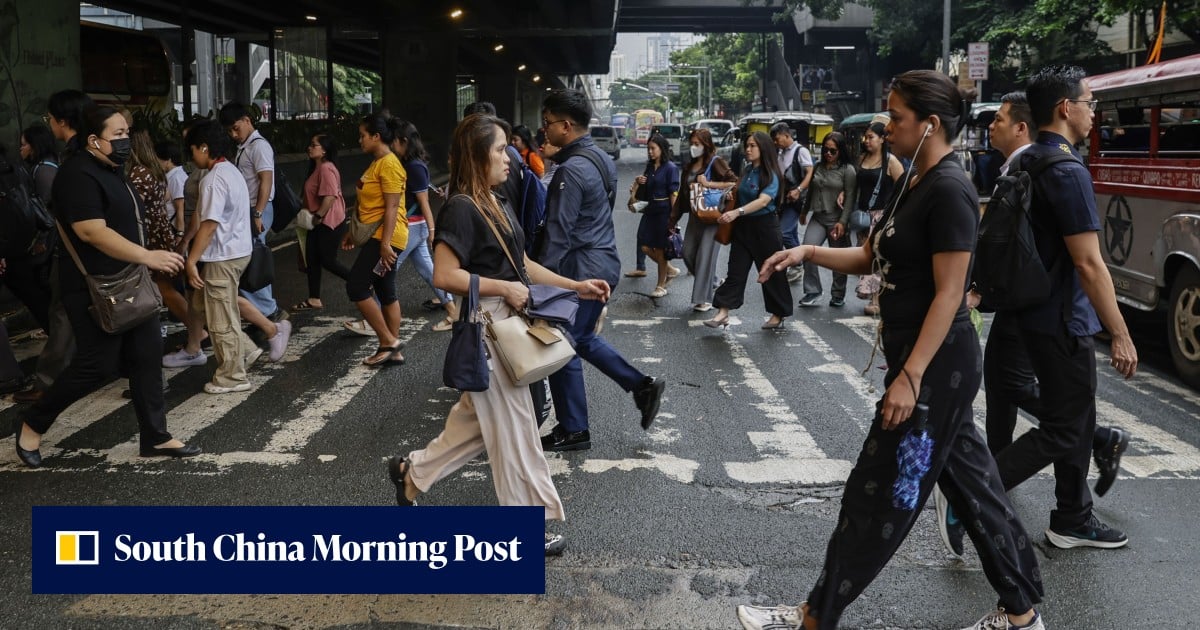
Written for “Filipino Migrants In Middle East Danger” on 2026-10-15, grounded in this article and the 0 other(s) covering the same event.
Why this leaning score
The model judged this article politically coded and scored it -0.30, but all 1 of its quote(s) are attributed speech - words the article quotes from someone, not the article's own narration, so the score is not published.
Written under an earlier scoring contract, which gave a paragraph rather than checkable quotes. Re-analysing this article replaces it.
Leaning score withheld for article 81194: attributed speech only · logged 2026-10-15

Story

📰 Filipino Migrants In Middle East Danger
World · 1 article(s) covering the same event.

Compared with similar articles

Nothing to compare against. No article is close enough to this one for the pipeline to have linked or judged the pair.
How this article was measured signals, leaning charts, publisher record, byline, topics and claims

Signals How these are calculated →

Claims extracted
5
sentences that state something as happening or true
Uncertain
0%
0 of 5 hedged ("reportedly", "may", "according to")
Leaning
withheld
no quote in the article backed the model's score
Publisher signals
67/100
South China Morning Post's corrections and hedging, across everything collected from it. Not a measure of accuracy.
Outlets on this story
1
World
Same framing elsewhere
1
articles that frame the event the way this one does
Analyzed 2026-10-15 · how these are computed

How this is being covered How these are calculated →

Article leaning vs. publisher reliability
Source leaning vs. consistency

Publisher

South China Morning Post · 2309 article(s) · 4 correction(s) detected
Running correction rate · 4 correction(s)

Who wrote this

Sam Beltran
18 article(s) here · 1 carrying a prediction
🔮 “I got worried, I got scared that maybe I wouldn’t be able to come home any more,” added the 29-year-old, whose six-year-old son lives in the Philippines under her parents’ care.
🔮 Aged 14, he already had accounts on Instagram and TikTok – among the platforms Jakarta said children would be banned from using – as well as popular video game Minecraft and gaming platform Roblox.
🔮 Before, in a 16-hour shift of driving, I could take home 400 to 500 pesos [US$6.30 to US$8] – now there’s a big cut to that income,” said Manlapig, who plies a two-hour daily round route from Malolos in Bulacan, north of Manila, to San Fernando, Pampanga.
🔮 The discovery of uranium-bearing minerals in Luzon comes as the country explores integrating nuclear power into its future energy mix The discovery, which could provide uranium for the nuclear fuel cycle if further exploration confirms its viability, was made in the Larap-Paracale mining district in Camarines Norte province, where exploration began in the 1950s. Researchers from the Philippine Nuclear Research Institute (PNRI), the University of the Philippines Diliman and Akita University in Japan confirmed that surface deposits collected from the area contained uraninite as the main uranium-bearing mineral, and that the material could be processed into a product with higher uranium content.
🔮 Before, a lot of us who could go out to Scarborough Shoal used to bring home around 15,000 pesos (US$238) a week, a comfortable amount for our families,” said Marabe, a resident of Masinloc town and provincial coordinator for the national fisherfolk federation Pamalakaya.
🔮 Poland eyes deeper Philippines defence ties following Black Hawk deal Warsaw is targeting drones, air defence and artillery exports to Manila as European rearmament fuels global arms ambitions Poland’s delivery of Black Hawk helicopters to the Philippines has given Warsaw a foothold in Manila’s defence market as it seeks to expand exports from its growing defence industry, with analysts saying drones, air defence and potentially co-production could pave the way for a broader partnership.
🔮 President Ferdinand Marcos Jnr is set to be the first Philippine leader to join the Brics Summit in New Delhi this weekend – presenting him with the perfect “low-risk opportunity” to engage the grouping as Manila continues to diversify its ties, analysts say.
Also by Sam Beltran
Nothing else under this byline is closely related to this article, so these are simply their most recent.
All 18 articles by Sam Beltran →

Topics

Filipino Iran Philippines Riyadh This Week in Asia

Subjects

Filipino NORP · 2× Jacinto PERSON · 2× Iran GPE · 1× Philippines GPE · 1× Riyadh GPE · 1× Saudi Arabia GPE · 1× This Week in Asia ORG · 1×

Narrative

Analysts point to economic difficulties and insufficient assistance initiatives, as large numbers continue to remain abroad for work “When the conflict with Iran happened, I started feeling like it wasn’t safe there any more because I was right there in Riyadh myself, so the bombing, the missiles, were closer to us,” Jacinto told This Week in Asia.
framing: assertive · carried by 1 article(s) · first seen 2026-10-15
🔮 “I got worried, I got scared that maybe I wouldn’t be able to come home any more,” added the 29-year-old, whose six-year-old son lives in the Philippines under her parents’ care.
2026-10-15 · South China Morning Post
Filipino migrants torn between safety and survival risks amid Middle East dangers · assertive framing

Claims (5 extracted, 0 hedged)

Filipino migrants torn between safety and survival risks amid Middle East dangers asserted
migrants → tear → dangers
Analysts point to economic difficulties and insufficient assistance initiatives, as large numbers continue to remain abroad for work “When the conflict with Iran happened, I started feeling like it wasn’t safe there any more because I was right there in Riyadh myself, so the bombing, the missiles, were closer to us,” Jacinto told This Week in Asia. asserted
Jacinto → point → Asia
“I got worried, I got scared that maybe I wouldn’t be able to come home any more,” added the 29-year-old, whose six-year-old son lives in the Philippines under her parents’ care. asserted
son → get → care
While Jacinto made it home, more than 2 million overseas Filipino workers (OFWs) remain across the Middle East, including at least 800,000 in Saudi Arabia, where the widening regional conflict has heightened concerns about their safety. asserted
conflict → make → safety
Many face a difficult choice of whether to stay on or return home and lose the income their families depend on. asserted
families → face → income
💬Give feedback
🕘History 🎫Support