Within three months of the U.S. and Israeli strikes on Iran on Feb. 28, 2026, the average price of gasoline for American drivers climbed from US$2.94 to $4.35 a gallon.
asserted
price → climb → 4.35
If there was ever a moment for Americans to switch to electric vehicles, this was it.
asserted
this → be → vehicles
But sales of fully electric vehicles were 16% lower from March to May 2026 compared with the same months in 2025.
uncertain
sales → compare → 2025
Some observers took that as evidence that high gas prices alone wouldn’t push Americans toward fully electric cars, but that conclusion misses half the story.
asserted
conclusion → take → story
I study car buyers and their preferences, and there is an important distinction between what consumers want and what they can actually buy.
asserted
they → study → what
Sales reveal what cars people actually bought, but not necessarily what they actually wanted.
asserted
they → reveal → what
When the supply of some kinds of cars can’t keep up with demand, prices rise, and that’s exactly what happened for electric vehicles in 2026.
An industry in retreat
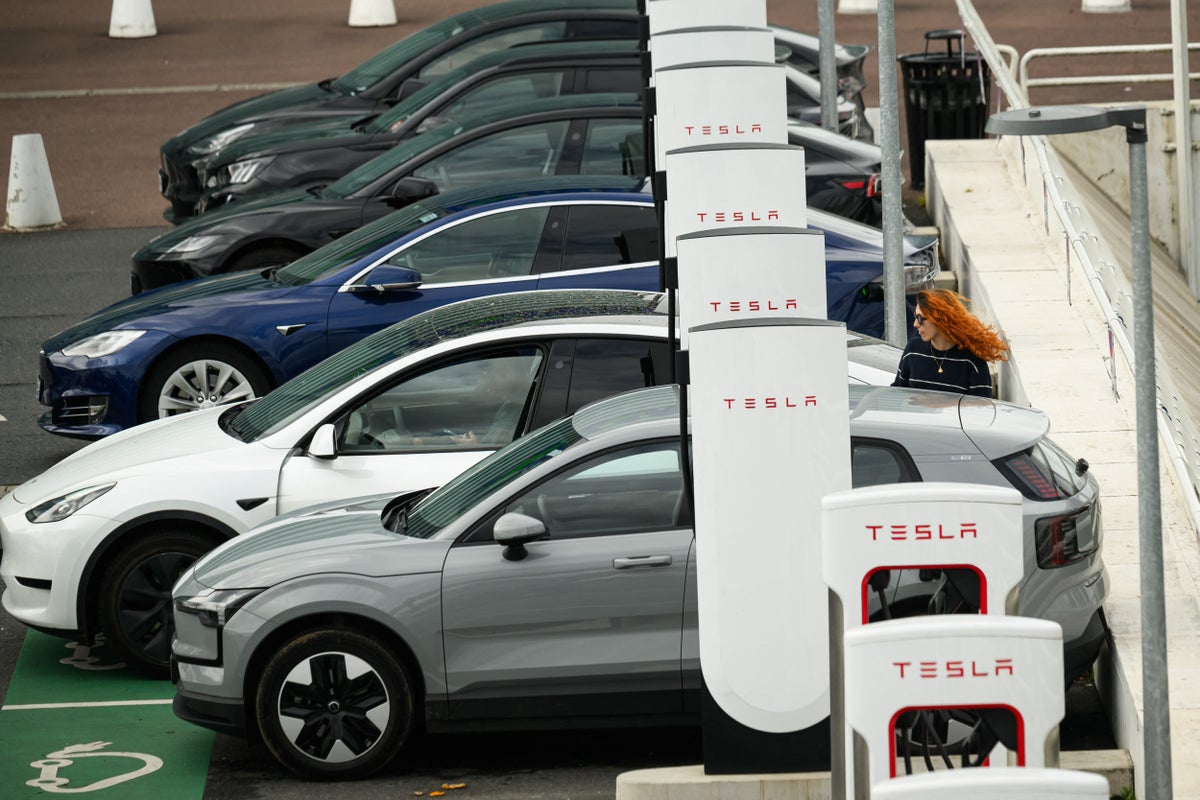
In 2026, hybrids and all-electric vehicles faced the same jump in demand from the oil crisis.
asserted
hybrids → keep → crisis
While there were plenty of hybrids available to meet that demand, the same was not true for EVs.
asserted
same → be → EVs
Hybrid production had been growing for years, led by Toyota, which sells about half of the hybrids bought in the United States.
asserted
which → grow → States
As a result, even as sales surged, hybrid inventories on dealer lots were 19% higher in March 2026 than they had been a year earlier.
asserted
they → surge → March
However, EV production had been in retreat since the tax and spending law President Donald Trump signed in July 2025 ended federal tax credits for EVs.
asserted
Trump → sign → EVs
Buyers had been able to get up to $7,500 for new EVs and $4,000 for used ones, but that ended after Sept. 30, 2025.
asserted
that → get → Sept.
Automakers responded by cutting back their EV production.
asserted
Automakers → respond → production
General Motors laid off more than 3,400 workers at its EV and battery plants and shifted its Tennessee plant to make batteries for energy storage, not cars.
asserted
Motors → lay → storage
Ford wrote off $19.5 billion from its EV business, ended production of the all-electric F-150 Lightning and converted a Tennessee EV plant to build gas-powered trucks.
asserted
Ford → write → trucks
Buyers, for their part, rushed to beat the tax credit deadline, pushing EVs to 11.3% of new vehicle sales in September 2025.
asserted
Buyers → rush → September
But by November 2025, after the tax credits ended, their share dropped to 4.3%.
asserted
share → end → %
As 2026 progressed and gas prices began to rise, so did EV demand.
asserted
demand → progress → ?
New EV inventories declined, shrinking from about 130 days of supply in the first quarter of 2026 to 78 days by August – just two days above the supply level of gas-burning cars.
asserted
inventories → decline → cars
Discounts on new EV models shrank too.
asserted
Discounts → shrink → models
My analysis of online listings from marketcheck.com shows the median new EV was listed 9.8% below sticker price in February.
asserted
EV → show → February
That’s a sign that dealers saw rising demand, not inventory to clear.
asserted
dealers → ’ → demand
Before the war, prices for used electric vehicles were still drifting down in the wake of the expired used EV federal tax credit.
asserted
prices → use → credit
After the war began, they climbed 13% through late June 2026.
asserted
they → begin → June
For a typical used electric vehicle, that’s about $3,500 more.
asserted
that → use → vehicle
Other data sources point in the same direction.
asserted
sources → point → direction
Recurrent, a company that reports on batteries and used EVs, found that the price of a used 2023 Chevrolet Bolt rose almost 20% from January to June 2026.
asserted
price → report → June
And inventories of used electric vehicles dropped too, with only 31 days of supply in May, 23% below the year before.
uncertain
inventories → use → year
None of this means the electric vehicle market is healthy.
asserted
market → mean → this
High prices and uncertain access to charging stations are real stumbling blocks for people who are thinking about buying an EV.
asserted
who → think → EV
But the data doesn’t support the claim that electric vehicle sales stalled in 2026 because Americans don’t want them.
uncertain
Americans → support → them
Rather, the sales stalled because there weren’t enough EVs available to buy – and there were plenty of hybrids as an alternative.
asserted
sales → stall → alternative
The distinction matters because automakers have treated a change in the policy landscape as a change in consumer demand, leading to shortages with real costs.
asserted
automakers → matter → costs
The average new car now sells for about $50,000 and the average new electric vehicle for about $55,000, according to Kelley Blue Book, a company that tracks car prices.
The current situation leaves drivers exposed to the volatility of oil prices with fewer alternatives.
uncertain
situation → sell → alternatives
The U.S. is the world’s largest oil producer, yet a war in the Persian Gulf raised gas prices significantly in just three months.
asserted
war → raise → months
Oil trades on a global market, so American drivers pay global prices.
asserted
drivers → trade → prices
Seven months into the war, the pressure on drivers is still going full throttle.
asserted
pressure → go → drivers
Oil was still above $100 a barrel in mid-October, and diesel hit a record $6.52 a gallon on Sept. 22.
asserted
diesel → hit → Sept.
Electric vehicle sales haven’t caught up.
asserted
sales → catch → ?
Argonne’s data show 86,000 of them sold in August, fewer than the 101,000 sold in May, while hybrid sales stayed above 216,000 a month all summer.
uncertain
sales → show → 216,000
…and 12 more, not listed.
 The Aporia