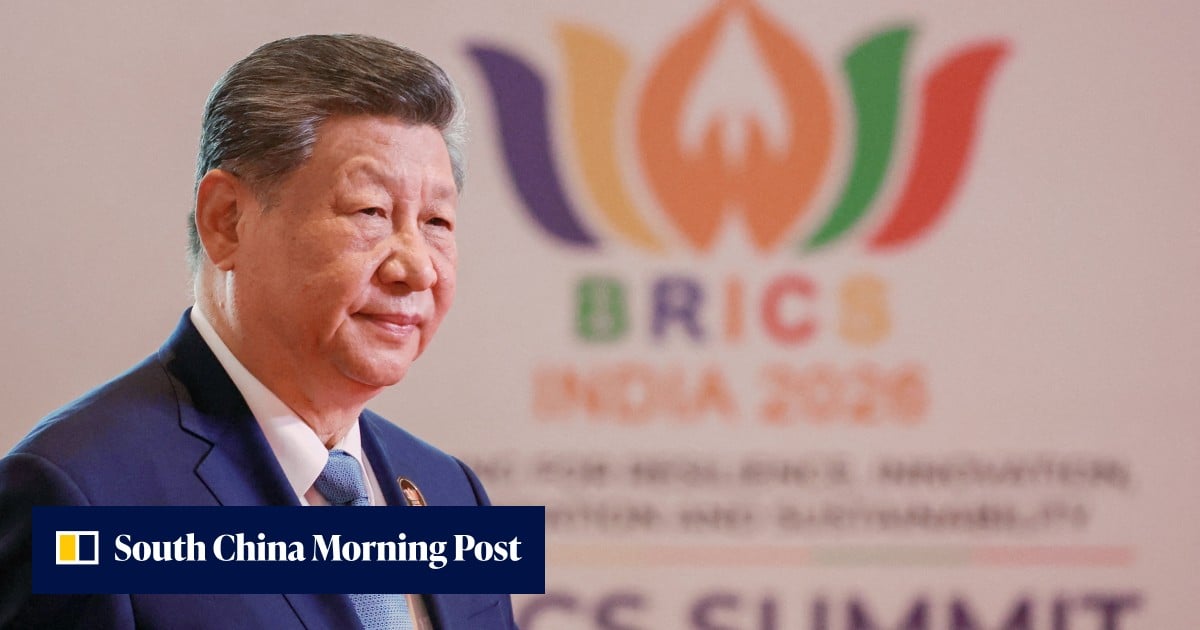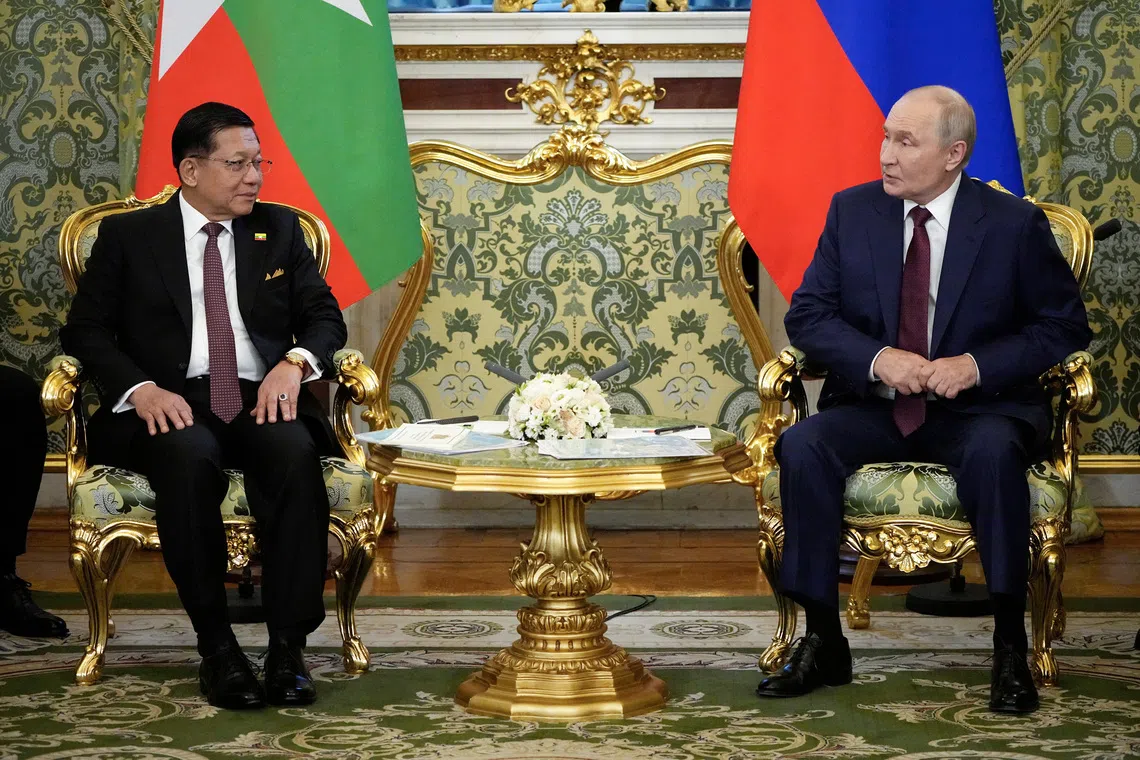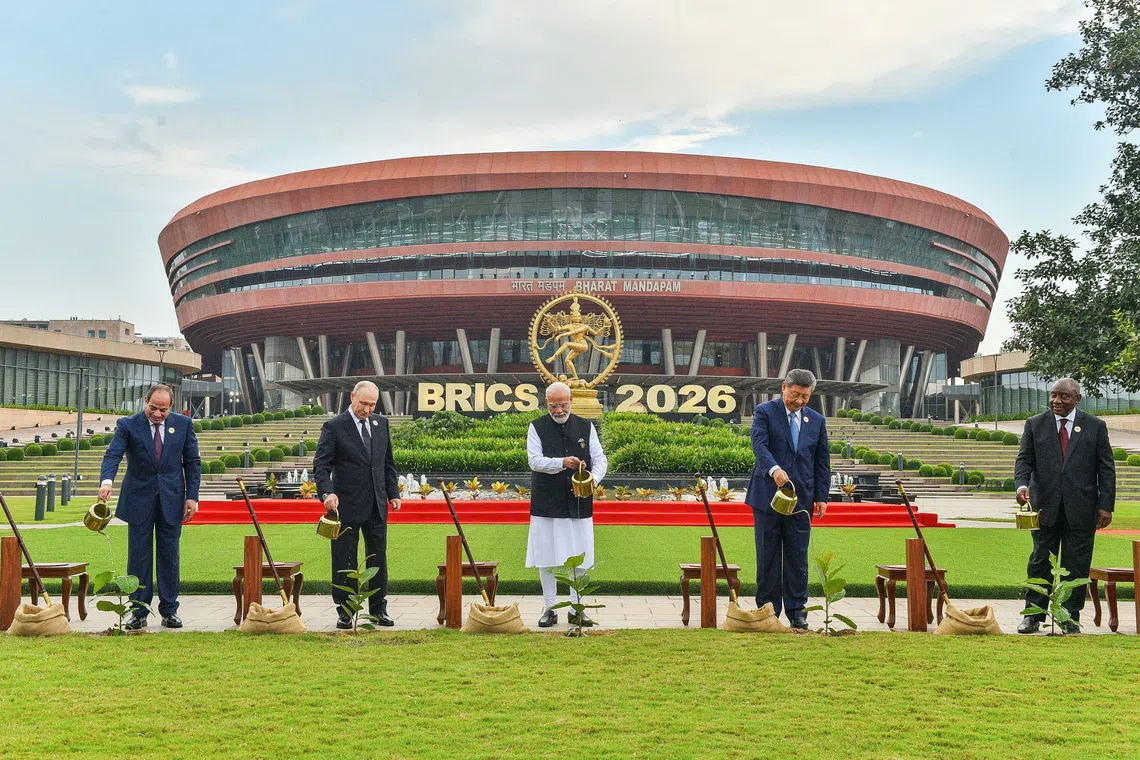
The BRICS summit in New Delhi aimed to strengthen cooperation among emerging economies but faced challenges due to internal divisions and differing interests. India, hosting the summit for 2026, emphasized the group's significance, representing half of humanity and 40% of global GDP. However, tensions exist between members like Russia and China, who seek closer economic ties, and India, which remains cautious about antagonizing Western nations. Leaders discussed initiatives such as a BRICS AI Open Source Zone and intra-BRICS trade in local currencies to bolster their influence globally. Despite these efforts, the summit highlighted that BRICS' ambitions are constrained by member states’ divergent goals and relationships with major powers like the US.
The BRICS grouping was designed as an alternative to a world dominated by a handful of powerful Western nations led by the United States.
Its member states account for a combined 40 per cent of the world’s total economic output compared with the G-7 Western-dominated 29 per cent.