Why a ‘killer switch’ to tackle Europe’s trade issues with China may not be so straightforward
AI generated
BRUSSELS –
uncertain
switch → tackle → China
European Union leaders ended their summit in the late hours of Oct 16 with no deal on the Union’s future budget, but with a new and surprisingly strong resolve to adopt new defence tools to tackle a ballooning trade deficit with China.
asserted
leaders → end → China
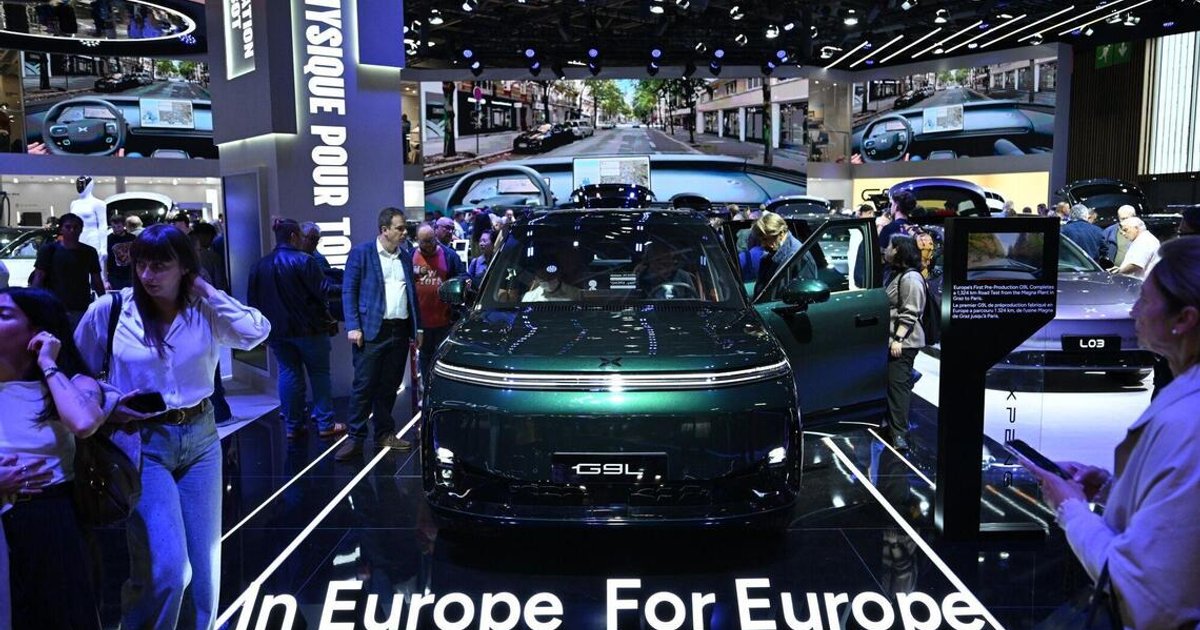
Heads of state and government of the EU’s 27 member-nations approved a trade deal concluded in Beijing earlier in October, under which China voluntarily agreed to cut by almost half its exports of electric vehicles to Europe.
asserted
China → approve → Europe
But the member-states still deemed this Chinese concession insufficient in addressing bigger trade questions, and they authorised the European Commission, the EU’s executive, to create “without delay” a toolbox of new trade defence instruments.
asserted
they → deem → instruments
That included a so-called “killer switch” provision that will enable the Commission to impose quotas and tariffs on products at a moment’s notice.
asserted
that → include → notice
The Commission is expected to come forward with such proposals by the end of 2026.
asserted
Commission → expect → 2026
There is, as yet, no legal text, no defined trigger, no agreed scope and no answer to the question of what a trade “cut-off” would mean in practice.
asserted
off → be → practice
Still, should the Commission gain such “killer switch” powers, the entire structure of Europe’s trade with the world could be revolutionised.
uncertain
structure → gain → world
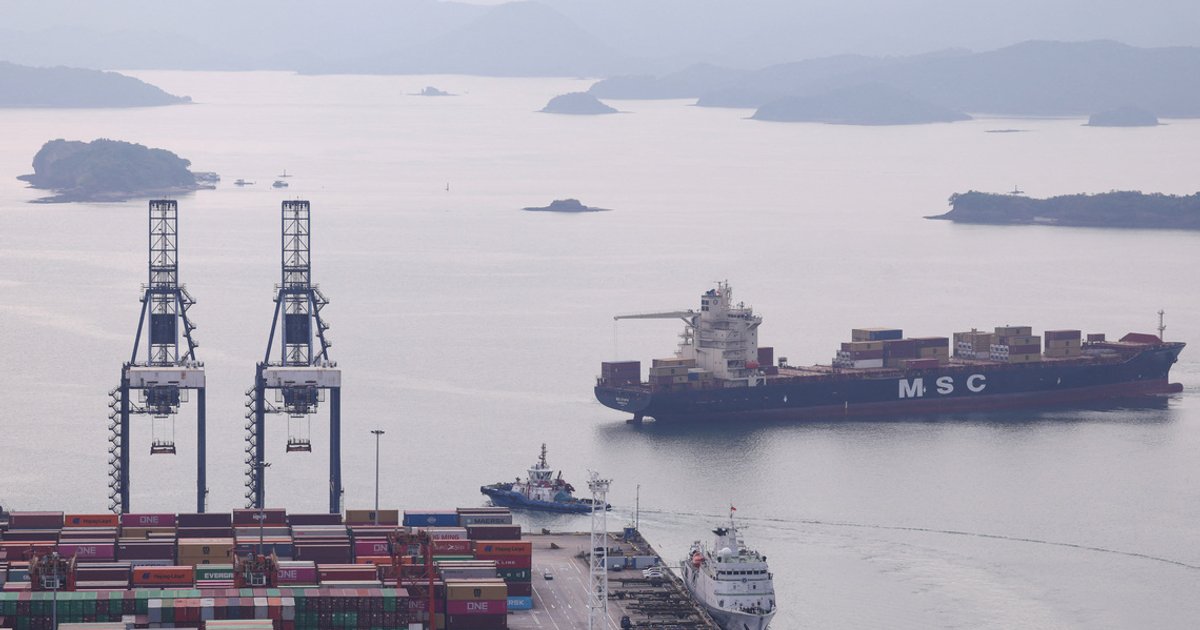
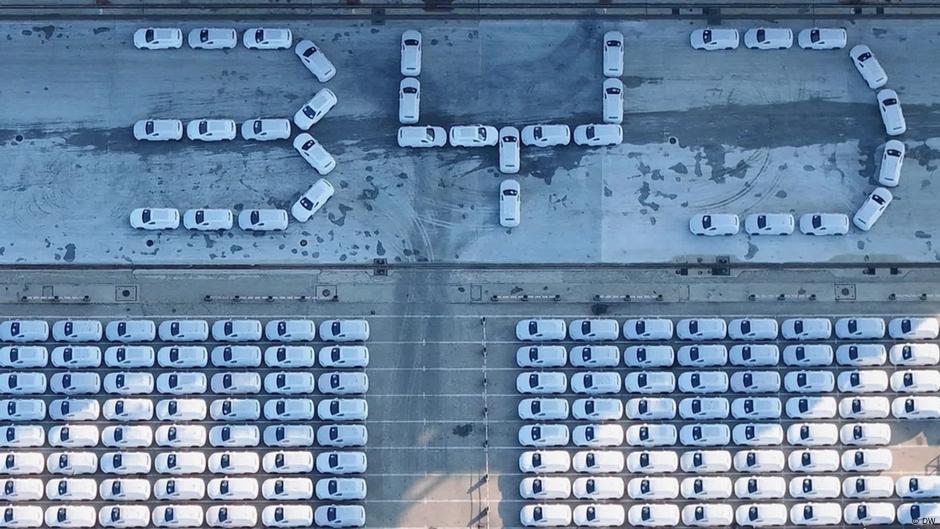
China loomed large at the EU leaders’ summit, as the European bloc faces a trade deficit of more than €360 billion (S$519 billion) with Beijing in 2026, or about €1 billion each day.
asserted
bloc → loom → 2026
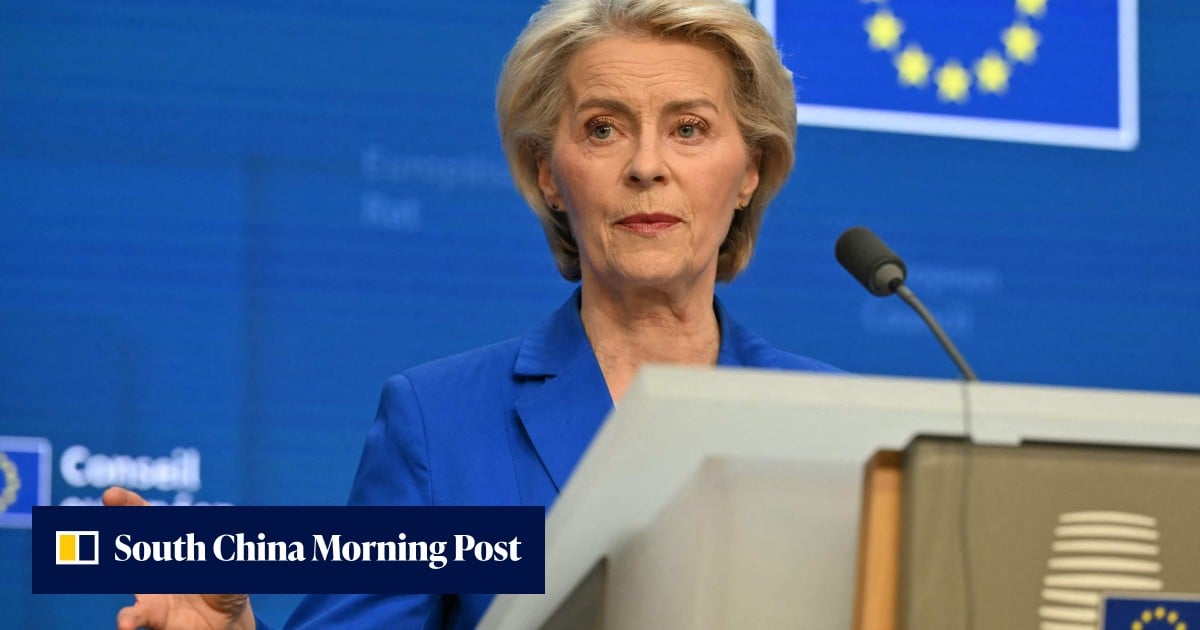
European Commission President Ursula von der Leyen has long warned the Chinese authorities that such deficits are “unsustainable”.
asserted
deficits → warn → authorities
Yet the latest EU statistics indicate that Chinese exports to the Union expanded by a further 25% during the first eight months of 2026.
asserted
exports → indicate → 2026
Europe’s car industry is no longer the primary concern; the continent’s chemicals and industrial machinery are now the latest sectors acutely vulnerable to what is described as a Chinese export onslaught.
asserted
what → describe → onslaught
A decade ago, the EU registered a yearly deficit of €71 billion in industrial machinery trade with China but enjoyed a surplus of €6 billion in trade in chemicals.
asserted
EU → register → chemicals
Today, the machinery deficit has grown to €206 billion, while a gaping trade deficit has developed in chemicals, to the tune of €24 billion a year.
asserted
deficit → grow → billion
At the latest summit in Brussels, the seat of the European Commission, Belgium, Denmark, France and Germany backed the Commission’s determination to move fast on seeking to protect these sectors.
asserted
Belgium → back → sectors
EU anti-dumping investigations into chemicals, pharmaceuticals and machinery are expected within weeks, and an investigation into Chinese-manufactured wind turbines is not far off either.
asserted
investigation → expect → turbines
In a joint letter released on Oct 5, French President Emmanuel Macron and German Chancellor Friedrich Merz argued that the Commission should be granted powers to, in the authors’ phrase, “cut off access to the European single market if needed if another trading nation deliberately ignores calls for the restoration of fair trade conditions”.
asserted
nation → release → conditions
The proposed weapon could be deployed not only if trade in a particular commodity suddenly balloons and no action is taken, but also if another country were to use other coercion instruments – such as a cut-off in supplies of critical raw materials – in an effort to avoid serious discussions about trade imbalances.
uncertain
country → propose → imbalances
If that happened, “the EU must be able to inflict damage comparable to that being done to us”, a German government official explained soon after the Franco-German proposal was released.
asserted
proposal → happen → us
Challenges of a ‘switch’
EU officials are refusing to identify any country to which such a provision may apply.
uncertain
provision → refuse → which
Still, it is a legal necessity dressed as diplomatic courtesy: A China-specific regulation would be indefensible at the World Trade Organization and awkward for many European nations still hoping to maintain friendly relations with Beijing.
asserted
regulation → dress → Beijing
Yet nobody is fooled.
asserted
nobody → fool → ?
The entire discussion about this “killer switch” provision – from subsidies and non-tariff barriers to overcapacity and dumping – amounts to the EU’s longstanding gripes against Beijing.
asserted
discussion → amount → Beijing
Currently, the EU’s powers of dealing with trade problems are cumbersome.
asserted
powers → deal → problems
The Commission must start an investigation into alleged fair-trade distortion.
asserted
Commission → start → distortion
The findings must be substantiated.
asserted
findings → substantiate → ?
And any measure taken against a nation exporting to the EU must be approved by a majority of the Union’s member-states.
asserted
measure → take → states
Until now, China had little problem in rendering such European measures irrelevant, either by launching its own trade distortion investigations into European products entering Chinese markets, or by dangling economic favours to a number of individual European nations, in return for their pledge to veto Commission measures against Chinese trade.
asserted
measures → have → trade
But if the “killer switch” proposal is adopted, that will transform the entire trade debate.
asserted
that → adopt → debate
The Commission will be able to dispense with most of the elaborate investigation procedure.
asserted
Commission → dispense → procedure
And incoming goods in a particular sector could be immediately subjected to tariffs or blocked altogether without first asking for the approval of the EU member-nations.
This is, to all intents and purposes, a revolution in the way Europe does business.
Beijing seems to have understood the significance of this proposal; this is assumed to be the main reason why China offered a highly unusual voluntary concession on future exports of electric vehicles.
uncertain
China → subject → vehicles
So, while Beijing thought that its concession on cars was a one-off gesture to silence the debate, the agreement to limit the volumes of Chinese EVs sold in Europe encouraged EU member-states to believe that it was precisely the discussion about the “killer switch” that forced China into giving way.
asserted
that → think → way
The question now is whether a consensus really exists over the adoption of such a measure, and how quickly it can be implemented.
asserted
it → exist → measure
While the EU’s biggest economies support the “killer switch” suggestion, many governments may yet baulk at the idea of granting the Commission wide powers; the idea that the Commission can make such critical decisions without prior authority from member-states is controversial.
uncertain
Commission → support → states
So, all that has been agreed at this stage is that the Commission will come back with its proposals.
asserted
Commission → agree → proposals
Then, there is the question of how quickly such measures could become legally enforceable.
uncertain
measures → be → ?
The guess in Brussels is that, even if new powers are adopted, the Commission will not be able to use them until the second half of 2027 because the necessary legislation will take time to be enacted.
asserted
legislation → adopt → time
Still, the anti-China mood is growing in Brussels.
asserted
mood → grow → Brussels
The European Parliament approved on Oct 7 by 454 votes to 86 – with 110 abstentions – a resolution calling Chinese industrial policy “an existential threat to the EU”.
asserted
Parliament → approve → EU
 The Aporia