‘It’s just straight bigotry’: Trump leads wave of Islamophobic rhetoric as midterms loom

The Guardian · collected 2026-09-13 · by Joseph Gedeon in Washington
Read the original at The Guardian ↗

Summary

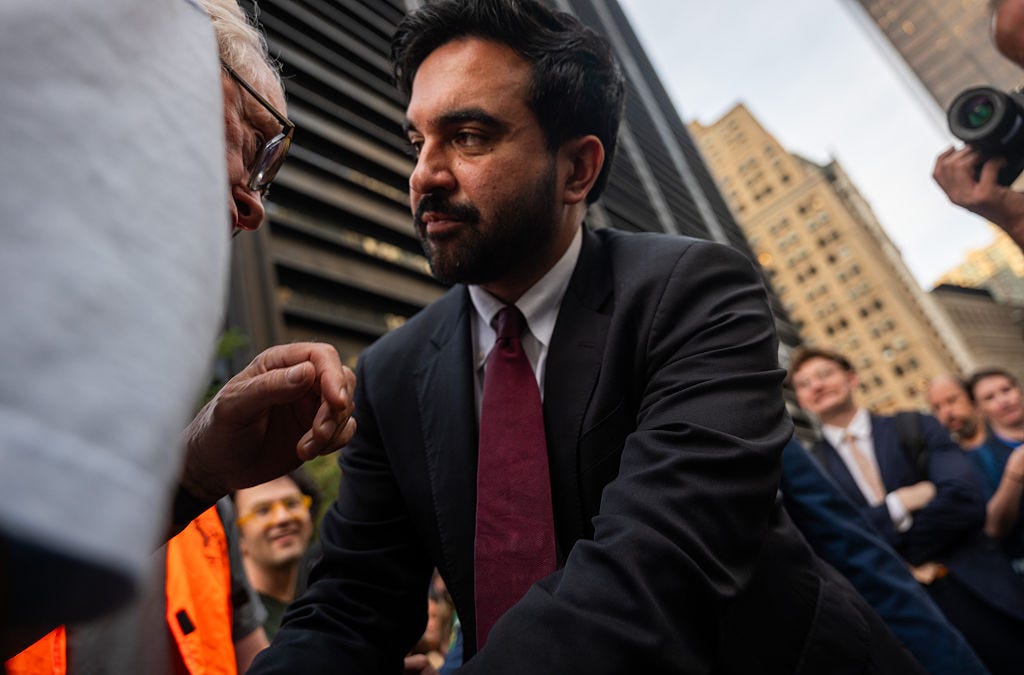
Republican Senator Tommy Tuberville accused Democratic primary winner Abdul El-Sayed of being an extremist who would destroy America, sparking a wave of Islamophobic rhetoric ahead of the midterms. Researchers tracking anti-Muslim sentiment report that this is the most intense period since 9/11, with Islamophobia rising sharply among Republicans and increasing numbers of hate crimes against Muslims. Despite this climate, Muslim candidates are achieving historic electoral successes, including El-Sayed potentially becoming the first Muslim elected to the US Senate.
Written by the local model on 2026-09-13, using this article's own text rather than the other coverage of the same event (that is the story summary below).

Signals How these are calculated →

Claims extracted
79
claim-shaped sentences
Uncertain
9%
7 of 79 hedged
Leaning
Leans left
of the writing, not the subject
Correction & hedging signals
59.6
corrections and hedging in what we collected; not a measure of accuracy
Outlets on this story
1
Politics
Narrative spread
1
articles carrying this framing
Analyzed 2026-09-13 · how these are computed

AI analysis (generated at analysis time, not now)

Story summary

Republican Senator Tommy Tuberville of Alabama made an Islamophobic statement immediately following Abdul El-Sayed's victory in Michigan’s Democratic US Senate primary. Tuberville called El-Sayed a “RADICAL ISLAMIST” who would “do everything he can to destroy America.” Researchers at the non-partisan Institute for Social Policy and Understanding (ISPU) describe this as part of the most concentrated wave of Islamophobic rhetoric in U.S. electoral politics since the 9/11 attacks. The ISPU’s 2025 Islamophobia Index rose from 25 to 33 among the general public, indicating a significant increase in anti-Muslim sentiment. This surge is happening as Muslim candidates win office at unprecedented rates ahead of the midterm elections.

Written for “Islamophobia In Politics” on 2026-09-14, grounded in this article and the 0 other(s) covering the same event.
Why this leaning score
The article's own words the score was based on. Each is quoted verbatim and was checked against the article text before being stored, so you can find it in the original.
Score -0.45 Confidence medium
Leaning score -0.45 for article 8514 (medium confidence, 3 verified quotes) · logged 2026-09-13

Story

📰 Islamophobia In Politics
Politics · 1 article(s) covering the same event. This is the one the site leads with.

How this is being covered How these are calculated →

Article leaning vs. publisher reliability
Source leaning vs. consistency

Compared with similar articles

This article reads leans left and hedges 9% of its claims. Each row says how that neighbour differs.
Zeteo
⚖️ Leans left 🔴 0% hedged 0 of 14
“The articles discuss different phases of a broader political narrative: Article A sets up the context and general issue, while Article B covers a specific incident of Islamophobic rhetoric following Abdul El-Sayed's victory in Michigan's primary election.”
Mother Jones
⚖️ Leans strongly left further left than this 🔴 4% hedged 4 of 100 📰 publisher trust 95
“Article A discusses a general trend and statements from multiple Republican officials on Islamophobia, while Article B focuses specifically on Tommy Tuberville's reaction to Abdul El-Sayed's victory in Michigan’s Democratic US Senate primary.”
Zeteo
⚖️ Leans strongly left further left than this 🔴 50% hedged 1 of 2
“The articles discuss different periods and aspects of Islamophobia related to 9/11, with Article A summarizing Trump's claims about 9/11 over time, while Article B focuses on recent Islamophobic rhetoric following Abdul El-Sayed's victory.”
Al Jazeera
⚖️ Leans strongly right further right than this 🔴 0% hedged 0 of 2 📰 publisher trust 96
“The articles describe different events: one covers Republican messaging during their midterm convention in Dallas, while the other focuses on Islamophobic rhetoric following a primary election victory.”
Noahpinion
⚖️ Leans strongly right further right than this 🔴 8% hedged 4 of 50
“Article A discusses poll results and mentions Abdul El-Sayed's low approval rating but does not describe a specific incident. Article B describes Republican Senator Tommy Tuberville's Islamophobic rhetoric following Abdul El-Sayed’s victory in Michigan’s Democratic US Senate primary, which is a different event.”

Publisher

The Guardian · 223 article(s) · 1 correction(s) detected
Running correction rate · 1 correction(s)
2026-09-07
Former Louisiana mayor completes 90-day jail term for raping 16-year-old boy

Who wrote this

Joseph Gedeon in Washington
7 article(s) here · 1 carrying a prediction
🔮 El-Sayed – or “Abdulrahman Mohamed El-Sayed”, as Tuberville called him on X – was a “RADICAL ISLAMIST” who would “do everything he can to destroy America”, he claimed.
🔮 After the senator mentioned the New York City mayor, Zohran Mamdani, video footage depicts at least one audience member shouting: “He should be shot!”
🔮 Project Maven, the Pentagon’s original AI targeting program launched in 2017, became the Palantir-built Maven Smart System, which the US leaned on heavily during its 2026 air campaign against Iran, helping strike more than 13,000 targets over the first 38 days, according to Stanley at conference in May.
🔮 Donald Trump intends to use the Boeing jet gifted by Qatar for his trip to Ireland next week, marking the first time the aircraft will leave the US since concerns were raised over whether it can adequately protect the president from attack.
🔮 The state’s decision to proceed – hours after Trump’s officials asked the supreme court to let the administration press ahead with its proposed crackdown – comes amid deep uncertainty over whether new federal rules governing mail ballots will be allowed to take effect, and whether the US Postal Service can implement the changes in time.
🔮 Twenty deportees from the United States arrived in Liberia on Thursday, as part of a new agreement that will see the west African country receive as many as 1,200 people under the Trump administration’s immigration crackdown.
🔮 Thirty US universities could lose federal funding unless they review and cut foreign academic partnerships the Pentagon considers a national security risk within the next two weeks, under a Pentagon directive aimed largely at ties to Chinese institutions.
More on this subject from Joseph Gedeon in Washington
All 7 articles by Joseph Gedeon in Washington →

Topics

ISPU Islam Muslim Republican anti-Muslim

Subjects

Muslim NORP · 8× El-Sayed PERSON · 5× anti-Muslim NORP · 4× ISPU ORG · 3× Democrats NORP · 2× Islam ORG · 2× Michigan ORG · 2× Muslims NORP · 2× Pew ORG · 2× Republican NORP · 2×

Narrative

It was the opening shot in what researchers who track anti-Muslim sentiment describe as the most concentrated wave of Islamophobic rhetoric in US electoral politics since the 9/11 attacks, arriving at the exact moment Muslim candidates are winning office in unprecedented numbers. “It’s probably the worst of what we’ve seen,” said Saher Selod, director of research at the non-partisan Institute for Social Policy and Understanding (ISPU), which has tracked anti-Muslim sentiment nationally for a decade.
framing: assertive · carried by 1 article(s) · first seen 2026-09-13
🔮 El-Sayed – or “Abdulrahman Mohamed El-Sayed”, as Tuberville called him on X – was a “RADICAL ISLAMIST” who would “do everything he can to destroy America”, he claimed.

Claims (79 extracted, 7 hedged)

Within hours of Abdul El-Sayed’s victory in Michigan’s Democratic US Senate primary, Republican senator Tommy Tuberville of Alabama declared that the party had “just voted to send a TERRORIST” to Washington. asserted
party → declare → Washington
El-Sayed – or “Abdulrahman Mohamed El-Sayed”, as Tuberville called him on X – was a “RADICAL ISLAMIST” who would “do everything he can to destroy America”, he claimed. asserted
he → call → America
It was the opening shot in what researchers who track anti-Muslim sentiment describe as the most concentrated wave of Islamophobic rhetoric in US electoral politics since the 9/11 attacks, arriving at the exact moment Muslim candidates are winning office in unprecedented numbers. “It’s probably the worst of what we’ve seen,” said Saher Selod, director of research at the non-partisan Institute for Social Policy and Understanding (ISPU), which has tracked anti-Muslim sentiment nationally for a decade. asserted
which → track → decade
“We’re certainly seeing in 2025 and 2026, ahead of these midterms, really very Islamophobic ads – more so than what we saw after 9/11.” asserted
we → see → 9/11
ISPU’s 2025 Islamophobia Index, a 100-point scale built using common anti-Muslim stereotypes, rose from 25 in 2022 to 33 among the general public in 2025, with the sharpest increases among white and Hispanic Americans. asserted
Index → build → Americans
The Pew Research Center found in a survey this spring that 51% of US adults now say Islam is more likely than other religions to encourage violence, up from just 25% six months after the 2001 attacks. asserted
Islam → find → attacks
The partisan gap on that question has widened sharply. asserted
gap → widen → question
Back in 2022 32% of likely Republican voters and 23% of Democrats in 2002 said Islam was more likely than other religions to encourage violence, according to the Pew survey. uncertain
Islam → say → survey
Today, 76% of Republicans say the same, and 29% of Democrats. asserted
% → say → Democrats
Anti-Muslim hate crimes reported to the FBI, which spiked to 481 in 2001 from 28 the year before, have never returned to pre-2001 levels, according to Pew’s research. uncertain
which → report → research
The ISPU separately found that 63% of Muslims reported experiencing religious discrimination in the past year, the highest share of any faith group it measures. asserted
it → find → group
Set against that backdrop is a wave of Muslim electoral success. asserted
wave → Set → success
There are four Muslim members of US Congress, with a fifth likely on the way, compared with zero in 2001. asserted
fifth → be → 2001
Ghazala Hashmi became Virginia’s first Muslim woman elected to statewide office this year, as lieutenant governor. asserted
Hashmi → become → governor
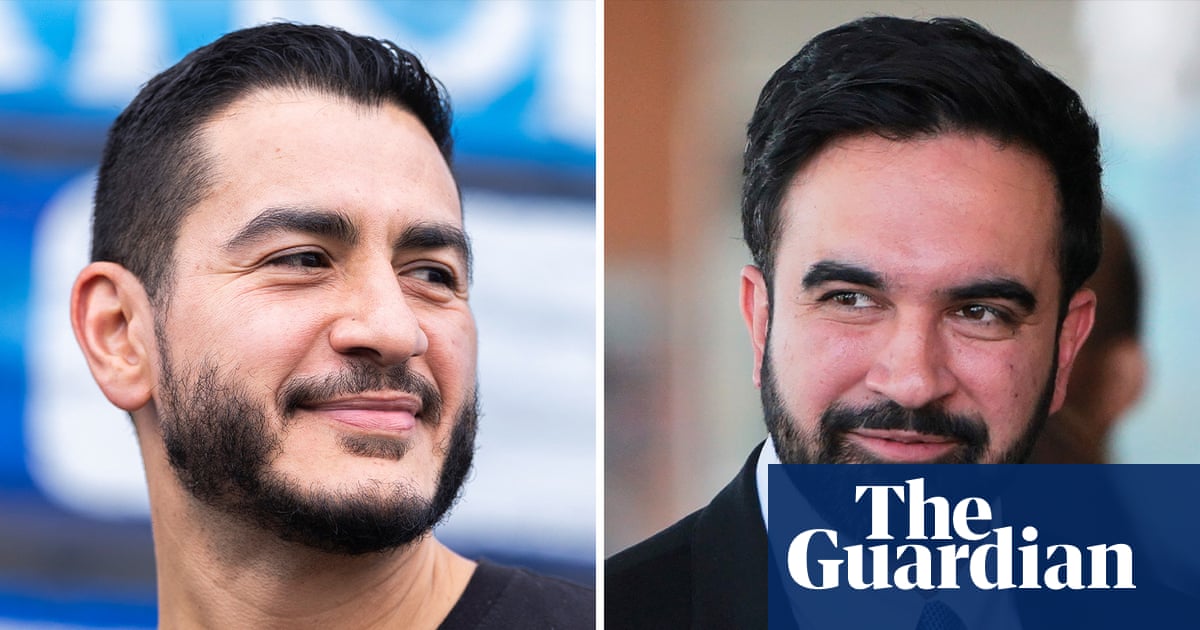
Zohran Mamdani was inaugurated as New York’s first Muslim mayor in January 2025, and El-Sayed’s primary win put him on track to potentially become the first Muslim ever elected to the US Senate. asserted
win → inaugurate → Senate
The reaction to El-Sayed’s victory showed how quickly the rhetoric escalates. asserted
rhetoric → show → victory
The Center for the Study of Organized Hate found Islamophobic posts naming El-Sayed rose by nearly 1,900% in the week after his win, from an average of 155 to more than 3,000 a day. asserted
posts → find → 3,000
The attacks are also coming from the very top of the Republican party. asserted
attacks → come → party
Donald Trump infamously called in 2015 for a “total and complete shutdown” on Muslims entering the US when he was running for president, and attempted to enact one via executive order in early 2017. asserted
he → call → 2017
After years of legal wrangling, the supreme court did allow Trump to implement a limited version of his travel restrictions for majority Muslim countries. asserted
Trump → allow → countries
This year, Trump called El-Sayed a “jihadist” from the Oval Office, and separately claimed – without naming anyone – that “jihadists” were being elected to office “all over the place”. asserted
jihadists → call → place
Vice-president JD Vance, meanwhile, called El-Sayed “very, very evil” at a Michigan rally and, separately, invoked his own late grandfather to attack comments El-Sayed made in 2022 defending a legal challenge to an Oklahoma anti-Sharia ballot measure. asserted
Sayed → call → measure
The attacks go beyond one candidate, however. asserted
attacks → go → candidate
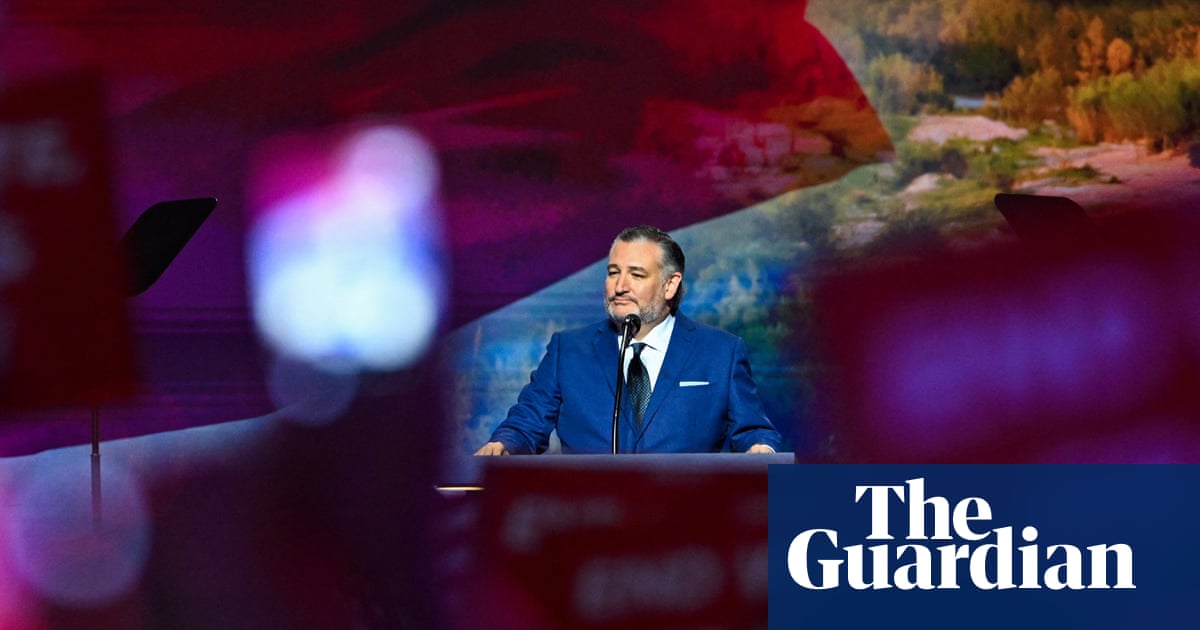
Senator Ted Cruz told Fox News that El-Sayed and Mamdani were “Islamists” who “want Sharia law” and “hate Jews, they hate Christians, they hate capitalism, they hate America”. asserted
they → tell → America
Representative Nancy Mace posted that “every single Muslim holding public office in America is a trojan horse, and a threat to both national security and our republic”, and followed up by writing that Islam “must be removed from civil society in the US”. asserted
Islam → post → US
In March, Representative Randy Fine of Florida wrote on X, “We need more Islamophobia, not less. asserted
We → write → Islamophobia
Fear of Islam is rational,” while Representative Andy Ogles of Tennessee posted that “Muslims don’t belong in American society”. asserted
Muslims → post → society
For Mobashra Tazamal, associate director of Georgetown University’s Bridge Initiative, which studies Islamophobia globally, the shift is shockingly noticeable. asserted
shift → study → Islamophobia
“It is almost as if the veil has been lifted,” she said. asserted
she → lift → ?
“It is so bigoted, and it’s so crude, and there is no red line. asserted
it → ’ → ?
It’s just straight bigotry. asserted
It → ’ → ?
The rhetoric has also extended beyond individual candidates into policy fights. asserted
rhetoric → extend → fights
In Texas, Governor Greg Abbott has spent much of the summer campaigning against what he calls the imposition of Islamic law, ordering a review of state grants to two major airports and referring both to federal regulators over privately funded wudu stations, ritual washing facilities Muslims use before prayer, which he called illegal religious favoritism. asserted
he → spend → which
Abbott has separately fought a proposed mosque-anchored housing development outside Dallas. asserted
Abbott → fight → Dallas
Nationally, the Center for the Study of Organized Hate documented a coordinated campaign among 89 elected officials over 13 months, including 1,111 social media posts and eight bills, tied to a “Sharia Free America Caucus” that has grown to 65 members. asserted
that → document → members
The anti-Sharia campaigns are not new: close to two dozen states passed largely symbolic anti-Sharia laws in the early 2010s. asserted
states → pass → 2010s
It’s not something that’s real,” said Tazamal. asserted
Tazamal → ’ → ?
“It’s constructed, and then these politicians claim to be tackling this constructed problem that they create.” uncertain
they → construct → that
Researchers caution against treating every attack on El-Sayed or Mamdani as bigotry. asserted
Researchers → caution → bigotry
El-Sayed drew criticism – including from Vance – after he responded to a March attack on a suburban Detroit synagogue by saying “hurt people hurt people”, noting that relatives of the attacker in Lebanon had recently been killed in an Israeli airstrike. asserted
relatives → draw → airstrike
…and 39 more, not listed.
💬 Give feedback
🕘 History 🎫 Support